Why Canada Is (Finally) Building Supertall Skyscrapers
- Youtube Views 709,184 VIDEO VIEWS

01 July 2026
Video hosted by Fred Mills. This video contains paid promotion for RoomSketcher.
FIRST CANADIAN PLACE has been the tallest building in Canada since 1975, looming 298 metres over Toronto for more than 50 years.
But FCP is about to lose its crown. Just five minutes down the road, Pinnacle SkyTower is preparing to open as Canada’s first ever supertall skyscraper. At 352 metres it soars high above its aging counterpart, setting a precedent in the city and this is just the beginning.
Until 2026 Canada had never been home to a supertall and now 11 have been proposed in Toronto with three already under construction. A city already densely populated with great steel towers is about to watch its skyline transform.
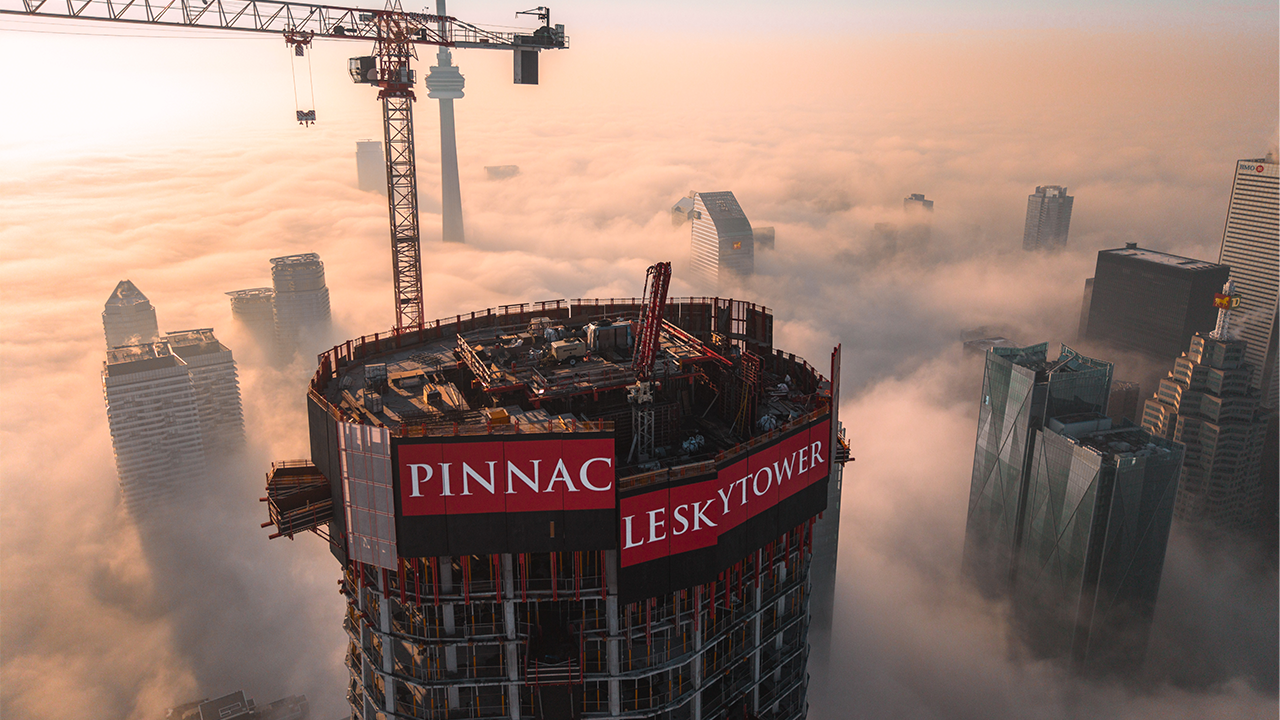
Above: Pinnacle SkyTower is the tallest building in Canada and it'll open as the country's first supertall skyscraper. Image: Kotsy.
Canada's aversion to supertalls
Supertall skyscrapers aren’t exactly a new phenomenon. We can trace their origins all the way back to 1930s New York City and one of the most famous sights in the world: the Chrysler Building.
In the century that’s followed, another 24 countries have added supertalls to their skylines. Yet Canada, a world leader in building tall towers, has none which is strange because Toronto has the third most skyscrapers of any city in North America, behind only New York and Chicago.
So, why has the Great White North decided now is the time to break the 300-metre mark? Unsurprisingly, it all centres on Toronto’s rapid development.
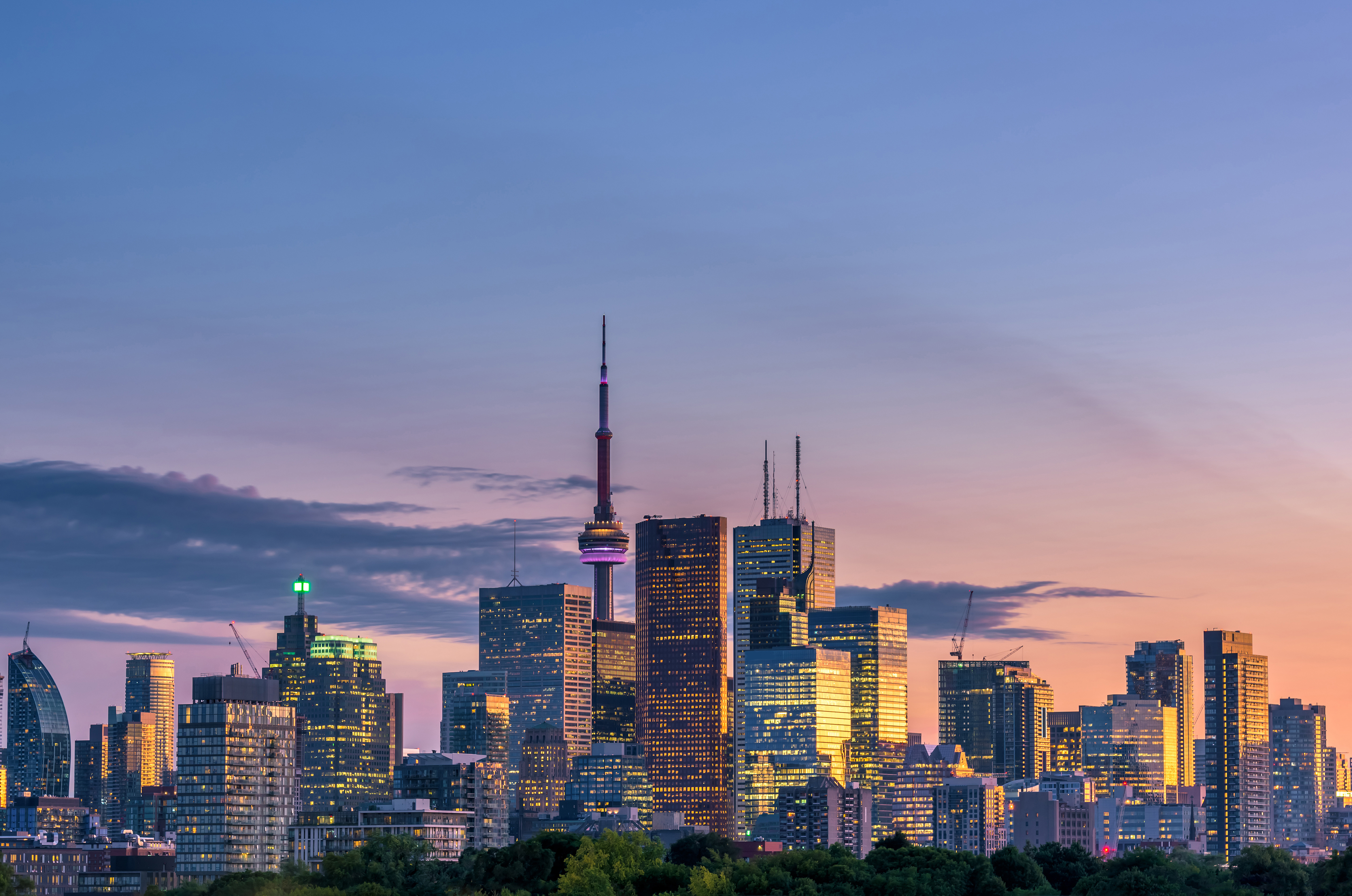
Above: Toronto has one of the densest populations of skyscrapers in North America.
Thanks to its position in North America as a hub for business, Toronto has experienced multiple office building booms, particularly during the 20th century. The skyline has completely transformed as downtown densified in its bid to support the rapidly expanding workforce welcomed from all around the world.
In fact, up until recently, Toronto had the fastest increasing population on the continent but as the workforce grew, so did the need for new homes. And as is often the case, housing struggled to keep up with demand.
A huge number of those working in the city ran for the suburbs as a solution which now sprawls for miles but that caused its own issue: the suburban dwellers still had to get into the city for work. Commute times became hellish as infrastructure investment lagged behind demand. That left people with one option: their cars.
Today, Toronto provides a massive 20% of the country’s GDP and yet it still can’t house its residents.
Toronto's action plan
Billions of dollars are already being spent to overhaul infrastructure and now, there’s a turn towards the skies. That’s where Pinnacle SkyTower comes in. The 352-metre-high-structure is balanced on a podium to offer a sturdy grounding for Canada’s tallest ever building. This means the tower itself actually starts at level 13.
As it climbs, it's centred around an incredibly robust reinforced concrete core supported by link beams and shear walls. The base initially features an almost rectangular footprint and then slims as it rises to become a 12-sided polygon. That serves two key purposes: firstly, it looks fantastic. The second purpose is to tackle the intense wind pressures caused by Lake Ontario and the plethora of tall structures throughout downtown Toronto.
Nadine El-Gazzar is an architect and associate for Hariri Pontarini Architects, the firm which designed SkyTower:
“In Toronto because we have a dense core and we have a lot of buildings adjacent to each other, the modelling of that wind changes as and when more buildings are added. It's something that’s been coming up a bit in Toronto where because the development is happening so fast, you may model your building for a certain wind condition but then all of a sudden there’s an approval for a building close by and you may have to adjust your modelling to suit those future conditions.”
SkyTower is just one of a number of skyscrapers being constructed in the city and with 10 more supertalls either proposed or under construction, future-proofing is no easy task. In fact, this building has been so technical to develop that architects have had about 70 different rounds of drawings to review related just to the curtain wall.
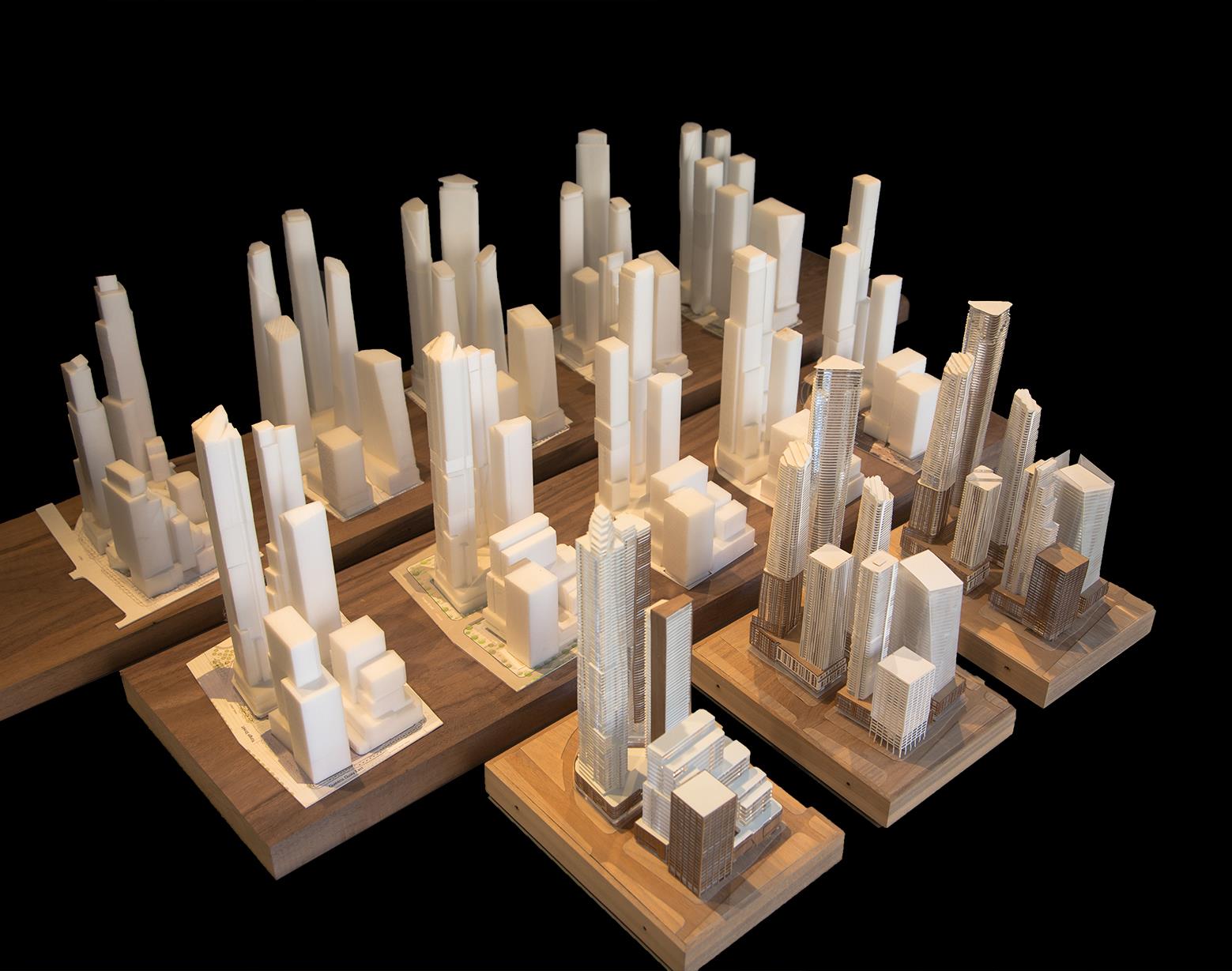
Above: Various models of SkyTower were created to test the wind pressures caused by surrounding buildings. Image: Hariri Pontarini Architects.
Sharp edges stop wind from gently slowing past, instead causing turbulent, swirling patterns and so the final design sees 12 notched sides acting as a diffuser for the wind. As powerful gusts hurtle towards the structure, they flow around the smoothed edges to limit interference.
Cutting the impact of the wind on the outside of the building is crucial, but it’s not where the challenge ends. Thanks to the harsh, cold breeze that blows off Lake Ontario, towers along the water’s edge are battling what feels like -20°C gusts (-4F). As they hit the building they get sucked up into the vertical shafts, haunting the interior by pushing and pulling on doors and windows. Architects and engineers had to painstakingly model every single door in SkyTower to test individual wind pressures to see where adjustments were needed.
Public and residential floors reach up to the 106th and then on the 108th is a tuned mass damper, like a big pendulum to control building sway. It’s an enormous piece of kit stretching upwards by nine metres and weighing 500 tonnes.
Skyscrapers are going up all over the city and a lot of them will climb to supertall proportions. But while that might impact the finished product, years into the construction process, SkyTower architects and engineers had to pivot to account for a monumental adaptation, as El-Gazzar explains:
“The footprint of the base is the size of the entire site which is typical for Toronto. We usually max out the site area below grade for parking and foundations. So, the foundation was set by the size of the site and was set for a 95-storey building but then after the excavation had started and after the footings had been established, the developer decided they wanted to go up another 10 floors.”
Back in 2017, when approval was originally given, SkyTower was set to be 40 metres shorter. But as the years rolled on and developments nearby grew ever taller, Pinnacle wanted to make sure their tower stood out. Hence successfully gaining approval, two years into building, to give their building a growth spurt.
Maybe that sounds simple - just stretch the plans up 40 metres - but in reality, we’re talking about months of redesign work. For starters, to add extra floors to the building, the lower podium had to be widened above grade to spread the base and fix the adjusted slenderness ratio of the whole structure.
“All of the curved corners are kind of curving and terracing upwards so it transitions its way up to the form of the tower and then you’ve got these nice buttressed corners which take that form back to its final location", says El-Gazzar. "Some of the things you saw were a lengthening of sheer walls and we added post tensioning to the walls on approximately the bottom 40 floors.”
The tower originally featured a tapering of the bottom ten floors but that had to be scrapped to keep it straight and support the extended base. While it may have been an exhausting process, the proof is in the pudding: Pinnacle SkyTower is the tallest building in Canada.
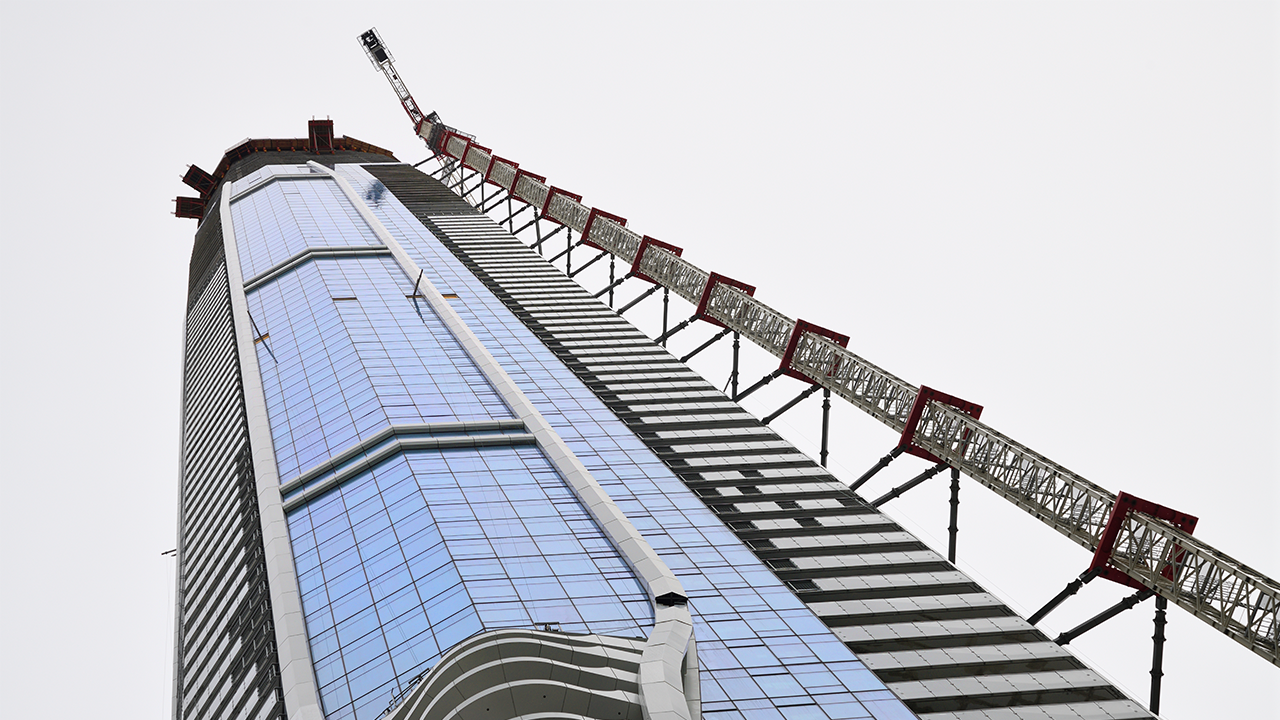
Above: SkyTower is set to open this year as the first supertall in Canada.
Why supertalls now
Toronto has a major housing crisis and sprawling suburbs but that doesn’t exactly answer why the city has turned to supertalls now. The downtown core faces the same issues that all major urban areas come up against eventually: a lack of space.
Although that doesn’t mean all of its towers are full.
This city is littered with underutilised office and condo buildings so, let’s tackle the aforementioned first. Throughout the 20th century there were multiple office construction booms. As the city’s population climbed, these great towers went up to offer commercial working spaces. Downtown is now full of office buildings. The problem is that following the pandemic, Canada introduced stricter immigration controls and its population is now declining. Couple that with the new work-from-home mentality and as of last year there was a 15% vacancy rate in downtown offices. That compares to 2.5% pre-pandemic.
Those office towers are getting old and replacing them is challenging. Existing city bylaws maintain any demolished office buildings downtown have to be replaced with more offices and while not impossible, overcoming that hurdle has historically been a bit of a minefield. With financial demand for office towers shrinking, these aging structures are stuck in the mud – although this policy has now been relaxed under review.
So, what about those empty condos? Over the last decade, they’ve accounted for half of all new housing constructed in the city. The perfect concoction of low interest rates, an increasing population and rising property prices meant investor demand went crazy. Developers built condo towers left, right and centre knowing they could flog units through pre-sales to investors.
And investors were more than happy to oblige. They could buy up apartments at a cheap price, before they went on the market, knowing they’d increase in value. On average, between 2015 and 2022, units rose in price by more than 40% between when investors would buy them and then sell them. However, following the pandemic Toronto’s population didn’t grow nearly as quickly and interest rates soared. The financial return for investors crashed and so pre-sales plummeted.
But as you might expect, building a condo tower isn’t an overnight process. It takes years of planning and approvals and so towers continued to climb in the city, even though demand had shrunk. In response, developers began to build very small condo units that could be sold to investors at a lower, more attractive price point. They may not be big enough for families but for temporary residents and students, not looking to settle in a home for the long-term, these small apartments work a treat.
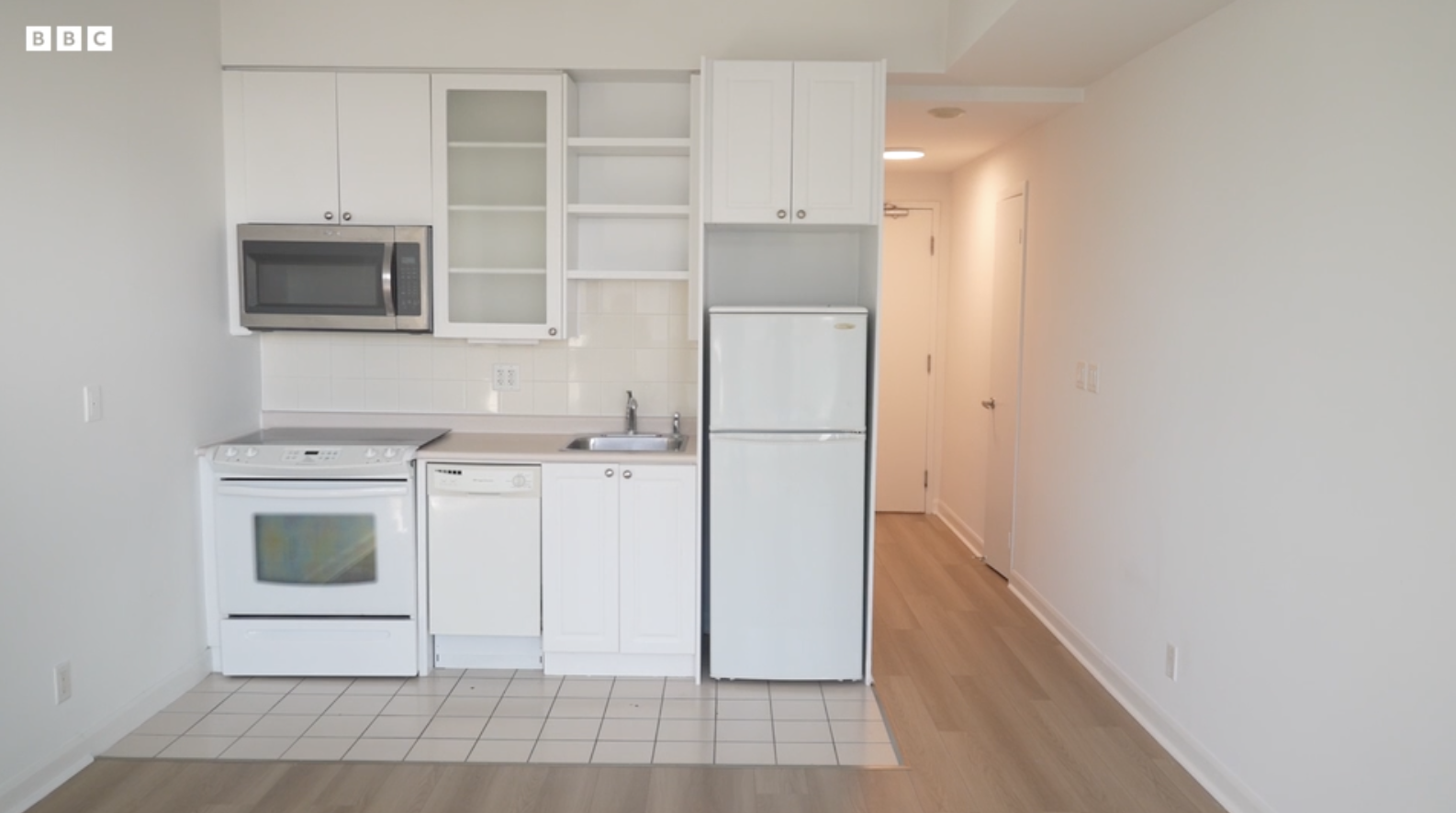
Above: Developers in Toronto built a swathe of condo towers with tiny apartments not big enough for the wider population. Image: BBC
However, as we’ve already covered, the population started to drop and so, even for these micro-homes, demand began to dwindle. The Bank of Canada has estimated micro-units make up 60% of new apartments coming onto the market but of new households only 30% would typically be appropriate to buy them. The market is oversaturated with small apartments that don’t offer enough to the city and that messy, winding road brings us to the birth of the supertall skyscraper in Toronto.
Their appearance on the scene is partially the result of the surge in planning and construction during, and immediately after the pandemic, but now they have to respond to changing demand post. For a developer, the more economic drivers you can fit into a tower, the more financially safe it becomes: you won’t end up stuck with a tower full of one asset class you can’t fill.
With demand for offices having slipped dramatically, and 18 condo projects cancelled in the city in the year leading up to January 2026, we’re now looking at a mixed use world, proven by the fact all three of the supertall skyscrapers under construction in Toronto feature multiple asset classes.
We’re talking offices, apartments, hotels, shops and restaurants and to fit all of that into one building, you need a lot of space. Sometimes it’s as simple as: land on the ground is expensive, land in the sky is cheaper. Couple that with developers forever wanting their tower to be the tallest or flashiest in the city and it’s no surprise Canada has started building skyscrapers over 300 metres tall.
By next year SkyTower should be joined by Concord Sky and then a year after that One Bloor West, formerly known as The One. Three supertall skyscrapers are navigating their way onto Toronto's skyline and they could be joined by another eight in the coming years. But as we’ve seen, successfully constructing a tower of this height is no mean feat.
It’s taken national population policy changes, global economic fluctuations and even a pandemic but Toronto is now following a path laid by various other cities around the world. What lies in wait for these towers once they’re opened is all part of the gamble. Whether they’ll become economic successes that add to the skyline or empty glass towers that perpetuate the housing crisis - only time will tell.
But one thing is for certain: a precedent has been set for building supertall in Canada and this is only the beginning.
Try RoomSketcher for free today: https://bit.ly/4oBa1DI
Additional footage and images: Pinnacle, Hariri Pontarini Architects,Global News, Taiwan News, Dustin Land, Fred Tam, CBC, Stephen Velasco, Foster + Partners, Dillan Payne, JK Liu, Bibi L and Kotsy.
We welcome you sharing our content to inspire others, but please be nice and play by our rules.
Comments