
The Bullet Train That Could Save Australia
- Youtube Views 1,160,437 VIDEO VIEWS

10 August 2026
Video hosted by Fred Mills. This video contains paid promotion for Incogni.
ON paper, a high-speed rail network in Australia makes sense. It's a wealthy, vast country that's spotted with highly populated cities that need connections.
In fact, Melbourne to Sydney consistently ranks among the busiest and most in demand flight corridors in the world. About 60 to 70 direct flights every day, or 400 flights a week.
That’s about 350 to 450M litres of jet fuel every single year. And fuel isn’t something that’s getting any cheaper. High-speed rail, by contrast, would be fully electric.
There’s demand, there’s a need, and there’s money. So what’s gone wrong? This feels like a no-brainer.
Australia's High-Speed Baggage
For Australia’s Prime Minister, Anthony Albanese, it’s been a no-brainer for a long, long time. In fact he worked on a proposal way back in 2013 when he was just a regular old Transport Minister. He even made it a campaign promise that when he was elected to the top job, he would finally put Australia’s dream of high-speed rail into action. And it looks like it might actually happen.
Unlike previous proposals, this one is kicking into gear. The federal government has committed more than A$659M for the planning phase so that they can lock in the design, approvals, scope and cost. It’s expected that major contracts will be awarded soon and that construction could be started as early as next year.
It's hard to overstate how much the country needs this: Australia is big. Bigger than you may think. So big that every few years the rainy season creates an inland sea larger than Lebanon and nobody seems all that bothered.
In fact, if you overlaid Australia across a map of America it would be just about the same as the continental United States.
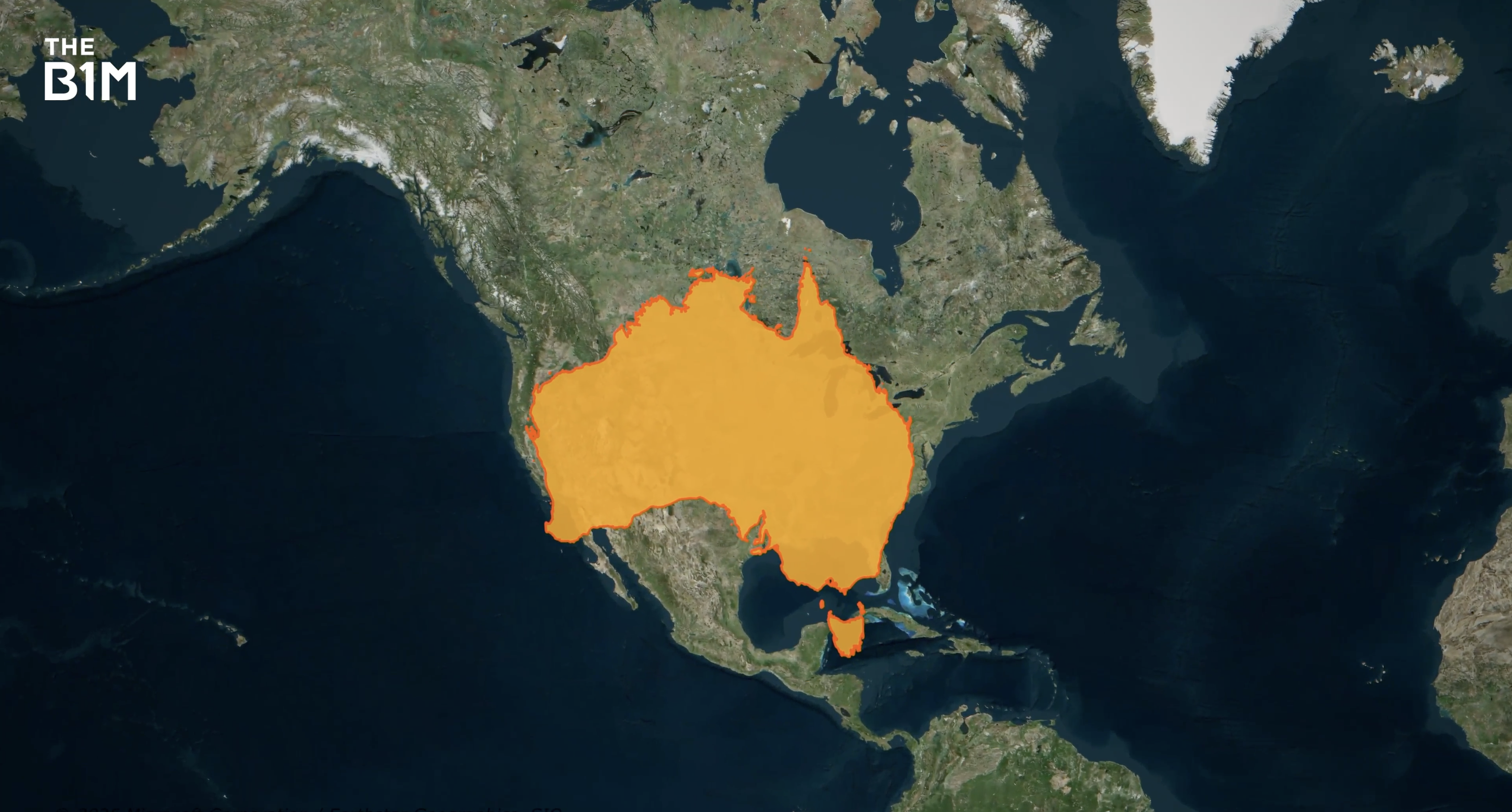
Above: Australia superimposed over the United States to show scale.
All in all, the proposed high-speed network would need to span more than 1,800 kilometres.
These trains will reach maximum speeds of up to 320 kilometres per hour, although limited to 200 in tunnels. The project is expected to be “shovel-ready” by 2028 and welcoming passengers by 2039.
Sydney's Crisis
Phase One is set to start, unsurprisingly perhaps, in Sydney. But there's something you need to know about the city: it's in the middle of a crisis. A big one.
Sydney’s housing prices have risen 730 per cent in 30 years. A typical home now costs more than 12 times the median household income.
This has made the city the second least affordable city in the entire world to buy a home. And it's breaking Sydneysiders.
There are of course a number of reasons for this but the big one is simply that Sydney has not built enough homes. And the areas that are marked for new developments are often not connected to proper infrastructure.
And there it is, that key word: infrastructure.
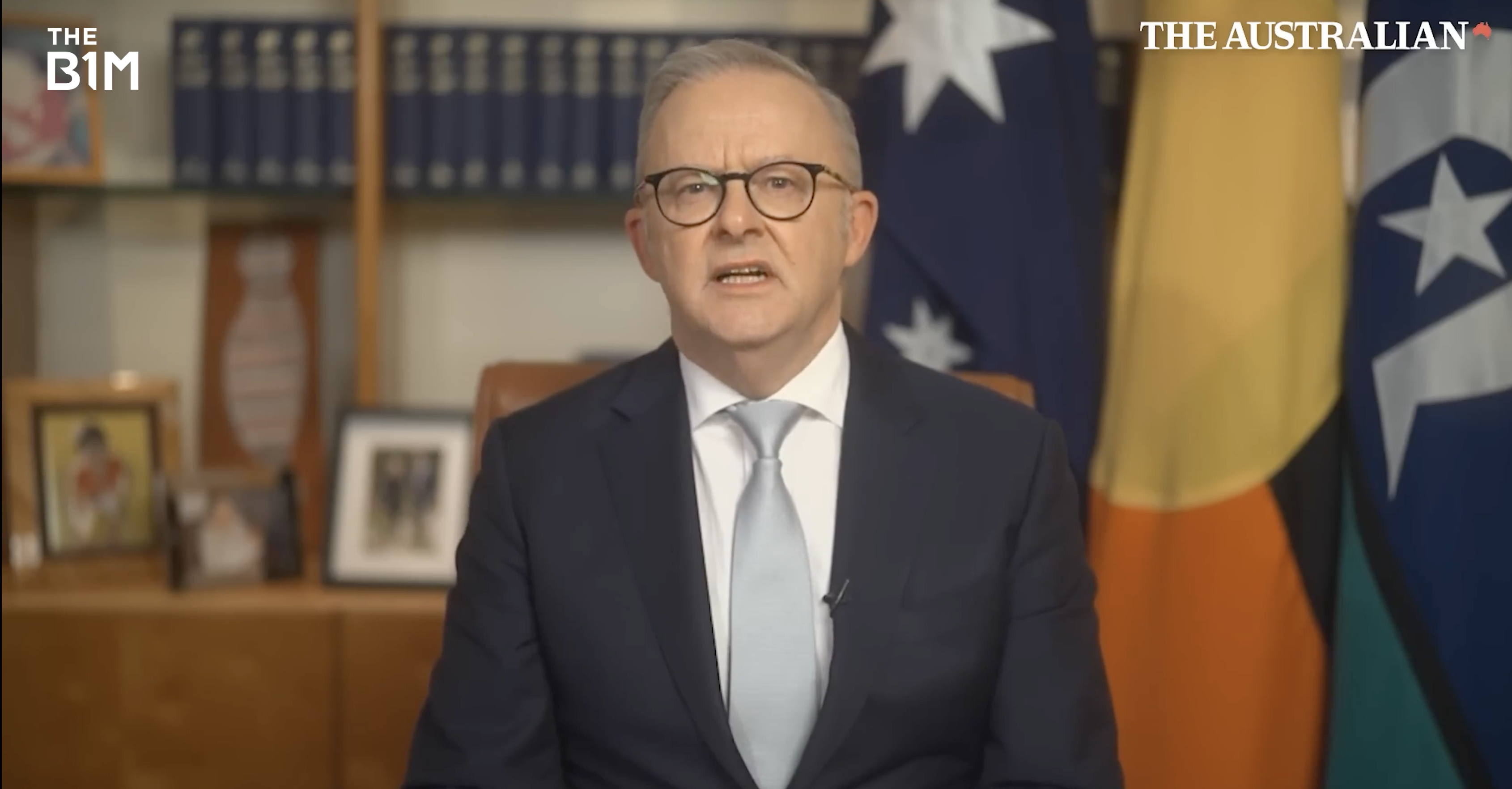
Above: Anthony Albanese, Prime Minister for Australia. Image: The Australian
Albanese’s new high-speed line is being sold as a way to help solve this massive problem.
Linking Newcastle to Sydney suddenly makes Newcastle a viable place to live even if you work in Sydney. And not just Newcastle, but all the regional centres the line will pass through.
Sydney itself is locked in geographically by mountains, the ocean, and national parks. This could bypass all of that.
The line could support the construction of up to 160,000 new homes according to the high-speed rail authority. It will create more than 99,000 new jobs and deliver a $250BN jolt to the economy over the next half a century.
Sydney and Newcastle are already pretty integrated right now, in terms of their economies and commuters who travel between the two. The line would cater to this and boost it.
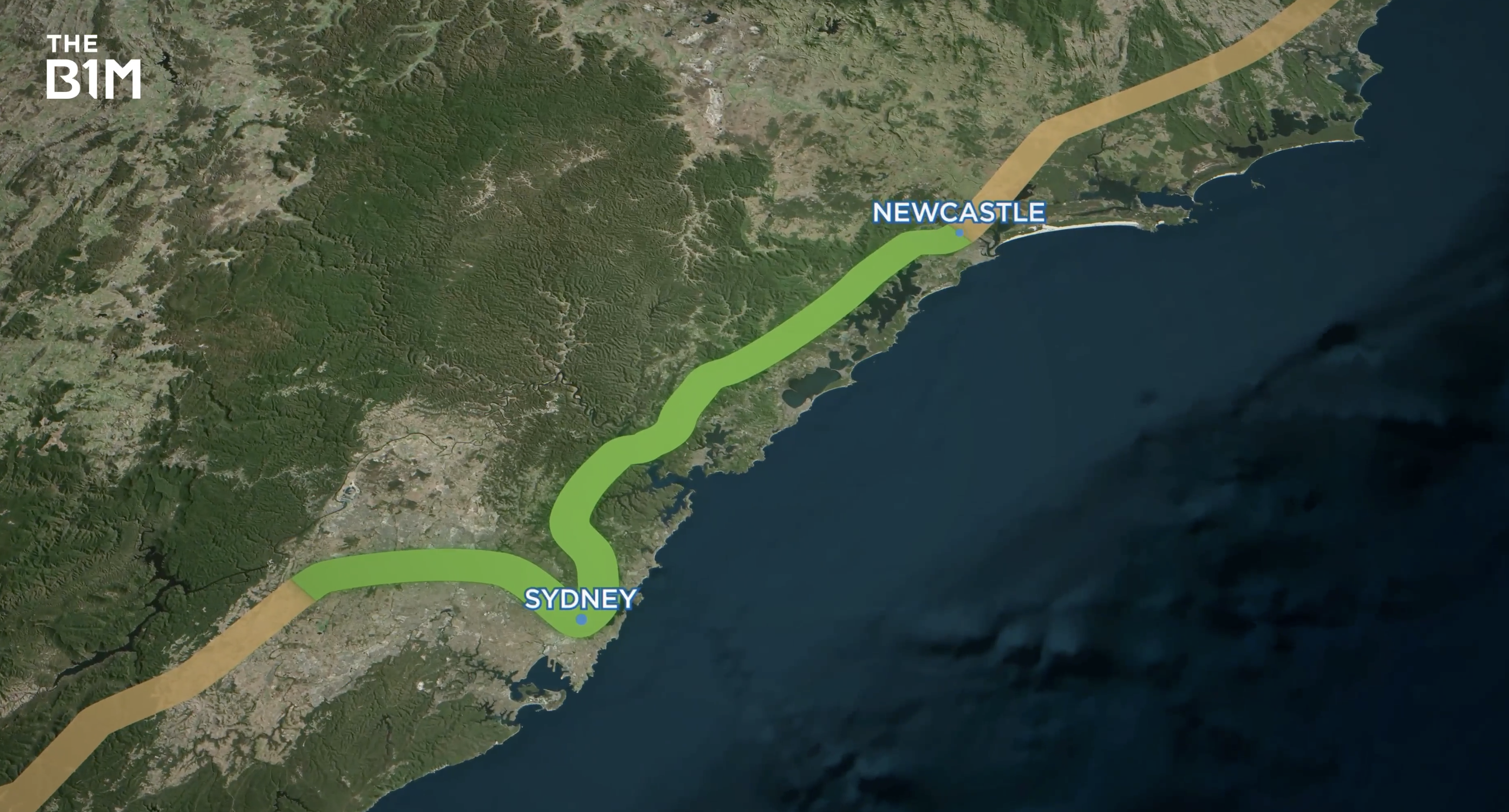
Above: The proposed route between Sydney and Newcastle.
The Newcastle line will eventually be extended to Brisbane. Then Sydney to Canberra, then Canberra to Melbourne. A rail trip from Sydney to Melbourne will be cut from 11 hours to just three. But this won’t be completed until about 2060.
In order for all of this to work it requires some phenomenally long-term thinking. And a lot of patience.
The Case Against HSR
Europe, China, Japan. These are all regions where high-speed rail has been a tremendous success. Europe and China are similar in size to Australia, and the eastern route from Brisbane to Melbourne would traverse a similar length to Japan.
It's not just the size of these places that make high speed rail viable, it's their density.
Take the city of Melbourne as an example and compare it to London. Melbourne is geographically three times the size of London, it is massively sprawling. However Melbourne has 5M people to Greater London’s 9M.
And once you leave Melbourne there aren’t a lot of people between there and Canberra.
High-speed rail is at its most efficient when it connects regions that are large and dense. But that’s just not how cities work in Australia. Fewer large cities along these proposed corridors means there is less demand. The increased distances between these cities also increases the cost of the railway.
Melbourne and Sydney more than justify high speed rail, but its these long regional areas in between that simply do not.
And the last fifty years are littered with failed proposals.
There were high profile ones in 1984, 1986, 1993 and of course the 2013 proposal that Albanese originally worked on. All of these have failed.
Right now, this is the closest the rail has ever come to actually being built in its entirety. And even if the consensus isn’t entirely there, Sydney to Newcastle will be the first route.
Because, either way, the population is growing. The current train network between the two cities is outdated and if it isn’t upgraded the government will be forced to widen the M1 Pacific Motorway - an option that carries its own expense.
The motorway isn’t a particularly elegant answer. It has seen increasing accidents thanks to higher congestion and is getting more and more expensive for commuters to use thanks to the fuel crisis.
The high-speed line is promising a solution to all of this.
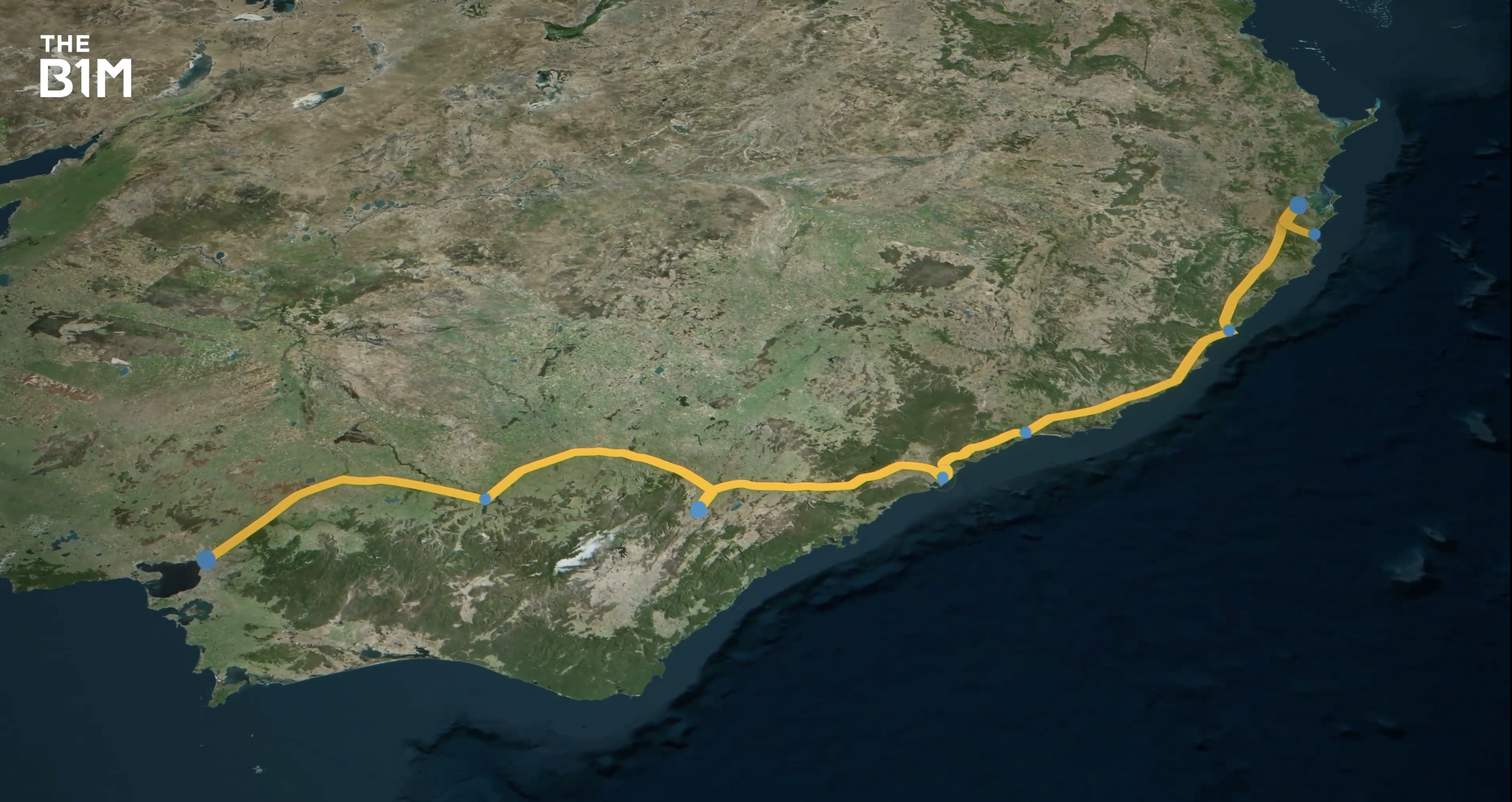
Above: The proposed route for Australia's High-Speed Rail.
While the timing does feel especially right for this project, ultimately its greatest challenge will be back with Albanese.
He’s made this project a cornerstone of his prime ministership. And recent Australian prime ministers are not known for their longevity.
With elections coming every three years and parties known to chuck their leader at the first sign of trouble, high-speed rail is in danger of being tossed out as well if Albanese is ousted.
They can't harm you, if they can't find you! Use code theb1m at the link below and get 60% off an annual plan: https://incogni.com/theb1m
Additional footage and images: The Australian, A Current Affair, ABC News (Australia), Disney, Buena Vista, 7News, Australia's High Speed Rail Authority, Warner Bros.
We welcome you sharing our content to inspire others, but please be nice and play by our rules.
Comments