
The £102BN Plan to Finish HS2
- Youtube Views 4 VIDEO VIEWS

28 September 2026
Video hosted by Fred Mills. This video contains paid promotion for Brilliant.
HS2 is a massive infrastructure project that set out to reshape the United Kingdom – connecting four of its largest cities and effectively reducing the gap between them.
But six years into construction, to say its has gone a little off the rails would be an understatement.
The budget has tripled — while the railway length has been cut by half. It’s set to complete at least a decade late, and to top it all off, it won’t actually be as high-speed as we thought.
Beyond what’s been reported in the media, though, much of what construction teams have been building is genuinely remarkable.
Four years after we first covered what is one of the world’s infrastructure projects, a couple of £102BN questions remain: why is it that we’re getting so much less, and it’s costing so much more, than what was in the original business case?
And now the people in charge have hatched a plan to fix it, could it actually work?
Fall from grace
In 1825, almost exactly 200 years ago, the first steam-powered passenger railway opened in the north east of England — an engineering feat that would be replicated all over the world. It’s a big part of why the United Kingdom claims the title ‘the home of rail’.
But nowadays, you’d be forgiven for forgetting such accolades, because the UK’s overground rail infrastructure isn’t exactly world-class.
The main lines are overcrowded, speeds fall behind those in other big nations, and as a result, journeys between the major cities can be frustratingly slow.
To tackle all this, and narrow the economic divide between London and the rest of the country, Britain is now attempting to build one of the world’s most ambitious high-speed railways.
Formally proposed in 2009, the 530km-long High Speed 2 — or HS2 for short – would connect the capital with other major cities in the midlands and the north, spreading wealth up the country.
Approved in 2012 at an estimated cost of £32.7BN, the plan had three stages. Phase 1 would link London to Birmingham, with 2a running up to Crewe and 2b spreading to Manchester and Leeds.
Trains could then carry on past these cities by joining the existing lines, travelling at regular speeds – meaning that people around the UK could have at least some part of their journey shortened.
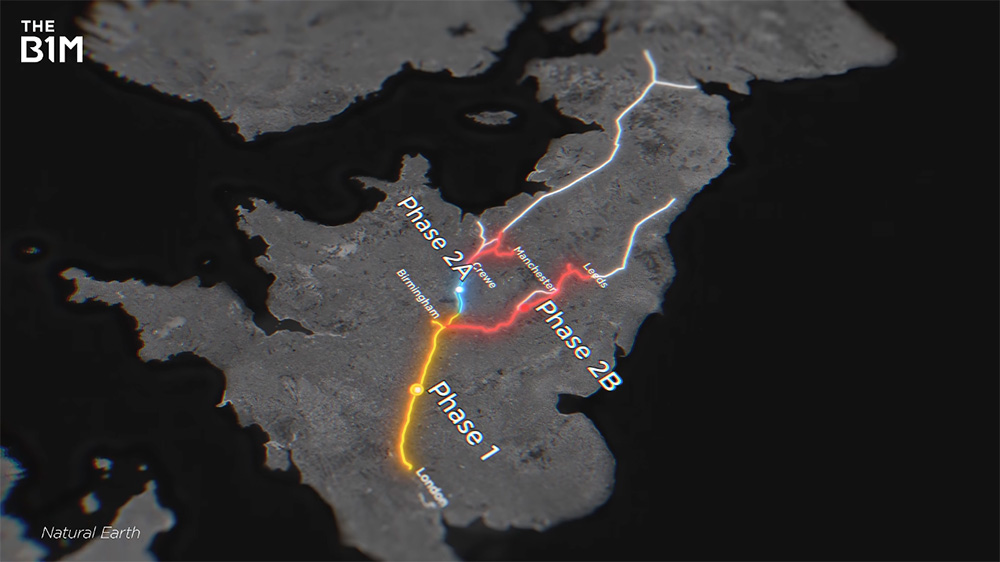
Above: The original HS2 route map, including connections to the current network (in white).
HS2 was designed to have a maximum operating speed of 225mph — faster than any other conventional railway on the planet.
That’s a big step up from the UK’s only current high-speed service, which is known as High Speed 1. That runs between London and the Channel Tunnel, and can only go 186mph.
Bringing fast passenger services onto a new dedicated railway would also improve capacity on the country’s West Coast Main Line. Right now, it’s overcrowded with long-distance, regional and freight trains.
To operate at their best high-speed trains need a track that’s as straight and flat as possible – but drawing a straight flat line up the UK isn’t easy.
As such, the majority of the Phase 1 route will be up on bridges and viaducts, or dug below ground in tunnels and cuttings, making it a huge feat of construction.
That approach has the added benefit of limiting the project’s environmental impact — teams here have arguably gone to greater lengths in that area than any other project of this kind.
All in, it meant that HS2 would cut journey times between Britain’s biggest cities by about 30 minutes — or around 40%. Phase 1 was set to open in 2026, with Phase 2 following in 2033.
The route
If you want to take a HS2 train from London to Birmingham once phase one of the railway is fully complete, your journey will start in Euston. The next stop then isn’t far — in an area to the west of the city called Old Oak Common.
The station there will be used by up to 250,000 passengers each day, and they’re building 14 platforms — six of them for high-speed trains.
Excavation of the 850-metre-long, 20-metre-deep station box, where those platforms will sit, finished in July 2024.
Visit the site today and you’ll see that the high-speed platforms — made from around 2,000 concrete slabs overall — have already come together.
Pouring concrete for that many slabs would require a huge amount of space, so they’re all being manufactured offsite, up in Nottinghamshire, before being sent down to London for installation.
The other eight platforms are for conventional services, including Heathrow Express trains — offering direct links to the airport — and the Elizabeth Line.
When they first arrive in London, passengers will have to change to get into the centre of the city — that’ll be the case for what is hoped to be an initial four-year period. But they’ll still be able to get to places like the West End in about ten minutes.
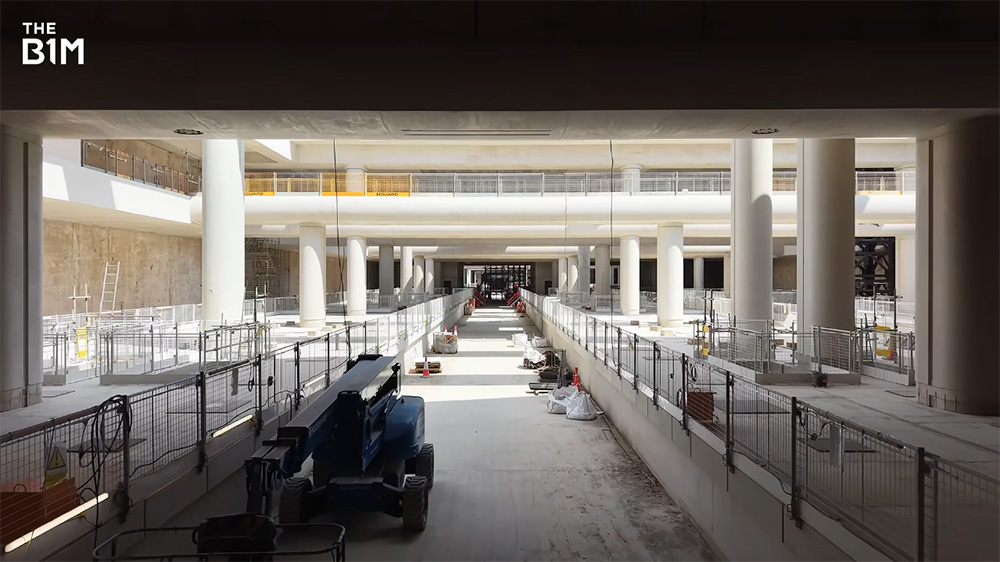
Above: Construction of the high-speed platforms at Old Oak Common has already completed.
Meanwhile, on the other side of the station, a shorter set of tunnels is being built that will link up to another major construction site just half a mile away.
It's called the Victoria Road Crossover Box and that name probably gives you a sense of what this massive space is going to be used for.
It's basically to help trains change track — if the tunnel is blocked for any reason — before heading on down the Northolt Tunnel and out of London, up to Birmingham.
The tunnels between the Northolt one and the Crossover Box were built using TBMs, but over at the other end of the junction, heading back to Old Oak Common, things look quite different.
Instead the team here has opted for the sprayed concrete lining (SCL) or SCL technique, where a type of shotcrete is sprayed on the walls before a layer of waterproofing lining, followed by the final concrete finish.
This is because the tunnel width varies here to allow the tracks to diverge and separate. Using a TBM would create a bigger area than you need, which is quite inefficient and introduce the risk of settlement.
As it turns out, having a giant open pit here, in between separate tunnelling projects, was pretty useful for launching and then removing parts of the TBM that dug the Northolt Tunnel.
Outside the city
But clearly not all the construction is happening down in London. There are dozens of sites between the capital and Birmingham, which all come together to form the railway.
Not long after passengers leave the Northolt Tunnel they’ll pass over the gigantic Colne Valley Viaduct.
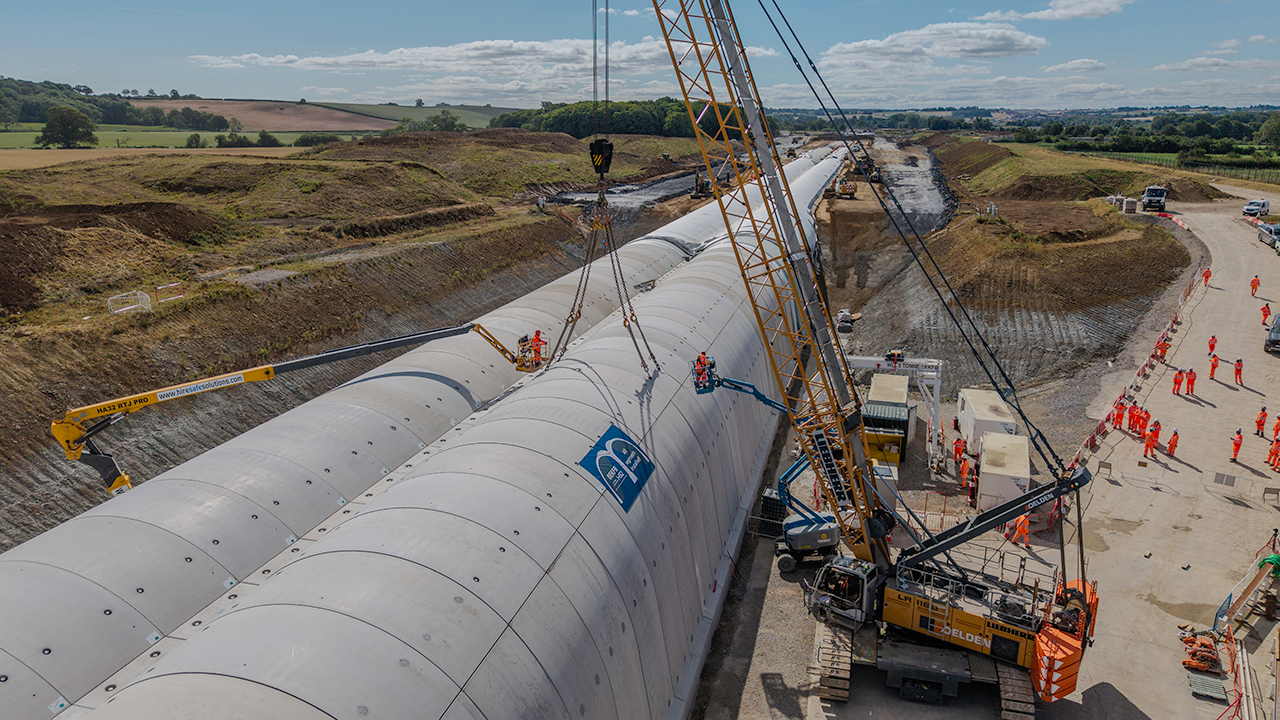
At 3.4km it’s the longest rail bridge in the UK, made from more than 1,000 precast concrete segments that were installed using a huge launching gantry. The main civil engineering phase here wrapped up in late 2025.
A few months later, in early 2026, construction finished on the next major highlight of the route — the Chiltern Tunnel.
Measuring 16km from end to end, it’s the longest tunnel on HS2 and helpfully put the railway beneath (rather than through) the Chiltern Hills — which is classed as an Area of Outstanding Natural Beauty.
Once through here, trains will cross a series of shorter viaducts over roads, waterways and other rail lines before they finally reach the end of the Phase 1 line — Birmingham Curzon Street.
Set to feature a 70-metre-wide arched roof, the last of the more than 2,000 foundation piles for this station were in place by March 2026, and the enormous platform deck is now taking shape.
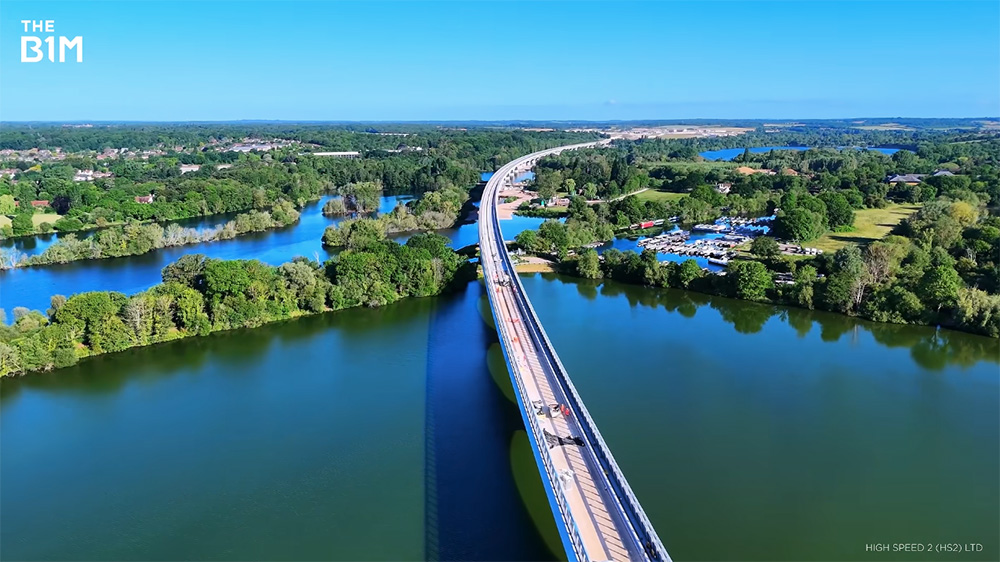
Above: The Colne Valley Viaduct.
All of that sounds great, but there's a problem. In fact, there are quite a few problems with this now infamous project.
When HS2 starts running in 2036 you're not going to be able to get on a train at Euston. Instead, your journey will start at Old Oak Common and then take you on up to Birmingham.
The hope is that an HS2 journey will eventually begin here at Euston by the early 2040s. The government paused construction work here, despite already doing quite a lot of enabling works, because they're now waiting for private developers to come in and fund the regeneration of this area, including a new station site.
In fact, there were issues from the very start. Not long after the route was announced, residents, local authorities and environmental groups rose up in opposition.
Many were against the plans for compulsory land purchases and digging up large parts of the countryside.
That led to some major design changes, including the construction of additional tunnels through the Chiltern Hills to limit the railway’s impact.
But it would prove to be costly. By 2013, costs had jumped to more than £50BN, including rolling stock.
Two years later, the figure rose again to over £55BN, after adjusting for inflation and adding in more mitigation measures.
In 2017, after Phase 1 gained full approval through Royal Assent, engineers predicted that tunnelling under London and constructing the viaducts would cost more than expected.
Then in 2019 came a government review which estimated that HS2’s price tag could soar north of £80BN.
2020 saw construction finally begin on Phase 1, despite the UK’s Public Accounts Committee stating that the project had gone “badly off course” that same year.
“I think the mistake they made right from the beginning was they rushed through the initial business case. So they were worried … that there'd be an election soon and therefore they had to try to get something through very quickly,” said transport writer and commentator Christian Wolmar. “And the business case was not particularly strong even then.”
The cutbacks
Next came the biggest bombshell so far. There would no longer be any new lines built north of Birmingham and Handsacre, where HS2 connects to the West Coast Main Line.
That Y-shaped network has been cut. It’s now more than 300km shorter than what it was supposed to be — less than half of the original route.
That’s despite hundreds of millions of pounds — all public money — being spent in these areas on land acquisition, designs and enabling works.
The trimming actually happened in two stages. First, the Leeds leg was axed in 2021, when Boris Johnson was Prime Minister. His government swapped it for a plan that focused on upgrading existing lines instead.
In 2023, then-prime minister Rishi Sunak chose to scrap the route to Manchester and invest the money in transport projects elsewhere across the north.
So now, all that remains is the original Phase 1. In a country of this geographic size, where the value proposition of high speed rail generally increases the further you go, the move made the entire business case feel off.
The downgrade that has seen previous governments accused of betraying large parts of the country. After all, this was a scheme that was pitched as a way to address the huge economic imbalances that exist between London and the north.
“This was originally going to be a useful railway, right? As it is, the bit that they contracted to finish is not an enormously useful line and so to make any sense of it they have to complete it to Manchester, complete it to Euston and we'll have to see how they find the money to do that,” commented Wolmar.
While HS2 trains will still be able to get to the north-west and Scotland by transferring onto the current railway past Birmingham, they won’t be high-speed.
They’ll be curtailed to the UK rail network’s maximum of 125mph. Although, because HS2 trains won’t be able to tilt, like the ones on the West Coast Main Line do, they may only be able to do 110mph in some areas.
Next, we come to the budget. Remember how it was set to cost a little over £32BN in the beginning? Well now, despite the scope of the project decreasing significantly, the figure could now go as high as £102.7BN.
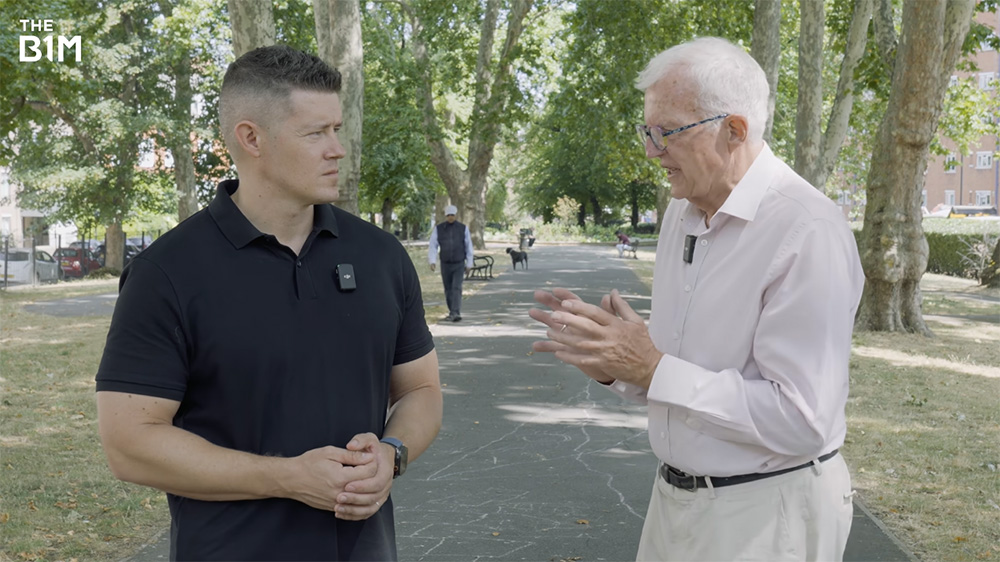
Above: The B1M's Fred Mills with Christian Wolmar.
As for why the route was cut so heavily, you won’t be surprised to hear that it was mostly down to the finances.
There hasn’t just been soaring inflation, which only accounts for a third of the increase. It turns out the estimates that were given at the start of the project were a bit optimistic.
No proper ground investigations, detailed designs or land purchases were carried out before the green light was given in 2010.
“I’ve been involved in big projects all my life, and there is a sequence that needs to be followed. And unfortunately, for various reasons, we were slightly out of sequence. The project started a little bit too soon, so the design wasn't developed,” said HS2’s construction delivery director Alan Morris.
“And what that does is carry on problems all the way forward, of course. So, had the design been more mature, had we got consents and approvals, the start date would have been later. But there's a lot of effort required to go through that, which would have taken time.”
This rush to get started would’ve made it difficult to know for sure exactly how much everything was going to cost overall.
Especially when this scheme was taking extra care to ensure it doesn’t interfere with the lives of people — and other creatures — living along its route.
This is bat country
In one stretch of woodland, which the railway passes right next to, there are 13 species of bats. And because these furry little guys are legally protected in the UK, HS2 had to do something to stop them getting hit by high-speed trains.
The result is a one-kilometre-long shield over the railway, made up of concrete arches and steel mesh. It allows the bats to fly over the line without hitting turbulence, or worse, getting sucked into a train’s slipstream.
A nice idea perhaps, especially when a solution had to be found, but this one structure is costing more than £100M.
To fully understand all these cost increases, there’s one other thing we need to mention. Many of the construction contracts on HS2 were agreed on a ‘defined cost’ or ‘cost-plus’ basis instead of fixed-price, which tends to be the norm across major projects.
That means contractors on HS2 have been paid back any allowable costs they incur, plus an additional fee for profit. Oh, and the bill for any unforeseen spending was mostly picked up by the client, which in this case is effectively the UK taxpayer.
Contractors are often expected to either share or completely absorb unexpected cost increases on major infrastructure projects. Maybe pay a penalty if they’re lucky. But on HS2, there has been much less of an incentive to reign in the spending.
In late 2023, HS2’s former executive chairman said that 89% of the cost increases for the first three years of the construction were to do with these contracts.
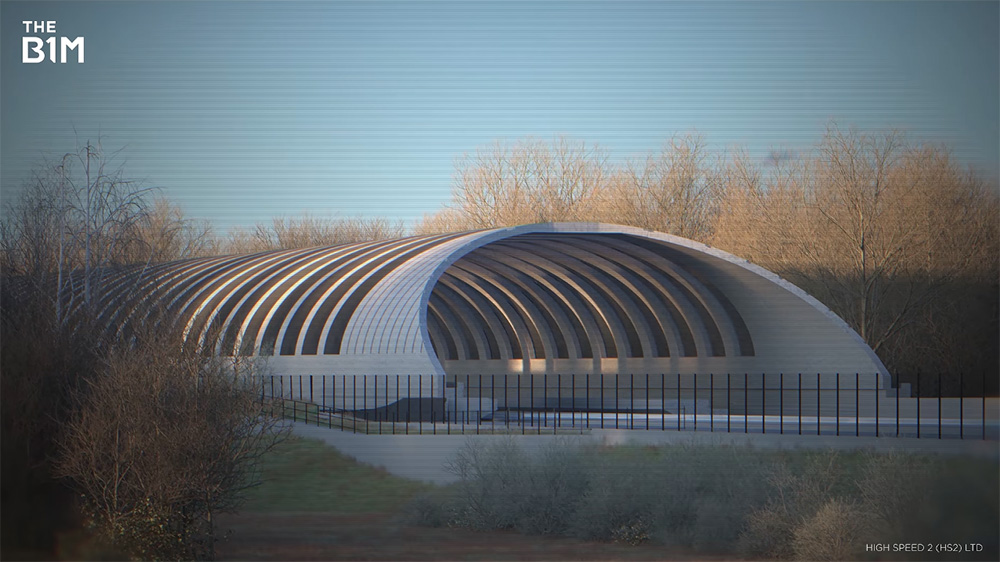
Above: The bat protection structure at Sheephouse Wood.
It’s obvious that some action was required to ensure HS2 gets back on track, and that’s exactly what’s been happening.
A new CEO was appointed in 2024 with the aim of turning this project around and getting it finished with as few remaining problems as possible.
And there were reasons to be hopeful — because the man they picked, Mark Wild, has done this before. Prior to HS2, he held the same position on London’s Crossrail project, which became the Elizabeth Line.
It too was heavily delayed and over budget, and yet it’s gone on to become the UK’s busiest rail service, and is widely considered a success.
Morris joined the HS2 team shortly afterwards, and to their credit, there has been some noticeable progress since they were appointed.
“Certainly in this last 18 months we have improved things dramatically. Last year, for instance, we had great production everywhere. We had a huge number of big ticket items that were met,” he said.
“So an awful lot of the milestones and a lot of the productivity figures were vastly better last year than they were the previous year.”
More recently, in 2026, another big announcement was made by the UK’s Transport Secretary Heidi Alexander. After a review of what’s been delivered so far, and a realisation that it would cost almost as much to cancel the project as to continue it, the entire programme has been given a full reset.
That’s another way of saying a complete restructure, aimed at getting those costs under control once and for all, without further delays.
Repairing the damage
The UK’s Minister of State for Rail, Lord Peter Hendy, was tasked with executing the reset alongside Heidi Alexander and Mark Wild.
“We've had to start absolutely from square one. I've never seen a project in such a bad state as this when we came here, and Heidi the Secretary of State and I have worked really hard to get a complete reset because frankly it was the only way of ever being sure that it could be delivered at any cost, and on any time scale,” said Hendy.
That meant making some tough decisions, and there was one in particular that stood out when the reset was confirmed.
It’s to do with that top speed, which has been reduced to 200mph. It’s still fast — the same as Japan’s Shinkansen trains — and yet HS2 was supposed to be record-breaking.
But by making them slightly slower, the UK government reckons it could save up to £2.5BN in costs, and cut at least a year off the timescale.
Journey times aren’t significantly impacted either. HS2 says it will only add three minutes to a trip between London and Birmingham.
Another positive step has been the renegotiation of some contracts so they reward companies for working efficiently and controlling costs, with new deals agreed already.
Of course, all of this would’ve made even more of a difference if it was still going all the way to Manchester. That doesn’t matter though, because it’s never going to happen now. Or is it?
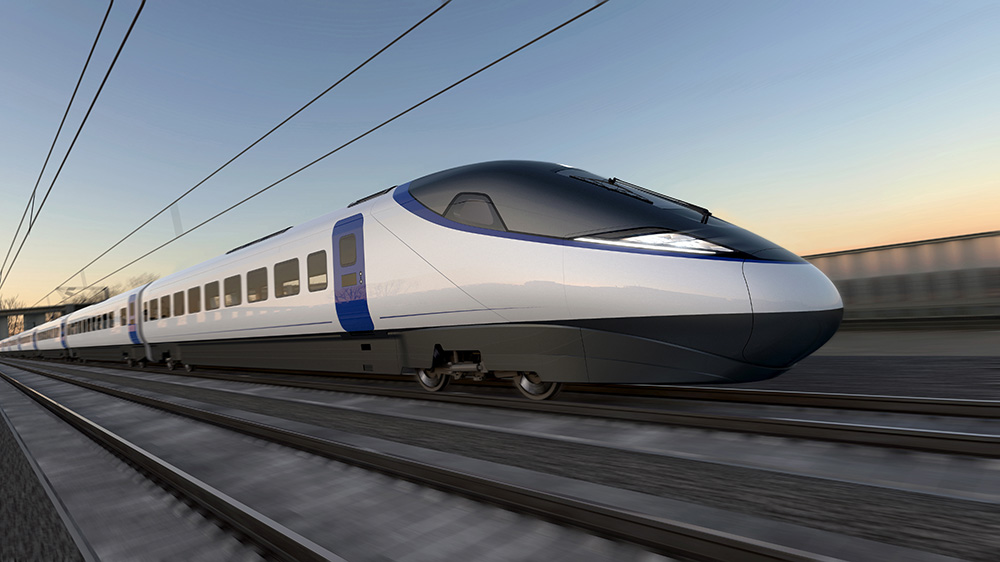
Above: HS2 trains will now top out at 200mph. Image courtesy of High Speed 2 (HS2) Ltd.
The idea might not be completely dead after all. Andy Burnham, the former mayor of Greater Manchester, said that if he became UK prime minister, he would revive the cancelled line.
And he made that claim just a month before he actually became the UK’s new prime minister.
Burnham has suggested doing something similar to what happened on Crossrail — raise some of the funds by taxing the property developers and businesses who would benefit from HS2. Like if they were situated near one of the new stations.
This would mean not all of the money coming from the public purse, making it — in theory — more likely to get funded. Resurrecting that phase would still be a tough ask, though.
When it was axed, the government at the time said the decision had saved £36BN, so bringing it back — even under a public-private structure — will be expensive.
And that’s not the only sticking point here. The Manchester segment never obtained full parliamentary approval, so there would need to be another painful land acquisition process … which would not be straightforward.
“I think it's right to contemplate what needs to be done north of Handsacre. Maybe it doesn't all need to be done at once, maybe it needs to be done in sections,” said Hendy.
“We certainly need to finish the railway that we're building now, but it is right to think about that and indeed when the current prime minister was the mayor of Manchester he made it very clear that amongst the things that he really wanted to do that was one of them.”
It’s perhaps too early to judge whether this reset has had the desired effect. But there’s little doubt something drastic had to be done to get this project fully under control, and eventually over the line, without further setbacks.
Even now, after so much has happened, there’s still a long way to go before we’ll know for sure if that goal has been met.
Click here to get started with Brilliant’s tutor for free. You can upgrade to Premium to unlock all courses and right now, The B1M viewers can save 20% off an annual subscription.
Additional footage and images: High Speed 2 (HS2) Ltd, BBC, Birmingham TV, Channel 4 News, Crossrail Ltd, EDF Energy, 5 News, Gilles San Martin, Good Morning Britain, ITV News, Sky News, 10 Downing Street, The Guardian, The Straits Times and Times Radio.
We welcome you sharing our content to inspire others, but please be nice and play by our rules.
Comments