
Vietnam’s $67BN Gamble on High-Speed Rail
- Youtube Views 1,669,996 VIDEO VIEWS

08 April 2026
Video narrated and hosted by Fred Mills. This video contains paid promotion for Rayon Design.
Vietnam is spending 17 percent of its entire GDP on one enormous megaproject. It’s quite frankly hard to imagine any other country in the world doing that. But Vietnam is in a pretty good place right now. It’s one of the fastest growing economies in Asia, and you can see it. They’re in the midst of a building spree. New airports, new mega-airports, new stadiums, new roads. And the World Bank forecasts this growth to just keep… well, growing.
But it hasn’t always been like this, and this remarkable reinvention could be more fragile than anyone would like to lead on. Enter: the $67BN North-South Railway. A gigantic high-speed line that will run up the entire spine of the country, all the way from Hanoi to Ho Chi Minh City. It could quite literally be the megaproject that will make… or break Vietnam.
It's big
HS2, the UK’s troubled High-Speed Rail project, is one of the most expensive rail projects in the world. By some estimates the cost of constructing it amounts to roughly 2.5 to 3 percent of the UK’s entire annual GDP. While China’s Three Gorges Dam, a megaproject so enormous it actually slowed the rotation of the Earth, cost approximately less than half a percentage of their GDP. To look closer to home, Indonesia spent roughly 0.55% of its GDP on a high speed rail line from Jakarta to Bandung. We’re telling you this to really put into perspective how enormous 17% is for Vietnam. It is the most expensive infrastructure project in the country’s history. Period.
“The critical question isn't even whether they can afford it. It's whether they can't afford not to,” explains Dr Scott McDonald, Lecturer, Logistics and Supply Chain Management at RMIT University. We talked to Dr Scott McDonald, a lecturer at RMIT Vietnam based in Ho Chi Minh City. He explained to us that Vietnam is at a crucial tipping point.
“It's constraining the economic growth in the country by not having a good rail system in place.”
So the solution: to build an entirely new 1,541 kilometre long rail line.
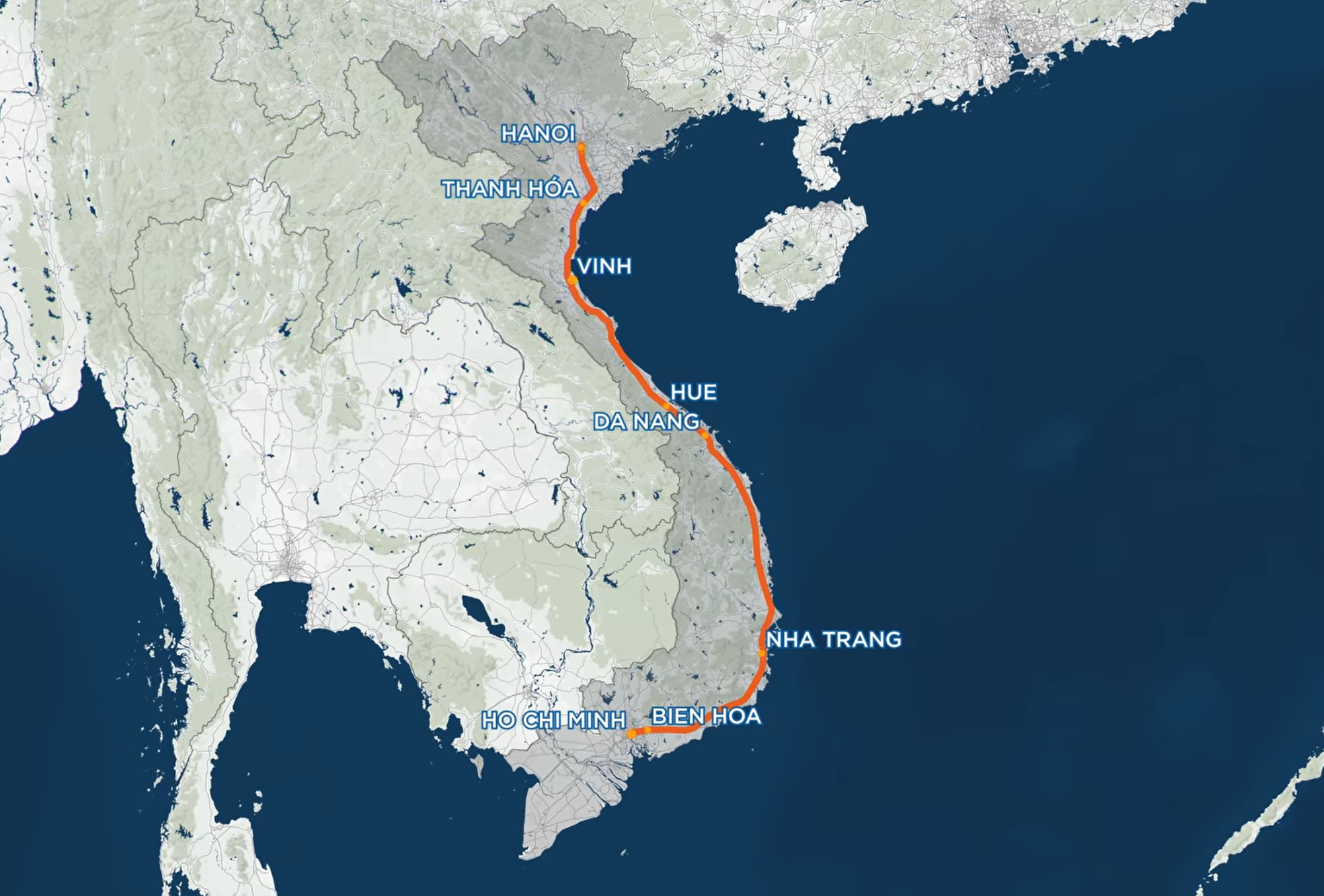
Above: The planned HSR route.
But these are just numbers on a screen. In order for you to get a sense of this project, you have to reminagine how you see Vietnam. Thanks to the Mercator projection most people have a pretty incorrect idea of the true size of Vietnam. If we placed the country over the US it would reach from New York to Miami. Over the UK it would reach from Scotland to Spain. This country is long. And building a rail up and down it is an enormous task. Just ask the French. They spent about 50 years building roughly 2,600 kilometers of rail throughout Vietnam.
“Originally built during the French occupation back in the 1800s, late 1800s. And they've continued the same system since then,” Dr Scott McDonald told us. “They've upgraded from steam engines to diesel engines, but the same one meter gage track has been used since then.
“Most countries using their rail system as kind of the backbone for transportation, in this country, it's maybe 6% of freight actually moves via the rail because it's so slow. It takes 30 plus, sometimes 35 hours just to get from Ho Chi Minh City up to Hanoi.
“The rail system is pretty much used for tourists.”
This rail is part of the bottleneck that’s choking the country. In many places it's just a single line. And that line is old and in constant need of repairs and maintenance. Thanks to Vietnam’s geography it’s also often extremely difficult to get that maintenance there in time.
A game-changer
This new project would add 1,541 kilometres of high-speed track, from Hanoi in the north all the way to Ho Chi Minh City in the south. Each of these cities, along with Da Nang, are crucial epicenters for the country. 10M of Vietnam’s 100M people live in Ho Chi Minh. It’s the country’s largest city and its economic powerhouse. It’s also set to grow… by a lot, with estimates adding another 4M people in the next few years. Hanoi comes in at a close second with more than 8M people. Right now a rail journey between those two cities would take at least thirty hours. This new high-speed line would cut that down to just six.
Apart from improving transport between these two hubs, a high-speed line would also connect rural communities. Suddenly trade, ideas, and people could all be shared on a massive scale. It's hard to overstate how great of a ripple effect this would have on the economy and the people.
To understand just how transformative high speed rail can be, we have to look to where it came from. You probably know it by a different name. Shinkansen, or in English: the bullet train.
How the bullet train changed Japan
Japan’s high-speed rail story began in the early 1960s, at a moment when the country was rebuilding itself from the destruction of World War II. With its economy growing at unprecedented speed and its cities straining under the pressure of overcrowded rail lines, Japan made a radical decision: instead of upgrading existing tracks, it would build an entirely new railway, designed from the ground up for speed.
The result was the Shinkansen. Opened in 1964, just in time for the Tokyo Olympics. It was the world’s first true high-speed rail line connecting Tokyo and Osaka and cutting journey times almost in half. But, at the time, it was an enormous financial risk. Costs ballooned, the project faced political opposition, and critics questioned whether passengers would even come.
They were wrong. The Shinkansen proved not just to be fast, but reliable, safe and completely transformative. It reshaped Japan’s cities, opened up rural areas, and set the template for every high-speed rail network that followed. So what made this radical new line so fast?
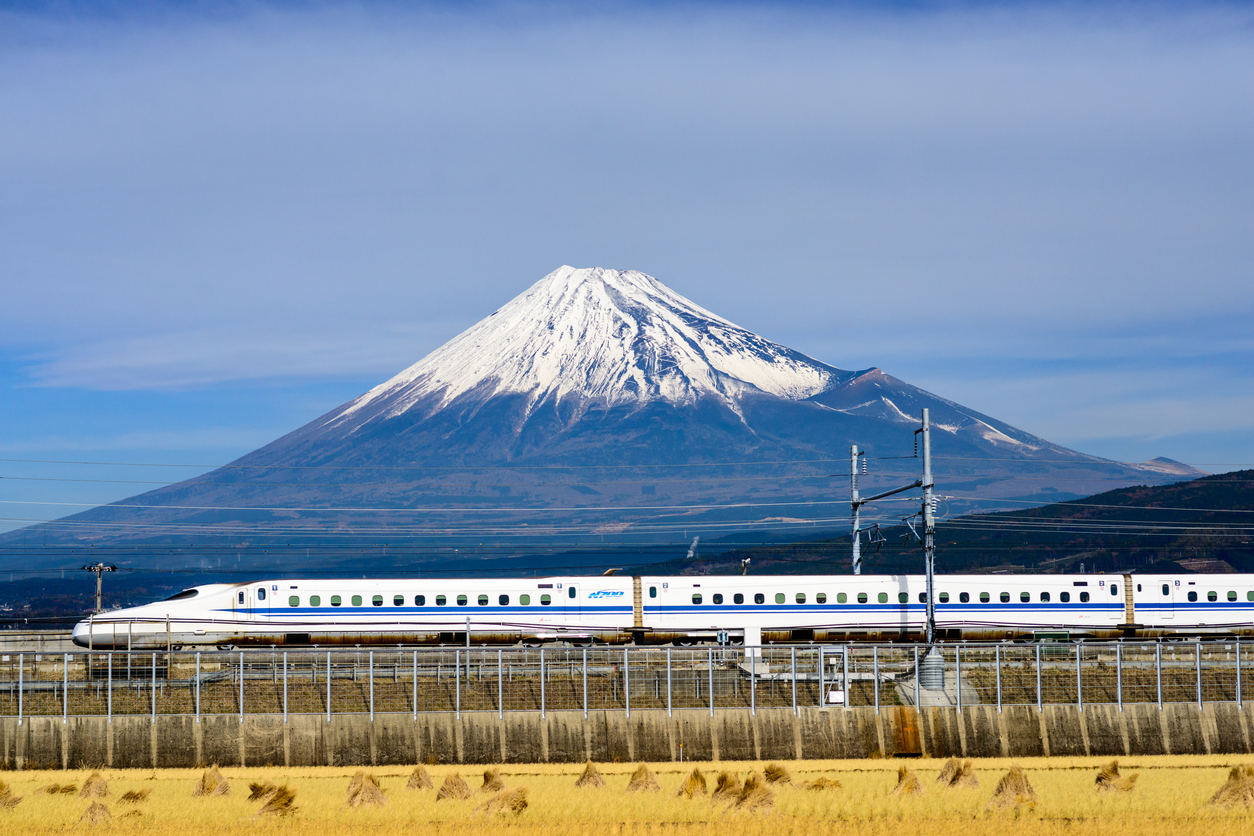
Above: The bullet train changed Japan forever.
Well, first off, by building an entirely new line they separated freight from passenger trains, which had previously shared the same track and congested the route. On top of that, this new route was designed to be as straight as possible, allowing the trains to go fast. Really, really fast. At the time it was about 200 kilometres an hour.
The new line used a wider gauge: 4 feet 8 inches instead of the 3 feet 6 inches of traditional rail. This improved stability at higher speeds, reduced sway and allowed for more powerful train designs. Over time, these designs steadily become more aerodynamic, with smooth car bodies and rounded noses. The aim was to reduce overall air resistance. And they’ve only got better at this over time.
The original line reportedly covered its construction cost within 7 years because of the incredible demand for tickets. In 1964, 23M passengers used the bullet train annually. Today that number is more than 400M. It helped spur Japan’s postwar “economic miracle” boosting the country to become, at its height, the second largest economy in the world.
Regions connected to the Shinkansen lines experienced a 20 percent increase in productivity. While the now interconnected Tokyo-Osaka “mega-region” has become the one of the largest economic corridors in the world, accounting for 40 percent of Japan’s GDP.
Enter: China
Now, China took this concept and did what China does best. Scaled it… massively. In less than a decade they built a high-speed rail network larger than any other country in the entire world. More than two-thirds of the world’s high-speed rail now lies in China. This has drastically shortened travel times, improved passenger safety, reduced carbon emissions, and facilitated labour mobility.
Those from provincial or less developed areas now have access to the country’s booming metropolises. Studies also found that tourism increased 20 percent in provinces connected by HSR, and generated 25 percent more revenue as a direct result. In 2024, China's national railway handled a record 4BN passenger trips, with daily traffic reaching a high of nearly 21M.
That’s the equivalent of moving one third of the United Kingdom every. single. day.
The rail has effectively acted as a foundation, connecting the country on a truly unprecedented scale and facilitating enormous economic growth as a direct result. You can see why Vietnam would want to invest in this kind of infrastructure.
The problem with Vietnam
But building high-speed rail isn’t as simple as building ordinary rail. In order for it to be as effective as possible the line has to be as straight as possible. This is basic physics. At low speeds, tight curves are fine. At high speeds, the same curve becomes dangerous or wildly uncomfortable. The faster you go, the more force you feel at every turn.
So, immediately we have a problem. Once we leave the urban areas of Ho Chi Minh City and Hanoi and approach central Vietnam things get tricky, to say the least. The Annamite Mountains run close to the coast and essentially block the path of any future track. Vietnam would have to bore through it. And that won’t be easy. The range is a fractured landscape of limestone mountains and unstable karst geology where tunnelling carries a constant risk of collapse.
“Vietnam only has roughly about 20% flat land. The rest is all, you know mountains and valleys and rivers. It's over 2,000 rivers between here and Hanoi that have to be crossed," said Dr Scott McDonald.
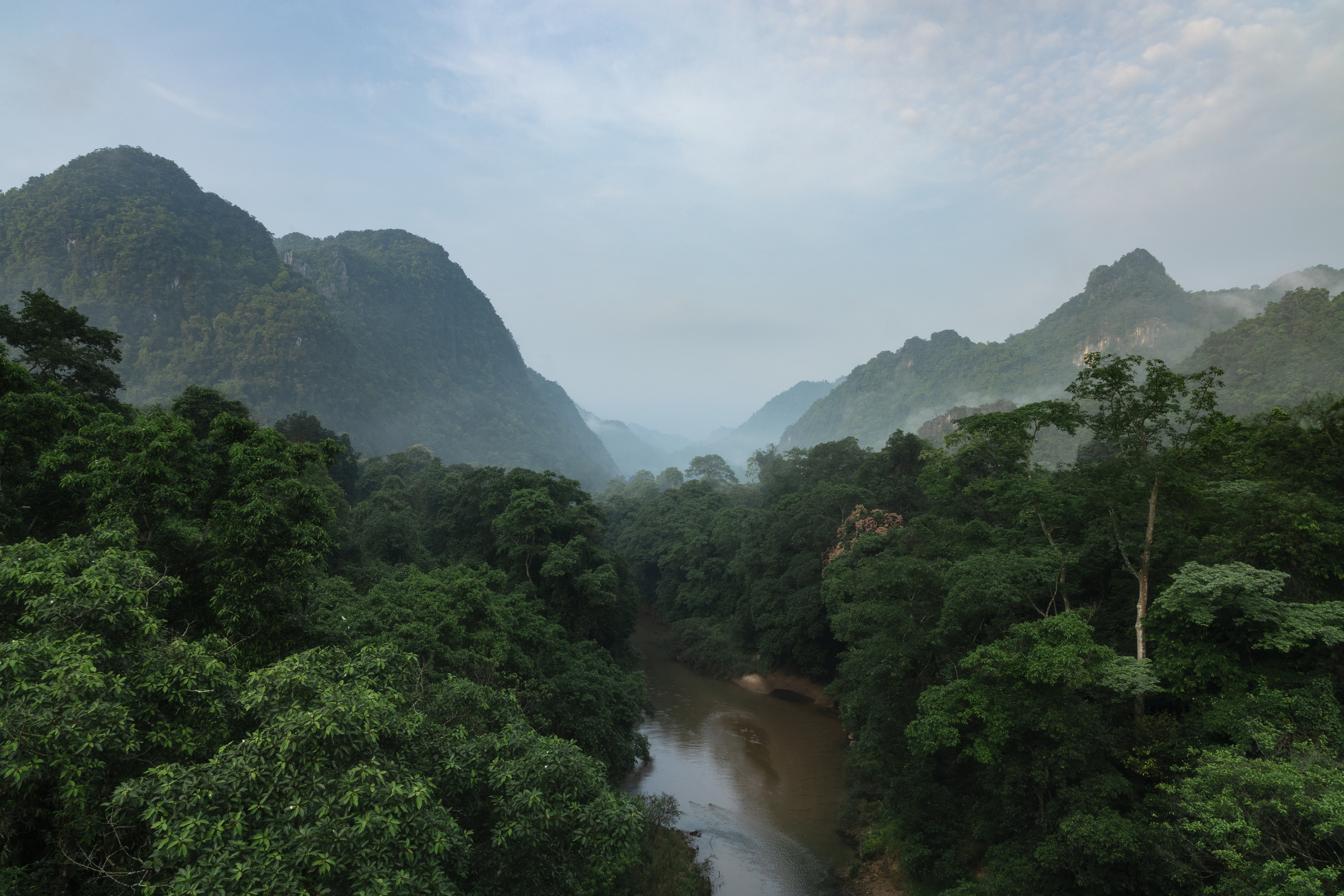
Above: Much of Vietnam is mountainous and full of jungle.
Further south, the line must cross the Mekong Delta, a vast floodplain of soft, waterlogged soils that behave less like solid ground and more like slurry. Extensive ground treatment and continual maintenance would be required to keep any high-speed track stable. 10% of the route will be tunneled, but 60% of it will have to be built on viaducts and bridges. This is far more than is typically seen on a standard route and is part of what will make this project so incredibly expensive.
“Also with flood risks, you know, Vietnam is very prone, especially lately, with climate change and whatnot to typhoons and landslides and heavy rains and everything else,” said Dr Scott McDonald. “And they tend to take out bridges and things like this. So again, that the viaduct is one way to kind of raise above that flood risk as well as preserving agricultural land.
“Now electrification is definitely another challenge because the current system is all run by diesel locomotives. And so there's no electrification anywhere along the route. So that's going to have to also be built from the ground up, which again is more costs involved in that too.”
Step 1. Get the land
And before all of this there is one very crucial thing Vietnam needs first. Land. This will be the largest land clearance exercise in the country’s history. And it will have to be done through some of Vietnam’s most densely populated urban areas, many of which are characterised by informal developments.
This has already raised concerns. While the Vietnamese government holds sweeping powers to acquire land for major infrastructure projects, compensation is frequently set below market value, making displacement a politically sensitive issue. Unlike most countries, all land in Vietnam is formally owned by the state, with individuals and businesses granted Land Use Rights rather than freehold ownership. In theory, this simplifies large-scale acquisition and removes many of the legal obstacles that can stall rail projects elsewhere.
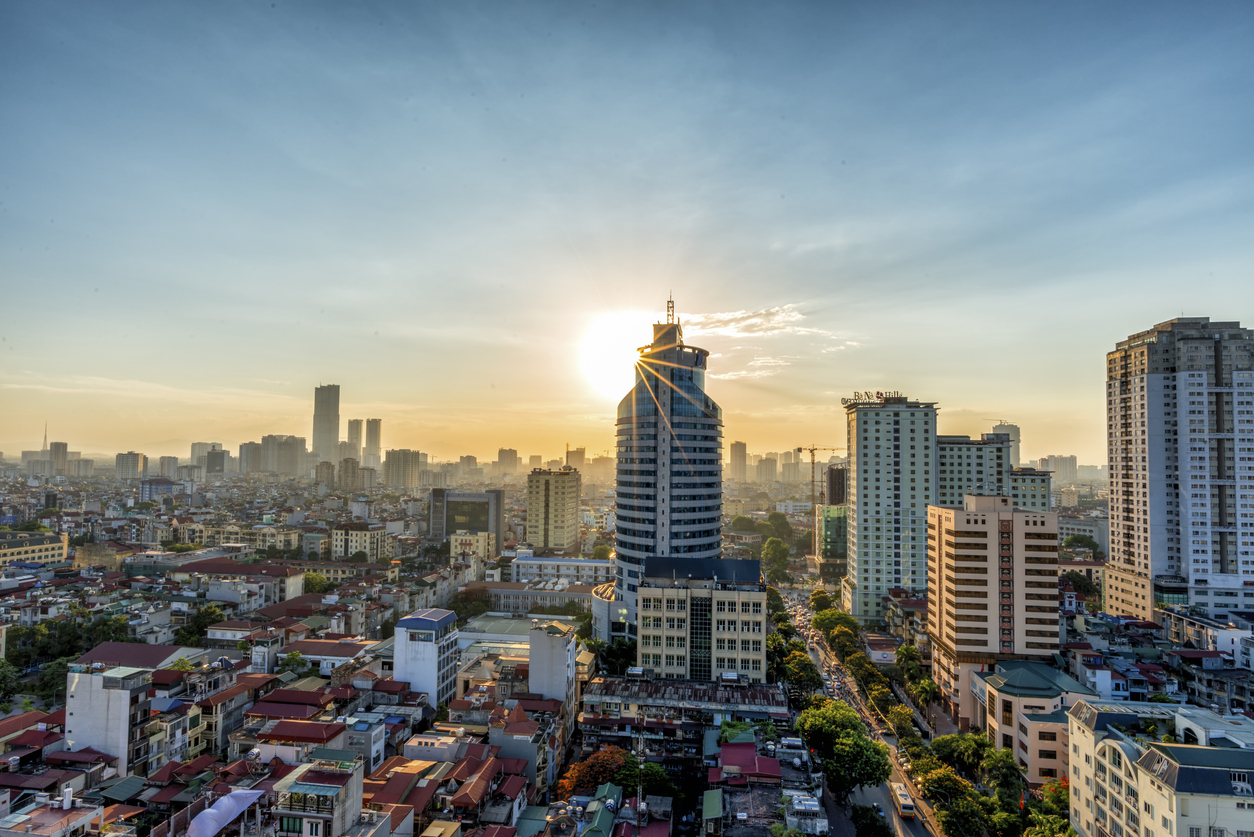
Above: The line will connect Vietnam's massive cities to rural areas.
“I've never had much experience in a country like this where it has the one party system and I, in my mind, I always thought that, hey, the one party is the law, right? They do whatever they want to do. But that's not quite the case. They still have to compensate.”
In practice, it shifts the challenge from the courts to the state. It will demand unprecedented levels of coordination to relocate communities and keep the project moving. But those using the land have every right to sue the government, if they wish. This will be far from an easy process.
Step 2. Get the people
There’s another key factor in this: Vietnam has never done anything like this before. So, naturally, they will have to import a lot of talent to get any of this built. The country has limited experience even with modern electrified double-track rail, and has struggled with just metro projects. In fact, these metro projects have acted as a sort of testing ground for high-speed rail.
“But the other skill gap area is operational. Train drivers, maintenance technicians, safety inspectors," said Dr Scott McDonald. “This requires, you know, a culture of precision and safety that has to be developed from scratch.
“The Ministry of Transport even warned that without early workforce development plans, it's, you know, Vietnam can have no choice, but to depend on foreign experts.”
Constructing the line will, either way, require some kind of foreign investment.
“The key question really isn't which countries trains Vietnam is going to buy, but which partner is best going to facilitate that genuine technology transfer. Vietnam doesn't want to just purchase trains, it wants to eventually manufacture and maintain them domestically.”
The risks surrounding this entire project are, quite frankly, enormous.
Spending this much on one infrastructure project could crowd out spending in other areas, such as healthcare, education, and improving regional rail that’s already there. It’s also unclear as to whether people will actually use this. Vietnam has frequent cheap domestic flights. The flight corridor between Hanoi and Ho Chi Minh city is one of the busiest in the world.
“11 million people travel annually. Now, if the high speed rail can capture even 50% of that market,” said Dr Scott McDonald. “The government has already you know stated that they're going to cap the fares at 75 percent of airline tickets.”
This project has been debated for 15 years already. But… right now could be the perfect time to pull it off.
“The economic impact is going to extend well beyond just transportation. Again, using China as an example, their HSR shaped real estate markets, labor mobility, business location decisions, all within a two- to three-year period. So Vietnam needs to prepare for similar transformative effects.
“High speed rail is is potentially game-changing.”
Vietnam is on a roll, they have a good hand and they’re playing it well. But with a gamble as big as this, they really need it to pay off.
Additional footage and images: HS2 and True Size of.
We welcome you sharing our content to inspire others, but please be nice and play by our rules.
Comments