
Inside Berlin’s Abandoned Cold War Airport
- Youtube Views 1,016,541 VIDEO VIEWS

18 May 2026
Video hosted and narrated by Fred Mills. This video contains paid promotion for AMD Threadripper Pro.
Tegel Airport is now closed off to the public. This massive airport was built in just 90 days. Not only by a crack team of engineers, but by a ragtag group of everyday Berliners. Average people who were caught in the first crisis of a war that would define the latter half of the 20th century. It saved countless lives. It saved an entire city.
Today, it’s undergoing a major renovation after being essentially abandoned for several years. But nothing about this airport is simple. This is the story of Berlin’s abandoned Cold War Airport.
The Berlin Airlift
The story of its construction is quite frankly remarkable, but it doesn’t begin in the 70s. Its origin traces back to the beginning of the Cold War itself. At the end of WW2. The story of its construction is quite frankly remarkable, but it doesn’t begin in the 70s. Its origin traces back to the beginning of the Cold War itself. At the end of WW2.
At the end of the Second World War, Berlin was heavily divided. Like the rest of Germany, the city was sliced up for the victors of the war. There was the American section, along with the French, the British and the Soviet.
Over time this simply became East and West. The Western Allies aimed to rebuild Germany’s economy. But the Soviet Union feared a strong, capitalist state on its border. In June 1948, those tensions finally boiled over. The Soviets blockaded Berlin, sealing all roads, rail, and canal routes into the West. This cut off 2.5M people from essentials like food and fuel. The goal? Force the Allies out of the city entirely and surrender all of Berlin to the Soviets.
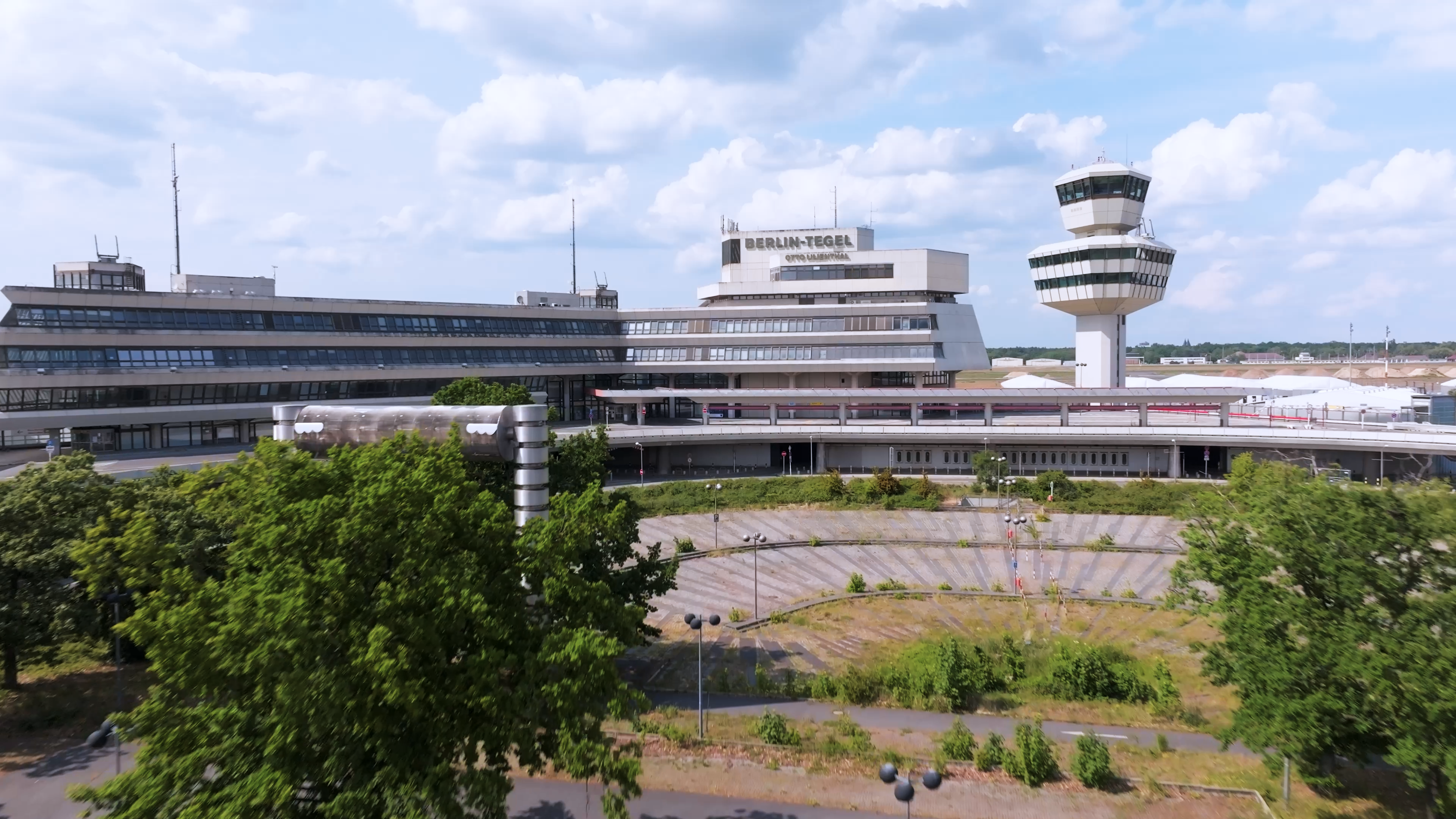
Above: Tegel Airport and its control tower as it stands now.
What followed was one of the largest humanitarian and logistical operations in history: the Berlin Airlift. For eleven months, the skies above Berlin were filled with aircraft delivering urgent supplies. One plane landed every 90 seconds at Tempelhof and Gatow airports. Over 200,000 flights delivered 2.3M tons of food, coal, fuel, and medicine.
This operation was keeping an entire city alive. But there was one huge problem: the airports could not keep up.Tempelhof, in the American sector, and Gatow, in the British sector, were never designed for the relentless pace of the airlift.
The Allies began flying in larger Douglas C-54 Skymasters, but these planes needed runways longer than Tempelhof could offer. And, while Gatow could accommodate these planes, it could not handle the sheer number of them. Every delay risked hunger, freezing temperatures, and civil unrest in West Berlin. They needed another airport. Fast.
The solution was a former artillery firing range in the French-controlled northwestern sector of the city. It was flat, open, and perfect for runways. French military engineers led construction, but it was the German workforce who made it happen. More than 19,000 people, many of them volunteers, worked day and night in rotating shifts.
Civilians, local businesses, even students pitched in. Bulldozers, cranes, concrete mixers, and sheer manual labour pushed the project forward. At first, this airport had no terminal, no hangars, and barely any infrastructure at all. But it worked.
Tegel levels up
By the 1960s, Tegel began handling civilian flights. But West Berlin was still locked inside Cold War aviation rules. Only airlines from the Allied powers could fly there. A modern passenger terminal was desperately needed. And so Terminal A was dreamed up.
Instead of hiring more established architects, the city turned to Meinhard von Gerkan and Volkwin Marg, neither of whom had yet to turn 30 years old. Their vision was a bold, modernist, youthful statement in a city still cut off by the Iron Curtain.
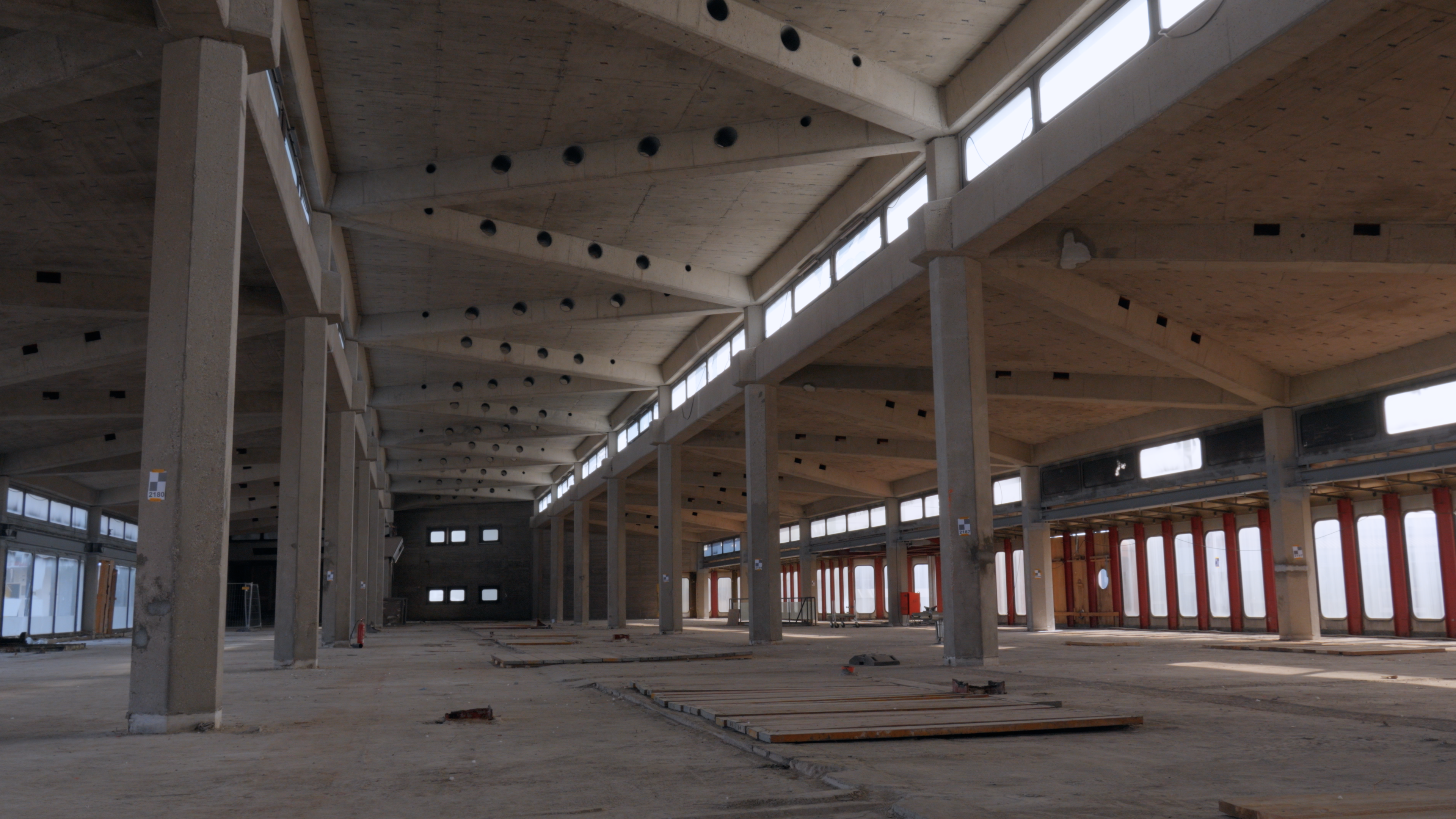
Above: Inside Tegel's Main Terminal A.
When this new terminal opened in 1974, it didn’t just give West Berlin a new passenger building, it completely rethought how airports could work, not by focusing on the planes, but by focusing on the car.
It was built around a simple ambition: minimise walking distance and processing time by bringing the car almost directly to the aircraft. The heart of the design was a perfect hexagon, each side containing its own check-in, security, and boarding gate. Passengers could be dropped off just metres from their aircraft. No endless concourses. No buses to distant stands. You parked, checked in, and walked straight on board.
At a time when airports were becoming sprawling, disconnected complexes, Tegel brought everything together under one roof. From car to plane could take as little as 15 minutes.
It was also unapologetically functional, a piece of architecture shaped entirely by the passenger experience. That hexagon became a symbol of West Berlin’s resilience: modern, self-reliant, and determined to keep moving despite its isolation. For decades, travellers loved it. Even as the layout proved difficult to expand, Terminal A showed the world that airport design could be human-scaled and that passenger experience could be seamless.
When the Berlin Wall fell in 1989 and German reunification restrictions on airlines suddenly vanished Tegel was no longer an airport solely for West Berlin. Passenger numbers surged, by 2019, it was serving more than 24M people a year, far beyond its intended capacity of just half a city. It was overcrowded, outdated… but passengers still loved it. Its speed and simplicity made it a favourite. Tegel was meant to close when Berlin Brandenburg opened, but Brandenburg’s endless delays and cost overruns ironically kept it alive for another decade.
On the 2nd January 1960 Air France operated the very first commercial flight to Tegel Airport. To honour that, on November 8th, 2020 the very last commercial flight leaving Tegel was also from Air France. As that last plane to Paris left the runway, Tegel Airport had fulfilled its promise.
Dropping a bomb
From a wartime emergency build to a Cold War icon to finally seeing Berlin united and at peace, Tegel was never just an airport. It was a lifeline. The airport is now having new life breathed into it thanks to a massive redevelopment plan. But, of course, even this isn’t without drama. It wasn’t until 2004, during a routine excavation for Queen Elizabeth II’s arrival, that a British aerial bomb was discovered at Tegel Airport.
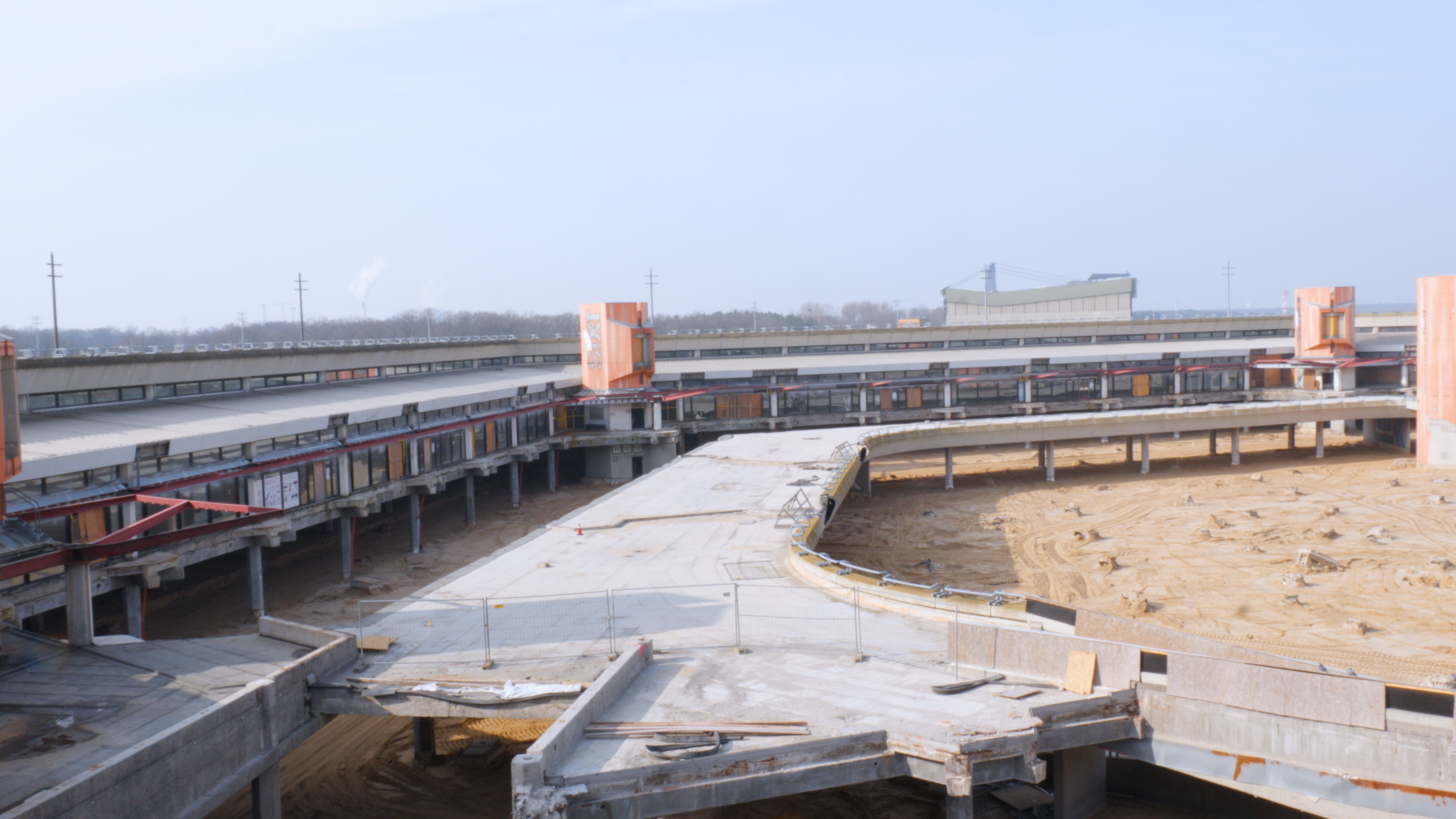
Above and Below: Tegel Airport undergoing new works today.
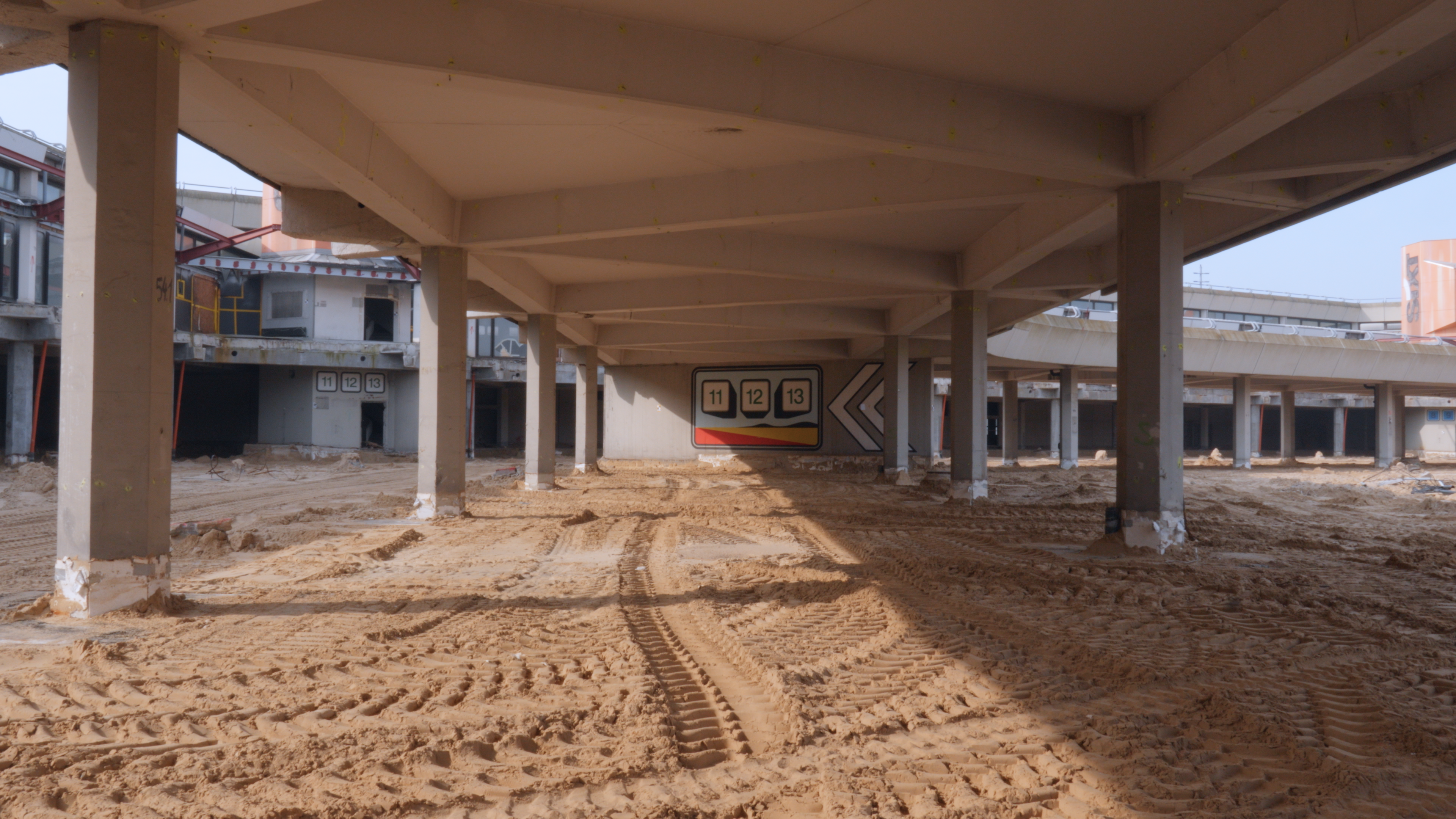
The find marked the beginning of a systematic, ongoing explosive ordinance disposal, or EOD operation led by Alexander Döring and his specialised team. The scale of the operation is remarkable. By May 2021, clearance teams had served more than 22,000 square metres, uncovering almost 900 kg of ordnance, alongside 30,000 kg of munitions scrap. Devices ranged from grenades to incendiary bombs. These were carefully transported to Berlin’s Grunewald detonation site.
Unexploded ordnance isn’t just a historical footnote, it’s an everyday reality. And in Germany, teams defuse approximately 5,500 bombs every year, with Berlin as one of the most affected areas. The project at Tegel stands as a powerful reminder: clearing and acknowledging the past is a prerequisite to building the future.
New life for Tegel
Berlin’s city planners envision a transformation of the site. The cleared lands are earmarked for several ambitious projects. The airport terminal itself is set to become a university. Then there is Urban Tech Republic, a cutting-edge innovation and research park set up in the old cargo holds. There’s also Schumacher Quarter, a pilot project for sustainable, low-car residential living. And a protected landscape that will have over 200 hectares of preserved dry grassland and habitats for rare species.
More than half of the clearance has been completed, with plans extending into the end of 2026. Berlin is unique in how it holds on to its historical buildings. They aren’t simply demolished even when they’re abandoned. They’re given a new life. This would not be possible without the sheer tenacity and love for their city that Berliners have.
This airport saved Berlin, and now decades later Berlin has returned the favour and saved Tegel.
See how the AMD Threadripper Pro can take your workflow up a level here.
Additional footage and images: Berlin TXL, GMP Architekten, Euro News, DW News, Maren Arnhold, Lukas Schmid and Marek Iwicki.
We welcome you sharing our content to inspire others, but please be nice and play by our rules.
Comments