
Why Maglev is (Basically) Impossible
- Youtube Views 1,680,806 VIDEO VIEWS

15 April 2026
Video hosted by Fred Mills. This video contains paid promotion for Brilliant.
In 2025, team at China’s National University of Defense Technology set a new speed record for magnetic levitation, accelerating a one tonne sled to 700 kilometres per hour in just two seconds.
The experiment, captured on a high speed test track, brings the vehicle close to the cruising speed of a commercial airliner in a matter of moments. Researchers say the trial marks a significant step forward in the development of ultra fast ground transport, with potential applications ranging from passenger travel to more specialised uses. There has even been speculation that similar systems could one day be adapted for military purposes, including assisting aircraft launches from carriers.
The test comes only a few years after the rollout – or, float out – of the CRRC 600, China’s first domestically developed high speed maglev train. Designed to operate at speeds of up to 600 kilometres per hour, it remains just short of the current benchmark set by Japan’s L0 Series.
Taken together, these developments suggest that the long anticipated race to build ultra fast transport systems is gathering pace once again. Yet for many observers, it also raises a familiar question. Why has maglev, a technology first demonstrated decades ago, still not achieved widespread adoption?
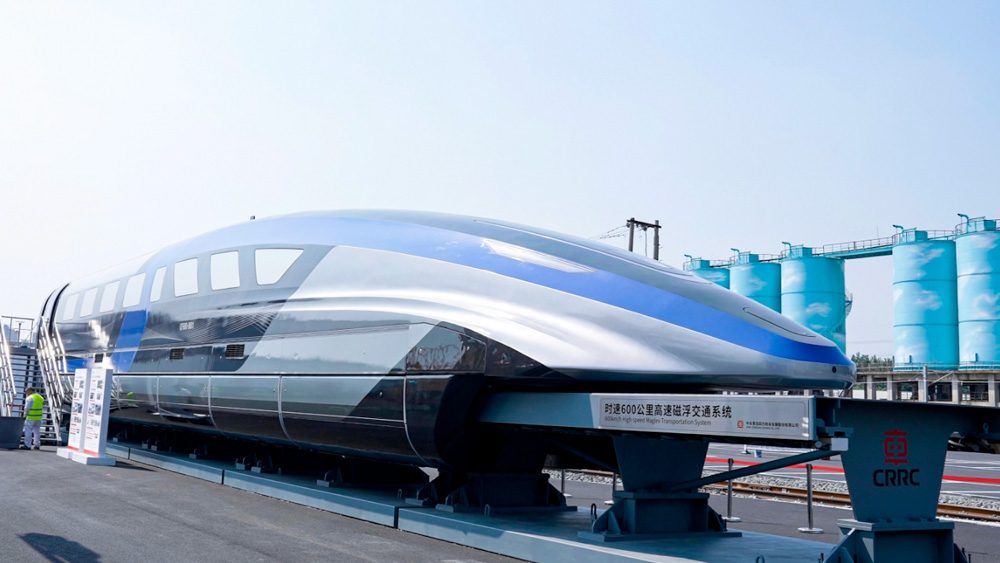
Above: China's prototype maglev train, the CRRC 600. Image: CRRC.
Magnetic levitation has been presented as the future of rail travel since the late twentieth century. The concept is simple in principle. By lifting a train off its track using magnetic forces, friction is almost entirely eliminated, allowing for much higher speeds and reduced maintenance compared with conventional rail. In practice, however, the technology has proved far more difficult to implement at scale.
The world’s most prominent example in operation today is the Shanghai Maglev Train. It links Pudong International Airport with Longyang Road station on the eastern edge of the city. While the system is capable of reaching speeds of more than 400 kilometres per hour, it typically runs at lower speeds and covers a relatively short distance. For most passengers, it serves as a niche connection rather than a central part of the transport network, with many opting instead for the parallel metro line.
This limited impact stands in contrast to the expectations that surrounded maglev in the early 2000s. At the time, the Shanghai line was seen as a showcase for a technology that could soon connect major cities around the world. Proposals emerged for routes linking Berlin and Hamburg, Shanghai and Hangzhou, and even London and Glasgow. Many of these schemes were presented as transformative infrastructure projects that would redefine long distance travel. Most of those plans, however, were never realised.
One of the core challenges lies in the type of system used by early commercial maglevs, particularly the German developed Transrapid design. This relies on electromagnetic suspension, in which the train is lifted by the attractive force between magnets on the vehicle and the guideway. The gap between the two is extremely small, typically less than a centimetre, and must be maintained with great precision.
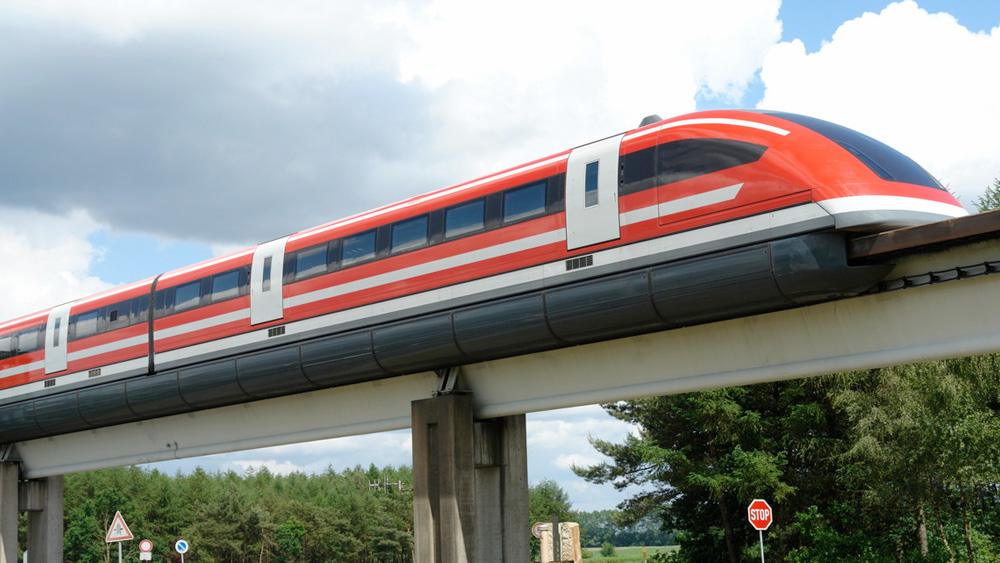
Above: A Transrapid series 09 at the Emsland Test Facility in Germany.
That requirement introduces a fundamental instability. If the gap becomes too large, the magnetic force weakens and the train begins to drop. If it becomes too small, the force increases rapidly and the train is pulled towards the track. To prevent this, the system depends on continuous electronic adjustments, measuring and correcting the position of the train thousands of times each second.
At moderate speeds, this can be managed. At higher speeds, the challenge becomes more pronounced. Small imperfections in the track, fluctuations in the magnetic field or even environmental factors can lead to vibration and a less stable ride. Passengers on the Shanghai Maglev have long reported a degree of movement that contrasts with the smoothness associated with high speed rail.
In recent years, this has led to operational changes. The top speed of the Shanghai line has been reduced from earlier levels, with typical services running significantly below its theoretical maximum. Researchers continue to explore ways of reducing vibration, but the issue highlights the complexity of scaling the technology.
Alongside these technical challenges are broader questions about cost and practicality. Building a maglev line requires entirely new infrastructure, including specialised guideways, power systems and switching mechanisms. Unlike conventional trains, maglev vehicles cannot transition onto existing rail networks. This limits their flexibility and increases the upfront investment required for each route.
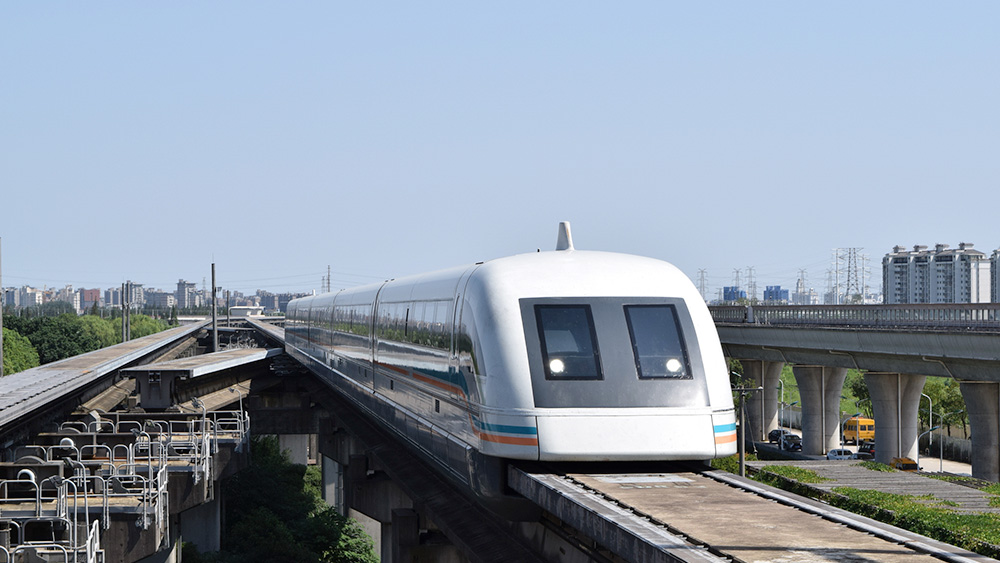
Above: The Shanghai Maglev.
By contrast, high speed rail has expanded rapidly over the past two decades. Although slower in absolute terms, it offers a more adaptable solution. Trains can operate on dedicated high speed lines for part of a journey before continuing onto conventional tracks, extending their reach without the need for a completely separate system. This ability to integrate with existing networks has made high speed rail the preferred option in many countries.
Between 2010 and 2024, tens of thousands of kilometres of high speed rail were constructed worldwide. Over the same period, new maglev systems were largely confined to short urban links or airport connectors. The gap between promise and deployment has become increasingly apparent.
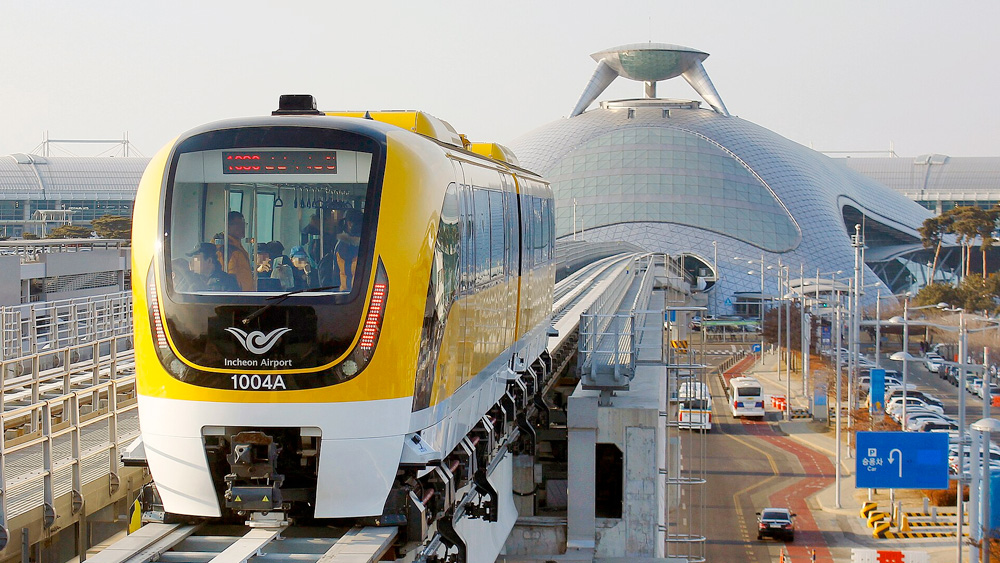
Above: The Incheon Airport Maglev.
Japan has taken a different path. Its Chūō Shinkansen project, currently under construction, is based on a superconducting maglev system that uses magnetic repulsion rather than attraction. Known as SCMaglev, it allows trains to levitate at a greater distance from the guideway, improving stability and reducing some of the issues associated with earlier designs.
The line is intended to connect Tokyo, Nagoya and Osaka, cutting journey times dramatically. Once complete, trains could cover the 438 kilometre route between Tokyo and Nagoya in just over an hour. However, the project faces significant challenges of its own. Construction is complex, with large sections of the route running through tunnels, and costs are substantial. Delays have pushed the expected opening well into the 2030s
Energy consumption is another concern. Maglev systems, particularly those operating at very high speeds, require large amounts of power. Estimates suggest that superconducting maglev trains can use several times more energy than conventional high speed trains, raising questions about efficiency and long term operating costs.
There are also capacity constraints. Maglev trains tend to have smaller carriages and longer intervals between services due to the complexity of switching tracks. This can limit the number of passengers carried compared with established high speed rail systems.
Even so, proponents argue that maglev still has a role to play, particularly on densely travelled corridors where existing rail lines are approaching capacity. In Japan, the new line is partly intended to relieve pressure on the busy Tokaido Shinkansen, while also offering faster journey times and supporting economic links between major cities.
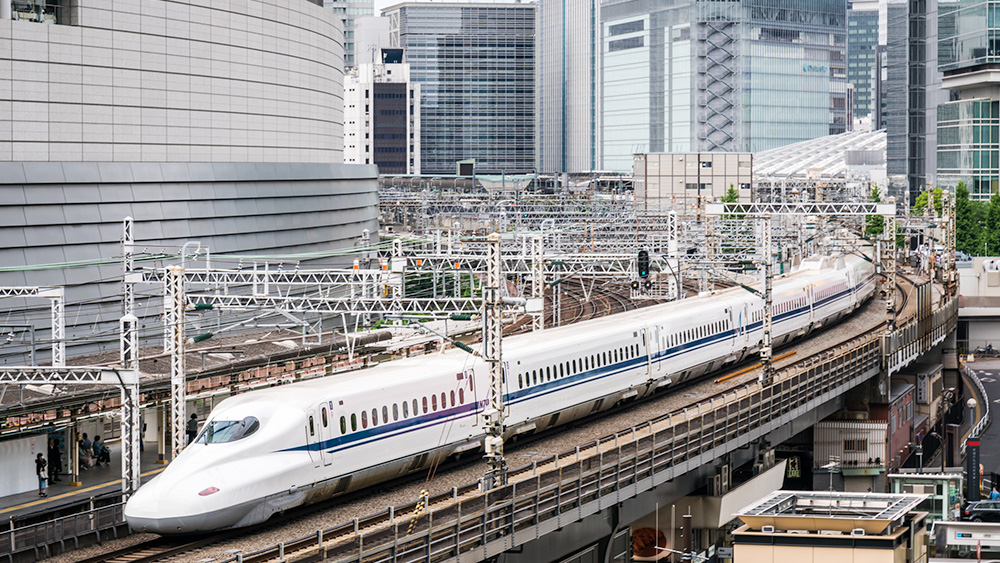
Above: Japan's high-speed shinkansen network is nearing capacity.
For China, the latest test highlights both the potential and the uncertainty surrounding the technology. The country has already built the world’s largest high speed rail network in a relatively short period, demonstrating its ability to deliver large scale infrastructure projects. Whether it can do the same with maglev remains to be seen.
What is clear is that the technology itself is no longer the primary obstacle. High speed tests and advanced prototypes show that extremely rapid ground transport is technically achievable. The more difficult question is whether it can be deployed in a way that is economically viable, operationally practical and widely useful.
More than half a century after the first maglev experiments, that question is still unresolved.
To try everything Brilliant has to offer for free, visit https://brilliant.org/TheB1M/ You’ll also get 20% off an annual premium subscription.
Additional footage and images: CGTN, ShanghaiEye, New China TV, BBC, Al-Jazera, West Midlands County Council, British Rail, Northeast Maglev, MagnetSchnellbahn Berlin - Hamburg, SMT, Evan J, CRRC Corporation, Skywalker218, Central Japan Railway Company
We welcome you sharing our content to inspire others, but please be nice and play by our rules.
Comments