
The Time America Tried to Beat the Shinkansen
- Youtube Views 785,252 VIDEO VIEWS

01 April 2026
Video hosted and narrated by Fred Mills. This video contains paid promotion for Odoo.
IN OCTOBER 1964, the world’s attention turned to Tokyo. As Japan hosted the Olympic Games for the first time, it used the moment to showcase a powerful symbol of its post war recovery. Days before the opening ceremony, a new high speed railway began carrying passengers between Tokyo and Osaka.
The Shinkansen was unlike anything seen before. Travelling at speeds of more than 130 miles per hour, it cut journey times dramatically and offered a level of comfort and reliability that redefined rail travel. For many watching abroad, it was a glimpse of the future.
In the United States, it also posed an uncomfortable question. If Japan could do this, why couldn’t America? By the mid 1960s, the United States was at the forefront of technological innovation. Its aircraft pushed the boundaries of speed and altitude, and its space programme was racing towards the Moon.
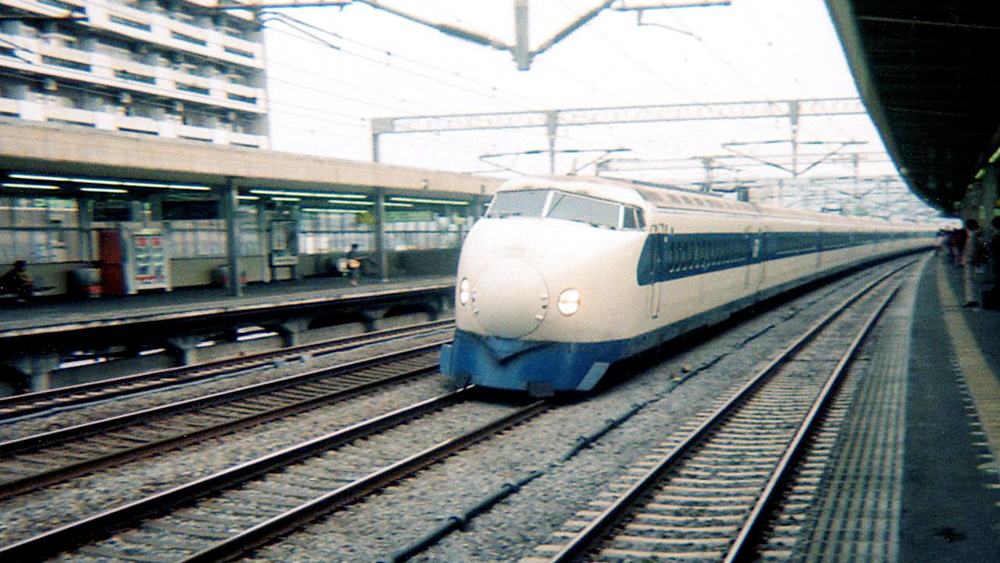
The Type-0 series bullet train was the envy of the world.
Yet on the ground, the picture was very different. Passenger rail had been in decline for decades, overtaken by the rise of the automobile and the expansion of the interstate highway system. For those without access to a car, travelling between cities could be slow and unreliable.
President Lyndon B. Johnson saw this as a failure that needed to be addressed. As part of his wider Great Society programme, he sought to modernise infrastructure and expand access to transport. In 1965, he signed the High Speed Ground Transportation Act into law. The aim was to support the development of faster, more efficient rail services and to restore confidence in intercity train travel.
At its heart was a simple idea. If the United States could match or surpass Japan’s high speed rail, it could transform how people moved between its major cities.
Attention quickly focused on the north east of the country. Stretching from Washington DC through New York to Boston, this corridor contained some of the most densely populated and economically significant cities in the United States. It was also one of the few regions where rail still played a meaningful role in daily travel.
Much of the line was already electrified, with infrastructure dating back to the early twentieth century. This made it an attractive candidate for upgrading to higher speeds. The concept itself was not entirely new. Earlier proposals, including plans developed by Senator Claiborne Pell, had identified the corridor as the most promising location for a modernised rail network.
What followed was an effort to turn that vision into reality. The programme funded two main projects. The first was the Turbotrain, which used turbine technology and operated on routes between New York and Boston. The second focused on the more heavily travelled route between New York and Washington.
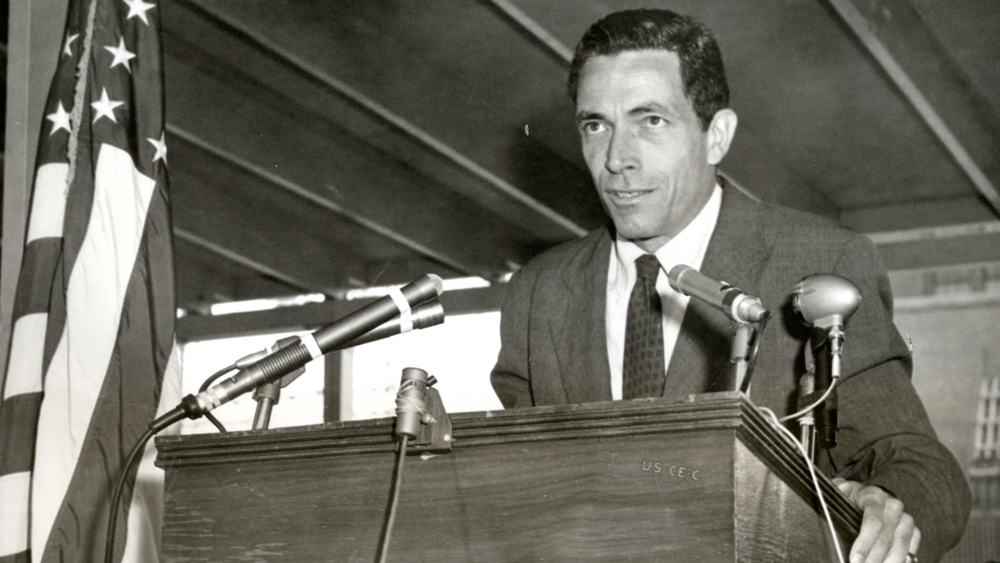
Senator Claiborne Pell was a key supporter of high-speed rail in the US.
This second project would produce the Metroliner, the most ambitious attempt yet to bring high speed rail to the United States. But from the outset, the approach taken differed sharply from that in Japan.
Rather than building a new railway from scratch, the US chose to upgrade existing tracks and adapt conventional trains to run at higher speeds. It was a decision shaped by cost, time and the complexity of acquiring new land.
Turning an ageing railway into a high speed corridor presented significant engineering challenges. At higher speeds, even minor imperfections in the track can create uncomfortable and potentially dangerous vibrations. To address this, sections of rail were welded together to remove the gaps that cause the familiar “click clack” sound of traditional trains.
Curves posed another problem. Trains travelling quickly through bends experience strong outward forces, requiring careful adjustment of the track angle to maintain stability.
Power supply also needed to be upgraded. The overhead wires, originally installed decades earlier, were not designed for sustained high speed operation. Engineers had to redesign both the wiring system and the pantographs that connected the trains to it, in order to maintain consistent electrical contact.
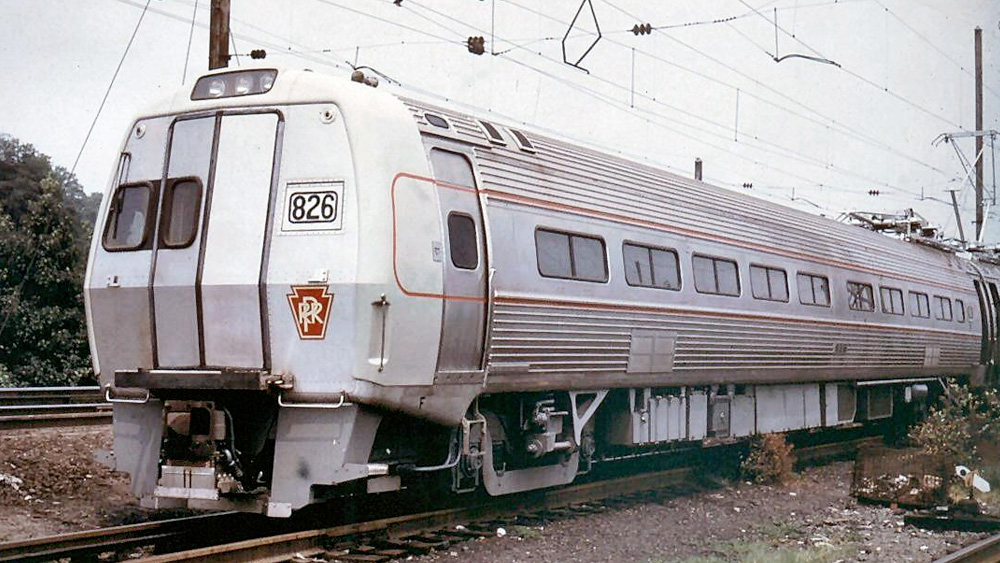
An early Metroliner in Pennsylvania Railroad livery.
In New Jersey, a 21 mile stretch of relatively straight and flat track was selected for testing. Early results were encouraging. The trains themselves were developed under intense time pressure.
Rather than designing a completely new vehicle, the Pennsylvania Railroad, which owned much of the line, opted to modify existing rail cars. These were fitted with new propulsion systems, upgraded suspension and advanced control mechanisms.
Each car was self powered, allowing trains to be assembled in flexible configurations depending on demand. Interiors were designed with comfort in mind, targeting business travellers with features such as air conditioning and onboard communications.
One of the more unusual additions was an early form of mobile telephone service. Using trackside transmitters, calls could be handed off between different signal zones as the train moved along the route.
In testing, the Metroliner achieved speeds above 150 miles per hour, surpassing the targets set by the federal government. On paper, the United States appeared to have caught up but the reality was more complicated.
The timeline for the project was extremely compressed. The legislation had been passed in 1965, contracts were finalised in 1966, and the service was expected to begin operations by 1967.
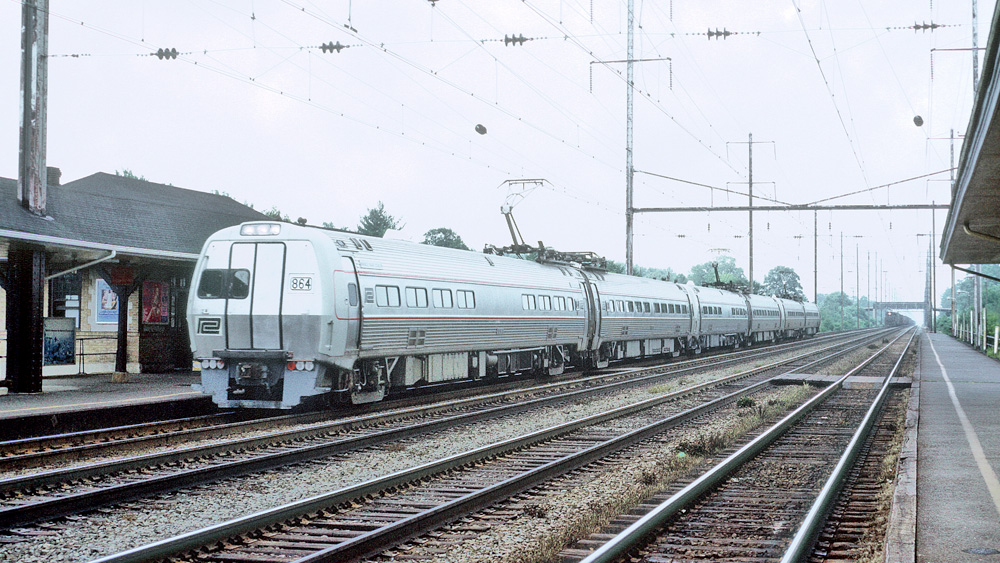
Above: A Metroliner in Penn Central livery.
Japan, by contrast, had spent several years planning and constructing its high speed line. Manufacturers in the US were given just over a year to produce a large fleet of new train cars. Infrastructure upgrades had to be completed alongside this, often on a railway that remained in active use.
The pressure to deliver quickly began to take its toll. When the Metroliner entered service in 1969, it was clear that the system was not ready. Technical faults were widespread. Traction systems failed, electrical components malfunctioned and, in some cases, doors opened unexpectedly while trains were moving at speed. At times, nearly half of the fleet was out of service.
Even when operational, the trains struggled to achieve their intended performance. The test track in New Jersey had provided ideal conditions, but the full route included tight curves, ageing bridges and congested approaches to major stations.
As a result, average speeds were significantly lower than those recorded during testing, often closer to 110 miles per hour. The core issue lay in the decision to rely on existing infrastructure. Unlike Japan’s Shinkansen, which had been built on a dedicated high speed alignment, the Metroliner operated on a railway that had evolved over more than a century.
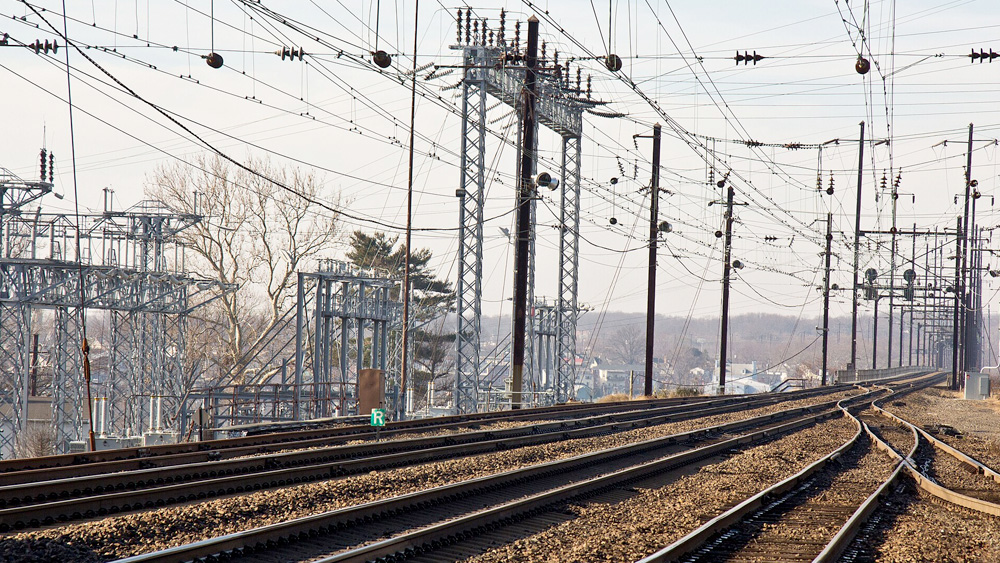
Dated infrastructure along the northeast corridor.
This imposed constraints that could not easily be removed. Tunnels, junctions and urban bottlenecks limited how fast trains could travel, regardless of how advanced the rolling stock became.
The project revealed a critical lesson. High speed rail is not simply a matter of building faster trains. It requires an integrated system, designed from the ground up to support sustained high speed operation. Despite its problems, the Metroliner did attract passengers, particularly during periods of rising fuel prices in the 1970s.
However, maintaining the service proved costly. In 1971, the newly formed Amtrak took control of most intercity passenger rail in the United States and began looking for more reliable alternatives.
The original Metroliner cars were gradually withdrawn during the 1970s, with the service fully replaced by the early 1980s. The Turbotrain programme also came to an end around the same time. Although the high speed ambitions of the 1960s were not fully realised, the investment made during this period had lasting effects.
The north east corridor remains the backbone of passenger rail in the United States. It carries hundreds of thousands of passengers each day and connects some of the country’s most important economic centres.
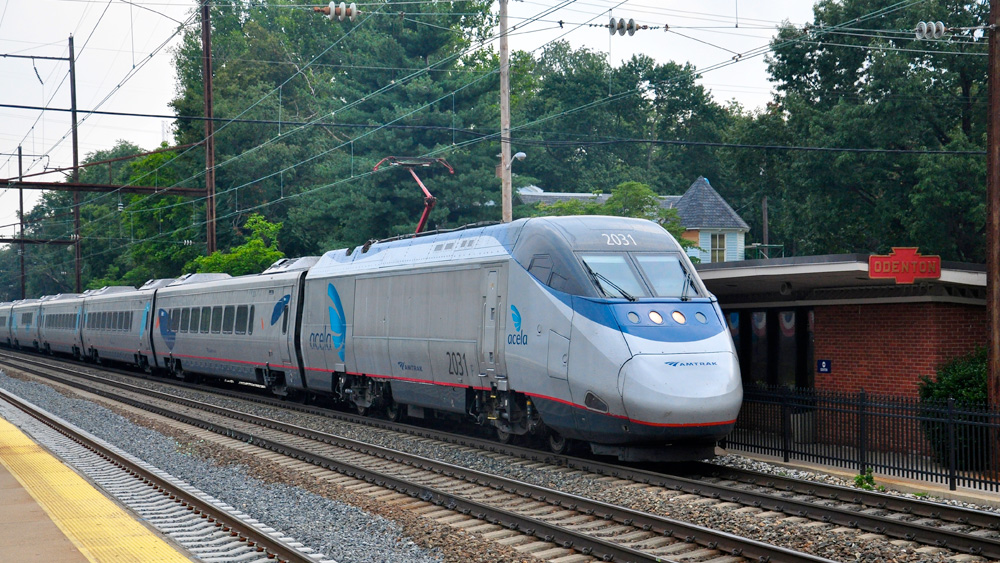
A modern Acela train on the northeast corridor.
In many ways, it represents a partial success. While it does not match the speeds or performance of dedicated high speed lines elsewhere in the world, it continues to provide a vital service. Efforts to develop high speed rail in the United States continue, most notably in California, where a new line is being constructed.
Yet many of the challenges faced in the 1960s remain. Building new infrastructure requires significant investment, complex planning and, in many cases, the acquisition of land. The experience of the Metroliner suggests that these factors can be as important as the technology itself.
More than half a century after Japan introduced the bullet train, the United States is still working towards a comparable system. The ambition has endured, but the path to achieving it has proved far more difficult than first imagined.
Try your first Odoo app for free today.
Additional footage and images: CNR, MCA/Universal Pictures, C-Span, NASA, Emery Gulash, Bell Laboratories.
We welcome you sharing our content to inspire others, but please be nice and play by our rules.
Comments