Can Saudi Arabia still complete The LINE?
- Youtube Views 4,163,213 VIDEO VIEWS

18 December 2025
Video hosted by Fred Mills. This video contains paid promotion for AMD Threadripper Pro.
IN THE south west corner of the Arabian desert, an enormous trench has been formed. It may look like it was carved out by an alien presence but it is in fact evidence that one of the most ambitious construction projects in history is steaming ahead.
The 200-metre wide trench runs from the Hejaz mountains across to the Gulf of Aqaba. As if that wasn’t enough, a small portion of it contains the start of what will be the biggest set of foundations ever built. Once that concrete has set, the first vertical structures will begin to emerge.
This incredible hive of activity is in fact the construction site of The LINE, Saudi Arabia’s wildly ambitious megacity in the desert. To put it another way, the thing everybody said would or could never be built is actually being built.
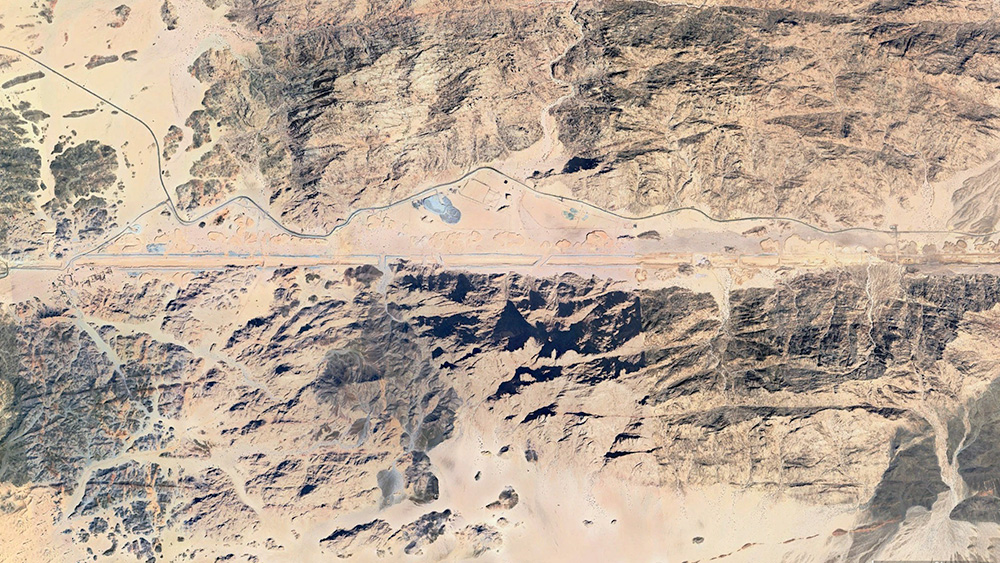
Above: Satellite imagery showing construction of The LINE Image: Google.
Or is it? Because for every sign of progress, rumours swirl of scalebacks, insurmountable budget blowouts and mass lay offs. There are even rumours swirling that the whole thing has been cancelled. But what we actually know for sure is much more limited.
2026 will be make or break for The LINE. This is where deadlines need to be met and progress will be measured in height, not hype. Regardless of what you think of this mind boggling project, there’s a country with its future invested in it and a leader whose reputation is staked on it.
So, the trillion dollar question: will it ever be built?
Let’s start with the basics. The LINE is Saudi Arabia’s plan for a 170-kilometre linear city, rising to a consistent height of 500-metres. When it’s complete, it’ll form the capital city of NEOM, a vast new region in the country’s northwest, dreamed up by the country’s de facto ruler, Crown Prince Mohammed bin Salman. NEOM, in turn, forms a key pillar of Vision 2030, a countrywide plan to transition the Saudi economy away from oil dependency by 2030.
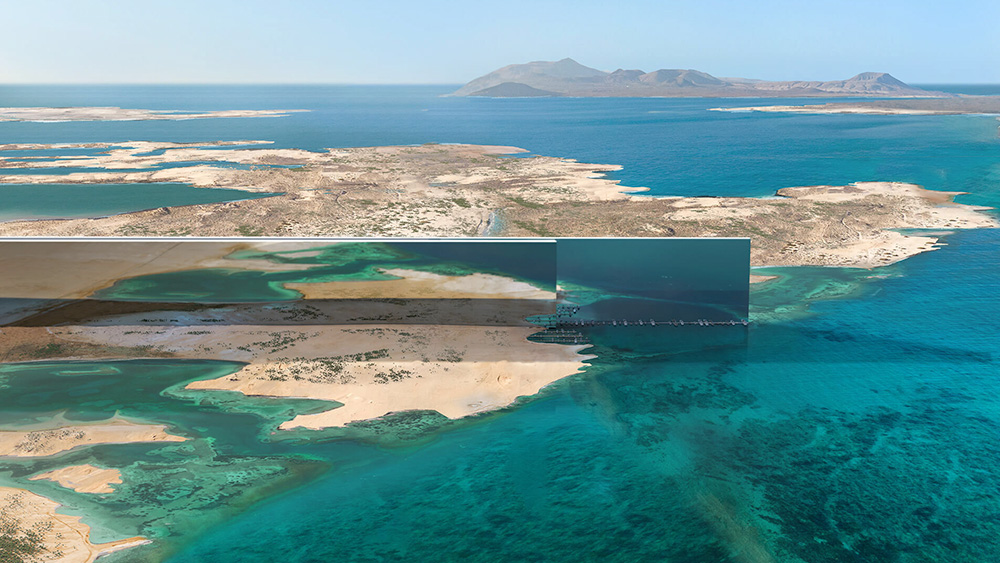
Above: An early render of The Line. Image: NEOM.
How is it being built? The initial challenge for any projector of this scale is geology. The LINE crosses wildly varying terrain: hard mountain rock, soft open desert, and salty coastal plains. To build anything across such varied land, you first need a uniform, stable footing.
That’s where foundations come in. The LINE will rest on a subterranean structure known as a piled raft foundation. The “piles” are sunk deep into the earth, along the Line’s footprint. These cylinders of reinforced concrete bypass soft, unstable strata of earth and rest upon the hard bedrock below. The flat concrete “raft” lays on top of these piles and creates a flat, uniform platform to build on.
To pull this off, an automated factory is churning out 32-metre long rebar cages, used to mould and reinforce each pile. Meanwhile, drilling rigs use GPS to precisely bore the holes these rebar cages will be dropped into. A biodegradable liquid is pumped into the holes to stop them from collapsing before concrete can be poured in.
But it's not just soft earth engineers have to grapple with. Being so close to the sea, this stretch also needs protecting from the highly saline ground water. Left untreated this could rust the steel cages and over time corrode the concrete piles.
To solve this, the world’s largest de-watering system was created. 500 wells were drilled along a stretch of The LINE, each equipped with a water pump at its base. Water is pumped out at a rate of 90,000-cubic metres per hour towards a settlement pond where the quality of the liquid is checked. From there, the water is filtered and pumped out to sea in a series of discharge pipes.
Work on the foundations for phase one is nearly complete which means the project is about to enter its next milestone: going vertical.
On a typical skyscraper, that means building the core. If you’ve ever walked past a construction site, you’ll have seen these go up, they’re not very attractive, but they’re critical to how a skyscraper works. It’s essentially the backbone of the building, and it’s formed by pouring concrete into a mould that gets pushed up by hydraulic jacks.
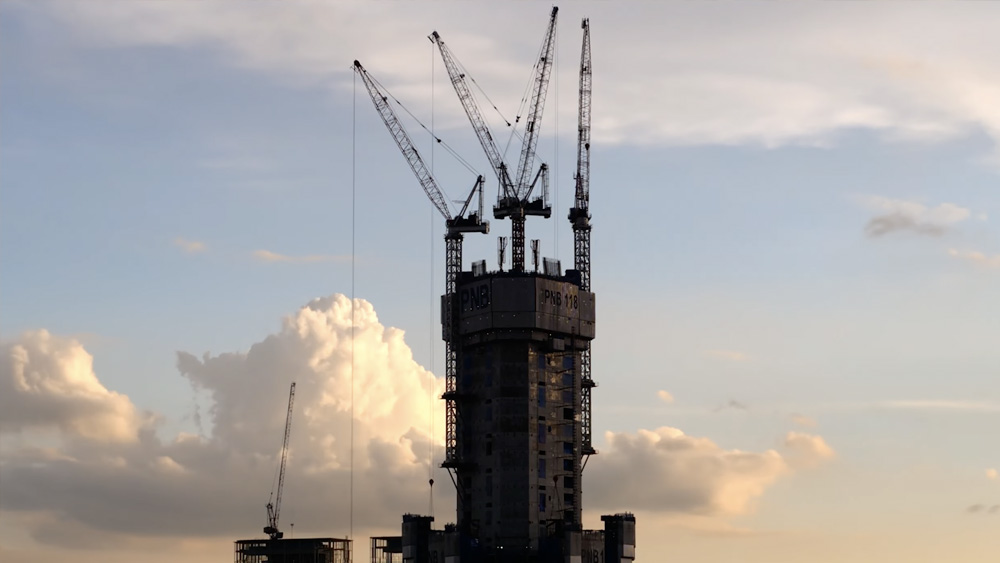
Above: A typical skyscraper core under construction.
But with The LINE, there’s a twist. Because it's a city, not a building, it won't have a 170-kilometre long core that everything sits inside. Instead, it will feature thousands of cores. These will be developed features in their own right but crucially, they will also support a series of decks.
Imagine taking Manhattan’s grid, folding it up and stacking it vertically. These decks are the city’s avenues and the cores are the streets linking each one. This is where the city will come to life. On these decks you’ll find schools, housing, transport, everything you need to make a city function.
Phase one will see 4.8-million tonnes of steel outrigger beams hoisted up to support five decks running through each. Usually on skyscrapers, the steel frame and cladding start to be added before the core is finished. That’s potentially why 2026 could be a huge year for The LINE, because it’s the first stage we can expect to see fast progress.
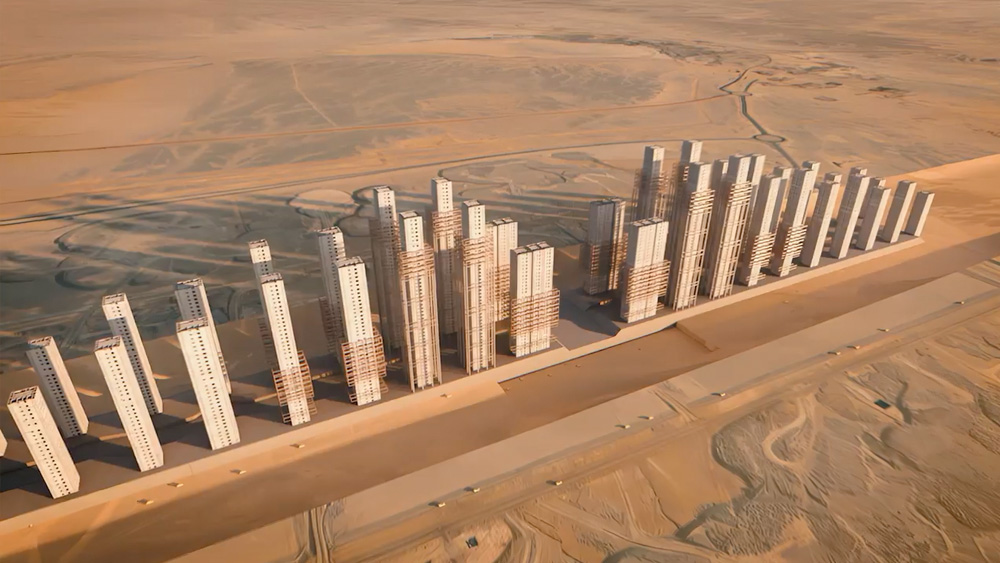
Above: Steelwork outrigger beams are expected to be installed on The Line's cores prior to their completion. Image: NEOM.
But, as impressive as all this is, some big questions remain, particularly over concrete. Pouring concrete at scale is incredibly complex. Pour it too slowly and it will set unevenly. Too fast and the ingredients can split. Get the mixture too wet and your concrete will be brittle. Too dry and it’ll end up like Swiss cheese. Put simply, it relies on total consistency for long periods of time.
Of course, millions of tonnes of concrete have already been poured, which is a solid track record. But all that construction has taken place near the coast, with easy access to supply lines.
The LINE still has a very long way to go and that’s into a vast hinterland with no local materials and a near total lack of a very key ingredient: water. But, there’s a plan.
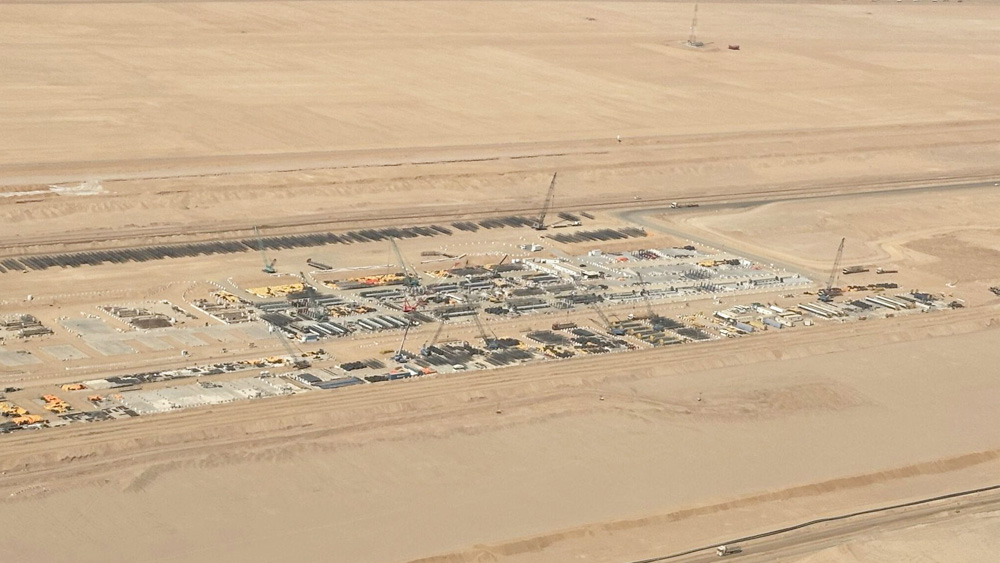
Above: Work progressing on the piled raft foundations. Image: NEOM.
It all begins at The Oxagon, another of NEOM’s megaprojects, where a massive desalination plant will pump billions of litres of seawater to reservoirs dotted along the length of the city. In turn, they will feed a USD $190M network of concrete factories capable of producing 20,000-cubic meters of concrete a day.
But there’s a catch. None of that infrastructure currently exists. Work only began on The Oxagon mid way through 2025 and that vast concrete factory is still some way off.
What’s more, yet again, there have recently been unconfirmed reports that the desalination plant has quietly been scrapped. So, what do we know? So far, concrete is being produced locally with water shipped in in tankers, which is not in any way a scalable solution.
This is not just splitting hairs. The LINE has some very ambitious deadlines. In less than nine years, the NEOM stadium, designed to be suspended 350-metres at the top of The LINE, is due to hold games for the 2034 FIFA World Cup.
For that to be credible, we’d expect to see much more evidence of scalable activity. What we’re seeing instead, as huge as it may seem, looks more like a team trying to build something, anything to prove people wrong.
So, what are they actually building? Judging by the enormous trench cut into the desert, you might have assumed work was underway on the entire 170-kilometre length of the city. But no. The only official confirmation about what is being constructed is “phase one”, a 2.4-kilometre stretch of the city, near its western tip. Less than one and a half percent of the overall structure.
This will contain some of the city’s most spectacular features, designed to act as anchor assets to attract investment into the wider project. It will feature a man-made marina, capable of hosting the world’s biggest cruise ships, the 46,000 capacity NEOM stadium, and hanging below, a vast chandelier welcoming people into this giant structure.
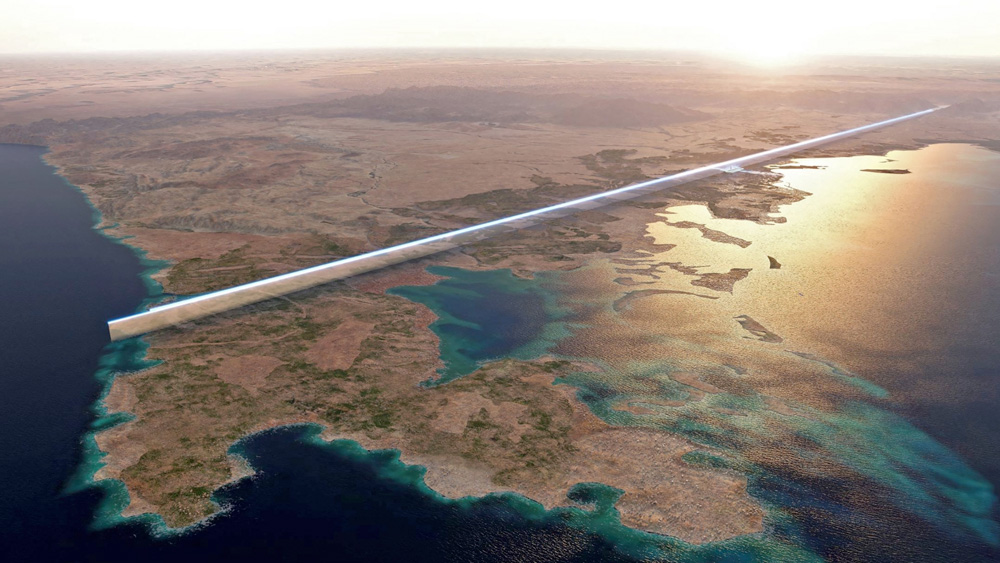
Above: An early render of The LINE. Image: NEOM.
In many ways this makes sense. It’s a sophisticated strategy, based on a standard large scale development playbook. But why it doesn’t make sense is because this is a 170-kilometre long city in the desert.
The LINE is supposed to be a revolutionary city that tears up the rule book in the most audacious way possible and changes how we think about cities forever. For an ambitious national leadership it’s exactly the type of project you take on to capture the world’s imagination. But for the external investors who are crucial for the success of the project, it’s a huge risk.
For the people who will live in The LINE however, there's perhaps a more pressing issue than the city’s commercial strategy: it won't be air conditioned.
The lack of outdoor cooling was confirmed in a presentation by The LINE’s Chief Development Officer earlier this year. Remember, this isn't a building, it’s a city. Indoor spaces like homes, offices and shopping malls will be furnished with as much air con as necessary, but out on the streets, you'll be subject to the ambient temperature of the desert.
As if that’s not bad enough, that can be made worse by the heat island effect, a phenomenon where cities absorb and retain heat much more dramatically than rural areas. In hot weather, London can reach up to five degrees hotter than the surrounding countryside, because of all its heat absorbing concrete. And in The LINE, there will be a lot of concrete, steel and glass to soak up heat.
That’s a major consideration but currently all we have to go on is an assurance that this has all been thought about and that everything will be ok. One argument made by NEOM is that the mirror finish of The Line’s walls will reflect so much light the city won’t absorb heat.
We’re also told the glass will be “breathable” to allow air to pass through. Whether that means the vast walls will have vents in them or there’s a brand new material being invented, we just don’t know.
So with such potentially blistering heat inside The LINE, how will you get around without melting? Well, you’ll need to rely on The Line’s public transportation. But, before we can get stuck into how it will work, we need to explain why The Line is a line.
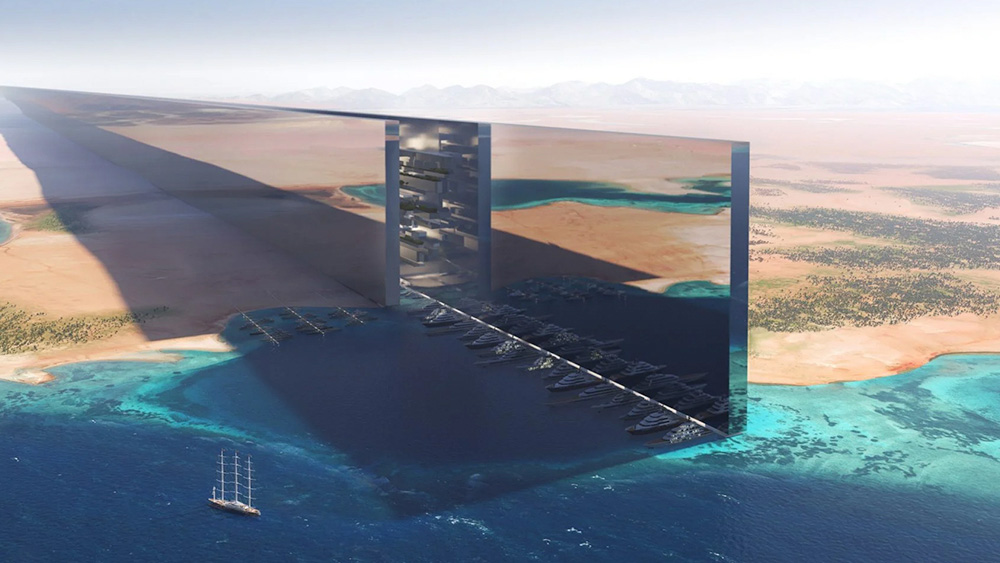
Above: The Line promises to create a revolution in how we think of cities. Image: NEOM.
London is home to about 8.6 million people, just shy of the 9 million that will live in The Line. It swallows up a sizeable chunk of the south east of England. Compared to The LINE it's a vastly inefficient use of space. It represents the old way of building cities: it’s grown without any real plan, it’s sprawling and inefficient.
But to create an elegant, simply designed city like The Line, you need to remove one key aspect: cars. Cars take up a lot of space. They crash, they need to be parked, they don’t carry many people. What the line is promising is something much better.
Just below ground level is the first layer of The Line’s transportation system: a high speed rail track. This line will connect the international airport at the eastern extremity to the western tip. Supposedly it will take just 20 minutes to reach end to end – which would be faster than any train in existence today.
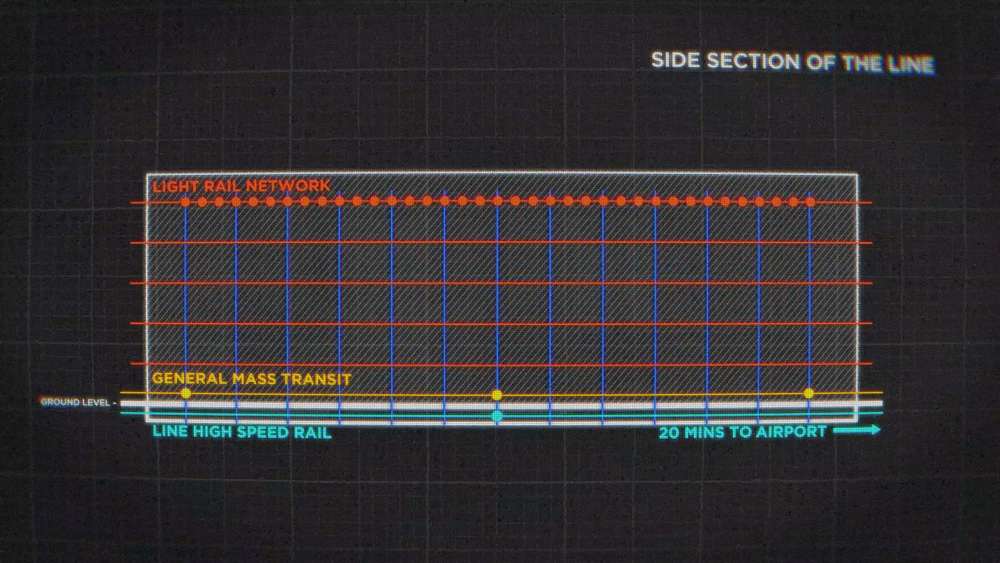
Above: A cross section of The Line's public transport infrastructure. Image: The B1M.
Above this will be The Line’s General Mass Transit, a suburban style rail system stopping every 1.5-kilometres. Next, distributed between the Line’s 5 primary decks will be a light rail network, stopping every 100-metres. Connecting people between the levels will be a series of escalators and lifts.
This is supposed to be one of the big selling points of The LINE, that its shape is a better, more efficient concept for a city. But, is that really the case?
In a big, messy city like London, you can turn in any direction and find a new destination. In The LINE, you essentially have two options, meaning your average journey time will always scale linearly. How efficient is that?
So, where are we? Remember The LINE and the wider project, NEOM, are part of Vision 2030, a plan to totally re-wire the Saudi economy by the end of the decade and save the country from economic ruin. The clock is ticking and it’s not even clear if phase one will be complete by then.
Just a few months ago, a detailed investigation by the Financial Times claimed top level executives were privately admitting the project was impossible.
When The LINE was announced in 2021, it was so bold, so daring in its ambition, it was almost confrontational. It dared people to write it off and then every frame of drone footage, every satellite photo showing progress was presented like a victory lap.
But we’re nearly five years in now and the honeymoon period is over. What’s being built is incredibly impressive. But is it enough, and is it on time and is it on budget? 2026 is the year where we should see fast progress and if not, all bets are off.
Even if it does get built, there’s still the question of liveability. Will this be a functioning city, will it be a place people want to live or just visit?
There’s no question that if this gets built, it will be one of the most impressive structures in history, the present day’s answer to the pyramids. But that’s a big if.
For more on the AMD Threadripper Pro and to see how it can take your workflow up a level, click here.
Additional footage and images: Google, Giles Pendleton, NEOM, NBC News, Financial Times, Bloomberg, Uhstudio, Discovery, Bitschnau Gleit & Schalungstechnik, CBS, BBC, Arquivo Nacional, Pan American World Airways, Warner Bros, Toho, CD Projekt Red, CRRC, Saudi Vision 2030.
We welcome you sharing our content to inspire others, but please be nice and play by our rules.
Comments