Malaysia is Building *Another* Multi-Billion Dollar Mega-Island
- Youtube Views 0 VIDEO VIEWS

03 December 2025
Video hosted by Fred Mills.
MALAYSIA'S building yet another multi-billion dollar mega-island.
It’s rising out of the sea, spread across hundreds of acres of reclaimed land, connected to the mainland via two bridges and the plans look pretty spectacular.
But it's a cause for déjà vu thanks to the nation's most infamous land reclamation project in the Johor Strait known as Forest City.
The development was slated to cost $100BN and began construction in 2016 - fast forward nearly a decade and it's commonly referred to as a ghost town.
Progress ground to a halt and it now stands as a single island, rather than the originally planned four and plays home to a mere fraction of the hoped population of 700,000.
But what about Andaman Island - is it destined to become Malaysia's next ghost island?
Justifying Andaman Island
Nestled between Thailand and Indonesia in the south of Asia, Malaysia has been quietly expanding and not just in terms of global influence - it’s literally growing.
Since 1991 the nation has reclaimed well over 80 square kilometres from the sea and the area that’s seen the biggest recent expansion is the state of Penang - specifically, areas around Penang Island.
In 2008, the island’s capital city, George Town, was given UNESCO World Heritage status. Recognised for its unique architecture and townscape, UNESCO decided it offered outstanding universal value.
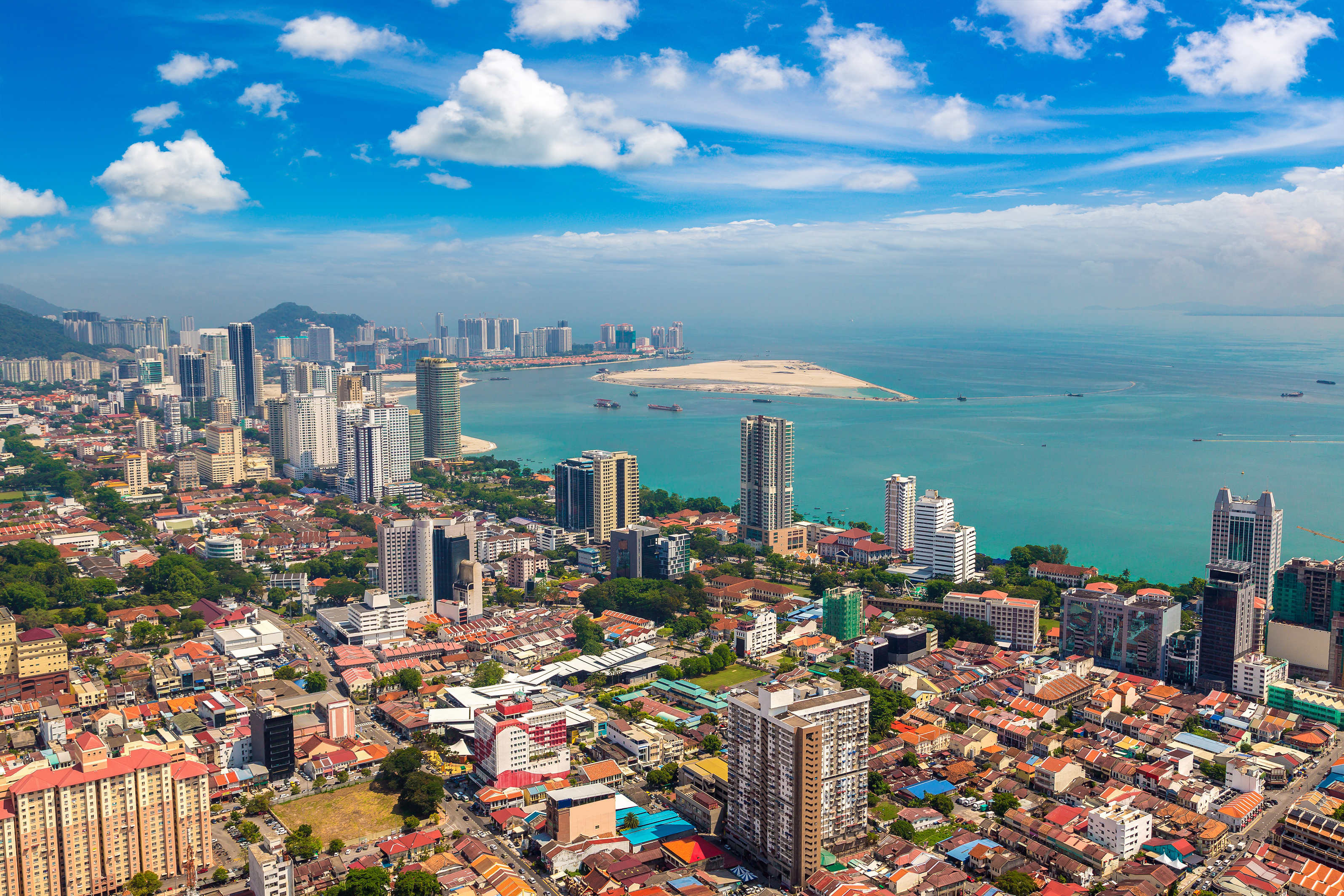
Above: George Town is the capital of the island of Penang and was recognised by UNESCO for offering outstanding universal value.
On the face of it, that sounds great but there’s a catch - it began to transform the city. People from all over the world began flooding to George Town - the city gentrified to cater to its new worldwide audience building shops, attractions and luxury seaside developments.
However, George Town sits on an island, there’s only so much space and while a huge chunk of the land is covered in forests, its mountainous terrain means building on it would be nightmarish.
The answer was to reclaim a new section of land called Andaman. It’s a $14 billion island being built off the coast of Penang Island to cater to the area's growing demand for high-end developments.
But given Malaysia’s recent history with projects like this, spending that much money on a swanky new island is a bold move.
Land reclamation 101
Andaman Island is the second phase of a masterplan that’s transforming the coastal areas of Penang.
Land reclamation isn’t a new concept here - compare any modern map of the area to one from before the turn of the century and you’ll see hundreds of acres of land has already been raised.
If we set the clock back to 2016, this area wasn’t much more than sea, sand and fish. Over the following nine years, hundreds of acres of land has been raised using crazy amounts of sand and by 2030, the whole project should be complete.
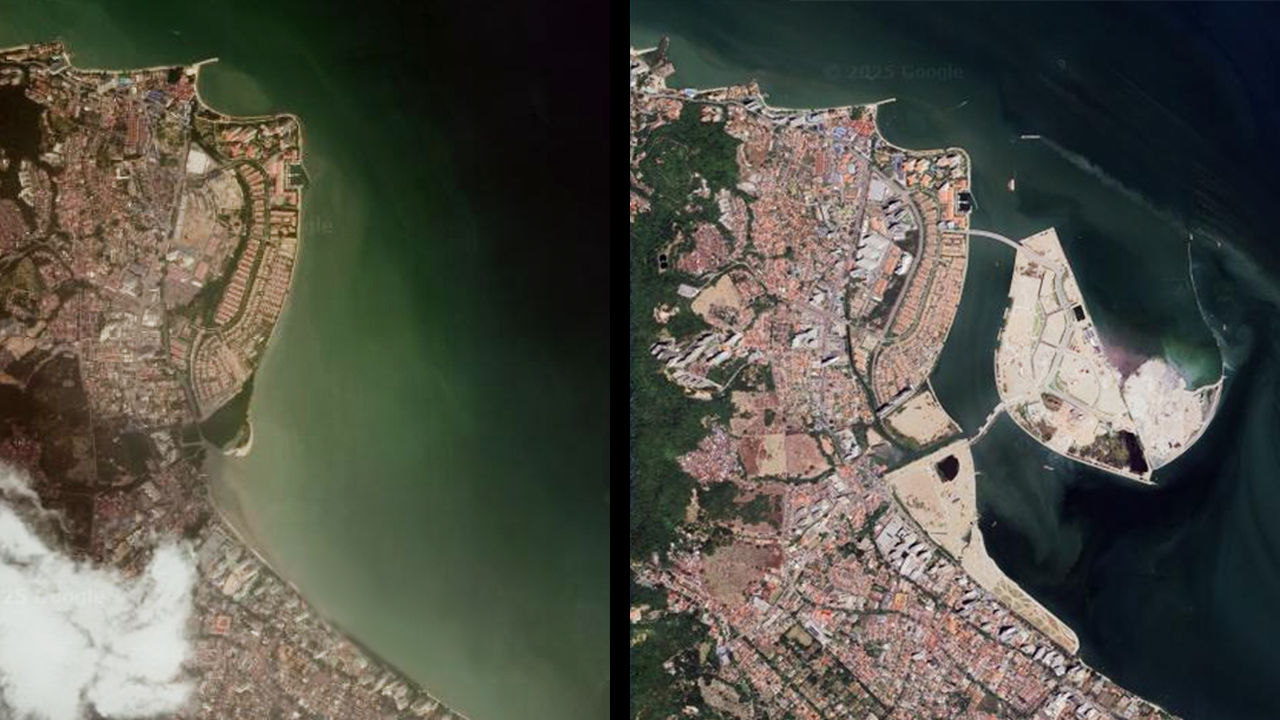
Above: A visual representation of the land raised for Andaman. Courtesy of Google Earth Studio.
To begin with, sand is collected from a source location using a trailer suction hopper dredger - a big ship with an underwater suction pipe.
The sand is then emptied onto the Andaman site through steel pipes and conveyors to start building out the island’s foundations.
The next step on the journey to building a multi-billion dollar island is another big vehicle called a prefabricated vertical drain or PVD crawler rig. The crawler comes along and inserts vertical drains through the sand into the clay to allow water to escape.
A thick layer of earth, called surcharge, is then placed on top of the sand, forcing everything underneath to compress, pressurising the water up the pipes and out onto the surface.
To stop the sand from floating away, the whole site is surrounded by a rock bund. To put it very simply, a rock bund starts as a big perimeter wall used to encase the fill sand. It’s made up of enormous rocks, each weighing an impressive 115kg.
Then, during the course of the reclamation process, it goes through a transformation. The rocks are shaped into a slope to absorb the energy of incoming waves, acting as a form of coastal defence and this wall needs to be sturdy enough to fend off waves, corrosion and at times, even tsunamis.
In 2004, while the first phase of this project along the coast of Penang Island was being completed, a tsunami hit Malaysia.
Even though that rock revetment wall was only partially completed at the time, it still managed to withstand the incredible forces of the water.
While there’s only so much a coastal defence can do against such a powerful force of nature, the sloped face of a revetment wall allows it to break down waves and dissipate any energy.
Back below the surface the underlying clay and sand that make up Andaman are monitored for months to track how they’re settling and project engineers must be pretty happy with the progress because buildings are already popping up across the island.
They’re being constructed using spun piles. It’s a process where reinforced concrete columns are forced down through the layers of sand and clay to create a stable footing for building foundations.
The new island is then connected to Penang Island via two road bridges: one to Straits Quay, an already reclaimed section of land and the other to Gurney Bay, an area currently being raised and developed.
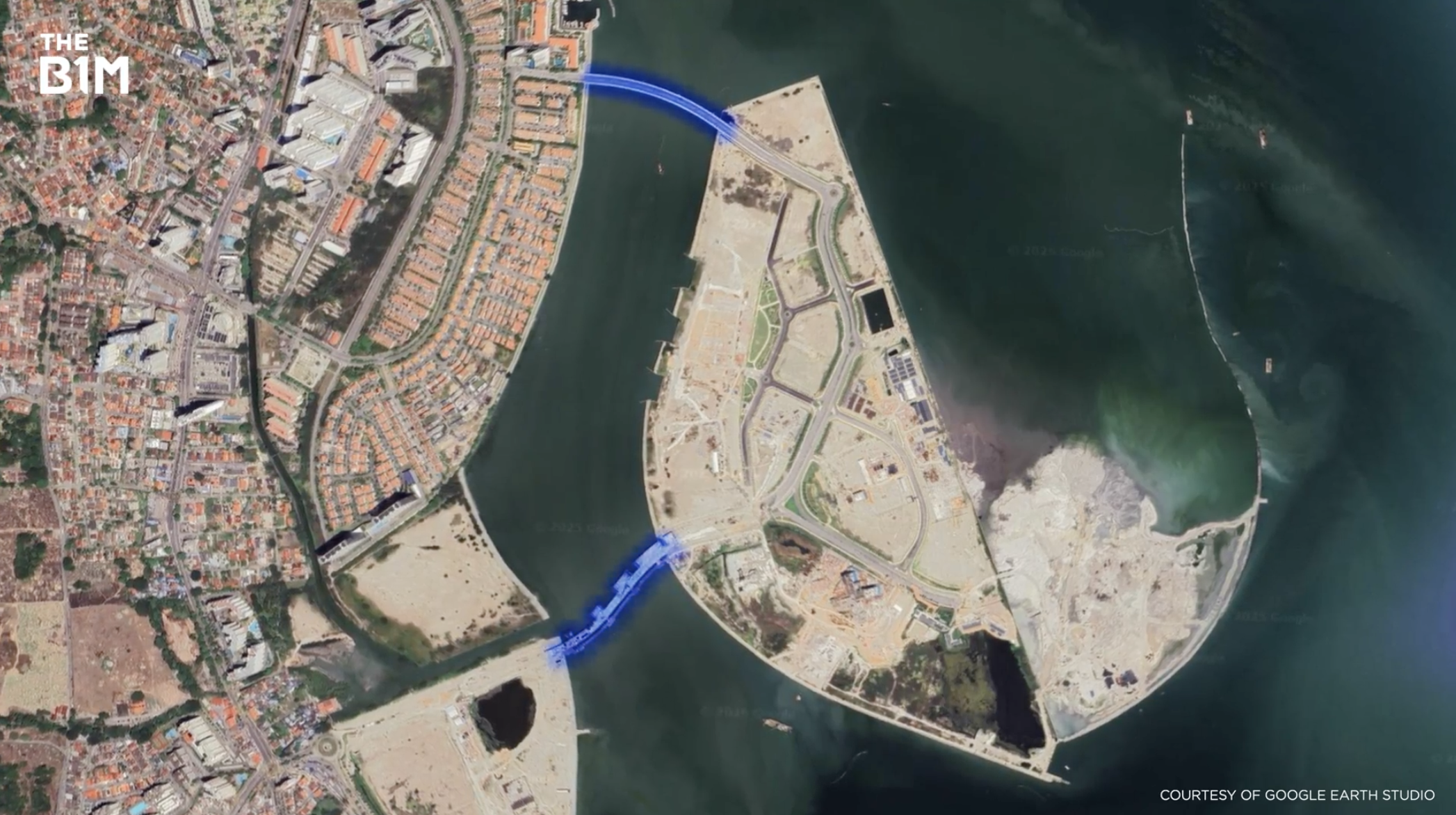
Above: Andaman is connected to the mainland via two bridges. Courtesy of Google Earth Studio.
More than a space issue
While Andaman will offer economic support to Penang through its shopping malls, offices and retail spaces, one of the key drivers for the whole development is luxury housing.
Properties along the coast fetch prices at an outrageous premium - on average they sell for 50% more than those elsewhere.
When you consider the fact that Andaman is a hefty 760 acres, it’s not much of a surprise to hear it’s already being filled with fancy highrises.
Around 5,000 homes are being created for an estimated 16,000 people and we’re not talking about your everyday Joe's.
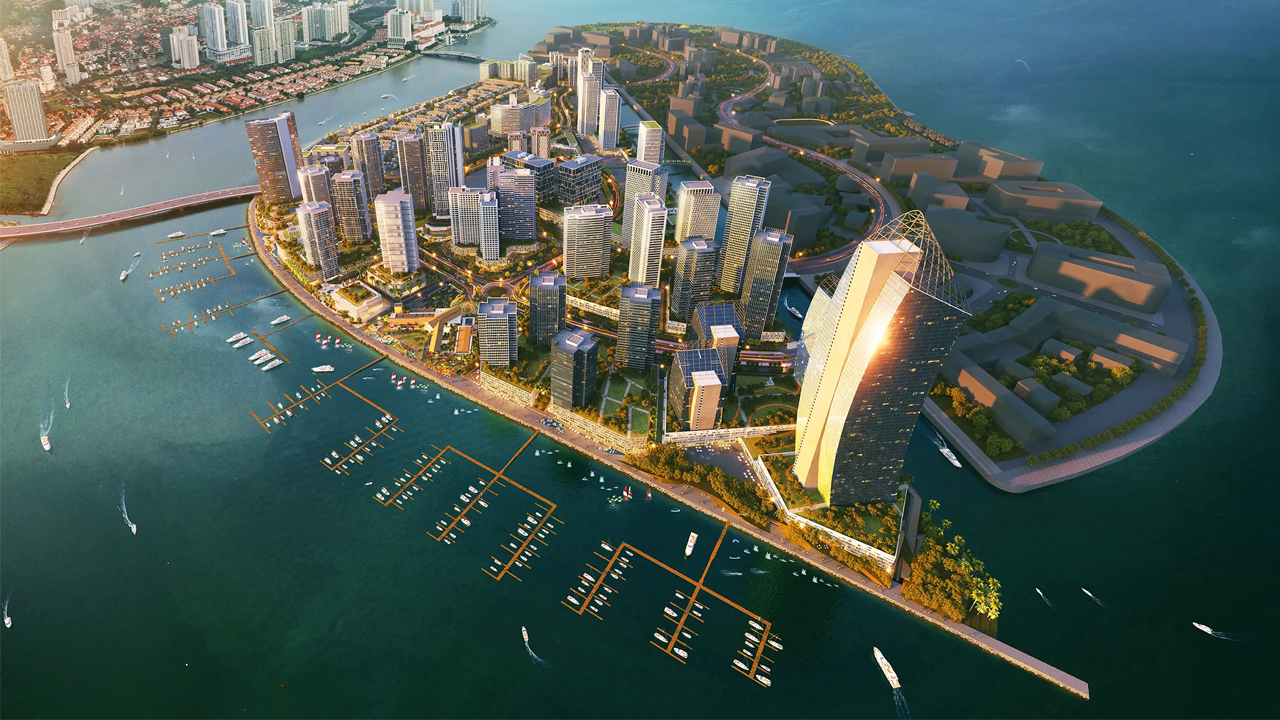
Above: Once complete, Andaman will feature a swathe of luxury housing. Courtesy of E&O Berhad.
Consider this - the average new apartment in Malaysia costs $140,000 - meanwhile, it looks like homes on Andaman are ranging in price from a reported $120,000 to $1.6m.
It seems like the lower end will be affordable but we know the majority are likely to be luxury apartments.
That leaves us with a multi-billion dollar island flush with luxury apartments for those with money to burn - haven't we been here before?
Is this Forest City 2.0?
There are a few reasons Andaman might just avoid becoming another Forest City.
The original mega-development is 600 kilometres south of Andaman, connected to the Malaysian state of Johor. The plan was to build four man-made islands, all connected by a rapid transit line.
Forest City was meant to be a dream paradise for all mankind, kitted out with a hotel and golf resort, shops, restaurants, apartments and offices.
Andaman Island will be on a very different scale. The aim was to house 700,000 people in Forest City, whereas Andaman will host a much more modest 16,000.
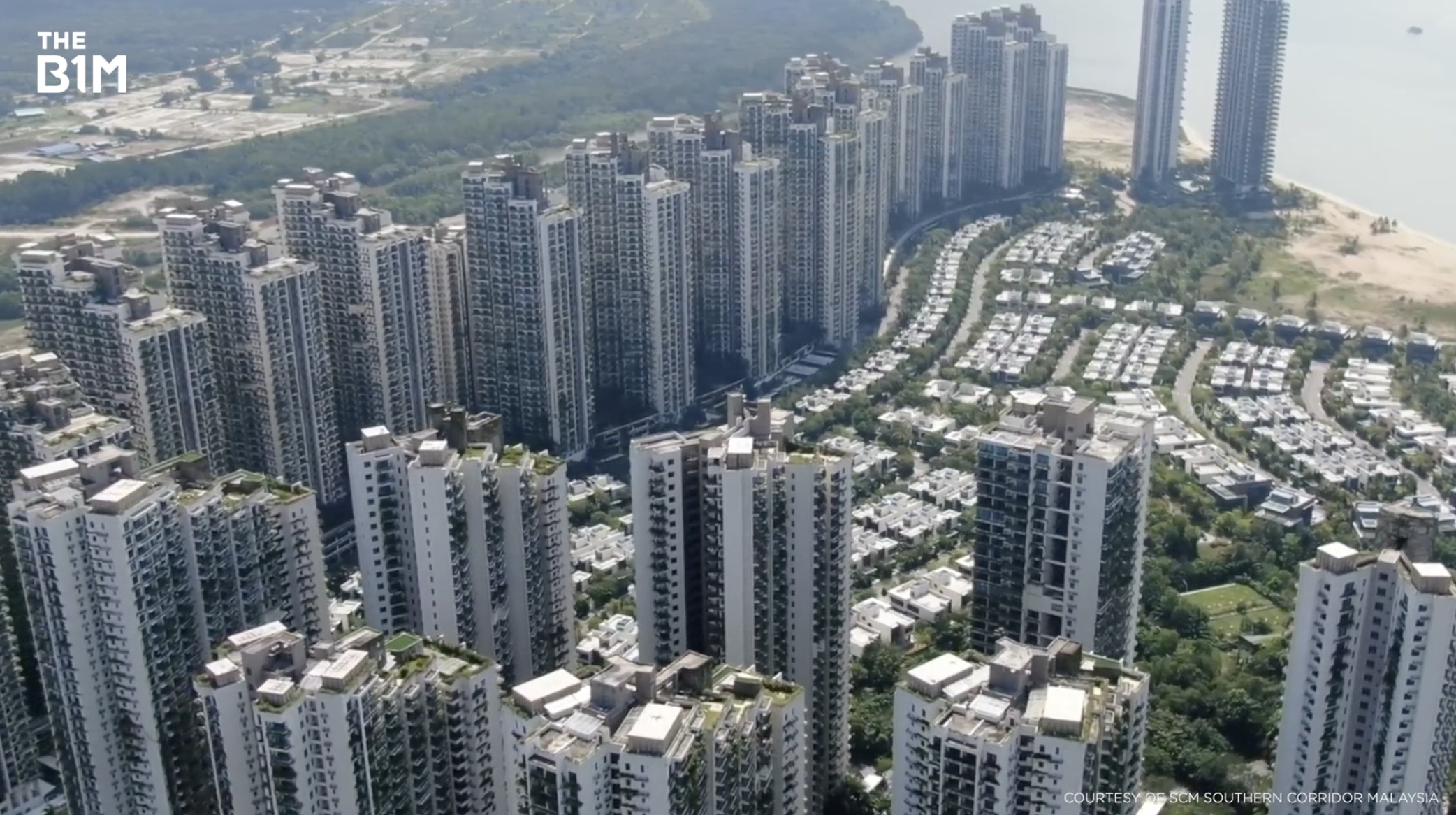
Above: Forest City has been labeled a 'ghost town' after construction of the mega-development slowed. Courtesy of SCM Southern Corridor Malaysia.
Forest City was a huge, multi-island project spanning an initial nearly 3,000 hectares, rather than the 760 acres set aside for Andaman and then there’s the funding.
The Johor development came with an eye watering $100 billion price tag. It was backed by the Chinese mega-developer, Country Garden, working with the Malaysian company, Esplanade Danga 88.
The problem is that China fell into a property crisis and to tackle the issue, the government imposed strict limits on developers borrowing cash.
That left Country Garden in billions of debt, abandoning projects across the world. On top of that, Chinese nationals were told they could spend no more than $50,000 overseas each year, a nightmare for this commercial zone ready to welcome tourists and overseas buyers.
In 2018, Malaysia's prime minister, Mahathir Mohamad decided he’d had enough, declaring he had no intention of granting visas to foreigners wanting to live in Forest City.
When you add a global pandemic into the mix, it's clear to see why property sales in Forest City plummeted - some reports from 2023 claimed only 1% of the 28,000 apartments were occupied.
That’s the key difference - Andaman comes at a fraction of the cost, although $14 billion still shouldn’t be sniffed at.
This time the project is being fronted by Malaysian company, E&O Berhad and so the likelihood a foreign property crash will halt progress is pretty slim.
Andaman is an extension of an already popular region, reacting to demand in the area for luxury living and it’s shown in the numbers. As of summer last year, four of the island’s condo towers were reportedly already sold out.
Meanwhile, Forest City well overreached - it was planned as a massive metropolis, relying on thousands of foreigners moving to or buying second homes there.
For now, work will continue to complete Andaman - the second section of the island is currently well underway and it looks like lessons have been learned from Forest City - but will Andaman be a success or is it destined to become another ghost town?
That’s a question only time can answer.
Additional footage and images courtesy of SCM Southern Corridor Malaysia, E&O, Elimelec Medina, Dariusz Kowalczyk / CC BY-SA 4.0 and CNA.
We welcome you sharing our content to inspire others, but please be nice and play by our rules.
Comments