The Plan to Save Paris' Most Hated Building
- Youtube Views 1,636,581 VIDEO VIEWS

11 February 2026
Video narrated and hosted by Fred Mills. This video contains paid promotion for Straight Arrow News.
FOR MORE than 50 years, the Tour Montparnasse has loomed over Paris, a 210-metre reminder of an experiment the city would rather not repeat.
Rising above the low limestone roofline of the Left Bank, the tower is still the only skyscraper within the historic centre of the French capital. It is also widely regarded as its least-loved building.
So strong was the backlash to its construction that, just four years after it opened in 1973, France introduced strict height limits across central Paris, effectively banning skyscrapers altogether. Today, that legacy still shapes the city’s skyline.
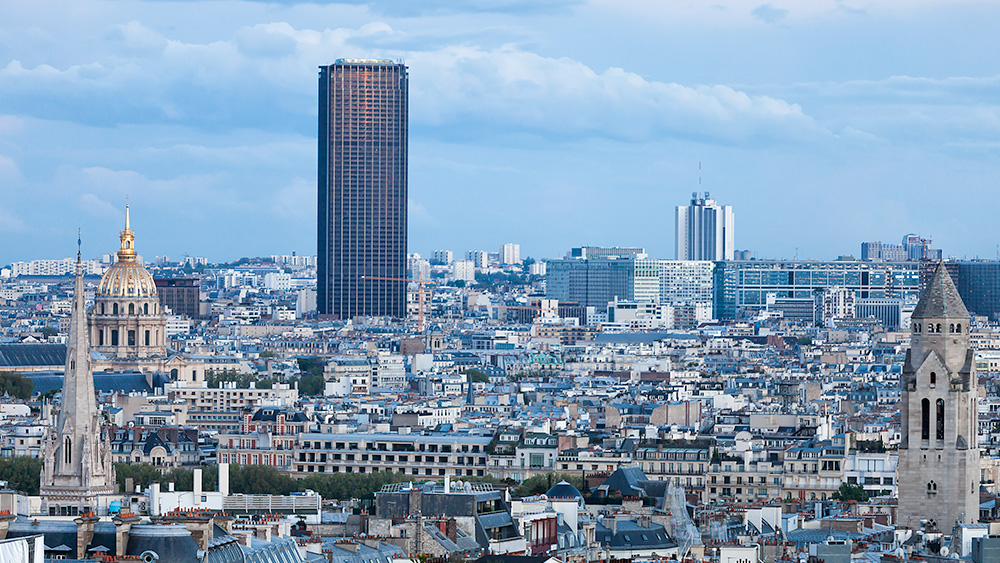
Above: The Tour Montparnasse looms over Paris.
Now, a radical plan is under way to give the tower a second life. Its architects hope that by changing almost everything about how it looks, they might finally persuade Parisians to make their peace with it, or at least stop noticing it quite so much.
Paris has long taken a cautious approach to tall buildings. While cities such as London and New York embraced vertical growth in the post-war years, France’s capital chose restraint.
There are more skyscrapers in New York City alone than across the whole of Europe. Paris, in particular, stands apart. That resistance can be traced back to the Tour Montparnasse itself. When it was completed in the early 1970s, it instantly disrupted one of the world’s most carefully regulated urban environments.
The tower rises more than six times higher than the surrounding Haussmann-era buildings, the six- and seven-storey apartment blocks that define much of central Paris. From many vantage points, it intrudes into views of landmarks such as the Eiffel Tower, Les Invalides and the Champs-Élysées.
Architectural historians note that Paris is unusually homogenous for a global capital, built largely from local limestone and governed by strict rules on height and façade. In that context, the Tour Montparnasse stands in sharp contrast: darker, more monolithic and radically out of scale with its surroundings. Yet the tower was not conceived as an act of provocation.
In the 1950s, Paris was struggling. Much of the city’s building stock was ageing, overcrowded and poorly suited to a changing economy. While other global capitals were constructing large office districts, Paris remained dominated by workshops, studios and small-scale commercial space.
The area around Montparnasse station seemed an obvious place to experiment. Once a bohemian centre of artists and writers, it had declined in the years after the Second World War. The station itself was handling around 50,000 commuters a day and was nearing capacity.
Edgard Pisani, a senior government official, believed the solution was redevelopment on an unprecedented scale. In 1959, he unveiled the Maine-Montparnasse plan, a four-phase project that would rebuild the district with new housing, a shopping centre, a redeveloped station and, at its heart, a landmark office tower.
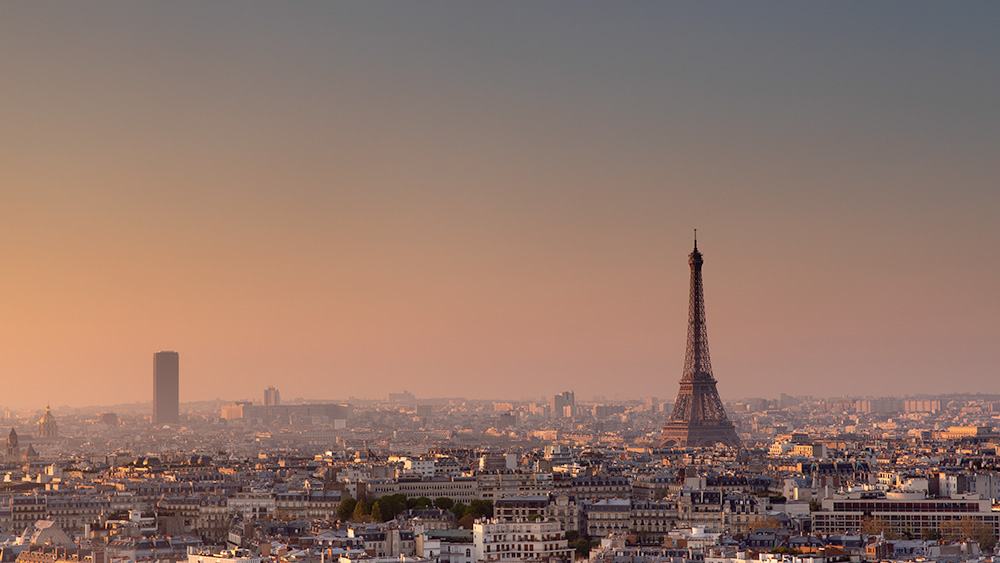
Above: The skyscraper on the Paris Skyline.
The aim was to draw office workers back into the city and demonstrate that Paris could still compete with other major global centres. Delivering that vision proved far from straightforward.
France had little experience constructing buildings of this scale, and the site presented a unique challenge. One of Paris’s busiest Metro lines, Line 6, ran directly beneath the proposed footprint of the tower.
Engineers concluded that the only viable option was to build the skyscraper directly over the tunnel and distribute its enormous weight evenly on either side.
To achieve that, the tunnel was reinforced with thick concrete walls and beams capable of supporting tens of thousands of tonnes. Fifty-six deep piles were sunk up to 60 metres into the ground to reach stable clay beneath soil weakened by centuries of quarrying. More than 12,000 cubic metres of concrete, over a quarter of the total used in the building, ended up underground.
The tower’s structure also relied on techniques that were still relatively new at the time, including slip-form construction, which allowed its concrete core to be poured continuously, day and night. At its peak, the building grew by around 30 centimetres a day. By 1973, the Tour Montparnasse was complete. Technically, it was a triumph. Publicly, it was a disaster.
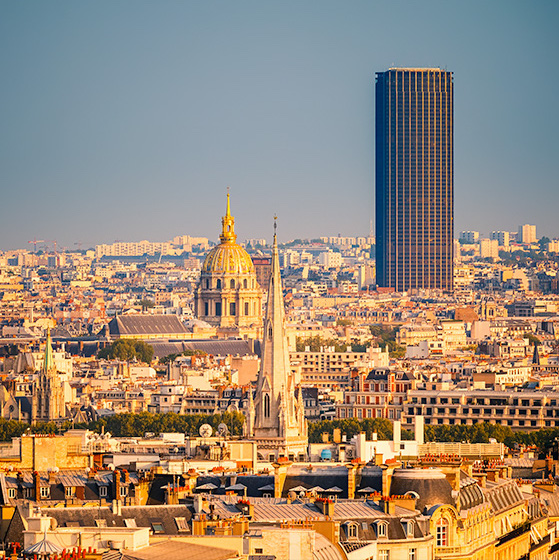
Above: The Tour Montparnasse was controversial from its conception.
Opposition began almost immediately. Residents objected to the tower’s height, colour and dominance, and to what it symbolised. The building had been intended to represent renewal and modernity. Instead, it became associated with a vision of progress that many Parisians rejected, particularly when set against a cityscape that people strongly identified with.
In 1977, the French government imposed a 25-metre height limit across central Paris, ensuring that nothing like the Tour Montparnasse could be built there again. Later attempts to relax those rules, including the controversial Tour Triangle project, repeatedly ran into political and public resistance.
As a result, tall buildings were concentrated in La Défense, the business district nine kilometres west of the city centre, beyond the périphérique ring road.
By the 2010s, calls to demolish the Tour Montparnasse were no longer marginal. Several political figures openly supported the idea.
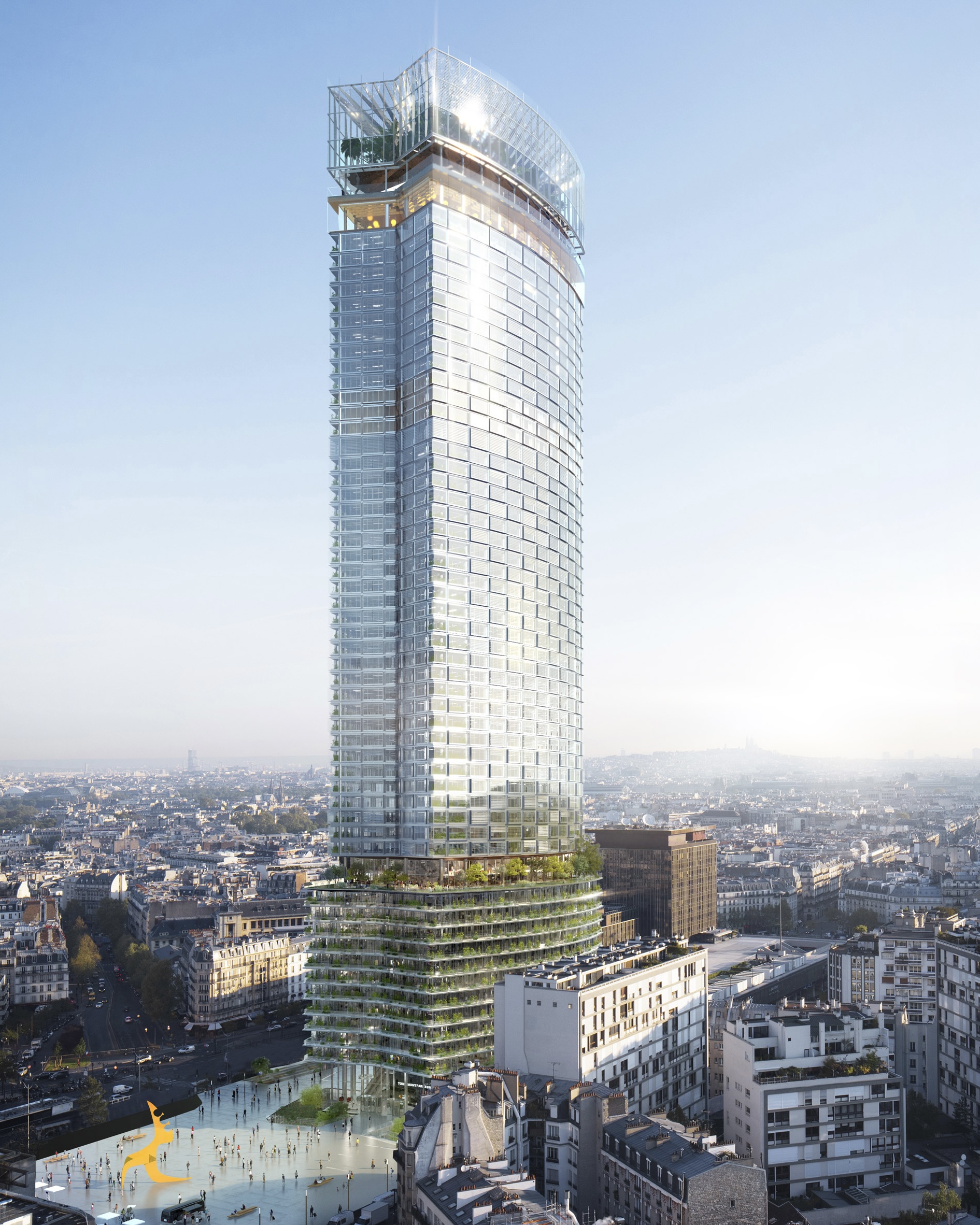
Above: How the redesigned Tour Montparnasse will appear. Image: Nouvelle AOM.
Instead, in 2017, Paris approved a €300m renovation designed by the architecture collective Nouvelle AOM.
The plans are deliberately transformative. The tower will be stripped back to its core and steel frame. Its dark façade will be replaced with transparent glazing. Sky gardens will puncture the building’s mass, softening its vertical emphasis. Openings in the exterior are designed to harness strong winds at height, allowing for natural ventilation.
The intention is not to turn the tower into a new icon, but to reduce its visual impact on the city.
Some architectural historians have questioned whether such a comprehensive makeover risks erasing an important, if unpopular, chapter of Paris’s post-war history. Work is expected to begin in 2026.
Whether the project succeeds remains uncertain. The Tour Montparnasse will always rise above its neighbours. But for the first time in half a century, Paris is attempting reconciliation, not by celebrating its only skyscraper, but by trying to make it quietly disappear.
Download the Straight Arrow News app by clicking here to stay informed with unbiased straight facts.
Additional footage and images: Nouvelle AOM, Indiana University, BNF, SNCF.
We welcome you sharing our content to inspire others, but please be nice and play by our rules.
Comments