
Buffalo’s New Highmark Rewrites the Stadium Playbook
- Youtube Views 1,169,107 VIDEO VIEWS

04 February 2026
Video hosted and narrated by Fred Mills. This video contains paid promotion for Brilliant.
IF you’re a football fanatic, it won't take you long to notice that new Highmark Stadium looks nothing like any other new NFL stadium.
The soon to be home of the Buffalo Bills looks traditional, utilitarian and seemingly not out of place in any major US city 50 years ago. Whilst that might sound like the set up to an insult, it’s not.
With its old school brick detailing and open to the elements style, new Highmark Stadium is a facility that harkens back to the venues of yesteryear.
The question is, why are the Buffalo Bills building a stadium of the past in 2026?
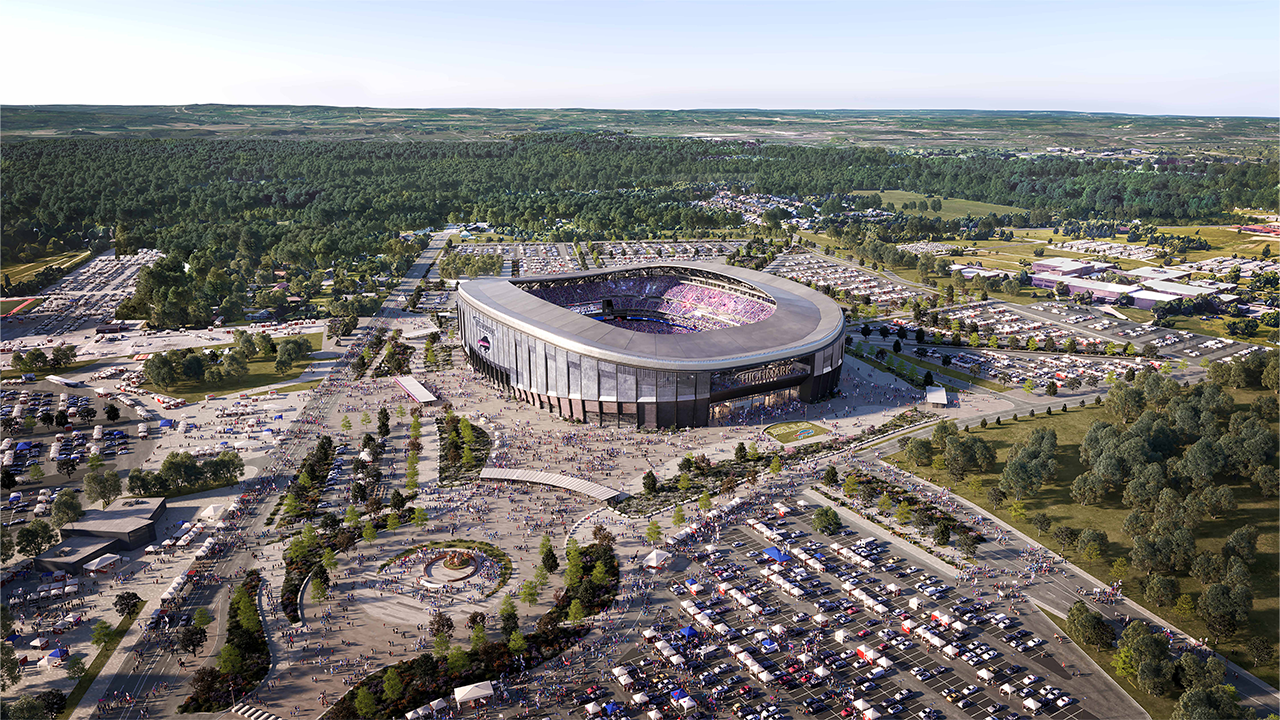
Above: New Highmark Stadium is set to open in summer 2026. Image: Populous.
The NFL is massive
With its growing global appeal, he NFL is the most financially profitable sports league on the planet.
Just look at the value of its franchises - according to Forbes, the Dallas Cowboys top the worldwide polls with a staggering value of $13 billion.
The nearest football, or soccer team if you’re across the pond, is mega-giant Real Madrid, ranked 20th at nearly $7 billion. Of the top 20, an impressive 13 are NFL franchises and of the top 50, 30 are from the NFL. There are only 32 teams in the National Football League so in other words, the sport is rolling in money.
But as the game continues its rapid ascension and the eyes of the world start paying more attention to America’s game, franchises across the league are under heaps of pressure to keep up.
It’s why new stadiums have been popping up left, right and centre and the league’s newest stadium, set to open in summer 2026, is new Highmark: future home of the Buffalo Bills.
The franchise currently plays at one of the oldest facilities in the NFL, Highmark Stadium, and renovating it ready for the modern day would be extortionate. For context, Real Madrid’s stadium renovation cost around $2 billion.
Depending on the amount of work needed, modern amenities need merging into an old structural skeleton and that skeleton may need a refresh of its own. It meant a brand new stadium made more sense although that still doesn't don’t come cheap.
New Highmark costs an eye-watering $2.1 billion. For context, Allegiant which opened in 2020 cost around $1.9 billion, Mercedes-Benz opened in 2017 costing about $1.6 billion and SoFi Stadium, home to both the Rams and the Chargers, cost around $5 billion.
What’s worth noting is the massive public investment being put towards new Highmark - a rather unpopular $850 million thanks to local and state taxpayers. It’s one of the biggest investments made by the public into an NFL stadium and it doesn’t even have a roof.
The argument is that a fresh new stadium adds value to a city. In the long run it should lead to financial gains by attracting visitors to the area for football games, gigs and whatever else the arena’s hosting.
But in reality, research suggests investments like this almost never lead to economic gains for a city’s residents and so the money spent is highly frustrating for non-football fans in the city.
Until these plans were confirmed, Buffalo Bills were looking to leave Buffalo but now, with new Highmark, the team will stay in Buffalo, as they have since 1960. In a car park right across the road from the current stadium, new Highmark Stadium is on the rise.
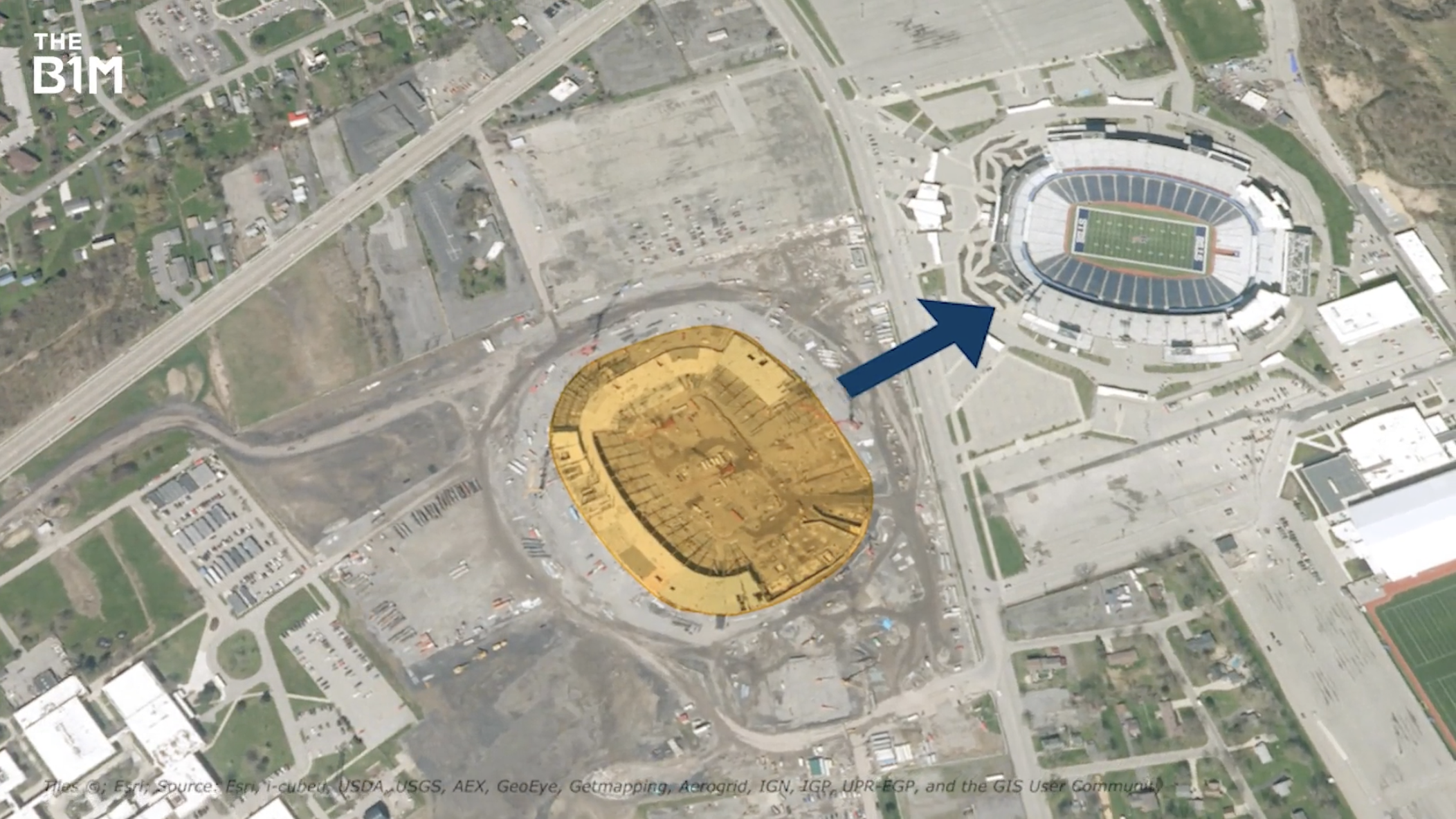
Above: New Highmark is right across the road from the current Highmark Stadium.
New Highmark is no spaceship
Everything we know about modern NFL facilities can be learned from the four most recently opened arenas. Each looks like it could be the not-so-secret headquarters of the Avengers.
From the outside, you’d barely know they were football stadiums at all and that's because they're about a lot more than playing ball. They’re multi-purpose venues built to host concerts, festivals, parties, conferences, Wrestlemania and more.
In short, they’re giant marketing, cash machines.
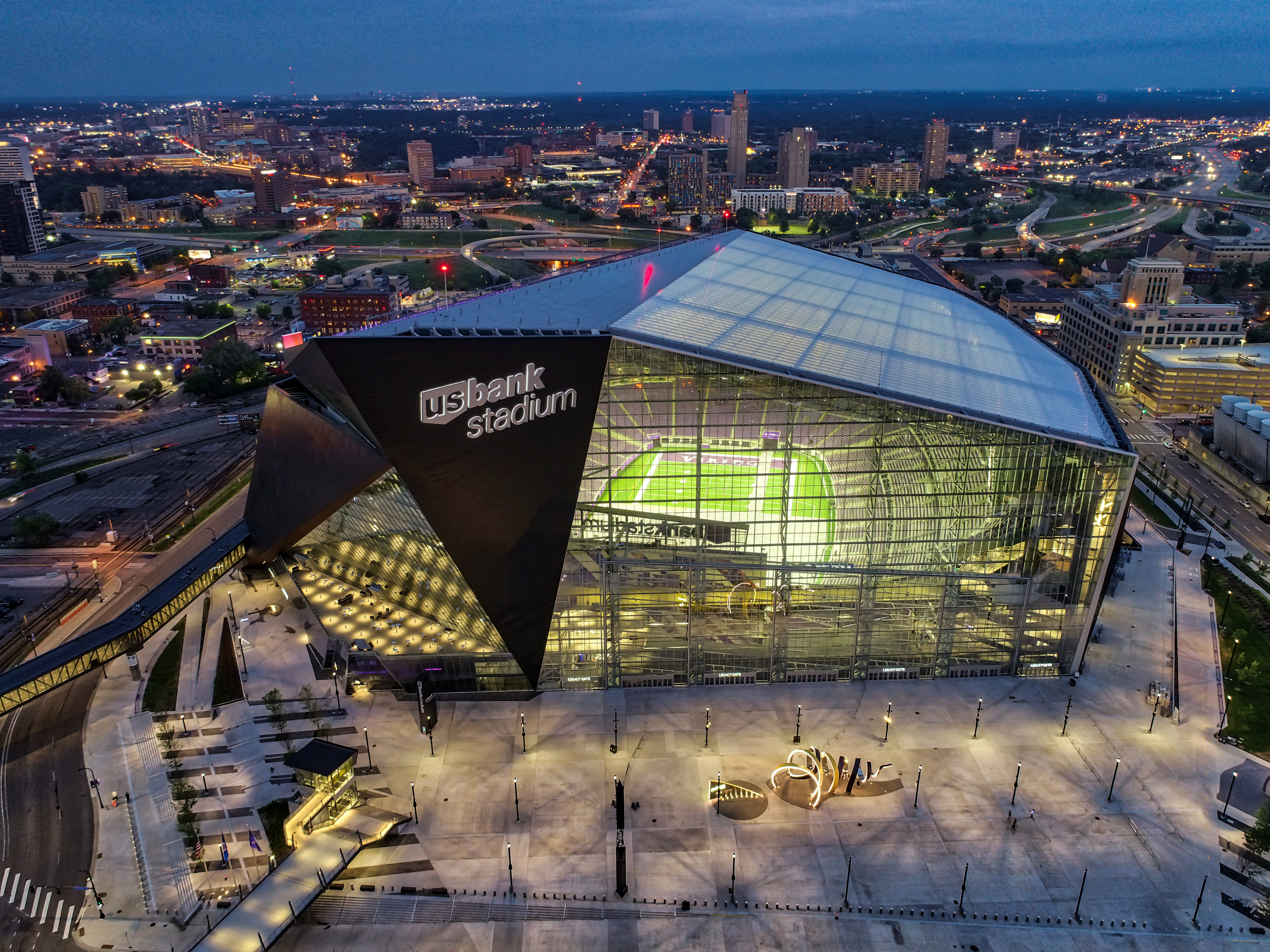
Above: U.S. Bank Stadium, home of the Minnesota Vikings and Minnesota Golden Gophers, opened in 2016.
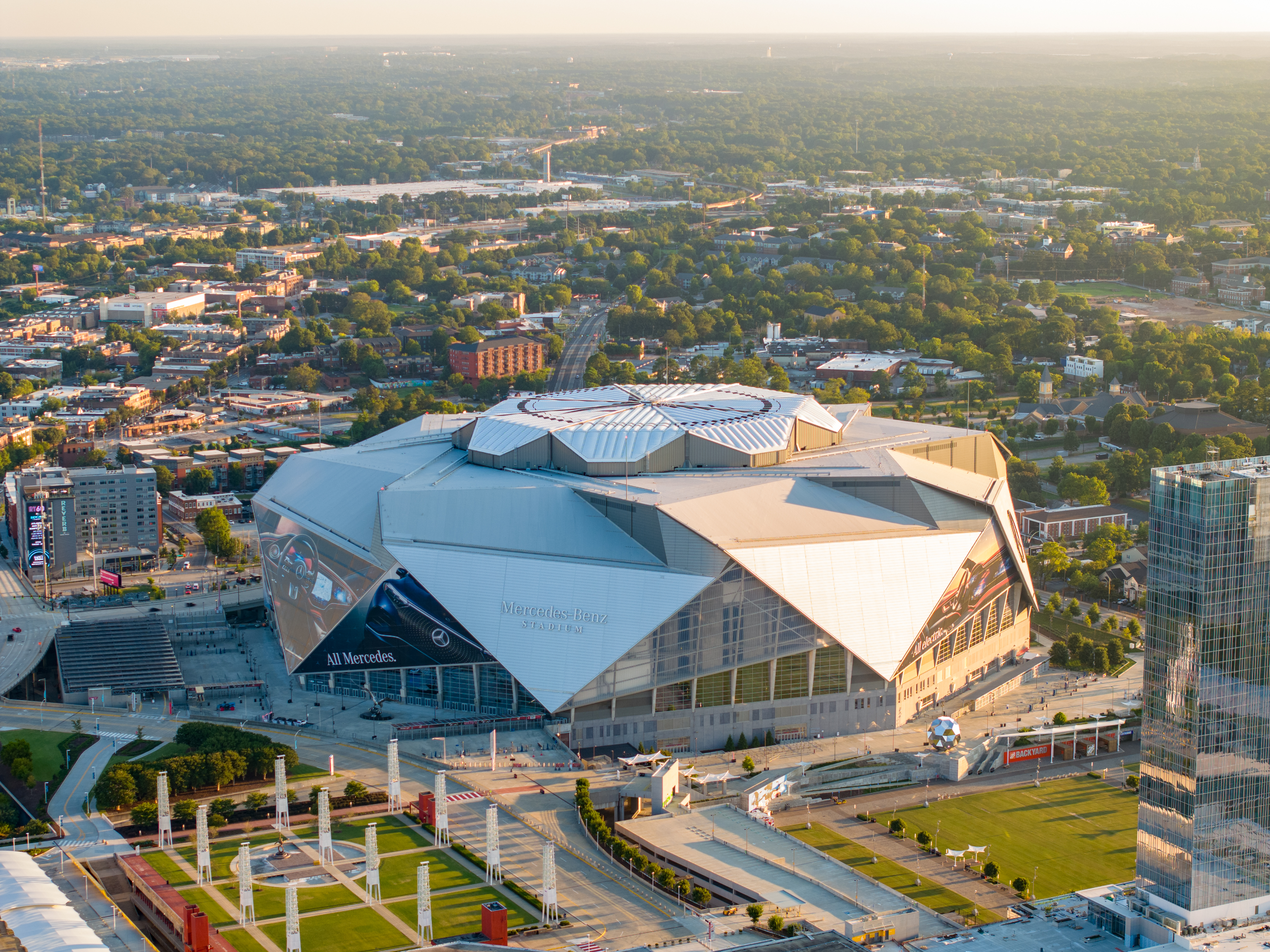
Above: Mercedes-Benz Stadium, home of the Atlanta Falcons and Atlanta United FC, opened in 2017.
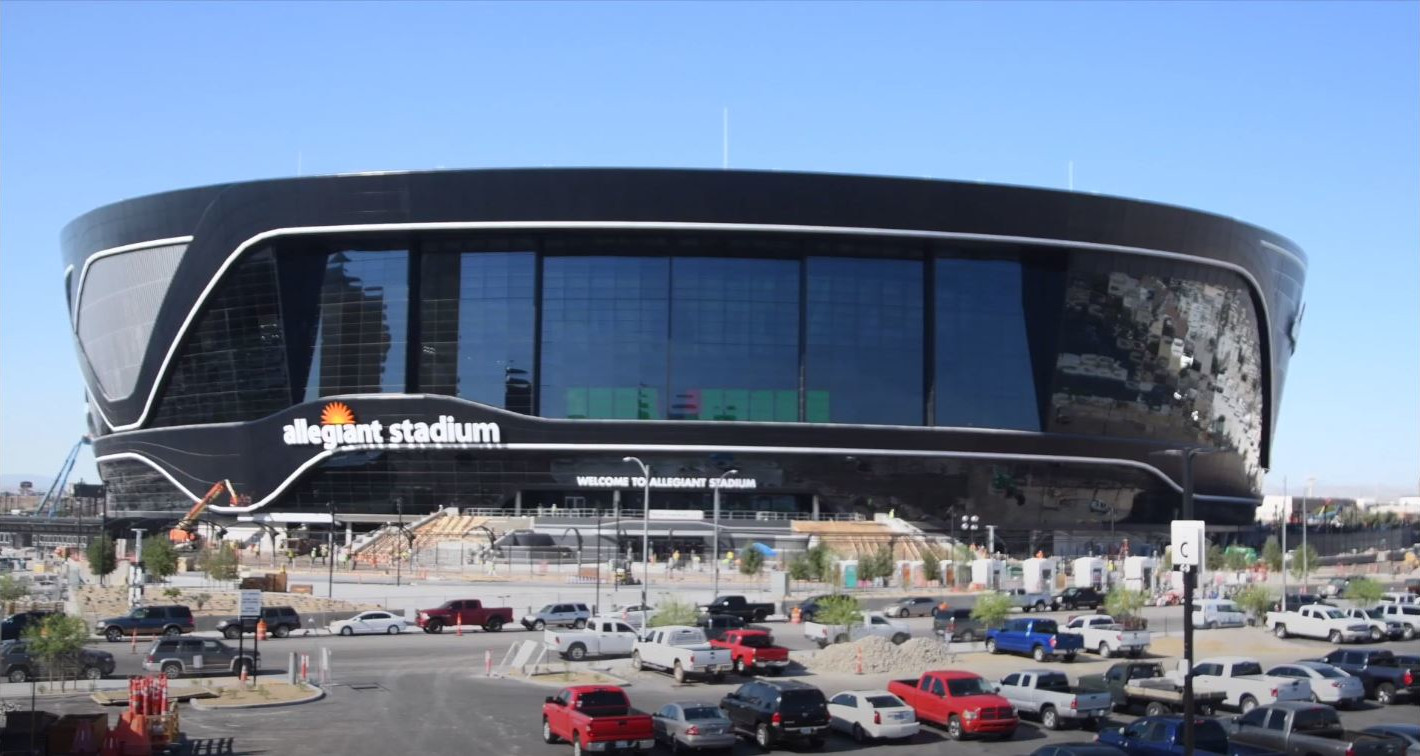
Above: Allegiant Stadium, home of the Las Vegas Raiders opened in 2020. Image: JediRich, Creative Producer.
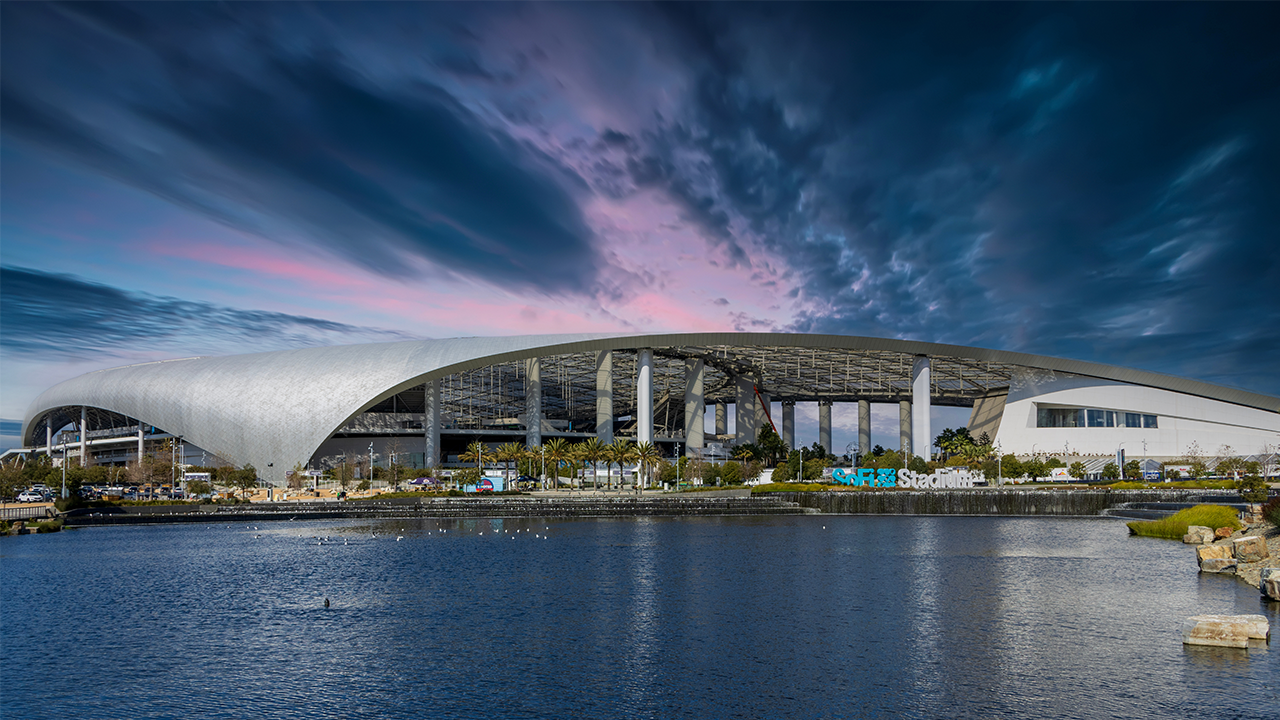
Above: SoFi Stadium, home of the LA Rams and LA Chargers, opened in 2020.
The football season only runs from September to February, leaving six months for money to be made from non-footballing ventures. It's why these modern stadiums are closed to the elements thanks to spectacular roofs to allow for year round usage.
They’re clad in glass to create a premium aesthetic and even the grass isn’t really grass. Three of the four most recently opened stadiums feature an artificial playing surface because it’s easier to maintain.
Then we have new Highmark Stadium, seemingly designed with one key priority as Jonathan Mallie, the managing director of Populous in the Americas, explains:
“From day one it was all about football first, Bills Mafia, designing for the team, designing for the fans. We never wavered off of that.”
Unlike its peers, you’ll find no fancy roof, no artificial playing surface, no crazy looking exterior facade and that's because punishing weather is all part of the gameday experience in Buffalo.
It’s the extra player on the Bills’ roster, making life difficult for opposition players. Ownership was keen to protect the open-air exposure but critically, with some innovative engineering solutions to make sure new Highmark is a stadium of the future.
Built for the future
While this stadium may not be following the modern trends set by other new arenas, its technology is certainly designed for the future.
At the base, iron-spot bricks form a solid band to give the building a modest grounding. Sprawling vertical elements then aim to give a sense of power and strength as Mallie describes:
“There are two primary materials we see on the outside of the building. The first is the brick coursing at the pedestrian level and that ties to a lot of the usage of brick throughout Buffalo and in many ways it was kind of a brick town in some of the historic architecture."
"When you zoom out and look at the overall design, from further away, you’ll notice these depressions in the metal facade. Those depressions are essentially akin to the Aud and Kleinhans Musical and some of the historic 1939 buildings in Buffalo.”
The exterior facade, or the skin of the building, features one of the stadium's first defences against the harsh conditions. Thousands of perforations cover the 4,400 giant steel panels that span the external facade.
Shaped like the Buffalo Bills charge logo, the gaps serve a very special purpose: wind manipulation. As wind hits the perforations, it enters the gaps and slows, becoming confused.

Above: Perforations in the exterior facade allow wind to enter, becoming confused and limiting the flow into the stadium bowl.
This stops the air flowing over the top of the stadium and circling inside the bowl, making for a bitter and blustery gameday experience for both fans and players.
But anyone who’s been to Buffalo in the winter knows the wind pales in comparison to the most dramatic weather obstacle: snow.
“This stadium was never going to have a roof. You know, this team, this ownership was all about football in December in Buffalo and snow is a friend in terms of the home field advantage. That being said, we wanted to keep the fans dry.”
The city experiences about 95 inches of snowfall each year making it one of the snowiest areas in the whole of the US and while it’s part of the gameday experience in the city, it’s cold, pretty disruptive and heavy, meaning it takes its toll on structural elements.
That’s where the stadium comes into its own. Alongside heating in the precast concrete stands to keep seating areas warm and further heating underneath the pitch, the canopy at the top of the stadium is a lot more than just a steel covering.
As it stretches out over the stands from the structural frame, it tapers down and inwards to create a funnel. When snow falls, sensors detect the change in temperature, automatically activating what Mallie describes as the largest snow-melt system in the NFL.
Hot water is sent through pipes that wrap around the canopy to melt the snow as it lands and in turn, radiate heat down below - it’s called a hydronic system.

Above: New Highmark Stadium features the largest hydronic system in the NFL.
A football first approach
The stadium canopy covers around 60% of all fans but it has a secondary purpose. Completely open air stadiums, while still loud, tend to lose some of the gameday atmosphere.
But this steel canopy has been specifically angled to trap noise in the bowl, bouncing off the steel and reverberating back through the stands. It’s all part of this mission to create the most intimidating atmosphere in the NFL.
Seating capacity has been stripped back to 60,000, from about 72,000 at the old stadium, with a further five to ten thousand people able to experience games from a standing-only section. The idea is that standing fans create more noise, lending to a vibrant atmosphere.
“There are some stadiums in the NFL where you have an entire open corner or different seating sections that are not really connected. When you have continuity, you’re creating continuity for the fanbase and Bills Mafia wants that so creating that 360 degree environment builds this kind of energy amongst the fans which is really second to none”, says Mallie.
In the interest of making the experience more intimidating for visiting teams, the upper seating deck will be the closest to the pitch of any stadium in the league and it’ll feature the closest general admission tickets to the grass.
More intimate than any other venue in the NFL, fans in Buffalo will be able to get closer to the players, hear each play call and feel the energy from the action on the field.
It’s what being a spectator at a live sports event is all about and while new Highmark still looks impressive, form really does follow function - first and foremost, this is a football stadium.
As innovative as all of these additions are, there’s no getting around one plain fact: there is no roof.
As mentioned, a roof allows you to host a whole world of events year round that snow and rain simply can’t be a part of and as amazing as the engineering behind new Highmark is, it’s a stadium built to embrace the elements, not eradicate them.
But what about hosting football’s biggest event? Mallie isn't convinced.
“I think Buffalo at that time of year, it might be a little bit tough but never say never. Drawing people to non-major cities and locations for Super Bowls is a little bit of a challenge but my fingers are crossed.”
A topping out ceremony for the steel structure has come and gone with construction moving into the latter stages ahead of opening in summer 2026.
Without rubbishing some of the new facilities like SoFi and US Bank Stadium, because they’re spectacular accomplishments, there's something satisfying about new Highmark being built for football purists.
It combines the best elements of the original Highmark Stadium with the modern engineering that carries a structure into the future. When you go to new Highmark, you should still get that unique Buffalo gameday feeling but with more than a touch of modern comfort.
It’ll offer a very different experience to any other new stadium in the NFL and that in itself should be celebrated.
The video and article contain promotion for Brilliant.
Additional footage and images: Populous, Peter J. Cimino, FOX Sports, CNBC, ElectricTV, Wrestlemania, Tennessee Titans, Mattison Twins, ABC News, All-Pro Reels, Erik Drost, ESPN, Sky Sports News, WGRZ-TV, CBS, WIVBTV.
We welcome you sharing our content to inspire others, but please be nice and play by our rules.
Comments