India Built the World's Most Remote Bridge
- Youtube Views 1,588,721 VIDEO VIEWS

26 January 2026
Video hosted and narrated by Fred Mills. This video contains paid promotion for Odoo.
DEEP in the foothills of the Himalayas, temperatures near Reasi vary in the extremes, dropping from 50 degrees celsius all the way down to freezing.
Everywhere you look, jagged cliff faces create these deep, dangerous canyons so you can imagine the challenge faced by crews attempting to build a world record breaking bridge there.
To access civilisation, teams had to trek the dusty tracks by foot or take a boat journey along the river.
Simply getting to the Chenab Bridge site was an enormous undertaking, let alone manoeuvring the nearly 30,000 tons of steel necessary to build it. No motorways, no nearby factories and not a flat, stable surface in sight.
This is construction in one of mother nature’s most unforgiving environments.
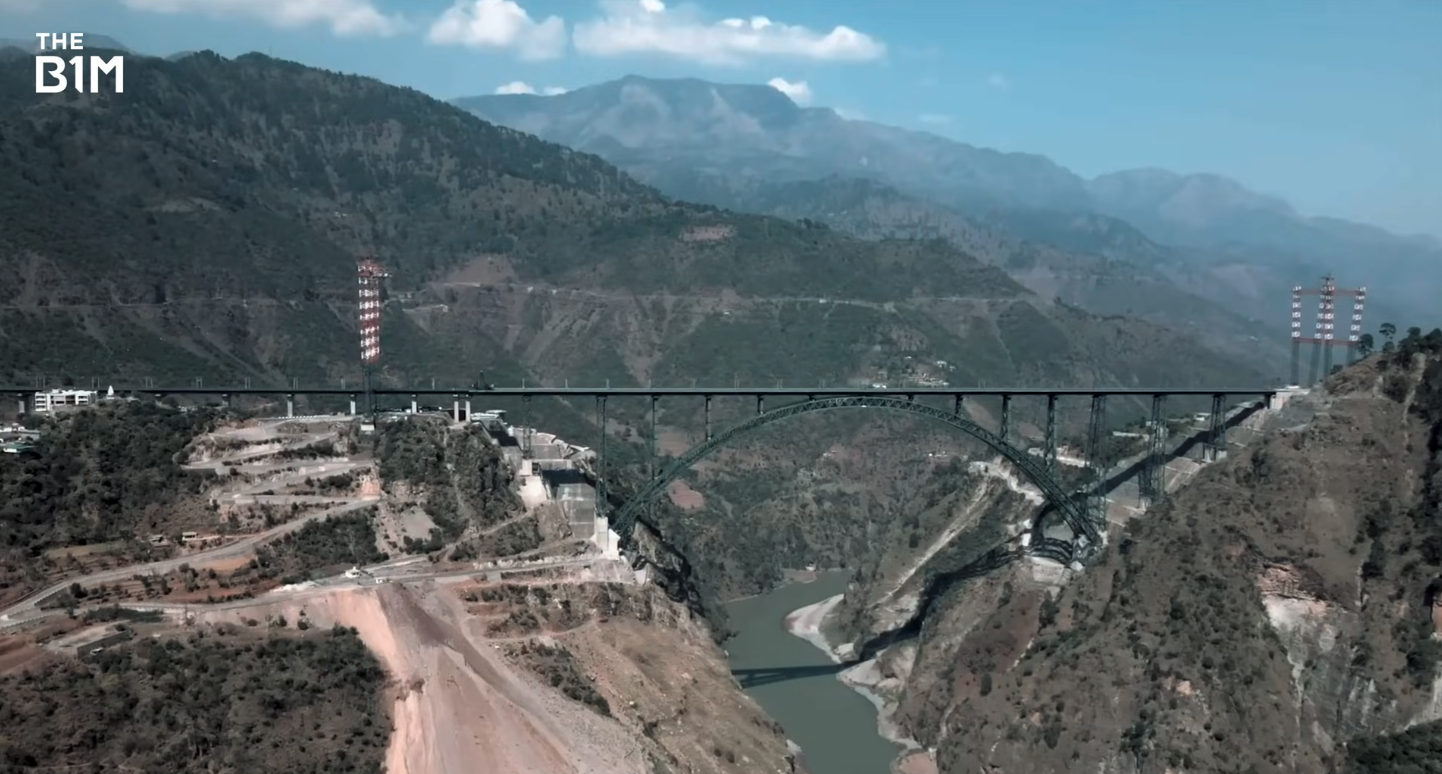
Above: Chenab Bridge sits 359 metres above the river down below, making it the highest rail bridge in the world. Image: Narendra Modi.
Far from straightforward
It sounds dramatic but constructing Chenab Bridge should have been impossible.
From searing temperatures, to dangerous ice and snow, working conditions don’t come much tougher and it’s not just the crews who suffer. When exposed to extreme temperatures, steel expands and shrinks making it a real challenge to manipulate and accurately line up.
But while workers are fighting the sun and snow, there’s an even bigger threat looming: the wind. The canyon Chenab Bridge looms over experiences powerful gusts of up to 165 miles an hour.
That’s unbelievably dangerous for people working hundreds of metres above the ground as it is, let alone when you consider they’re manoeuvring thousands of tons of steel into place. But even if the weather decides to take it easy, there’s no guarantee an earthquake won’t shake the ground to its core.
Any one of these factors could have put a stop to the notion of building a canyon-crossing bridge in the area and still they pale in comparison to the main challenge of Chenab Bridge: actually getting to it.
David MacKenzie is the senior technical director for COWI and he was involved with the project since 2004.
"When we first started the project we were invited to go up and donkeys were provided to help us get up the stream to the river so we could see where the bridge was going to go and then we had to climb up the hills. The first trip we took a boat on the way out because it was quicker by boat down the river than it was to try and negotiate these tortuous mountain paths."
Chenab Bridge is part of a 169 mile all-weather rail line looking to better connect India with Kashmir Valley. They’re separated by mountains and connected by one main artery - National Highway 44 - which is regularly blocked by snow.
But the line isn't universally popular. Kashmir is an area of high political tension and it’s one of the most militarised zones in the world, divided between India and Pakistan.
While India says its new all-weather rail line will give the area an economic boost and improve travel connections, opponents claim it’s being used as a way of exerting more control over the region.
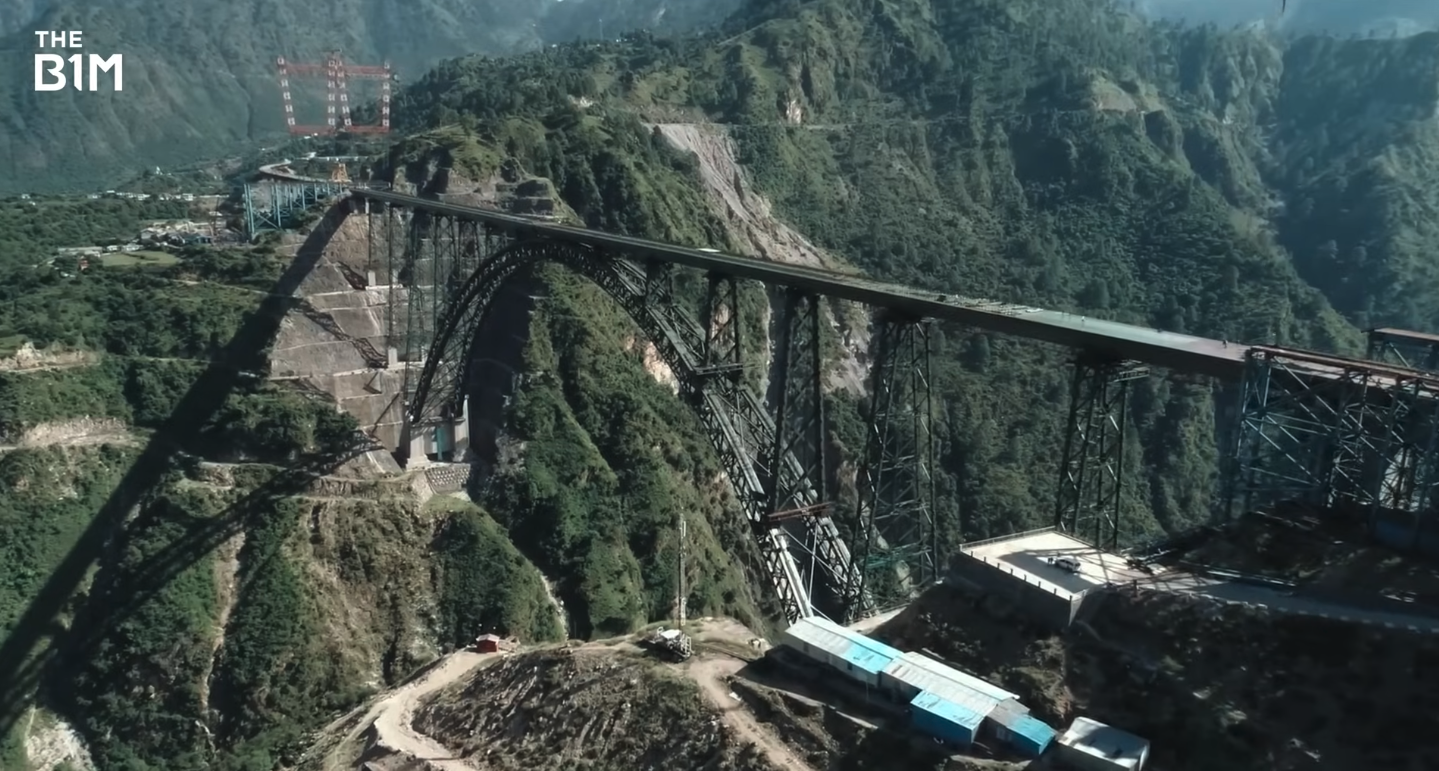
Above: India says Chenab Bridge will help to offer vital access to Kashmir, while opponents say it's about gaining greater control in the region. Image: Narendra Modi.
Building the bridge
The line features a mind blowing 943 bridges and 36 tunnels, including one stretching seven miles but Chenab Bridge is the most fascinating.
On either side of the canyon, the site features two fabrication workshops. Usually on a project this big, key components would be prefabricated in factories far away and manoeuvred to site but that wasn’t an option.
To make the location even remotely accessible for vehicles, teams had to build a whopping 26km of roads specially for this project, twisted along the sides of mountains, clinging to cliff edges.
Once materials reached the site the next challenge was to actually building the bridge, hundreds of metres above the ground and over a giant canyon.
The topography is nothing short of a nightmare - a jagged, rocky canyon split by a river makes for some beautiful views but an incredibly tricky engineering job.
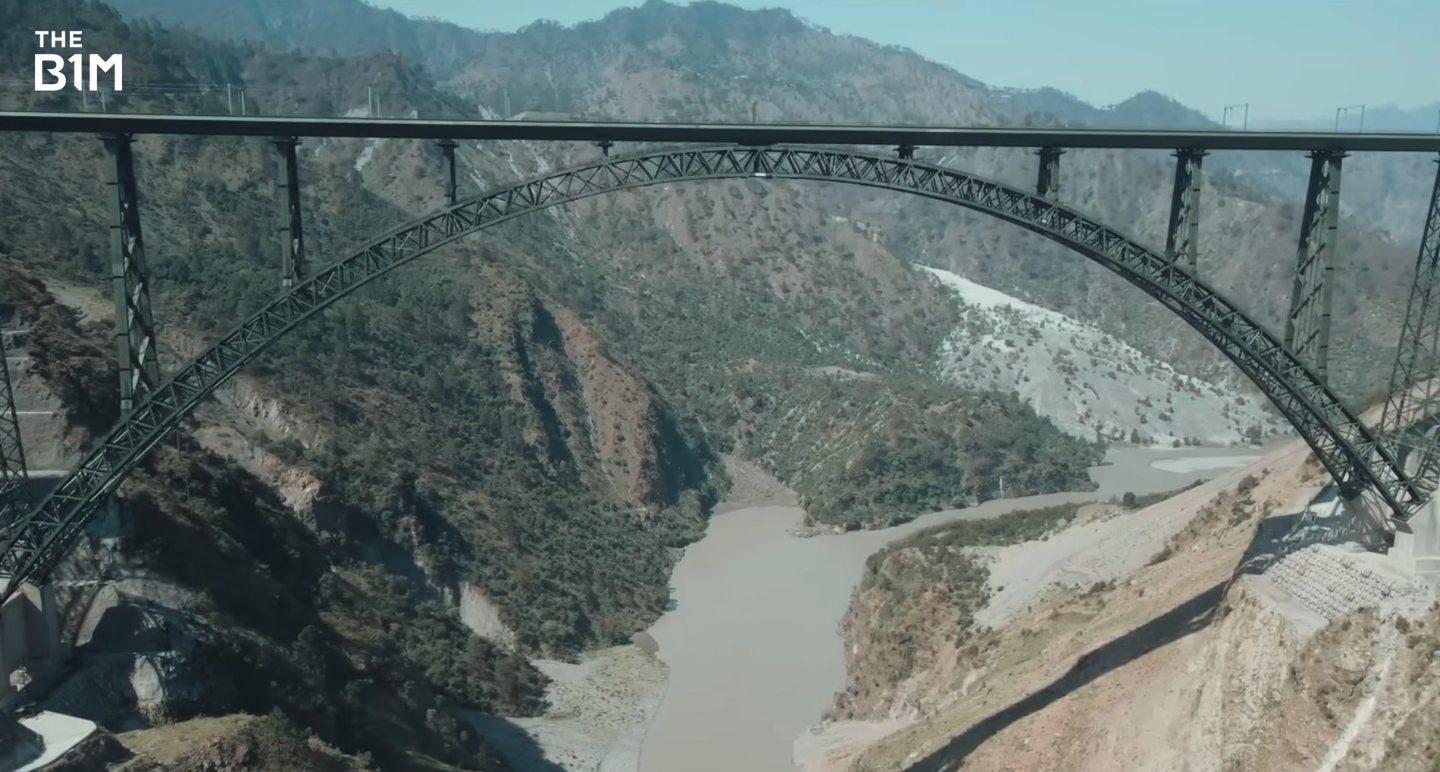
Above: Building Chenab Bridge was no easy task thanks to the challenging topography of the canyon. Image: Narendra Modi.
As mentioned, one of the biggest factors is the wind, thanks to a phenomenon known as the Venturi effect.
That’s when a narrow passage like a canyon becomes a funnel. As wind passes through, its pressure drops as its speed increases, creating powerful, chaotic patterns and that’s before we’ve discussed the terrain.
In geological terms, the Himalayas are very young and they’re still moving. The range was forced up by the Indian and Eurasian plates driving into one another, creating a heavily twisted landscape and the rock along its canyons is fractured and friable.
By nature a canyon is a distorted ‘v’ shape. If you try to fix a tower down into an inclined face, especially one with unreliable rock, there’s a tendency for it to want to slide down the hill and that’s why Chenab Bridge is an arch design.
It’s constructed from either end, with both sides meeting in the middle and creating a locked shape. As they meet in the middle, they push against each other, forcing weight down through the legs and into the mountain.
However, before any construction takes place, a model of the structure is usually put through a wind tunnel to test stability and while that was done here with a 1 to 50 scale model, the unique topography called for more drastic research as MacKenzie explains:
"We did some localised tests, both physical and computational, by modelling the environment around it, the hills, the valleys so then we could calculate the accelerated flows locally because of course they push up in their wind speed."
"If there’s an acceleration of 20%, your maximum wind speed of say, 50 metres per second, is now 60, 70 metres per second so you’ve got to take that into account."
The ability to stabilise this bridge with an incredibly strong arch is crucial but it’s stretching over a canyon, hundreds of metres above the river down below.
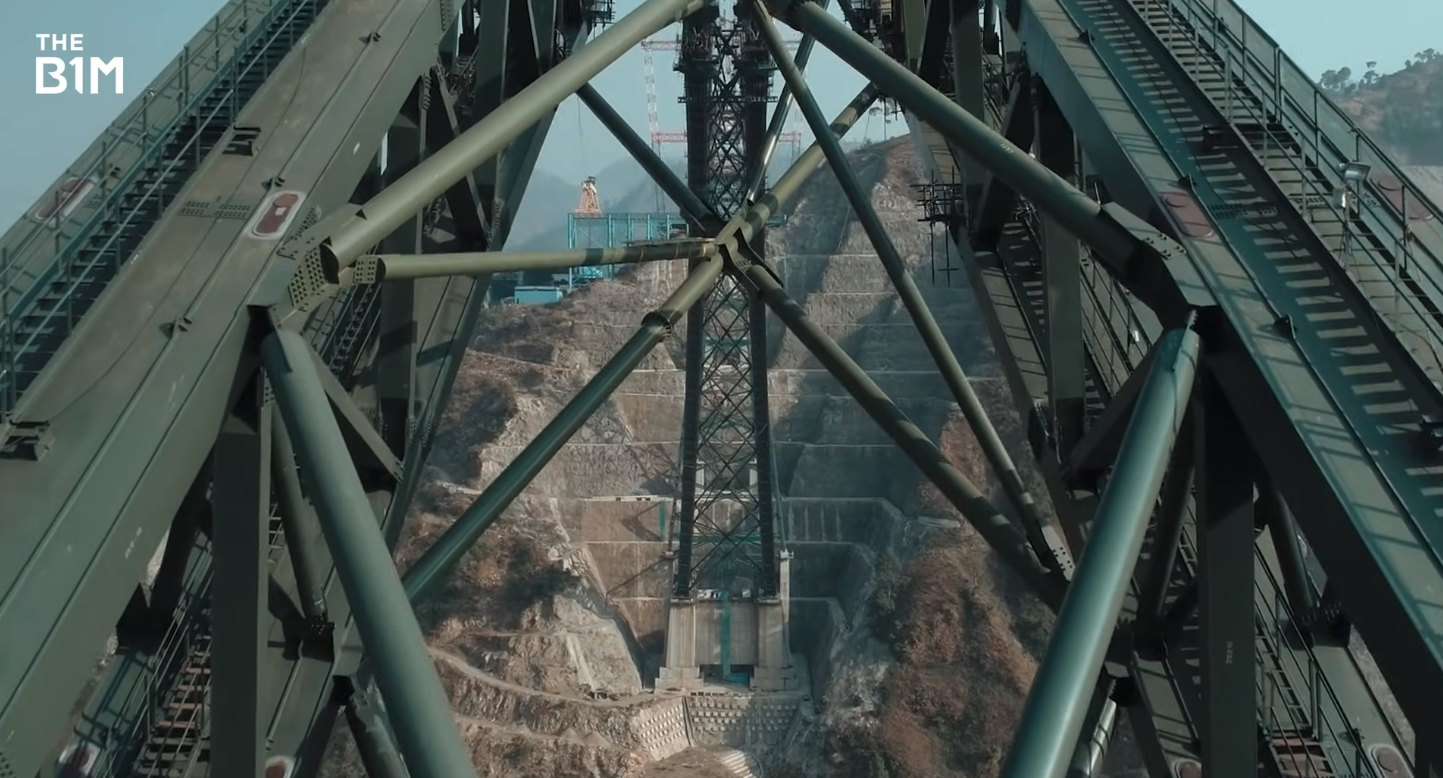
Above: The Chenab Bridge arch is the key component supporting the weight of the structure. Image: Lalit Kumar Rawal.
To actually build it, crews first had to construct a cable crane which is a bit like an aerial trapeze or a monorail made of cables. Towers are constructed on either side of the canyon and a cable connects them. Pieces of steel for the arch are winched across on the cable crane and into the correct location.
Each side of the arch is then built from the bottom upwards, held back by cables locked into the rock to stop them toppling nearly 400 metres down to the river below and once complete, you have an arch.
Once the arch was complete the supporting towers were erected to allow for the top deck to come into play. It's a large, flat piece on top of the bridge where the rails sit and it's constructed in sections.
Working from each side of the canyon, a piece of top deck is laid, then another piece is pushed in behind it, another is placed and pushed along and so on until the two sides meet in the middle. It’s known as a launch methodology.
It goes without saying the stability of the top deck is crucial - the safety of trains has to be central to the project’s construction - and one of the key environmental threats to the bridge's stability is experienced around the world, although maybe less so in the UK: the sun.
As previously mentioned, temperatures at Chenab Bridge vary from freezing all the way up to a scorching 50 degrees celsius and that impacts the steel that the bridge arch is made out of.
The big problem with this canyon is that the sun can only shine on sections of the bridge at any one time, meaning it needs to operate at different temperatures.
As the bridge arch warms and cools, it bends and flexes which is far from ideal for moving trains. In preparation, the rails have been stressed so that they’re pulled really tight for stability.
However, to avoid damage to the track as the bridge moves, it’s allowed to slide inside its fixings which attach the rails to the overall structure.
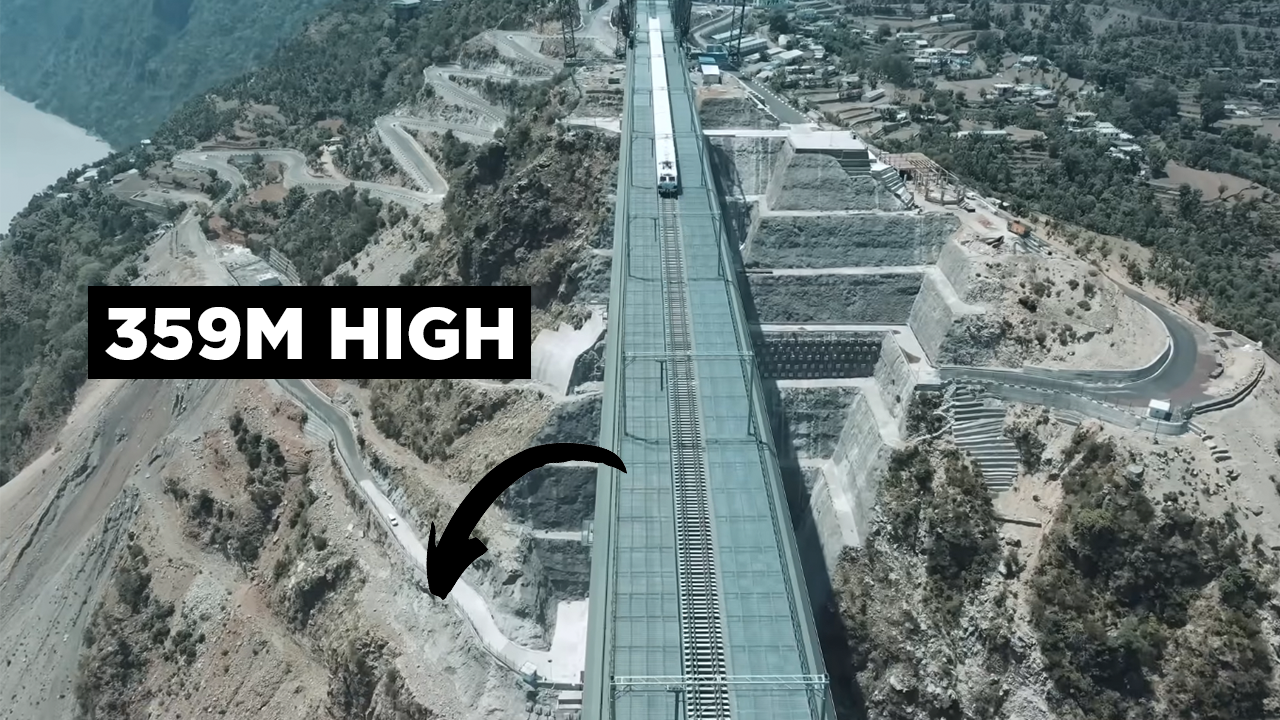
Above: The bridge was inaugurated last year to allow for trains to travel the route.
The finished article
Designed by the WSP team in Finland, the arch and its towers loom over Chenab River. The rock and steel blend in with the mountainous backdrop and in doing so, offer some of the best train passenger views on the planet.
The line was inaugurated in the summer of 2025 as India begins its next chapter of connectivity and while Chenab Bridge is just one part of a number of rail projects across the country, it might be the most impressive.
To create this bridge, construction teams had to build where no one has built before and yet through incredible determination and innovation, it’s now home to a brand new railway.
More than 20 years after construction first began, following delays and complications, boat journeys and trekking on donkeys, cable cranes and kilometres of purpose built roads, construction crews found a way.
Chenab Bridge is the perfect example of the hardships faced by teams building in some of the world's most challenging environments.
But the enormous efforts taken to create structures like this pave the way for future generations, yet again showing what this industry is capable of, even against all the odds.
This video and article contain paid promotion for Odoo.
Additional footage and images: Trimble, Narendra Modi, Afcons, Lalit Kumar Rawal, The Print, Megha Engineering and Infrastructures Ltd, The Indian Express, North Geographic, Gyan Tokri, Jean-Yves FOUCHECOURT.
We welcome you sharing our content to inspire others, but please be nice and play by our rules.
Comments