
Switzerland is Building Another Mountain Mega-Tunnel
- Youtube Views 1,265,605 VIDEO VIEWS

18 March 2026
Video hosted by Fred Mills.
THE A2 is one of Europe’s most important highways, running all the way across Switzerland.
It connects the German and Italian borders, providing a clear route through the Alps — a journey that’s only been possible since the late 20th century.
And it’s all thanks to a tunnel that millions of people rely on every year. But now it’s starting to show its age and has to close for repairs.
Without some sort of replacement, the consequences would be severe, causing chaos throughout the region.
Which is why the Swiss government is building a second tunnel to ensure this critical corridor remains open, using cutting-edge techniques.
It’s a project that simply cannot fail, and yet it’s now having to overcome a pretty big problem that’s left this huge piece of equipment in a sticky situation.
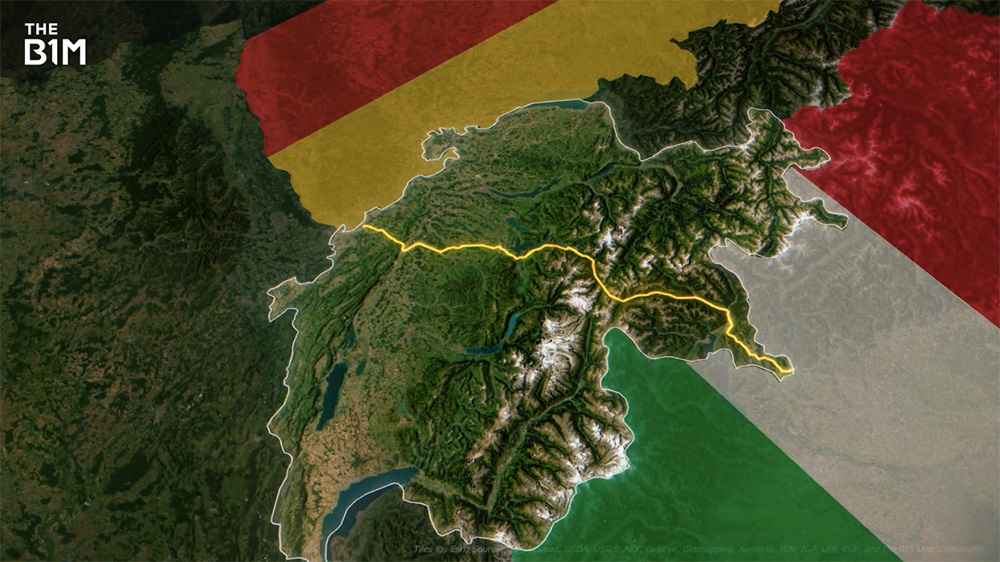
Above: The A2 connects Germany and Italy, covering the length of Switzerland from North to South.
Imagine you’re about to take a drive across Continental Europe from North to South. Let’s say Amsterdam is your starting point, and Rome is the destination.
The chances are your sat nav will take you through Switzerland, which sits right in the heart of the mainland.
But more than that, you’ll probably be directed down one road in particular — the A2. It’s a hugely important transport corridor for the entire continent, and it passes right through the middle of the Alps.
If it were to close, thousands of drivers would need to find a detour in a place where they’re very hard to come by.
They’d either be forced onto other already-busy highways, or one of these narrow passes — some of which are unusable in winter.
Fortunately that’s unlikely to happen because the A2 is part of one of the most impressive tunnel networks in the world — and not just for cars.
More holes than Swiss cheese
You’ve got the 57km-long Gotthard Base Tunnel — currently the longest rail tunnel in the world — at least until the one between Lyon and Turin finishes.
Then there’s the Gotthard Tunnel — no, that’s not just the same thing again, it’s a much older one — and the Gotthard Road Tunnel, which carries the A2.
Why do they sound so similar? Because they all pay homage to Saint Gotthard — the 11th century German bishop.
Don’t worry though, the only one you really need to remember for the purpose of this story is the Road Tunnel.
It takes the A2 underground for almost 17km — between Airolo and Göschenen. And it’s been doing so since the ‘80s.
Before its opening, drivers had to take the Gotthard Pass, a winding route that was first used properly in the 1400s. A journey that typically took one and a half hours via the Pass was cut to just 15 minutes.
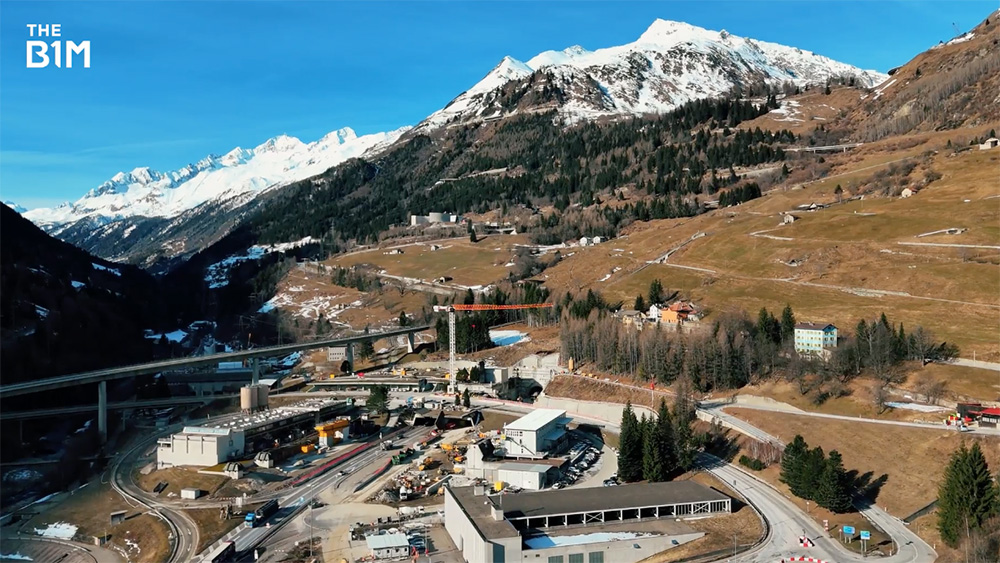
Above: The southern entrance to the Gotthard Road Tunnel in Airolo. Image courtesy of Swiss Confederation.
Construction took seven years and was primarily done with conventional drill and blast. If you’re a B1M fan you’ll know this already, but just in case — it’s where holes are drilled into the rock, filled with explosives, there’s a big bang and the rubble is cleared away. Then you do it again, and again.
Completing in 1980, it became the world’s longest road tunnel — a title it held for 20 years — and is the seventh longest today.
However, by the 2010s this critical connection was in need of an overhaul. The structure was beginning to show its age.
Let's go again
So, in 2012, the Swiss Federal Council decided it was time to, yep, build yet another new tunnel. Not because it would boost capacity or replace the existing one entirely.
Instead, this additional crossing will take over from the current tunnel, allowing it to be upgraded. Both tunnels will then operate side by side once the original tube has been brought up to spec.
“Basically it’s for the security standard, and also [because] all the electromechanical parts have to be renovated,” explained Udo Oppliger, project manager for the Swiss Federal Roads Office (ASTRA).
“We cannot close the tunnel for three-four years. That’s why the Swiss Confederation decided to build a second tunnel — to renovate the first one without interrupting the traffic.”
Four years after it was put forward, the people of Switzerland gave their consent to the plan in a referendum.
Then, once another four years had passed, preparation work began and the project was given a 2030 completion date.
Before we go any further, if you were already struggling to follow all those tunnel names earlier then guess what this new one is called? The Second Gotthard Road Tunnel. Oh well, at least it makes sense.
Unsurprisingly, there are many similarities between the old and new tunnels. They’re exactly the same length because they have to run in parallel, with the existing service tunnel — or safety gallery — placed in between.
And construction is taking place from both ends simultaneously — just like in the 1970s. But the methods have moved on a lot since then, so this time most of the work will be done with tunnel boring machines.
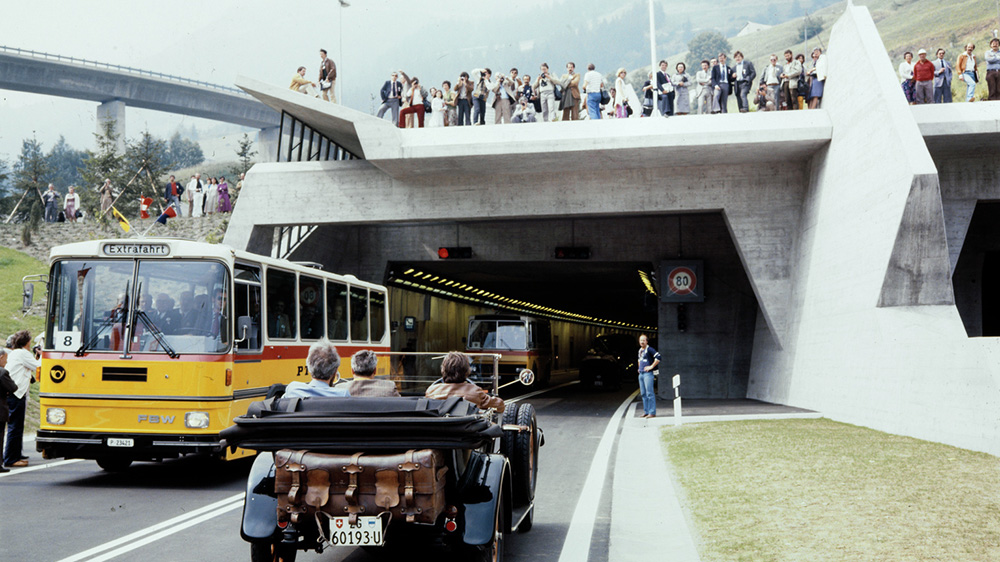
Above: The opening of the Gotthard Road Tunnel in 1980. Image courtesy of ETH Library Zurich.
One TBM — Alessandra — is digging from the north, and the other — Paulina — has been coming up from the south. Both have a diameter of more than 12 metres.
After around two years of tunnelling, they’re due to meet in the middle, having passed through completely different types of ground on the way.
As well as major fault zones, also known as shear zones. These are areas of fractured, weak rock with squeezing characteristics. Both TBMs will encounter them after they’ve bored for several kilometres.
Except they won’t be drilling through them. For those sections, construction teams have switched to the old conventional method, albeit temporarily.
Marti Group, one of the contractors responsible for the construction on the south side, has been doing this in order to get through a particularly difficult spot — the Guspis Shear Zone.
“It’s a known shear zone — very large. 400 metres of faulted rock at five kilometres in the tunnel,” said Samuel Gilgen, a geologist at Marti Group.
“Everybody knew that with a tunnel boring machine at this diameter it would not be possible to go through this squeezing rock ground because it would get jammed — very often, probably.”
Taking it steady
Despite being slower, drill and blast is considered safer in areas of high pressure like this. Doing it this way means they can be more precise, immediately stabilising the rock with anchor bolts and shotcrete.
Again, if you’ve not heard of that before, it’s basically where you spray on concrete with a big hose. It acts as a sort of base layer for the lining before the tunnel is waterproofed and topped with more concrete.
When using a TBM, the tunnel is lined with precast concrete segments that are installed using the same machine.
Those sections through the main fault zones were actually among the first to be excavated. A pair of access tunnels were built prior to the main one, using a smaller set of TBMs.
This allowed crews to get inside early and tackle the more difficult parts before the bigger machines arrive later.
“From there we could start with a full-face excavation through this squeezing ground so that it was always possible to secure the entire section of the tunnel and to maintain the right security measures,” commented Gilgen.
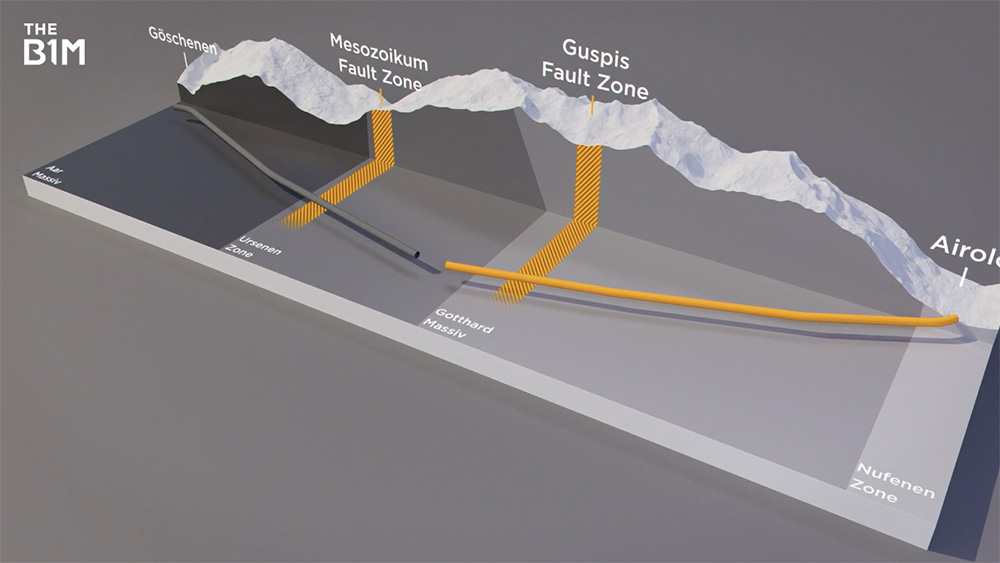
Above: The various different ground types and main fault/shear zones the project teams are encountering.
Before any of the main tunnelling could happen, though, years were spent preparing the north and south portals so they were ready for the TBMs. And that meant more drilling and blasting.
The areas that support the construction also had to be built. Up in Göschenen, a set of caverns were carved out, and that’s where concrete is made for the tunnel lining. It’s done below ground because out in the open air there isn’t much space to work with.
“We need the logistics for material management, for concrete production. We also have a very, very small surface and that’s why part of the installation will be done underground. For example, the concrete production on the north side — it’s all underground,” said Oppliger.
There’s another more dramatic reason these facilities are set into the mountain. This whole area is prone to avalanches.
Near to these caverns is a large spot where excavated material is temporarily stored before almost all of it is reused. More on that in a bit.
Meanwhile, in Airolo, because there’s less of an avalanche threat here, and more space to work with, the concrete and segment manufacturing is done outside.
Grinding to a halt
By February 2025, everything was set for the TBMs to start digging, and so off they went. And for the first few months all was well. Until June, when Paulina found herself in quite a bit of trouble.
She had travelled less than 200 metres, but was already experiencing serious geological challenges — much sooner than expected.
The machine was forced to stop — a last resort on projects like these — and as a result, became stuck. Paulina had hit an area of highly fractured, partially loose rock and cavities. Exactly the sort of ground TBMs really don’t like. This caused the face of the tunnel — that’s the part at the front that’s being excavated — to collapse.
“The situation is that the cutterhead is blocked. The torque of the machine is not enough to turn it,” said Gilgen. “We have to liberate it from the front so that it can turn again and bore its way through this difficult zone.”
They’re doing this by digging an extra access tunnel shooting off from the one that’s already been built into the fault zone.
It’ll enable them to get in front of the TBM and dig back towards it, so it can be freed some time in the Spring of 2026.
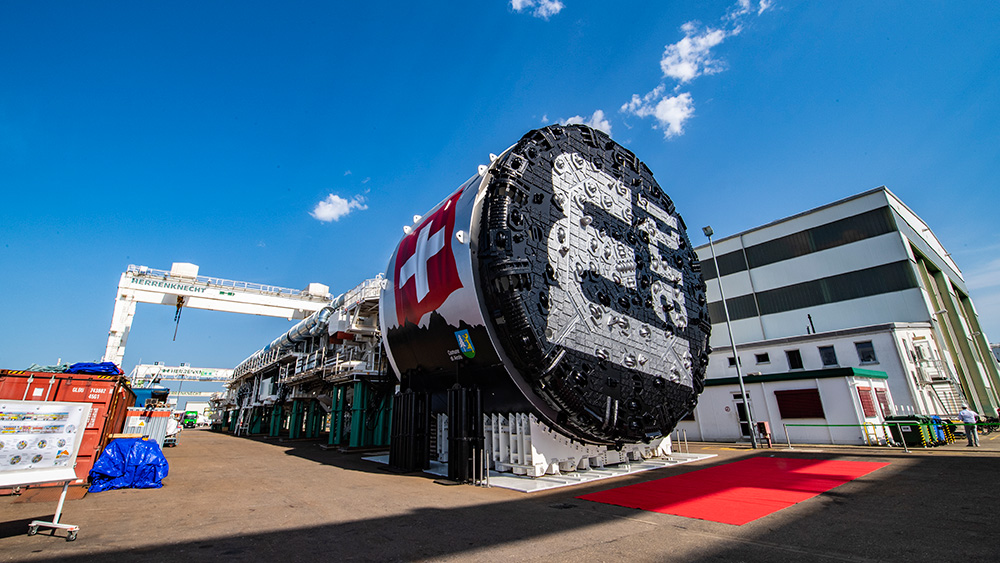
Above: Paulina before she entered the tunnel. Image courtesy of Swiss Confederation + Nicola Demaldi.
Even so, it’s an expensive setback. Want to guess how much? Around 20M Swiss francs — or USD $25M — has been added to the overall cost, which stands at just over 2BN Swiss francs. That’s about USD $2.7BN.
It’s resulted in months of extra work too, although they’re still aiming for the same completion date. Tasks that were due to be completed later on have been brought forward, and this 500-metre problem zone will now be done with drill and blast instead.
Teams are working in three shifts, seven days a week to get it back on track. So, as long as there are no further slip-ups, these giant machines should still be able to make their rendezvous in 2027, as planned.
But the question is, how much did they know about this tricky section beforehand? And if they were aware of its dangers, might they have been better off taking the conventional approach from the start?
Well, according to a press release from the Swiss Federal Roads Office, the “challenging geology on the southern side was correctly predicted” and that there were “risks” involved with the method chosen.
In other words, they knew it was there but it turned out to be more hazardous, and positioned slightly differently, to what they thought.
There was no shortage of geological data either, as most of it was taken from the original analysis for the first tunnel.
Treading a fine line
Clearly, the team is now having to deal with the consequences of this gamble, but you have to realise that this is not a simple thing to get right.
“It’s very, very difficult to make a right evaluation of the geology,” said Oppliger. “The big fault zone[s] — it was easy to situate, but there are some smaller fault zones that are a big problem — a big challenge because it’s not easy to understand where are these fault zones and what impact to the TBM these fault zones could have.”
Even the original tunnel had its share of complications, and we’ve seen similar incidents in other parts of the world, like India and Australia, with even more serious outcomes.
“It was known from the building of the first tube and the safety gallery — with conventional methods — that they had a lot of problems. They had to rebuild a large part of it because of the squeezing ground conditions,” recalled Gilgen.
“Geology is always challenging in tunnelling. Even if you think you know everything about it, there are always surprises.”
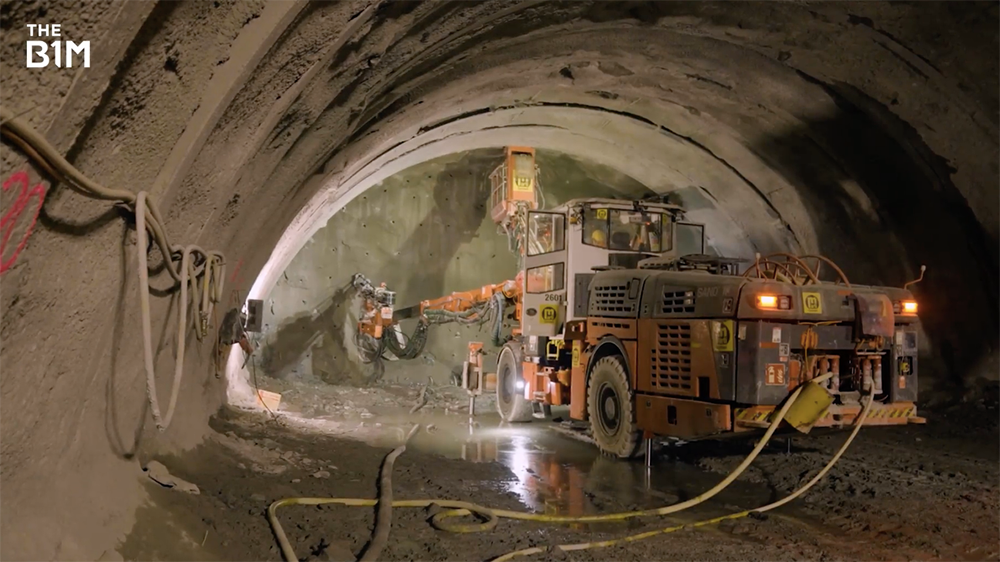
Above: The traditional method (drill and blast) is now being used to get through the troublesome area. Image courtesy of Swiss Confederation.
Now, we should clarify that obviously the TBMs won’t actually physically touch each other when they both — eventually — get to the middle. It would get very messy if they did. They’ll stop just before that point, when it’ll be time to dismantle and remove them.
We should also explain something about the size of those TBMs. You might be wondering why they need to be so large (12 metres in diameter) when the biggest things that will travel through here are trucks. And they’re only about four metres high at most.
Yes, the tunnel linings add around half a metre of thickness, but it’s more to do with what will be going above and below the road.
On top there will be a space for ventilation, and underneath a set of service ducts. One will carry all the utilities for maintaining the tunnel, which is hardly a surprise. But the other will have a high-voltage power line running through it.
This hasn’t been done anywhere else in Europe, and it’ll replace the line that’s now spread over the Gotthard Pass on big pylons, which isn’t much to look at.
Nothing goes to waste
Another clever idea is what they’re doing with the excavated material, which amounts to almost seven and a half million tonnes overall.
Around a quarter of the stuff is going back into the concrete mix for the same project, as well as the restoration of the old tunnel. A further quarter will be used for road surfaces.
The remaining half is going to be sent off to Lake Lucerne — about 50km north of Göschenen. There it will be used to make shallow water zones, creating new habitats for plants and animals.
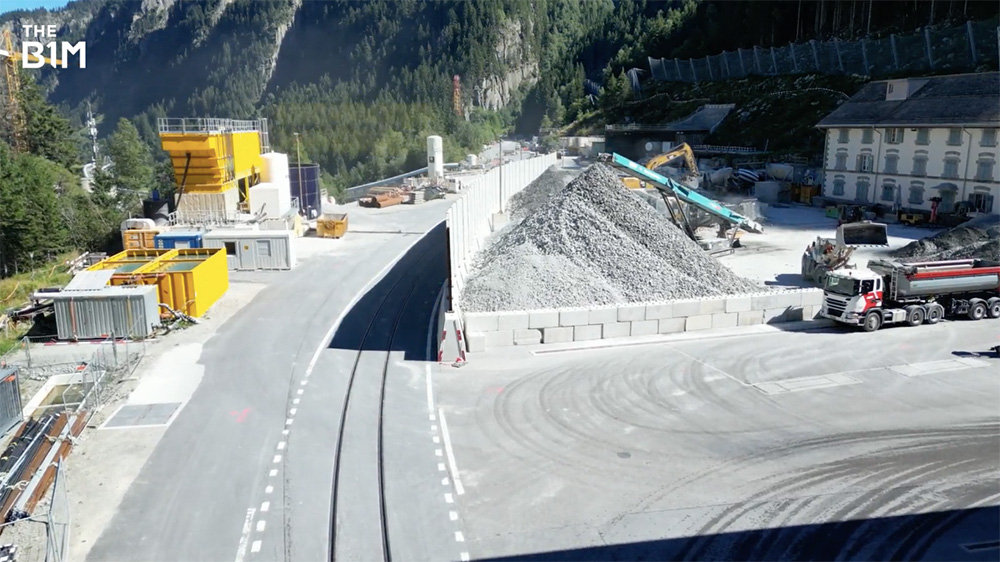
Above: Around 7.5M tonnes of material is being excavated as part of the project. Image courtesy of Swiss Confederation.
Sounds great, but let’s get back to an earlier point for a second. We said before that adding this second tunnel won’t boost capacity, which might sound a bit strange.
Although traffic will be split across two tubes instead of one, it doesn’t mean there will be twice as much traffic coming through here.
Instead, there will be one tunnel for each direction, which does sound better than how it is at the moment, when cars pass each other head-on in the same space.
But they will continue to go single-file in the new tunnels, with the other side used as a hard shoulder or emergency lane, for you non-Brits. The idea is it will make the tunnels safer and more reliable, which you can’t really argue with.
Then there's the fact they’re not actually allowed to make this road any busier. Article 84 of the Swiss Federal Constitution states “the capacity of the transit routes in the Alpine region may not be increased.”
Meaning the congestion often seen around the existing tunnel probably won’t go away once the new one opens. In 2025, queues stretching for several kilometres were reported multiple times.
Keeping things moving
So, some might feel this new tunnel won’t make much of a difference if it doesn’t fix the traffic. But others would argue it’s about more than that — ensuring this vital artery of Europe’s transport system doesn’t come to a complete standstill. Even if this giant machine that’s so crucial to its completion is doing just that — for the time being at least.
“The Swiss population has chosen for this second tunnel and we have the responsibility to do it. I think it’s the biggest project now in Switzerland,” remarked Oppliger.
“Also the people that work there, the construction companies, they are all proud to work there, and we are also proud to work on this project.”
Additional footage and images: Swiss Confederation, Marti Gruppe, ETH Library Zurich, Kecko, Myoungho Shin, Nicola Demaldi, Olaf Arndt, Snowy Hydro and Valentin Luthiger.
We welcome you sharing our content to inspire others, but please be nice and play by our rules.
Comments