The World's Tallest Buildings Are Cheating
- Youtube Views 1,519,120 VIDEO VIEWS

29 April 2026
Video hosted by Fred Mills. This video contains paid promotion for Rayon Design.
ARCHITECTS HAVE long deployed clever techniques to squeeze extra height from their skyscrapers, but what does "tallest building" actually mean? As construction on the Jeddah Tower reaches its 100th floor, the Saudi megastructure is edging closer to becoming the tallest building ever built. But in the peculiar world of skyscraper records, height is rarely as straightforward as it seems.
For decades, architects and their clients have used a variety of techniques to claim the coveted title, and the results have sparked bitter rivalries, international disputes, and more than a little controversy.
Few episodes illustrate the complexity of measuring skyscrapers better than the row that erupted in 1998, when the Petronas Towers in Kuala Lumpur claimed the title of world's tallest building from Chicago's Willis Tower, known at the time as the Sears Tower.
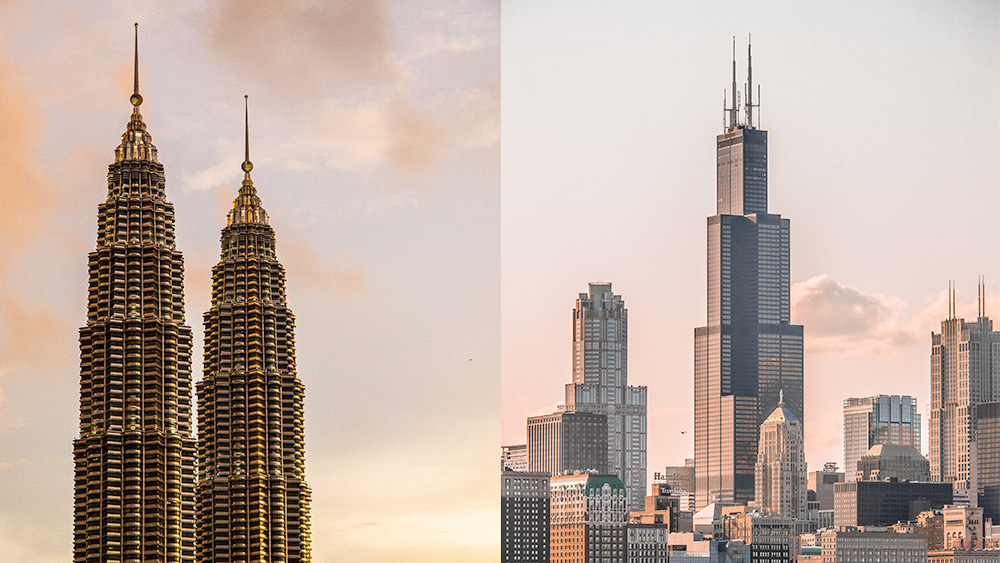
Above: The Petronas Towers, left, and the Willis Tower, right.
Chicagoans were furious. The Willis Tower was taller to its roof level, and considerably taller to the tip of its antenna masts. How, they demanded, could it possibly have been beaten?
The answer lay with the Council on Tall Buildings and Urban Habitat, the body responsible for the official rankings. Their ruling was unambiguous: buildings are measured from street level to their architectural top. The antenna masts on the Willis Tower, having been added after construction purely to carry television signals, counted for nothing. The Petronas Towers' twin spires, by contrast, were a deliberate architectural feature of the design and pushed the building's official height to 451.9 metres, compared to the Willis Tower's 442.1 metres.
The outcry was loud enough that the Council subsequently introduced two additional categories, highest occupied floor and highest point of any structure, alongside the existing architectural height measure. Rather than settling the argument, it opened a door.
Today, architects and urban planners use a specific term for the gap between a building's highest usable floor and its official architectural peak: vanity height.
Merdeka 118 in Kuala Lumpur, completed in 2024, provides one of the most striking examples. The building's highest occupied floor sits just above 500 metres, yet its official height is 678.9 metres thanks to an enormous spire, placing it second only to the Burj Khalifa in the global rankings. That means its vanity height is a remarkable 176 metres, taller on its own than most of the world's notable skyscrapers.
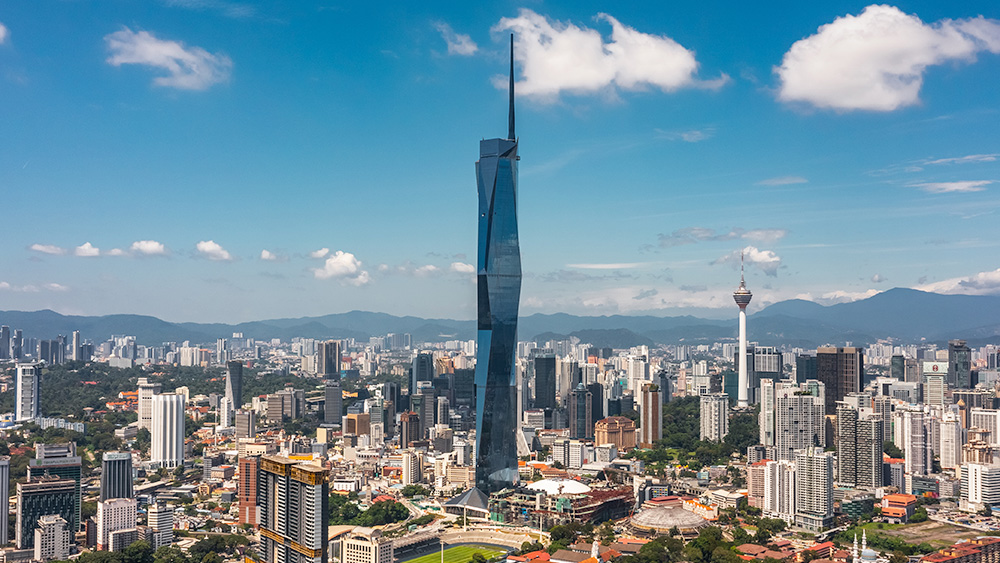
Above: Merdeka 118 in Kuala Lumpur.
The Shanghai Tower, which Merdeka 118 nudged into third place, has a restaurant on its 120th floor, more than 50 metres higher than the highest occupied floor in Merdeka 118. In theory, a diner at the Shanghai Tower could look down at the roof of the building officially ranked above it.
Supporters of Merdeka 118's spire argue it is far from mere vanity. Its unusual silhouette is said to reference the pose of Malaysia's founding father at the moment he declared independence, "merdeka", in 1957, lending the structure a significance that transcends the record books.
No building did more to transform the ambitions of skyscraper design than the Burj Khalifa, which opened in Dubai in 2010 and remains the world's tallest structure by every available measure.
The Burj Khalifa is notable not only for its record-breaking height of 828 metres, but for the scale of its vanity height: a 242-metre gap between its uppermost mechanical floor and the tip of its spire. That portion alone, if transplanted to Manhattan, would rank among the tallest buildings in New York.
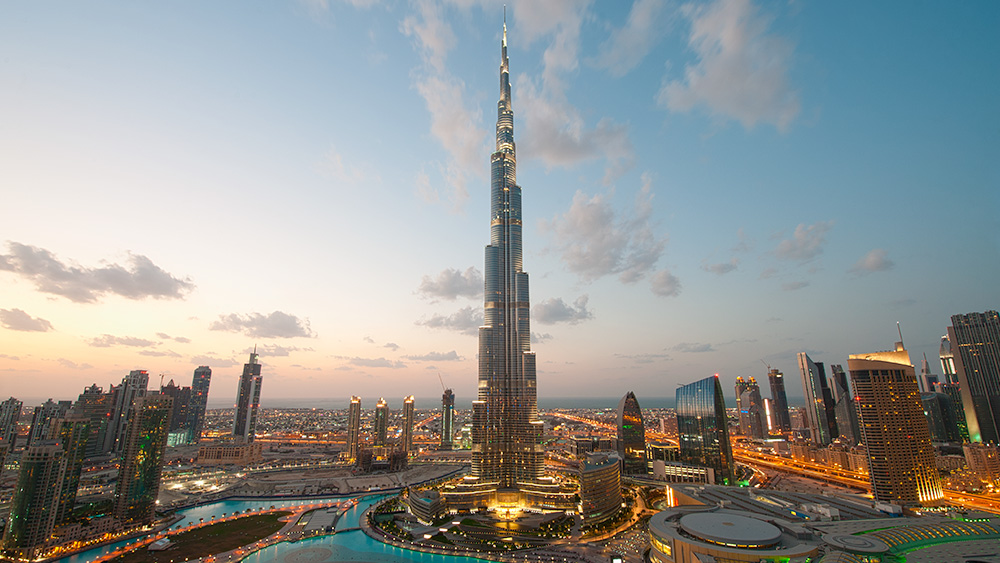
Above: Dubai's Burj Khalifa.
But the significance of the Burj Khalifa goes beyond its dimensions. When construction began in the mid-2000s, Dubai was still a relatively modest port city with an economy heavily dependent on natural resources. There was no shortage of space, and skyscrapers were not a response to crowded streets, as they had been in Manhattan a century earlier. They were a statement of intent.
The tower helped establish Dubai as a destination for tourism, investment and global business, demonstrating that a skyscraper could function as an instrument of national soft power as much as a practical piece of real estate. The era of the vanity height had arrived in earnest.
The appetite for record-breaking height is nothing new. In 1929, New York was the stage for one of the most dramatic rivalries in architectural history.
Walter Chrysler was building what he intended to be the city's crowning skyscraper: a soaring, 65-storey art deco tower. His plans were thrown into disarray when a rival developer, George Ohrstrom, began work on 40 Wall Street with the explicit aim of surpassing it. The two projects traded height increases in a sequence that would not look out of place in a negotiation between feuding tech billionaires.
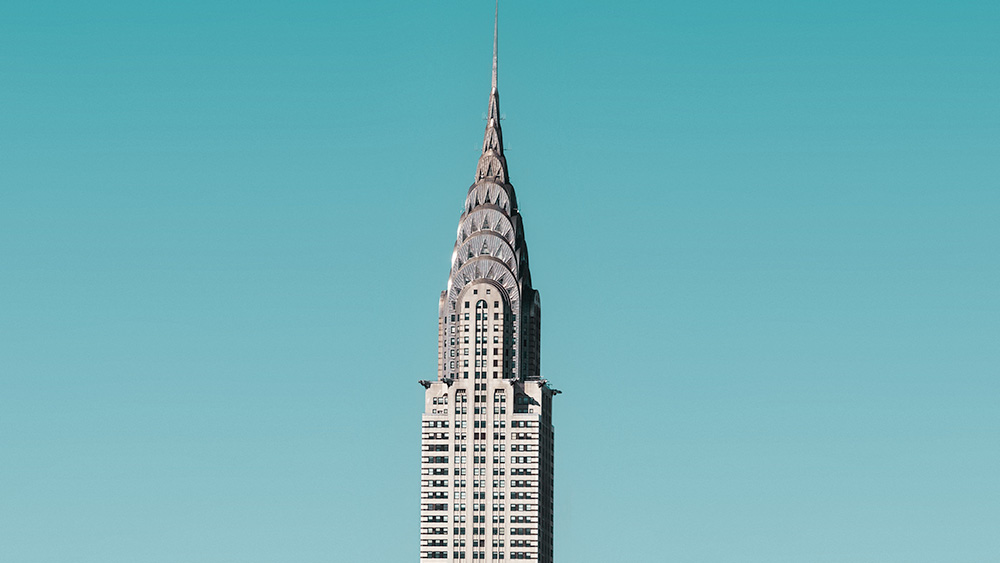
Above: The Chrysler Building with its sneaky spire.
Chrysler's response was characteristically theatrical. His architect, William Van Alen, had quietly secured permission to construct a 38-metre steel spire. Built in secret inside the roof of the tower, it was hoisted into place over a single night in October 1929. The Chrysler Building's official height was taken to 319 metres, comprehensively defeating 40 Wall Street and, briefly, claiming the title of world's tallest building.
The arms race in height was not limited to capitalism. In the 1920s and 1930s, Joseph Stalin turned his attention to Moscow's skyline, determined that the Soviet Union should match and surpass what America had achieved.
The result was a series of monumental skyscrapers, known today as the Seven Sisters, built across Moscow. Among them is the Ukraine Hotel, which holds an unusual distinction: it comes closer than almost any other building to not qualifying as a building at all.
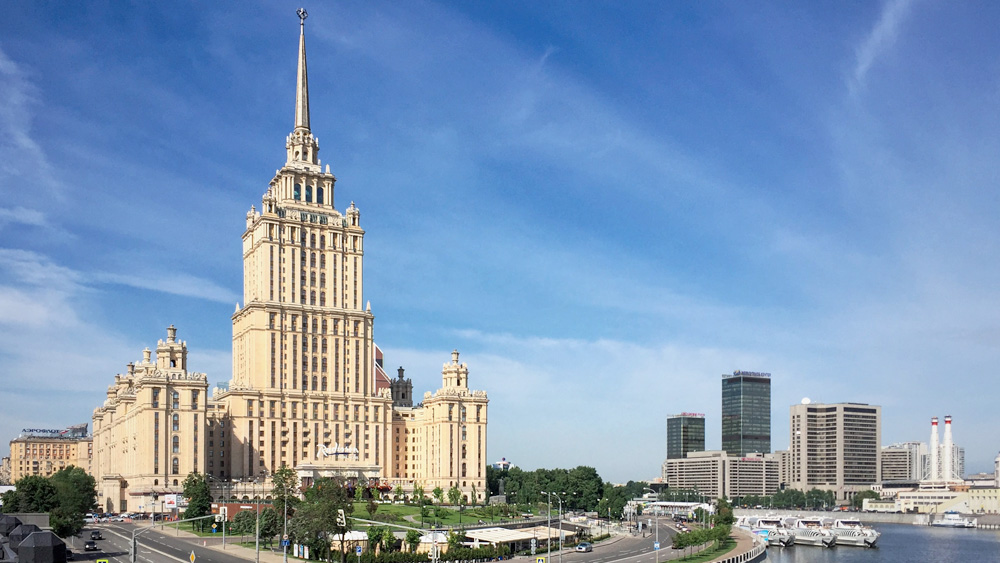
Above: The Ukraine Hotel, one of Moscow's "Seven Sisters" skyscrapers.
Under the Council on Tall Buildings' rules, a structure must have at least 50% of its height as occupiable space to be classified as a building rather than a tower. The Ukraine Hotel, with its enormous Stalin-mandated spire, reportedly added after the Soviet leader complained that American skyscrapers had spires and Soviet ones should too, has a vanity height that accounts for 42% of its total structure. It sits just eight percentage points from disqualification.
The Jeddah Tower, currently under construction in Saudi Arabia, was originally conceived as a mile-high building, standing 1,600 metres tall. That proposal was eventually abandoned as impractical. The revised plan, for a one-kilometre-tall structure, is ambitious enough.
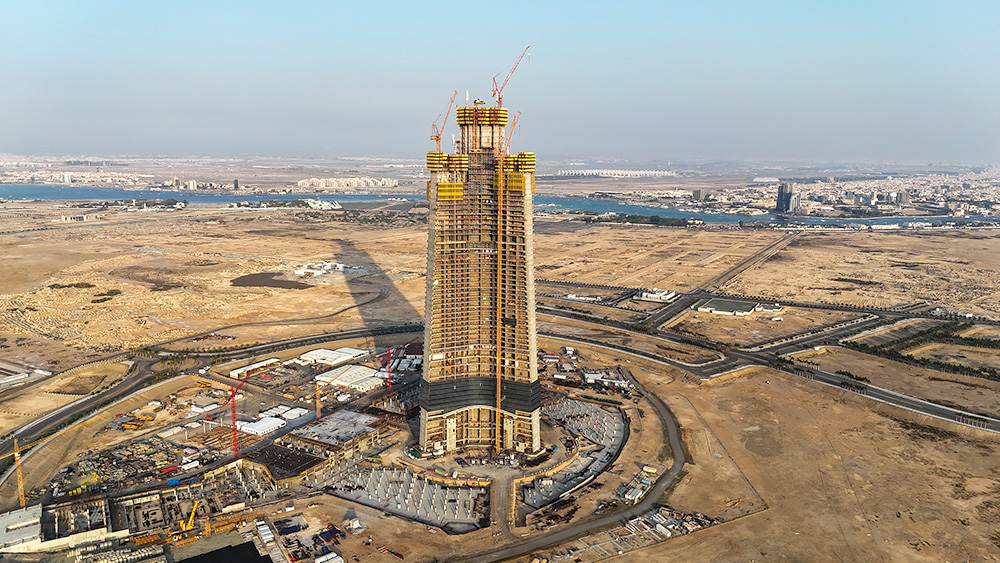
Above: The Jeddah Tower under construction in 2025.
The tower's upper floors are being constructed in steel, and its spire will house ladders to provide maintenance access to aviation warning beacons at a height equivalent to 240 storeys. Based on standard floor heights, the spire alone could exceed 300 metres, potentially making the Jeddah Tower's vanity height taller than most of the world's recognised supertall skyscrapers.
Whether that is an achievement to celebrate or a distortion to lament depends on your point of view. But the impulse it represents is ancient. Cathedrals, pyramids, temples: humanity has always looked upward when it wants to leave its mark. The skyscraper is simply the latest expression of that instinct, refined by competition, shaped by politics, and measured, it turns out, by rather more complicated rules than most of us ever imagined.
Rayon is the all-in-one, effortless CAD tool for going from concept to completion. Try it (for free) here.
Additional footage and images: 20th Century Fox, Warner Bros. Interactive Entertainment, 20th Century Fox, Paramount Pictures, New Line Cinema, TriStar Pictures, Kingdom Holding Company
We welcome you sharing our content to inspire others, but please be nice and play by our rules.
Comments