Saudi Arabia Just Built The World’s Biggest Park
- Youtube Views 329 VIDEO VIEWS

09 November 2026
Video hosted by Fred Mills. This video contains paid promotion for Parsons.
SAUDI ARABIA is quietly working on a colossal mega project that’s on a scale we’ve never seen before.
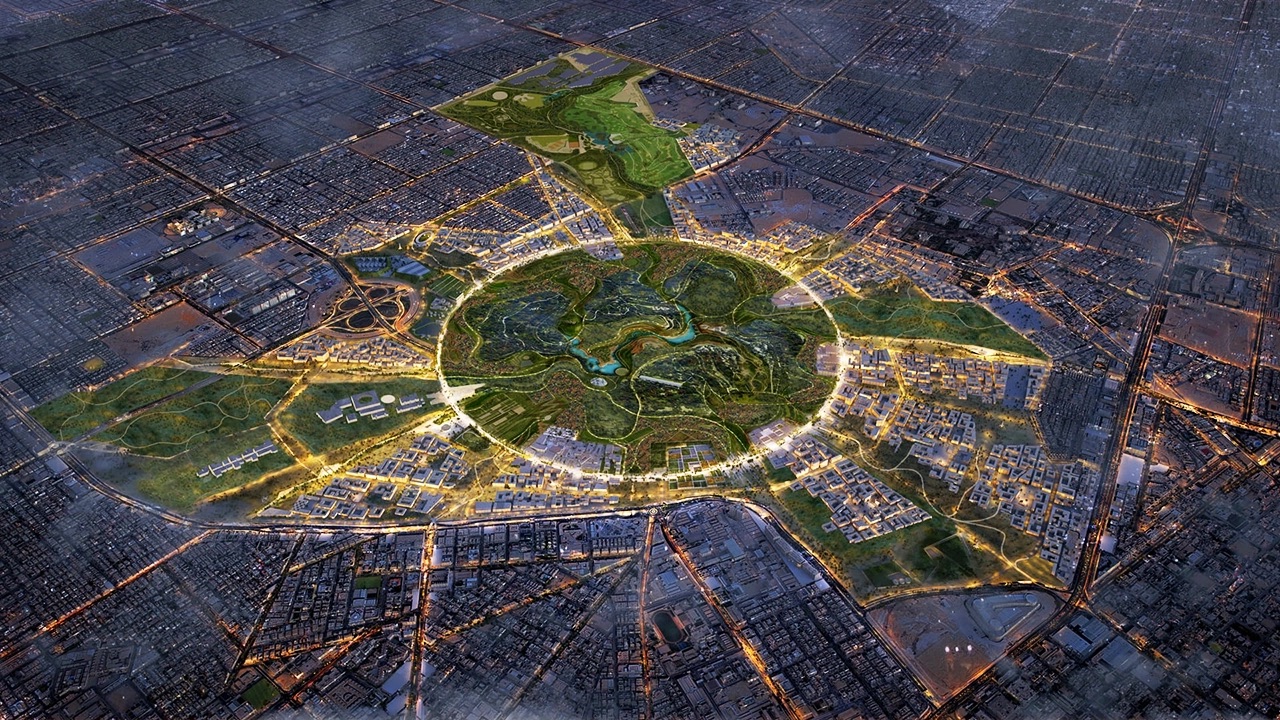
This is King Salman Park. One of the largest parks in the world. It’s so big that infrastructure is being built around it. A conveyer belt is planting more than 1M trees, while 54M cubic metres of earth has already been moved… Which is equivalent to 21 Great Pyramids of Giza.
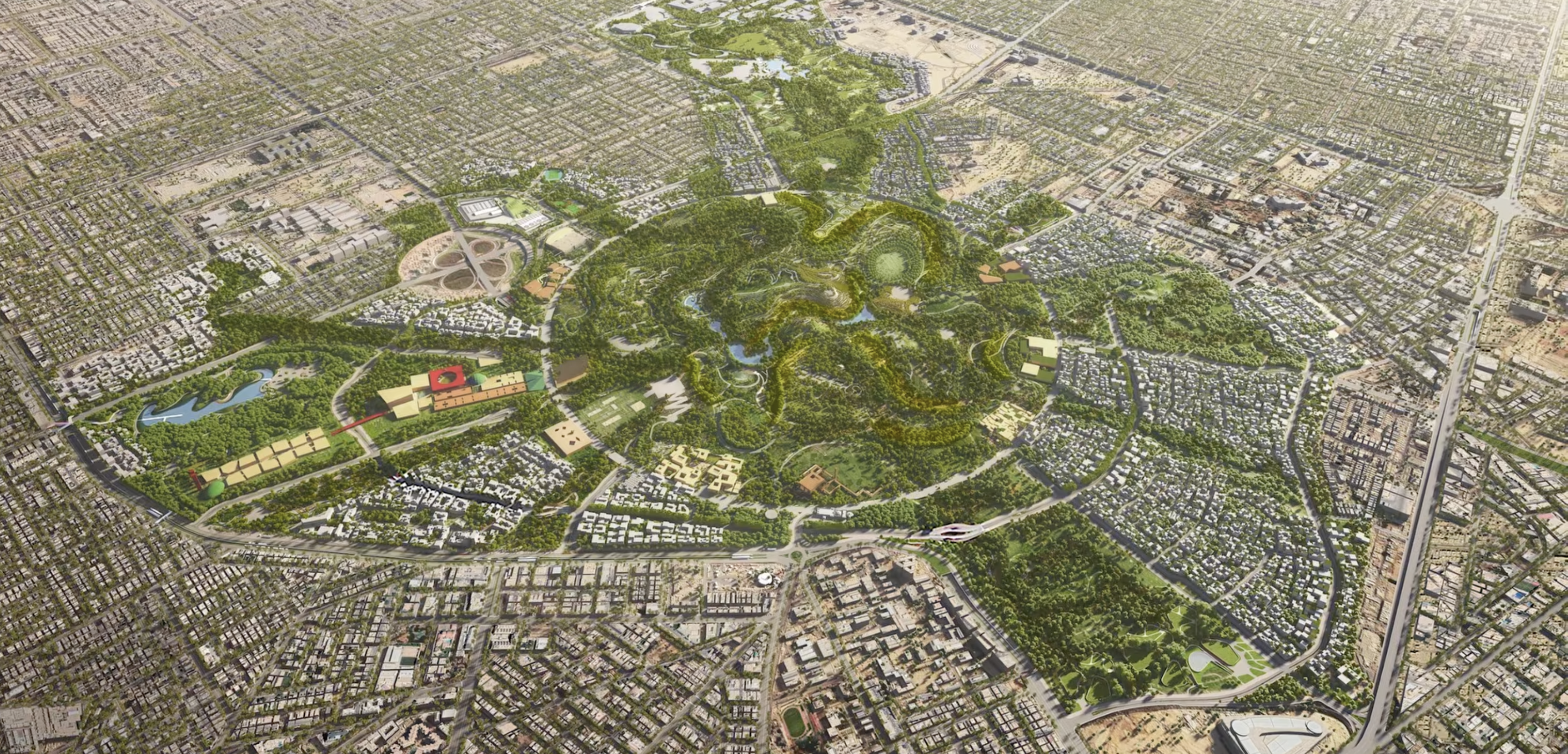
Above: An aerial render of King Salman Park. Credit: King Salman Park Foundation.
River networks are being carved out of the ground. Tunnels are being dug beneath it. On top, smart soil is being developed so the flora can thrive in the middle of a desert.
And when all of this is finished it will actually lower the temperature and cool one of the most arid cities on earth.
This is the world’s first mega park. A once in a century urban mega project. And we’re going to show you how it’s being built.
The scale of King Salman Park
There's an ancient Greek proverb that says: A society grows great when men plant trees in whose shade they shall never sit.
This is Central Park. One of the most famous sights in the world.
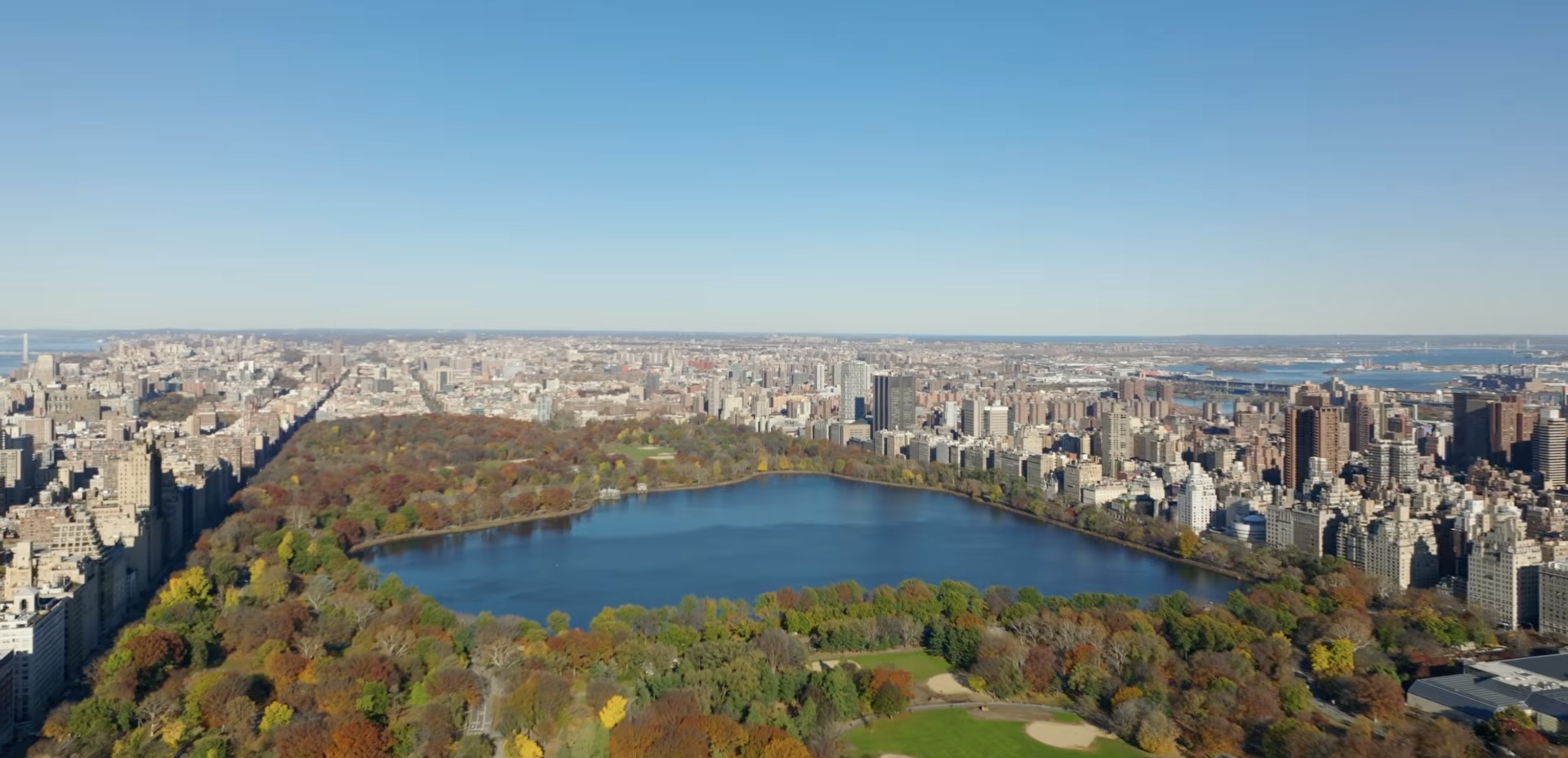
Above: Central Park, New York City.
It was, at the time, revolutionary. At 843 acres it became one of the largest urban parks in the world when it was laid out in 1858.
And today, it’s hard to imagine New York without it.
Not only is it iconic, it also plays an important function: it cools New York City by about 2 to 4°C. The more than 18,000 trees at its heart remove pollutants and reduce the urban heat-island effect.
This is a phenomenon in nearly every major city in the world: concrete, asphalt and glass absorb and trap heat during the day, then slowly release it at night. In some major cities, this can push temperatures several degrees higher than nearby rural areas.
One way to curb this is through trees. Obviously, they provide shade, but during the day they release moisture which lowers temperatures.
Just one tree can make a difference, but 18,000 can transform an entire city.
Today, most modern cities are bursting at the seams – with little space for record-breaking parks. The space they do have is usually earmarked for major urban development.
But not always.
At over 16 KM², King Salman Park is more than five times larger than central park.
So how do you find space for an enormous mega park in the heart of Riyadh?
Finding the perfect site
To find out more, we spoke to Dale Chadwick, Acting CEO of King Salman Park Foundation.
"So, originally it was an airport." Explains Chadwick. "So we had to do with the site clearance. We had major earthworks. We have topographical changes across the site. Like I said, it an airport, so we've gone up 20 metres and we've going down 20 metres."
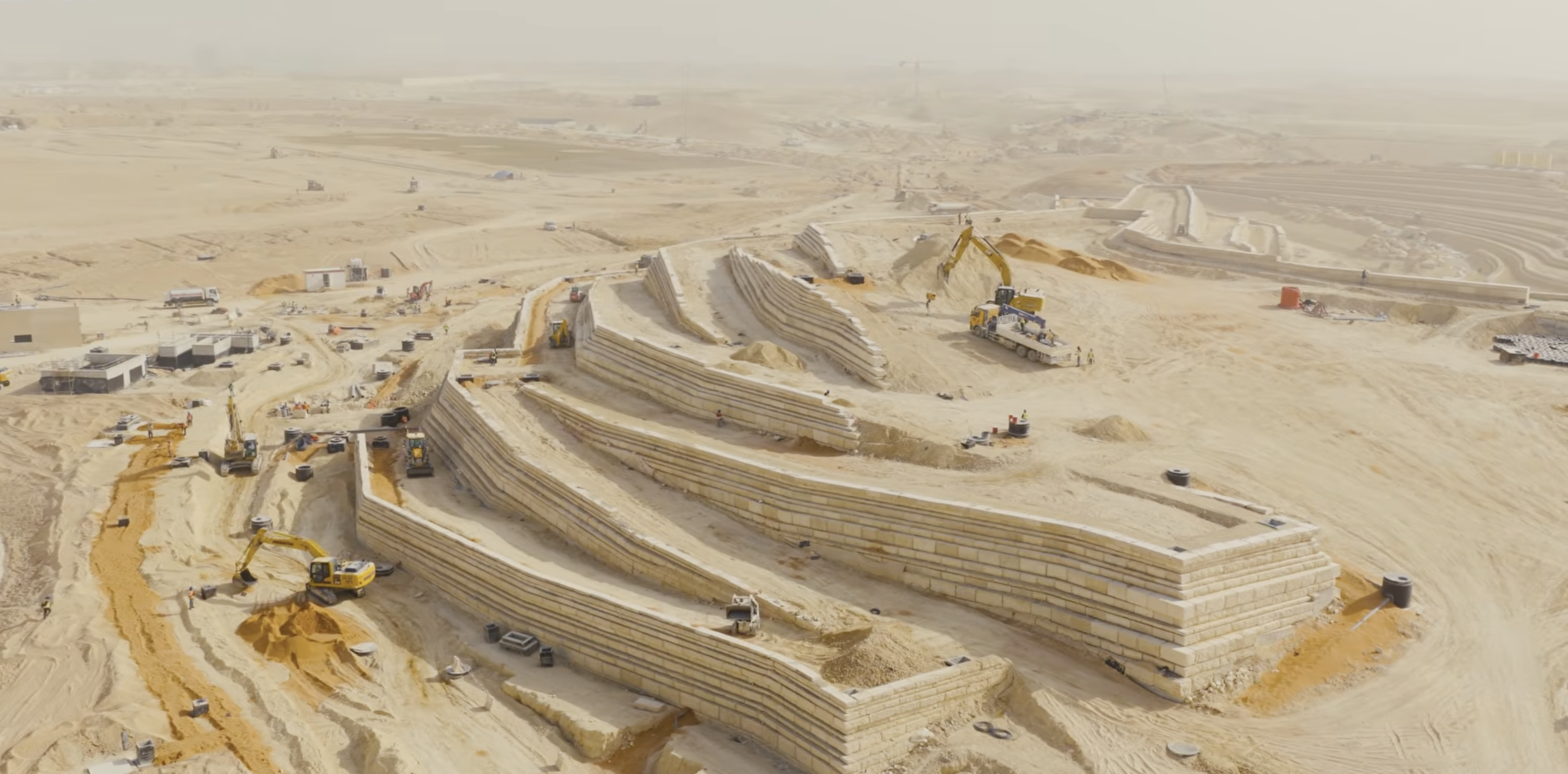
Above: Work underway on the topography of King Salman Park. Credit: King Salman Park Foundation.
"Rather than just a flat, boring part, which really wouldn't have worked. We've really changed and sculpted the land across 12 square kilometres of parkland."
They gathered a team of experts that included the head of landscaping from Harvard University and Parsons.
Parsons is an American company specialising in large-scale infrastructure. They were brought in to Project Manage the entire operation, ensuring it’s delivered to an exceptional standard. We spoke to Richard de la Mare, Vice President, Program Director of Project Management Office for King Salman Park at Parsons to learn more about their work on this project.
"A park of this size has never been designed or built before, especially in the middle of a desert. So we had to pull together a world-class designers and engineers that had the experience in both engineering and landscaping and architecture." Says de la Mare.
"We actually had a team of about 900 professionals, world leaders in their respective fields from environmental to ecological, hydrological, geological, botanical, and wildlife specialists. Parsons, who have been delivering projects in Saudi Arabia since 1950, were engaged as the project managers to pull together these consultants. They'd just come off a project, Riyadh Metro, which was essentially a project not in the same scale but over a full length of the entire city."
Parsons oversaw the design, construction, and procurement of much of the park, including the masterplan and many of its smart city ideas.
The genius of King Salman Park's topography
This masterplan had several large-scale concepts, and linking them altogether were the “green fingers”.
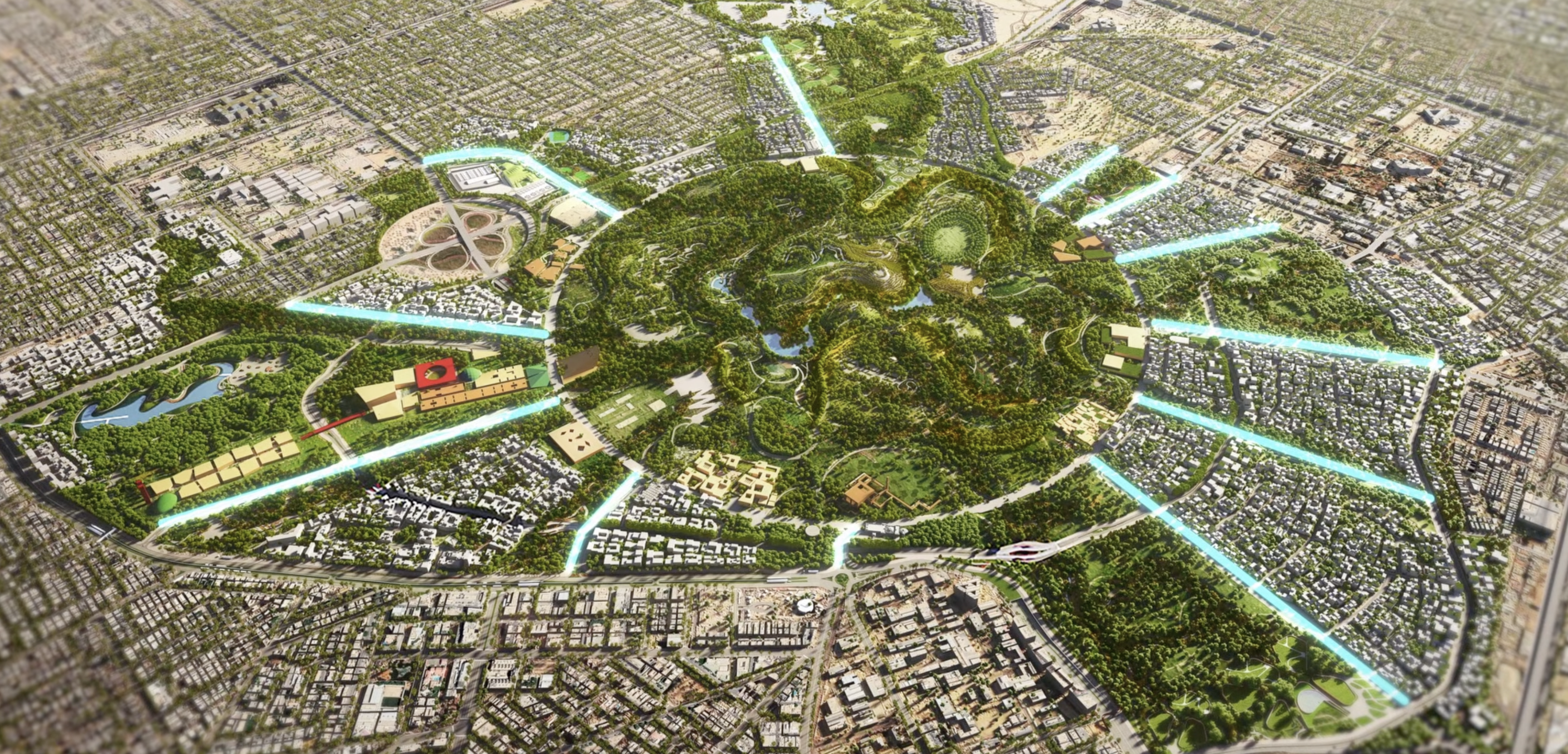
Above: The 'green fingers' of the park, pathways to transport people and water. Credit: King Salman Park foundation.
These are essentially pathways that transport people and water throughout the park which itself is arranged in a circular ring.
Arranged around the circle are a series of hubs. These are parking structures that get you from the city to that loop. Several of them also include public transport and metro links.
Within these green fingers are wadis. Now, a wadi is an Arabic term for a dry riverbed or valley that carries water during periods of heavy rain.
Many ancient settlements and oases developed near wadis. Today, they are often used as hiking routes.
For King Salman Park these wadis have been manufactured. They are a sunken, tree-lined feature up to 30 metres deep from ground level.
They create little valleys that double as a way to collect urban stormwater, guide recycled water and support wetland-type features in a controlled manner. This turns a dry environment into a more lush “oasis”.
"To create the topography of the park, we had to dig out wadis and create hilltops." De la Mare explains, accounting for the unique topography of the site.
"But to create these wadis at this scale, The landscape is only limestone and sand. So we had to stabilise these wadis using mechanical stabilised earth, MSE walls essentially. And they're reinforced with geogrids and clad in Riyadh stone to create that natural effect. Eight kilometres of Riyad stone was used to create 4.5 kilometres of wadi space that runs all the way through the park. Totally, we moved 54 million cubic metres of earth just to create that one shape that you see today."
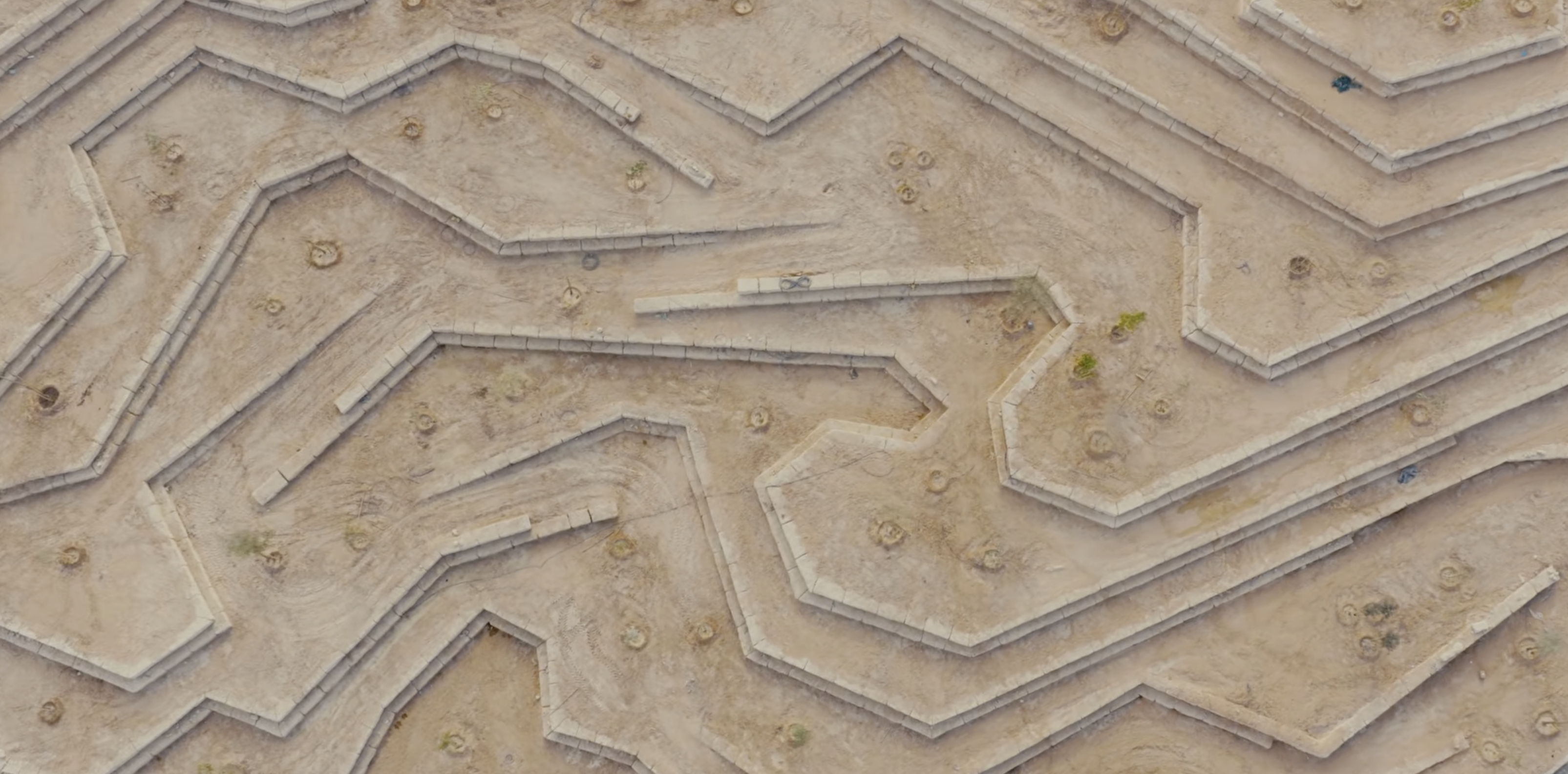
Above: Aerial shots of the construction beneath the wadis. Credit: King Salman Park Foundation.
Central to this process are MSC walls, mechanically stabilised soil walls. These structures are used to retain huge volumes of earth, create level changes, and stabilise the terrain above roads, tunnels, and underground infrastructure.
Once completed, they disappear into the landscape, doing their work out of sight. Like the foundations of a skyscraper, they’re rarely seen, but absolutely essential.
How to navigate inner-city traffic
If you couldn’t tell already, this was an ambitious plan. It necessitated carving an entirely new topography out of the land. The soil mixture itself had to be brought to the site through a massive fleet of trucks every day.
This in itself was a massive operation. Riyadh is already one of the busiest cities in the world in terms of traffic and regularly ranks among the most congested cities in the Middle East and North Africa.
De la Mare explains how the park turned this problem into an opportunity. "We realised that there was a number of roads that actually went through the park. And if we wanted to create the largest urban park in the world, we had to do something with these roads."
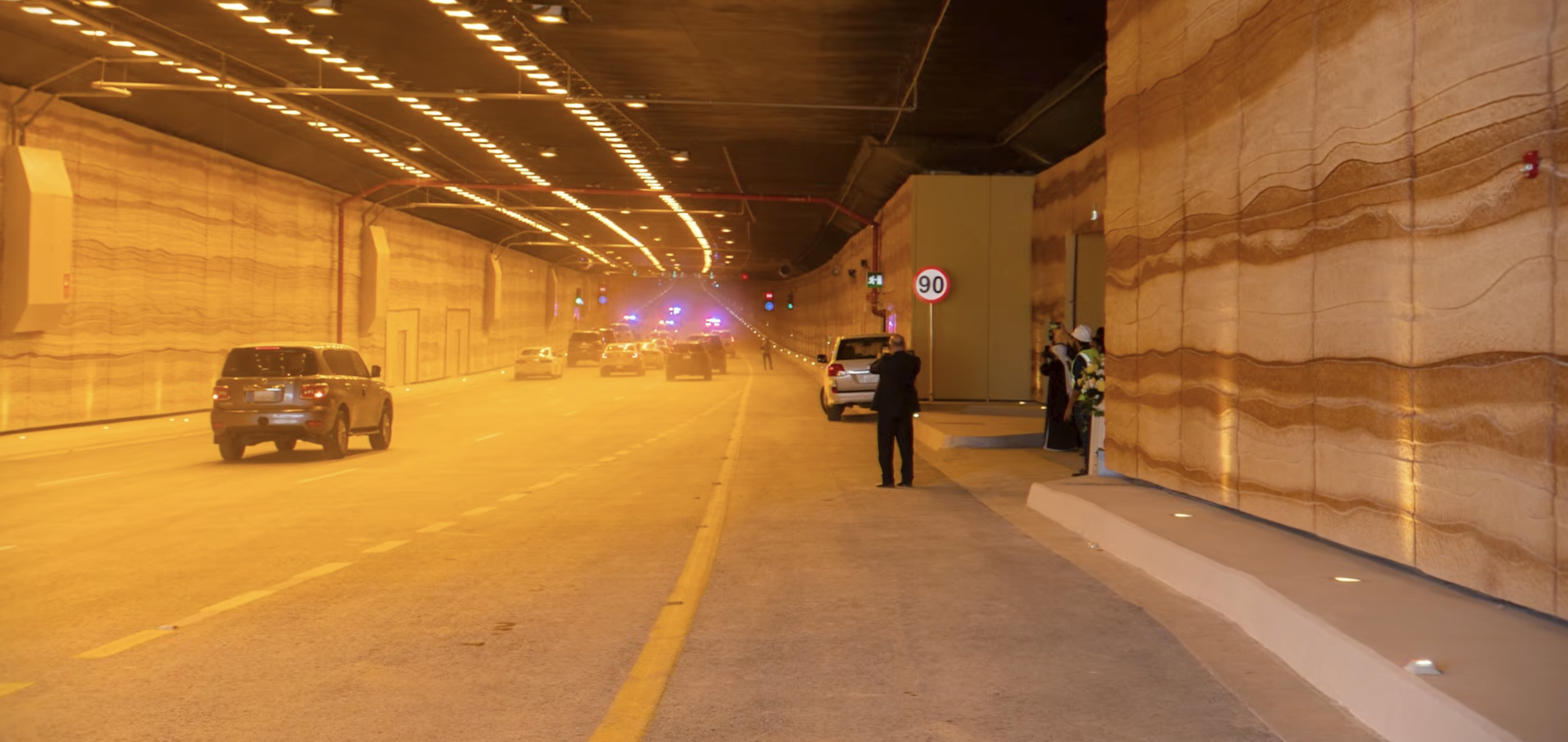
Above: The underground tunnel system beneath the park. Credit: King Salman Park Foundation.
"They take traffic east-west and north-south, so the two main arteries, and we need to remember that the park is in the centre of the city. So really disrupting the traffic flow in the middle of the City, sending it across the park would have been quite disruptive."
Instead of letting highways carve the park into fragments, the city’s transportation thoroughfares were routed underground through a system of road tunnels.
This subterranean network allows King Salman Park to remain a continuous, uninterrupted green space.
But building these tunnels hasn’t been easy. They were in effect a “project before the project” and were required to be fully completed before surface landscaping and park construction could proceed.
This increased pressure on early construction phases, as delays underground would have a ripple effect on the entire park programme.
Once the tunnels were in place, they imposed long-term limitations. No heavy structures could be built above certain tunnel sections. Park topography and architecture had to be carefully designed to avoid loading tunnel roofs.
These tunnels were truly massive and included the Abu Bakr Al-Siddiq tunnel, one of the longest in the Middle East.
Once these were in place work on top could begin.
This is not 'just a park'
When we say that this is a park… we really need you to expand your definition of what a park can be. For example - most parks don’t contain a 500,000 m² cultural hub, home to a national theatre, research and arts institutes, cinemas, libraries, exhibition halls, and, this…
The Museum of World Cultures. Which absolutely towers over everything else.
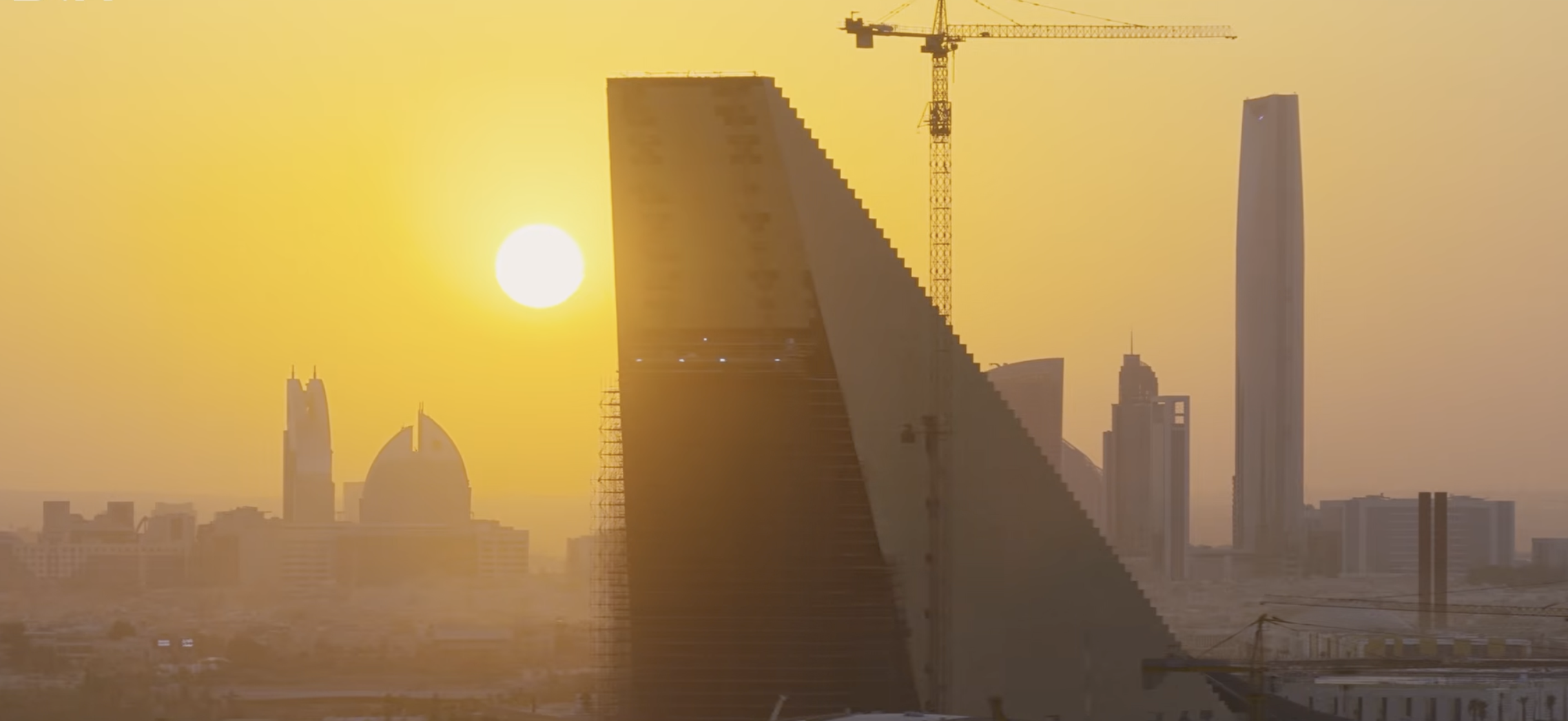
Above: The Museum of World Cultures. Credit: King Salman Park Foundation.
"It's certainly the tallest building across the programme." States Chadwick. "It's 110 metres tall. And really, you'll be able to see it's a focal point from around the park."
It’s intended as a major cultural anchor rather than a standalone museum, meant to work in conjunction with other arts, performance, and research facilities within the complex.
It is one of the most visually and symbolically prominent structures within the park. So much so that its height was increased.
Originally the Museum of World Cultures was due to be 60 metres high. However, Chadwick retells that the scope of the intention changed.
"They suggested, can we make it over a hundred metres tall and not just be an icon within the park, but also become a wayfinding device for the whole city."
So it increased to 80 metres, then to 100 metres and finally 110 metres. About twice its originally-intended height.
It might sound simple enough to increase the height of a building, but it’s a lot more complicated than a simple vertical stretch. Bofill recalculated the geometry so that proportions, angles, and radii remained consistent. The building maintains its original golden-ratio-based proportions, as Chadwick tells us.
"It's very elegant in terms of its proportions. And in terms the form, the triangle form, the overall triangle form that's really seated in Saudi Arabia's architectural heritage. It has been designed not just to contain art but the building itself is also supposed to be an artefact."
Building King Salman Park isn’t just about pouring concrete and shaping landscapes, it’s also about growing an entire ecosystem from scratch.
And at the heart of that effort is a vast onsite nursery operation, functioning at a scale more commonly associated with industrial agriculture than city parks.
To make the project viable, planners established two large, temporary nurseries directly on-site: an acclimatisation nursery and a production nursery, spanning 1M square metres. Together, they form one of the most critical pieces of infrastructure in the project.
"We have the ability in that nursery to produce about 65,000 plants per day, seedings in pots. It's fully mechanised, so they go through a mechanised process of seeding." Chadwick goes on to explain that these nurseries can hold thousands of plants. "And we've imported about 100,000 mature trees. And really what the intention there was to kickstart the maturity of the park."
How to build a park in the desert
The scale is staggering. The park will ultimately contain around one million trees, yet only about 100,000 mature trees are being imported. The remaining 900,000 trees - and the vast majority of all planting - are grown onsite.
Species selection is equally deliberate. Around 55 to 60% of trees are indigenous to Saudi Arabia, with most remaining species sourced regionally to match the climate.
The project uses a conveyor-belt logistics system to transport plants directly from the onsite nursery to planting zones across the park.
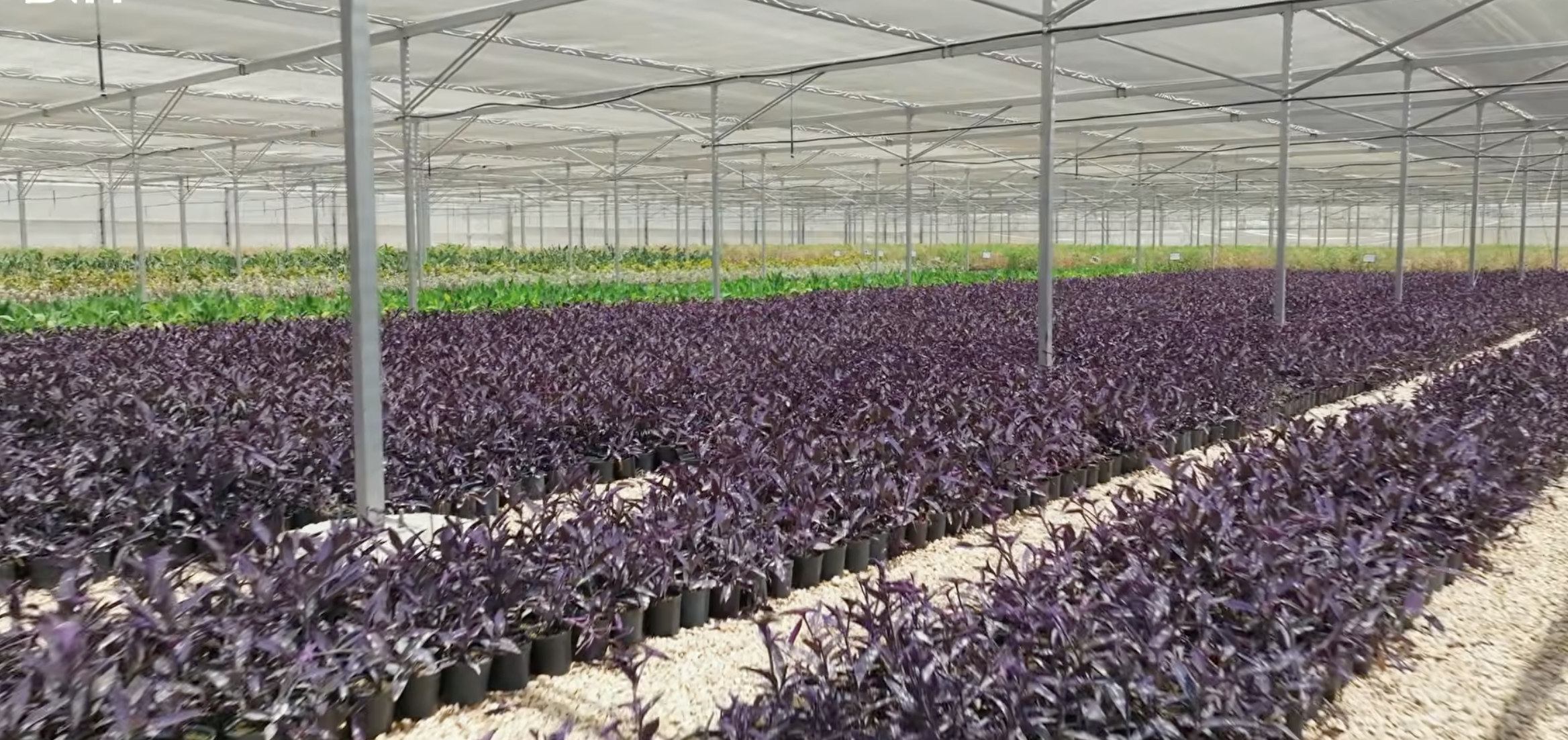
Above: One of the nurseries on site. Credit: King Salman Park Foundation.
But the nursery isn’t just a behind-the-scenes operation. There are plans for a public “visitor nursery”, complete with a café, library, and children’s learning spaces.
Visitors will be able to identify plants via QR codes and even buy the same species they see growing in the park, turning planting into a shared civic experience rather than a hidden process.
Riyadh is one of the hottest major cities on Earth, regularly topping 45 degrees celsius. For decades, its growth has meant the heat has only intensified.
Vast stretches of asphalt, highways, and hard landscaping have exasperated the urban heat island, trapping warmth long after the sun goes down.
King Salman Park is designed to change that. The park is expected to reduce ambient temperatures across the entire city, not just cool the immediate area thanks to its sheer scale.
Earlier, we discussed how moisture that’s produced from the 18,000 trees in Central Park reduces the city’s overall temperature by 2 - 4 degrees…
Now, take into account that King Salman Park will have over a million.
Thanks to cutting-edge engineering the park will actually thrive in Riyadh’s arid environment. Ultimately, this park was designed for the people of Riyadh. It will be their backyard. 75% of the Saudi capital will be able to access King Salman Park within 30 minutes.
Massive green spaces like this have proven physical and mental health benefits, reducing stress and anxiety. The goal is for Riyadh to become one of the world’s top 10 most liveable cities by 2030.
Of course it will take time. Like the Greek proverb says: a society grows great when men plant trees in whose shade they won’t sit in, at least not right away.
After a few years this place will grow into a destination as vital and nurturing as New York’s Central Park.
This is a mega project with people at the forefront, designed not just for now, but for the generations that follow.
King Salman Park is reshaping life in Saudi Arabia and American firm Parsons is helping them do it. To find out how, click here: https://bit.ly/4jZZVvX
Additional footage and images: Parsons, King Salman Park Foundation, SAS Mediax.
We welcome you sharing our content to inspire others, but please be nice and play by our rules.
Comments