SkyTrain vs LRT: Has Vancouver Got it Wrong?
- Youtube Views 688,959 VIDEO VIEWS

17 June 2026
Video hosted by Fred Mills. This video contains paid promotion for AMD.
For the past decade, Greater Vancouver has been caught in a debate: SkyTrain or LRT?
The region's suburbs are developing rapidly and desperately need new infrastructure to connect the sparsely serviced areas of Surrey and Langley. A SkyTrain would glide over the street-level chaos below while a Light Rail System would create a walkable city environment at just a fraction of the material costs.
But while $6 billion (CAD) is currently being spent building a SkyTrain from Surrey out to Langley, the originally planned LRT would already have opened in 2024 (providing there were no delays). Late in the day, Surrey’s former Mayor Doug McCallum and the city council scrapped the LRT project and replaced it with a SkyTrain. Now in the midst of a busy construction zone, the debate is still not settled: is Vancouver's new SkyTrain really worth spending triple the original budget?
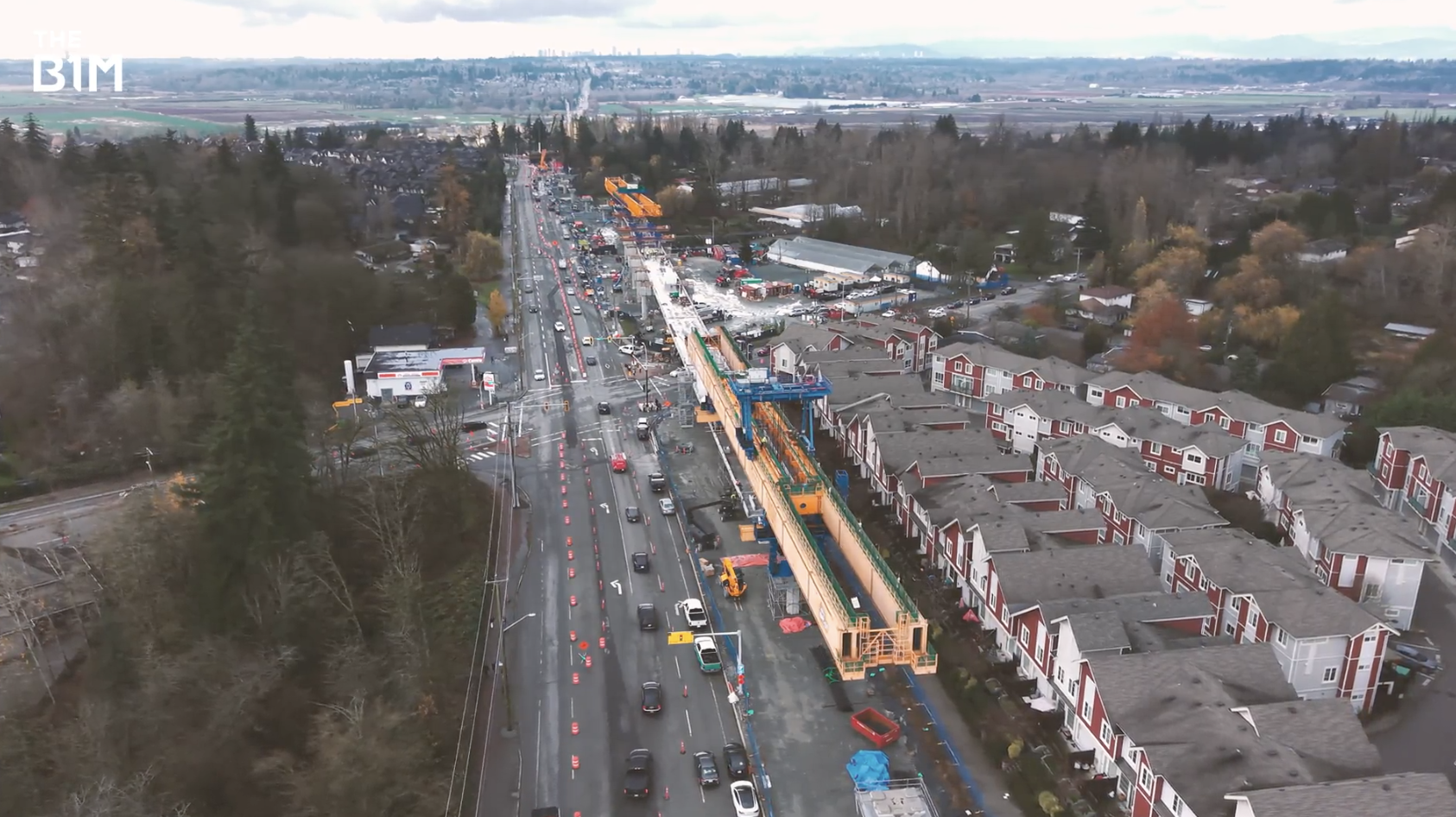
Above: Construction on the Surrey Langley SkyTrain began in 2024. Image: StainerTheFirst
The surging suburbs
Along the West Coast of British Columbia is find one of the most famous regions in the whole of Canada: Greater Vancouver. Spanning nearly 3,000 square kilometres, it’s home to the City of Vancouver and even if you haven’t been before, you’ve definitely seen it. Hailed as the Hollywood of the North it's famed as the backdrop of countless blockbusters including the likes of Deadpool, I, Robot and Rocky IV.
Head south, across the Fraser River, and you’ll find Surrey and Langley, two of the fastest growing areas in the country. So fast-growing, in fact, that while Vancouver is the most widely recognised city in British Columbia, these suburban areas are beginning to climb out from under its shadow.
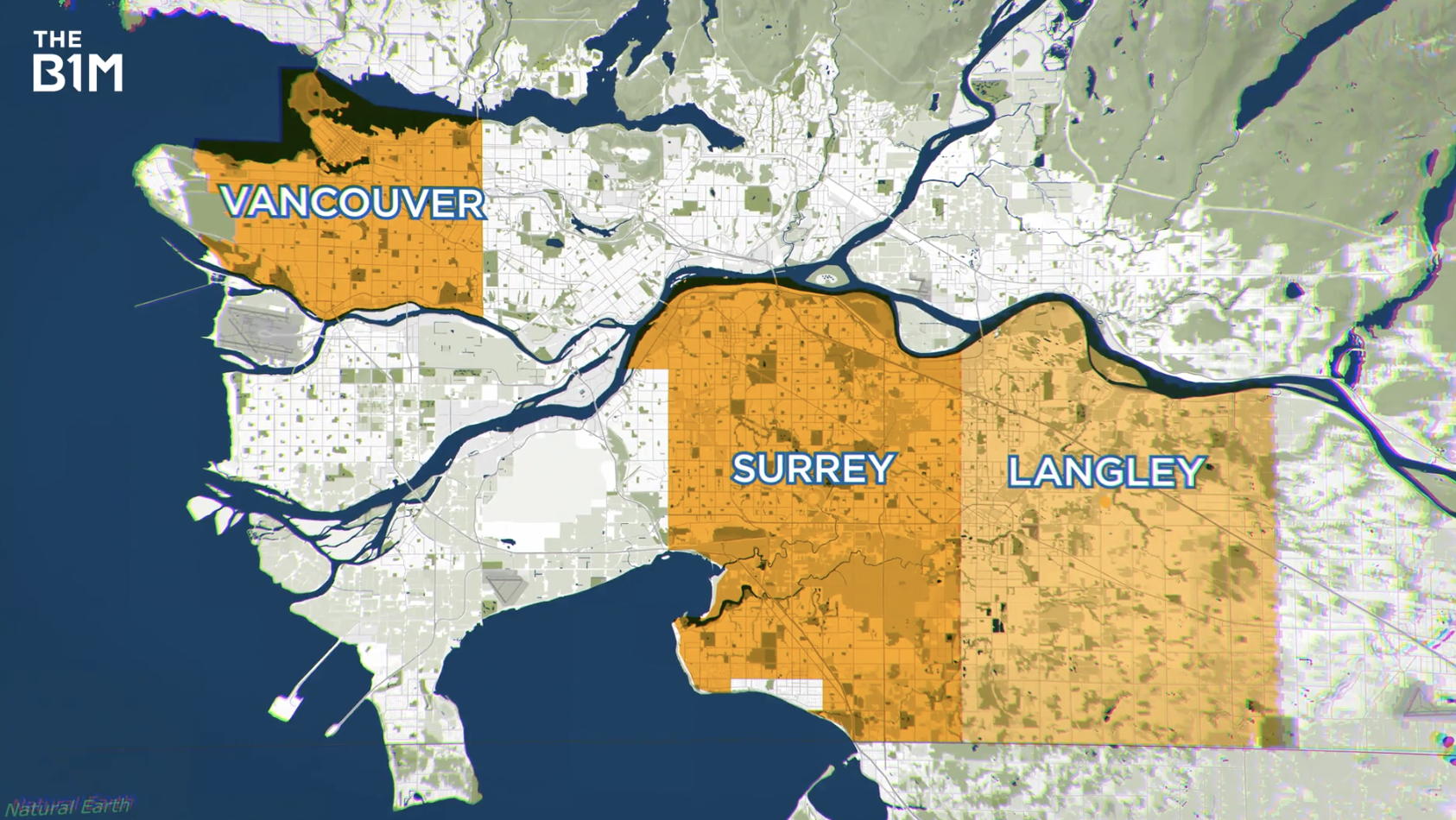
Above: Surrey, the Township of Langley and the City of Langley are some of the fastest growing areas in all of Canada.
Population growth in the province may seem to be stagnating but these districts are bucking the trend. More than 400,000 people are expected to move to Surrey, the City of Langley and the Township of Langley over the next thirty years to take advantage of the cheaper housing market but the speed of growth is already causing problems. Patrick Condon, Master of Urban Design at the University of British Columbia explains:
“The bottom line is the jobs are migrating, like most North American Metropolitan communities, away from a nodal centre to a much more distributed system and you really need a distributed transit system if that’s going to be the case.”
While people may be rushing to live in the area, getting around it once they’re there proves challenging with the car still king. To avoid falling into the Toronto trap of sprawling suburbs and a historic lack of investment in infrastructure, British Columbia is making moves.
The Surrey-Langley SkyTrain
Connecting to the pre-existing Expo Line, and therefore onto the Millennium Line and future Broadway Subway, the Skytrain will carve 16 kilometres through the heart of Surrey. This new line will create links from Langley in the south up towards Burnaby, Richmond and Vancouver in the north. That is once it's constructed.
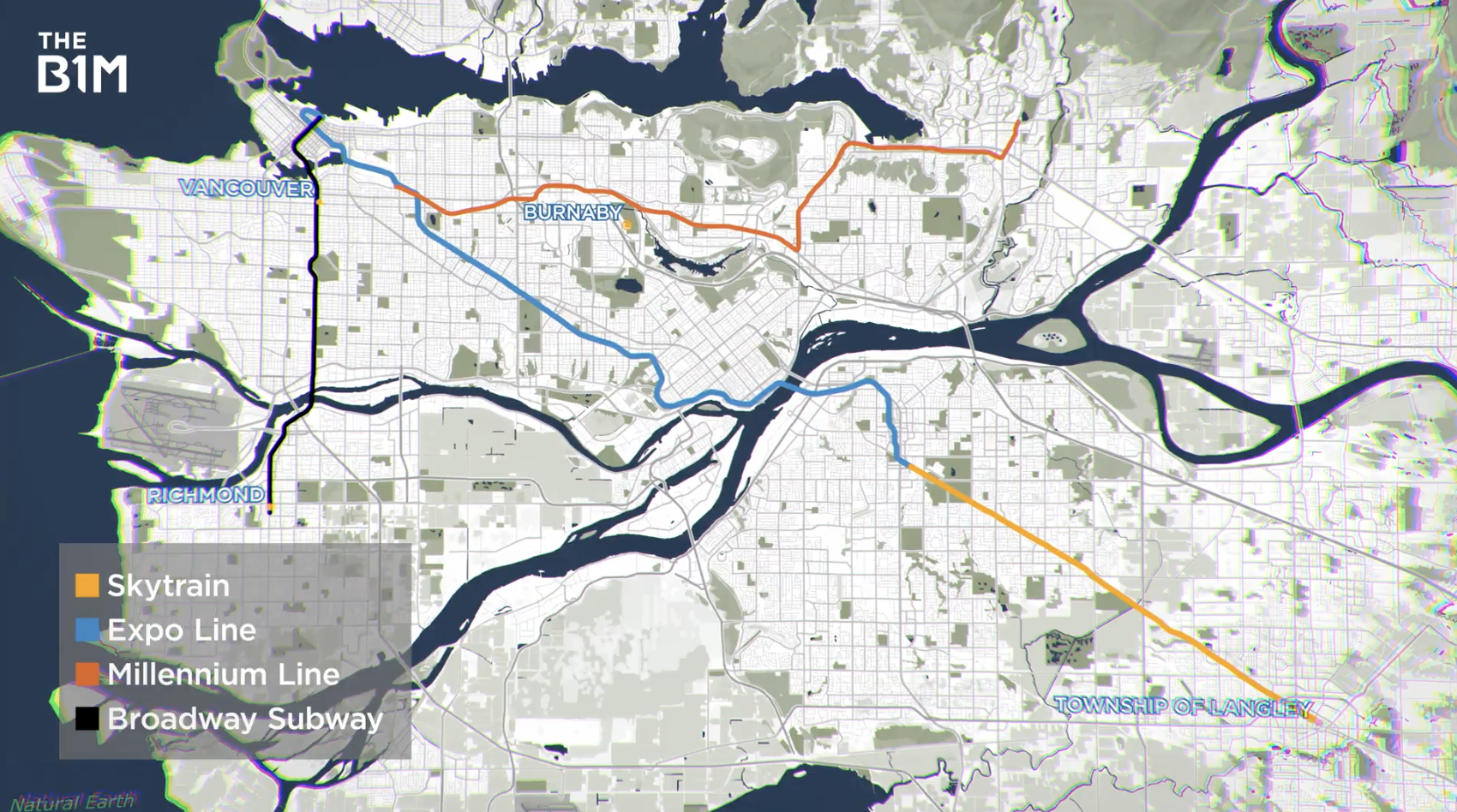
Above: The Surrey Langley SkyTrain will cut through Greater Vancouver, connecting Surrey and Langley with the City of Vancouver.
To create space for the new guideways, major roads like Fraser Highway are being widened in sections. Built high above street level, elevated guideways avoid the congestion down below and negate the need for any tunnelling work that would require big, expensive tunnel boring machines (TMD).
The first step to building a guideway is the piles - deep holes ready for the load bearing columns that support the overall structure. They’re driven into the ground ranging in depth from 10 to 100 metres. Certain areas of the Surrey-Langley route cut through flood plains and so deeper piles are required to offer stability in soft soil. Once the piles are excavated, concrete columns are constructed within them. This route features more than 480 of those columns, created with a rebar cage for reinforcement and a formwork mould for the concrete. They act as legs for more than 4,400 precast segments which are lifted into place by a machine called a launching gantry.
This nifty piece of kit sits on wheels, manoeuvred by a hydraulic system to move the segments into place that make up the actual guideway. The segments are bound together using threaded steel cables and epoxy – which is a bit like super-glue on steroids - and once those blocks are tightened they become what’s known as a span.
But while the construction journey began in late 2024, meaning it’s well underway, the building process nearly looked very different. Proposed in 2012, the initial plan was to construct a light rail system – like a tram. The Surrey LRT would have had 11 stations along its two pronged, 10.5 kilometre route and construction was set to start in 2019. But, just a year before work began on site the project was cancelled. Doug McCallum, who campaigned to replace the plan with the SkyTrain extension, was elected Mayor in 2018. He claimed the LRT would be slower, offer lower capacity and could increase congestion on the roads and while he gained a lot of public support - he was elected after all - the new SkyTrain plan has divided opinion.
“There’s still quite a lot of support in North America for that kind of system which I find rather frustrating, especially in a period of time where the claim is of austerity, austerity, austerity", says Condon. "The extension of the SkyTrain system out to Langley was originally a whole different animal which was going to be our region’s first modern, what I call, European-style tram system.”
SkyTrain vs LRT
The first phase of the Surrey LRT was set to cost about $1.65 billion (CAD) in 2018. Even when accounting for the less developed follow up phase to the LRT plan, and adjusting for inflation, today that would be about $5 billion (CAD). That’s a heck of a lot cheaper than the $6 billion (CAD) set out for the SkyTrain project. It’s worth mentioning the SkyTrain was initially predicted to cost just three to four billion Canadian dollars but in the construction industry, early financial estimates for a major infrastructure project should be taken with a very generous pinch of salt.
First point: LRT
The second major difference is where the train will actually go. Looking at the LRT, the initial phases would have cut through Surrey in the shape of an ’L’ creating two corridors for travel which is ideal for the residents of Surrey. Even though the route was only 10.5km, it featured three more stations than the longer SkyTrain. Surrey could have become a lot more walkable, like many European cities, easing reliance on cars to get around. The problem is that it doesn’t help the people of the City of Langley and the Township of Langley further south. The SkyTrain, on the other hand, will be five and a half kilometres longer, stretching through all three districts. While its stations are spread further apart, it’ll connect to more people and onto the Expo Line towards the City of Vancouver.
We’ll give a point to both options here because there were less substantiated plans to extend the LRT down to Langley at a later date.
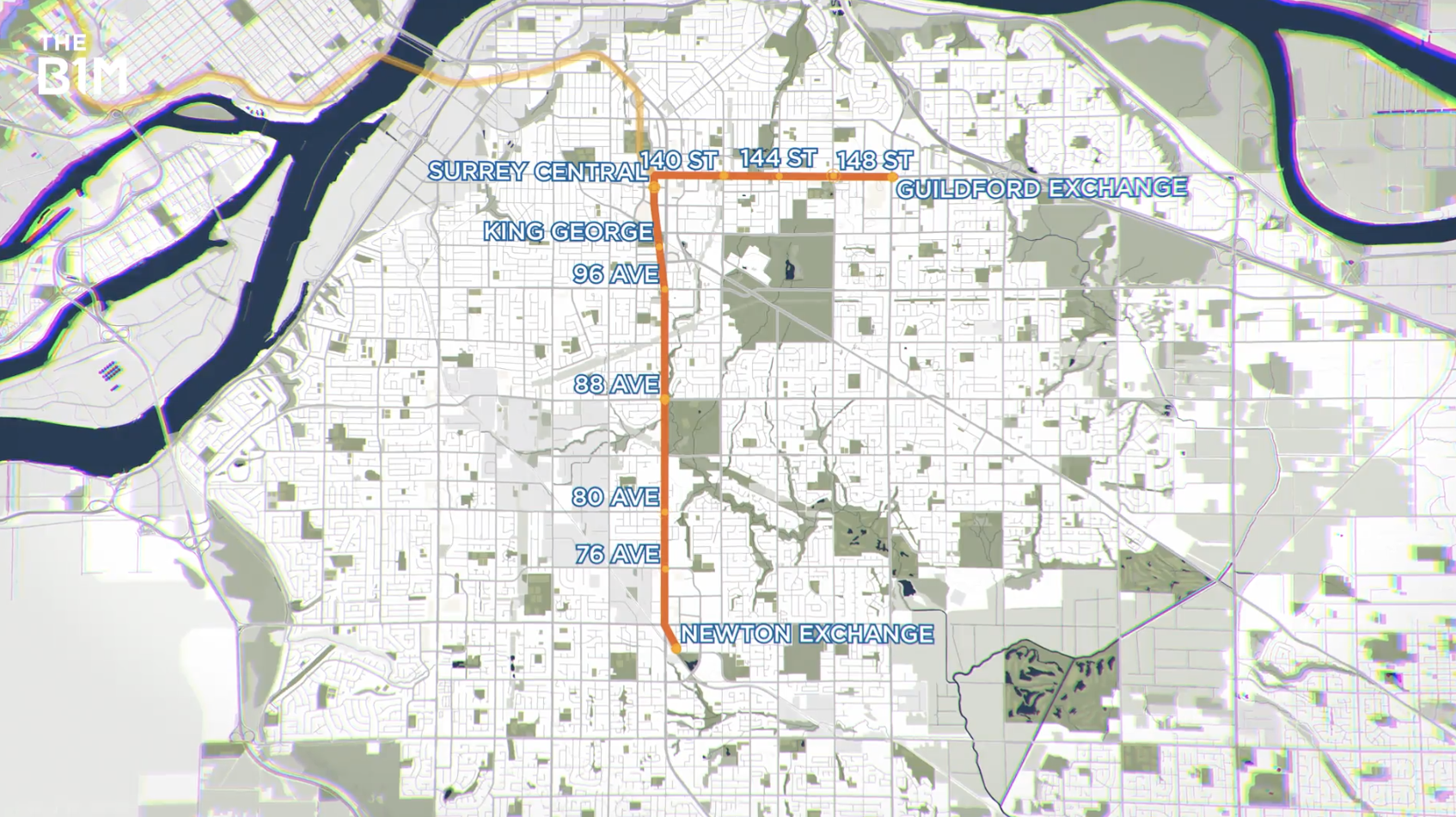
Above: The initial phases of the Surrey LRT cut through the city in the shape of an 'L', featuring three more stations than the SkyTrain route.
Then there's the construction. Put simply, engineering an LRT is a lot faster and generally more straightforward. It’s built at street level using existing road infrastructure, although that still includes signalling, road rebuilds, traffic redesign, electrical systems and moving utilities. That's compared to the SkyTrain which requires tonnes of concrete to create hundreds of columns before any track has even been laid and maintenance doesn’t come cheap.
Three-one to the LRT.
The next point is awarded for operation. All of those concrete columns that are needed to support the SkyTrain’s elevated guideways may be expensive and time consuming to build but they come with huge benefits. The LRT is at street level meaning it has to adhere to the rules of the road: traffic lights, cars and pedestrians. The SkyTrain will be metres above the road avoiding any of the chaos down below which means two things: It should be safer and it should be a lot faster. By way of comparison, Toronto recently opened the Eglinton Crosstown LRT which, when at street level, can travel up to 60kmph. The SkyTrain can travel at 80kmph without stopping at lights and intersections. That means travelling from King George Station at one end of the line to Langley at the opposite end in just 22 minutes.
The SkyTrain cars will be bigger, and driverless, offering more trains per hour for more passengers. It’s an easy point to the SkyTrain.
The final point, making it three-all, goes to the SkyTrain because of convenience. If you’ve been to Vancouver, you’ll know a SkyTrain is already in operation; it’s called the Expo Line and as already briefly mentioned, the Surrey-Langley route will act as an extension of the pre-existing infrastructure. The SkyTrain costs a lot more money and is incredibly intensive to construct but it should offer more passenger capacity and a faster service.
The bigger picture
Making these massive decisions, that impact generations to come, is never black and white and sometimes these debates can go on for decades. But while the new line will offer a fresh travel option for residents of this growing Metropolitan area, development will stretch beyond the tracks. Condon says the areas around the new stations could transform:
“It dramatically elevates the value of the land within that two minute walking compass of the stations enormously and so land speculation is a huge business here among people who are smart enough to get in there early enough. There are huge profits to be made.”
Eight new stations are being constructed for the Surrey-Langley SkyTrain extension and each has the potential to become a commuter hub servicing thousands of people a week. That might be great news for shops, hotels and bars nearby looking to take advantage of increased footfall but it’s the housing developers who really stand to make the big bucks. Thanks to these convenient new travel stops, the cost of land anywhere near the planned stations tends to shoot upwards, which is either excellent or terrible news depending on your situation.
On the one hand, homeowners in the area will likely increase their house value without having to do anything but on the other hand, properties become a whole lot more expensive, pricing potential buyers and renters out of the market. It’s the perfect opportunity for stealthy developers in what’s called a land grab. The early bird moves in quickly to buy a worm at a reasonable price. It then sells the worm for a premium once the station is constructed and the land value has increased.
It doesn’t have to be this way, though – Hong Kong has a very different approach. There, the state owns basically all land so, when the MTR Corporation (Mass Transit Railway) builds a new line or train station, the government grants development rights for the surrounding land before prices skyrocket. Once the new train hub is constructed, that land becomes more valuable and the MTR can partner with private developers to build offices, malls, houses - or whatever they like. The MTR then takes a slice of the profits made by the developer, whether that’s a lump sum or a percentage of commercial gains from the properties. It’s known as a Rail plus Property model and it means transit essentially pays for itself without the need for massive tax payer subsidies.
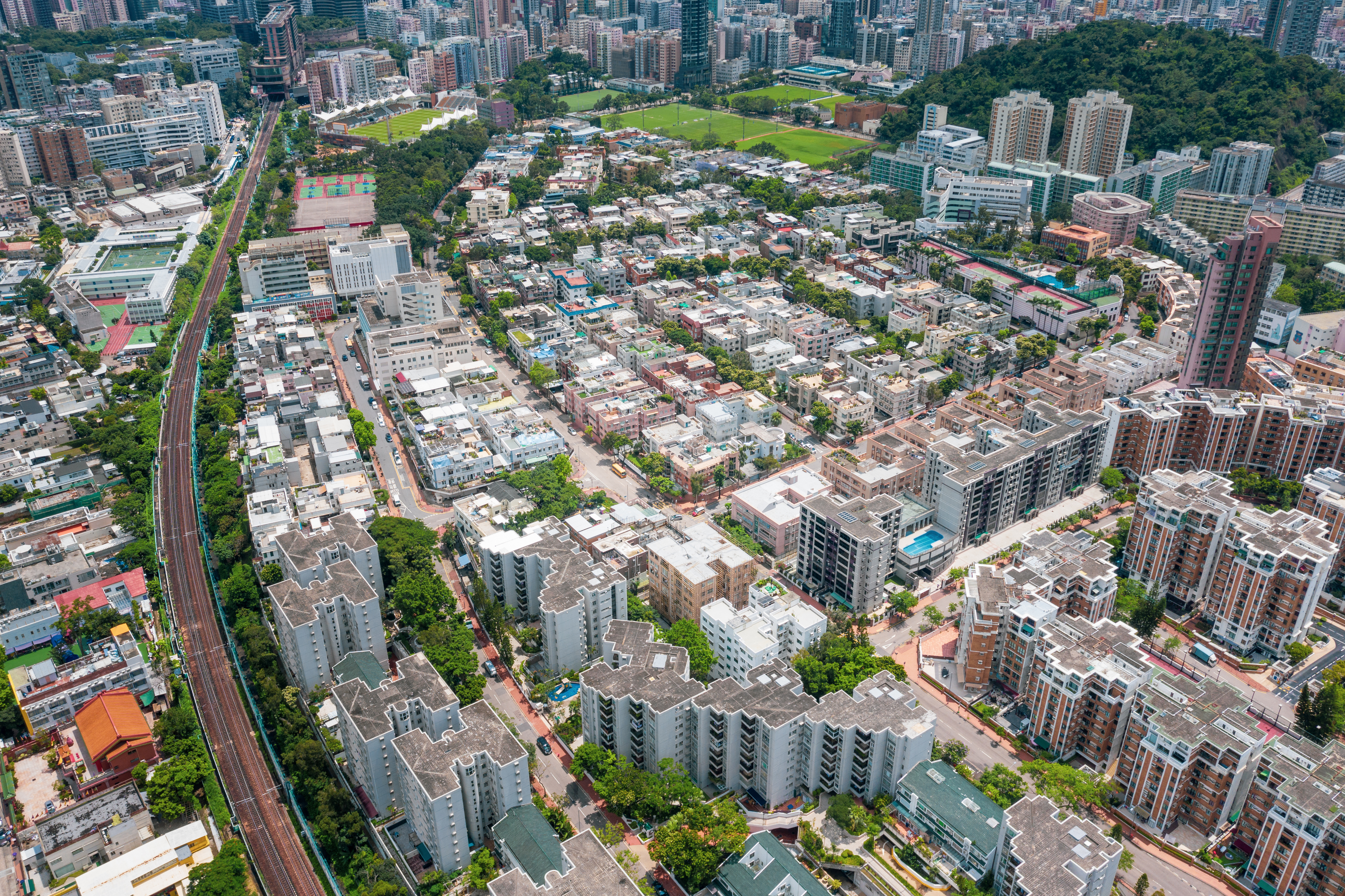
Above: Hong Kong operates a Rail plus Property model, limiting the need for tax payers subsidies towards transit infrastructure.
However, in Vancouver, and most Western countries, developers can basically have-at-it, meaning land profits fall into private hands. It goes to show that projects like this are about a lot more than just where a train line operates. They shape the land value market and hold the potential to transform the face of an area.
We couldn’t come to a decision on whether LRT or SkyTrain was best but in decades to come will people look back and regret that it wasn’t an LRT? Probably not. Almost every transit project faces some level of criticism throughout the planning and construction journey. What matters is that it’s happening. Come 2029, Greater Vancouver will have a new SkyTrain to help connect its people and we’re looking forward to seeing it arrive.
Check out AMD's Threadripper Pro here to transform your computing capabilities.
Additional footage and images: StainerTheFirst, Khoi Pham, SHOX ART, Disney, 20th Century Studios, MGM Studios, Sony Pictures, Global News, TI Corp, All About Beautiful British Columbia, Jean-Paul Around, Vista Media, BISON UNITED, More Than Transit, Home Vista Media, Transit Talks Club and Colin Stepney.
We welcome you sharing our content to inspire others, but please be nice and play by our rules.
Comments