The Race to Build the World’s Second Tallest Building
- Youtube Views 811,810 VIDEO VIEWS

01 June 2026
Video hosted and narrated by Fred Mills. This video contains paid promotion for Rayon Design, see the Burj Azizi template here.
THE BURJ AZIZI is nearly two hundred metres taller than One World Trade Center, more than twice the height of the Shard and a whole 46 metres closer to the skies above than Merdeka 118.
At a staggering 725 metres tall, by 2028 it will be the second tallest building on the planet; that's if Jeddah Tower doesn't beat it to the punch.
1,700 kilometres away Jeddah Tower is once again on the rise and it's also estimated to complete in 2028. If that happens, it will become the tallest building in the world which means the Burj Khalifa would drop to second, and the Burj Azizi, well, that would be third.
It’s officially a race to the top but the question is, who will win?
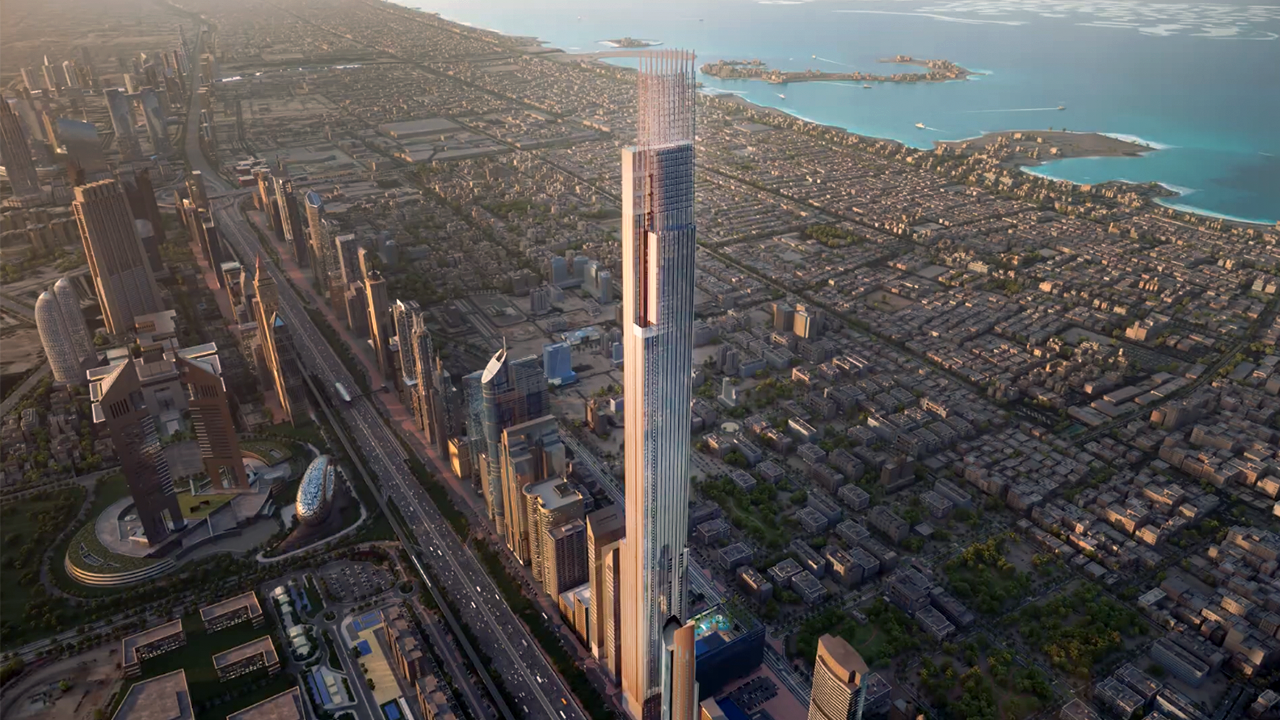
Above: The Burj Azizi will tower over Dubai at 725 metres tall. Image: Azizi Developments.
Building Dubai
Sheikh Zayed Road sits along the spine of Dubai and the chances are you’ll have seen it before because it’s home to the world’s tallest building: the Burj Khalifa.
As you squint to make out the top of the giant skyscrapers that line this corridor, you might start to wonder if you’re in New York or Hong Kong and that’s no coincidence. New York, Hong Kong, Shenzhen - these regions are jam-packed with skyscrapers. They’re compact, concrete jungles born out of a drive to be best in class, to develop better and faster than anyone else and crucially, they’re limited on space.
Hop back over to Dubai and if you focus your attention purely on Sheikh Zayed Road, you’d think this city is facing a similar issue but you’d be wrong. The scarcity of space isn’t the natural byproduct of centuries of construction: it’s intentional.
Dubai isn't short on space - in fact there's loads of it available but to create its own financial district that rivals the biggest and best around the world, they needed a condensed, vertical urban core. Their own global-city image to showcase ambition and it started with the creation of Sheikh Zayed Road itself - a key access route allowing the area to transform.
There are three things that make this road appealing to developers: status, financial opportunity and pro-supertall zoning laws. Pop all of those ingredients in a tin and bake at 180 and you get giants like the Burj Khalifa.
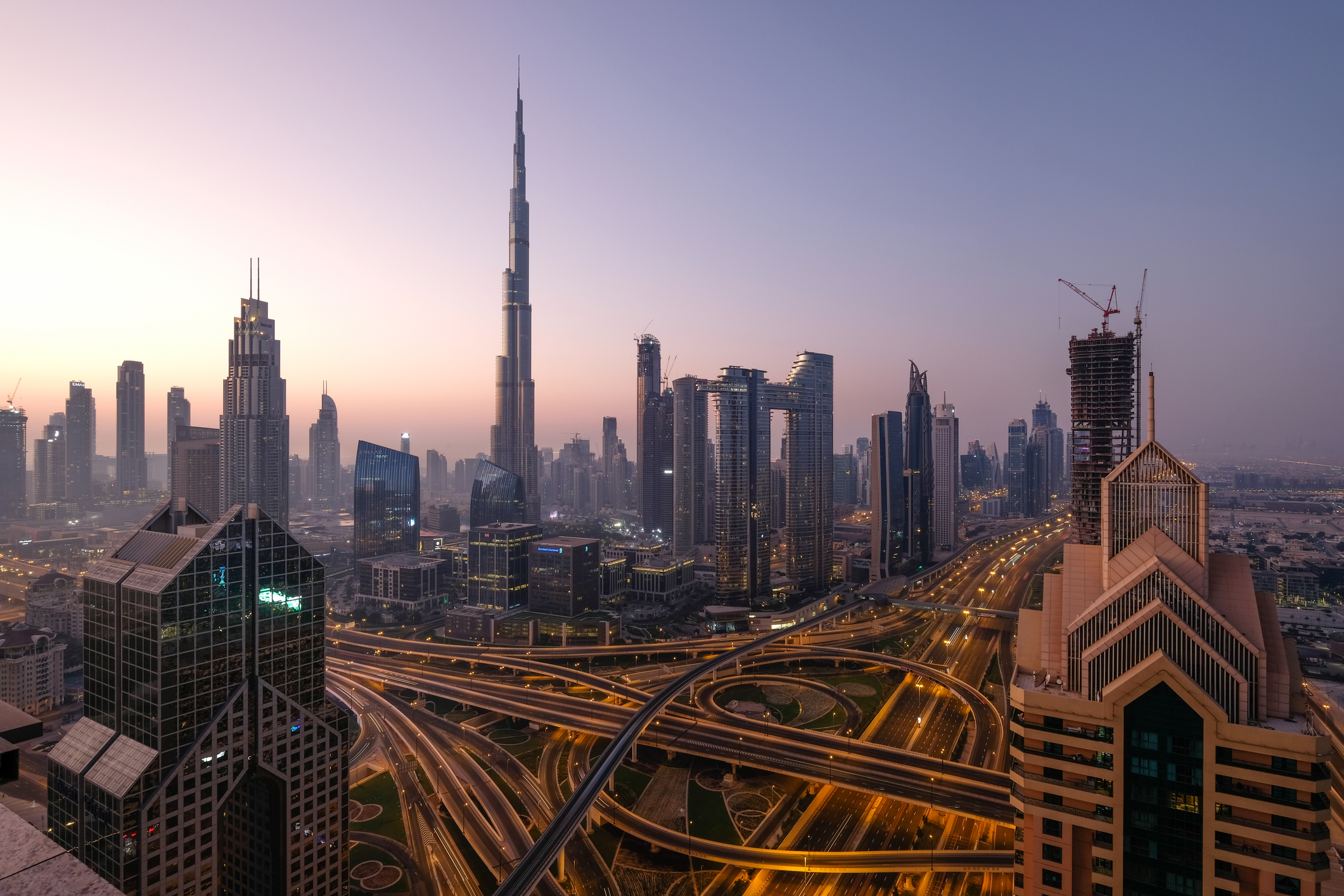
Above: Sheikh Zayed Road is home to a number of skyscrapers, including the Burj Khalifa.
But contrary to popular belief, Dubai’s zoning laws are far from a construction free-for-all. Authorities reserved a level of influence at every stage. Historically, plots on Sheikh Zayed Road were offered on a leasehold basis, generally for a term of around 99 years. It’s a method that allows the government to control development in key areas but it’s more than a bit limiting.
On top of that, land slots were owned almost exclusively by internal investors and developers; unlike in Manhattan, for instance, where skyscrapers are created by people from all over the world. Its development market is opened up to competition on the global stage and so it’s that much more impressive when you manage to get your skyscraper project over the line.
With that in mind, for Dubai’s economic spine, everything is changing. As of January 2025, 128 plots along Sheikh Zayed Road were opened up to freehold conversion which means investors and developers in Dubai will actually own both the building and plot outright.
The area has opened up to foreign property investment like never before and in doing so, has created this buzz from around the world. Reports claim both property demand and prices have surged. It all means more eyes on Sheikh Zayed Road and of course, more opportunities for gargantuan skyscrapers like the Burj Azizi; the skyscraper Azizi Developments is hoping will become the second tallest of all time.
It’s the epitome of what Dubai is striving to achieve and it’s being built to very tall, slim dimensions to maximise space along this fast-developing corridor.
Inside the world's second tallest building
The outside of the Burj Azizi may be eye-catching but its interior steals the show. The main attraction, aside from the height, is a stunning seven star hotel inspired by seven cultural themes - Arabic, Chinese, Persian, Indian, Turkish, French and Russian.
There’ll be culturally styled restaurants for each theme, a luxury ballroom and a beach club. The tower features 20 floors of apartments serviced by everything you could possibly want including a cinema and a supermarket. Add to that the ultra-luxury mall and there’s no reason you’d ever need to leave the tower.
The fancy apartments will be topped by premium penthouses which will range from one to five bedrooms and then there are the world records:
- The highest observation deck
- The highest hotel lobby
- The highest nightclub
- The highest restaurant
- The highest rock climbing wall
- The highest hotel room
And that's just to name a handful. It’s capped off with a museum in the clouds, showcasing the building’s journey and evolution but that story hasn't been run of the mill.
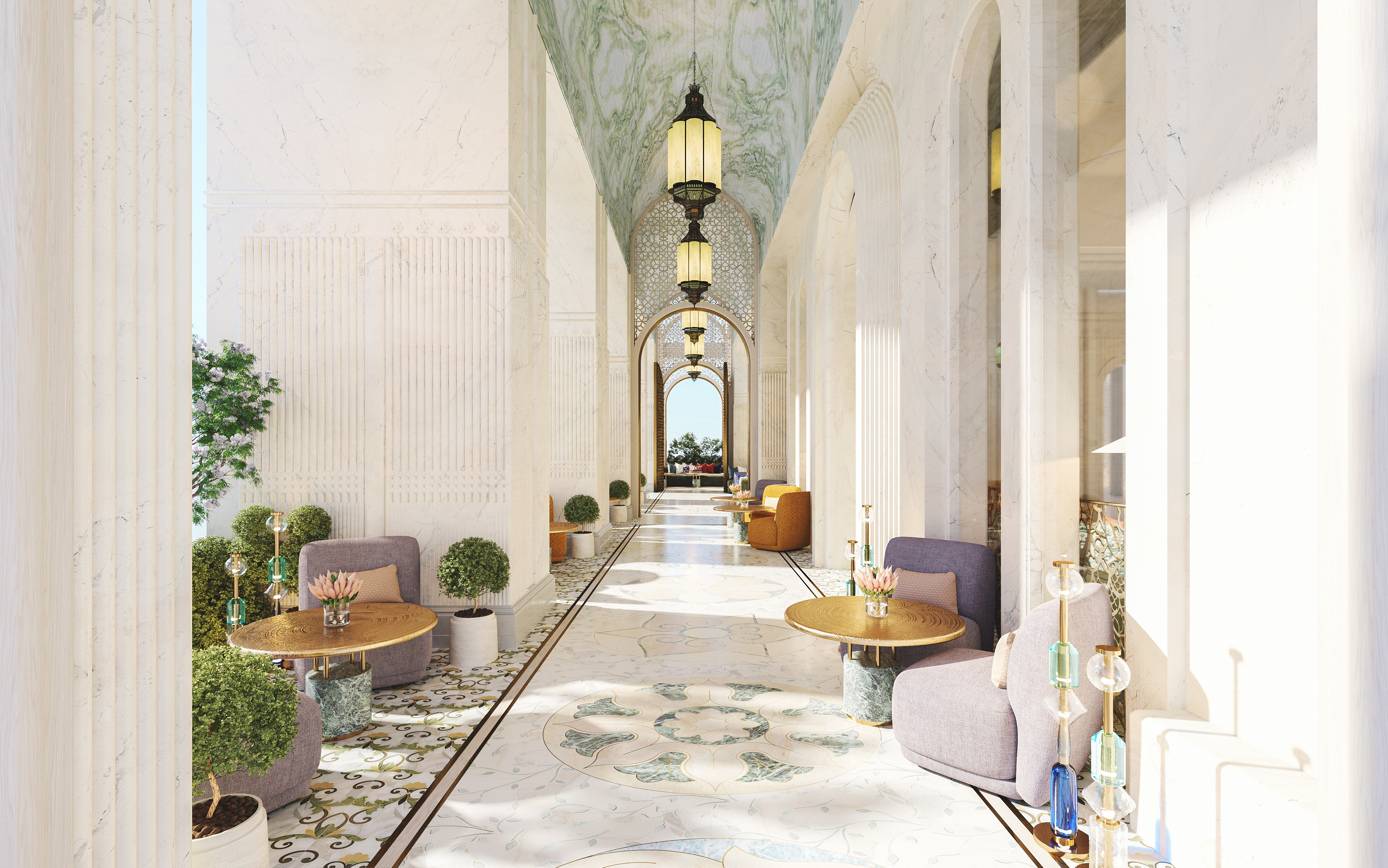
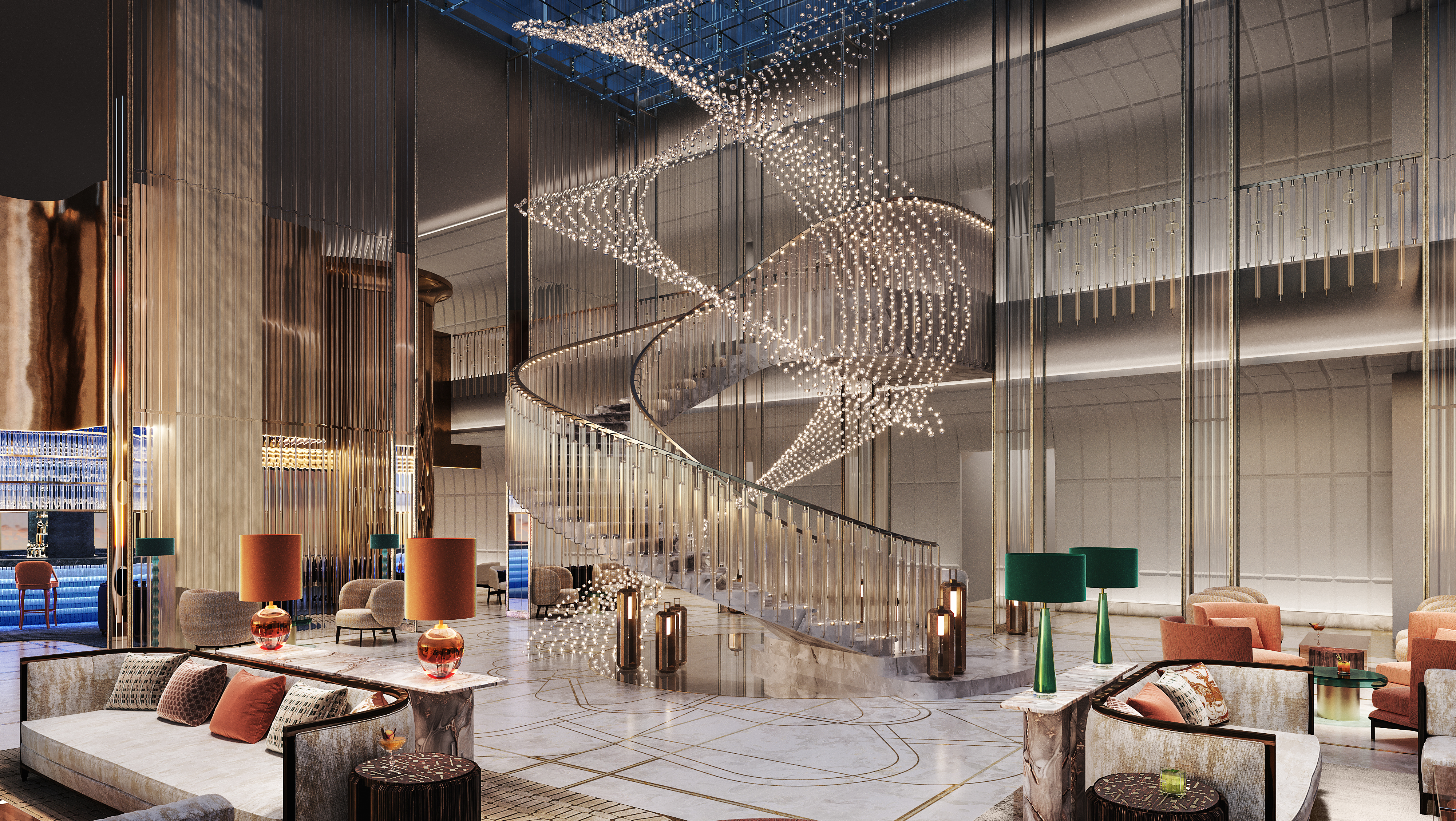
Above: Alongside its dining, apartments and amenities, the Burj Azizi will feature a luxury seven star hotel. Images: Azizi Developments.
In fact, before this site became known as the home of the Burj Azizi, it went by a very different name: Entisar Tower. That’s the skyscraper originally being built on this plot by Meydan Group in 2016.
It was planned to be 570 metres tall but the project ran into money problems. A stop work order was issued and in 2018 Azizi Developments stepped in to buy the land. Work restarted in 2025 with a mission statement geared towards becoming the second tallest tower in the world.
Entisar Tower wasn’t particularly far along its construction journey and so they’d only prepped the foundations. However, that meant Azizi Developments needed to create a tower that would fit within the previous specifications but that worked in the company’s favour.
The foundations, which were already excavated, piled, shored and dewatered, stretched 70 metres below the surface and that’s crucial for the Burj Azizi. By comparison, the Burj Khalifa’s foundations dip down to just 50 metres. The major difference is the footprint.
The Burj Khalifa was built in ample space, allowing for a wide base-plan which offered stability as the structure rose higher than any had before it. The Burj Azizi is squished between two buildings on the side of a road. It physically cannot have a wide footprint and so the alternative is to create really deep foundations to stabilise the tower in the ground.
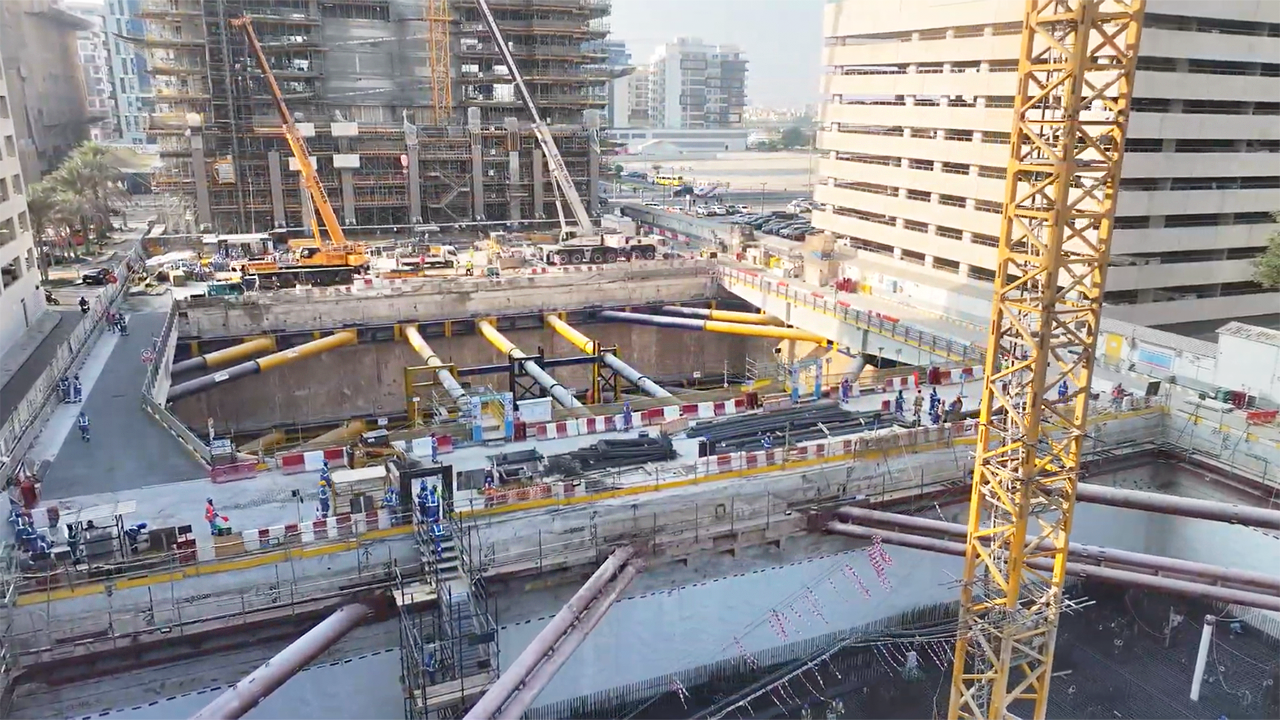
Above: The Burj Azizi features deep foundations to stabilise the incredibly tall tower. Image: Azizi Developments.
Beyond that below ground work, there’s another major challenge with a skyscraper of these dimensions: the Burj Azizi is 725 metres tall by 57 metres wide. That means its height to width ratio is 13:1.
It's one of the slimmest buildings on the planet which means the wind is its enemy. What’s curious is that the Burj Azizi won’t have a tuned mass damper (a massive pendulum that controls building sway). Much like the Burj Khalifa, it’s been decided a TMD is too heavy at these ridiculous heights.
As wind hits the building, its path is interrupted, leaving it three flow ‘choices’. It’s either pushed down, up or around the sides of the tower and all three are problematic.
If it heads back down to earth this causes a downdraught; the wind accelerates as it drops down the face of the skyscraper, forcing powerful gusts into the streets below and the taller a building is, the more time it has to gain speed as it descends. As the wind that travels up the tower races to the top, it can meet air flowing over the peak, combining to create turbulent patterns. Finally, if it goes around the side of a building with sharp edges or corners, that accelerates wind flow, causing vortex shedding where air swirls in a variety of directions around the structure.
Any of the above can cause a building to shake, sway and experience ear-piercing noise pollution. To combat nature, a variety of wind tests are carried out on a scale model of the structure to learn how it interacts with its environment.
Using information gathered from the tests, the shape of the building is fine tuned to manage lateral forces. The pressure is highest in the middle of the facade, with the edges of the tower experiencing lower pressure and so the tower features notched corners and massive setbacks that look a bit like giant steps. The idea is that they’ll work as an aerodynamic modification to mitigate any problems. Setbacks act like mini, attached side structures. They interrupt the wind, limiting the momentum it builds as it travels up and down the facade.
High performance glass and cladding then reduces heat in this desert city and thermal sensors embedded in the concrete track temperature.
The Burj Azizi’s core will house 44 elevators and the building’s mechanisms. As it climbs, it’s supported by an outrigger system that acts like arms, connecting to the outer structure for stiffness. In this incredibly cosy worksite, tower cranes feature anti-collision systems to safely move concrete and steel up into place for the core but the main challenge faced is time.
A race against the clock
The Burj Azizi is destined to become the second tallest building in the world but to achieve that goal, it has to open before Jeddah Tower.
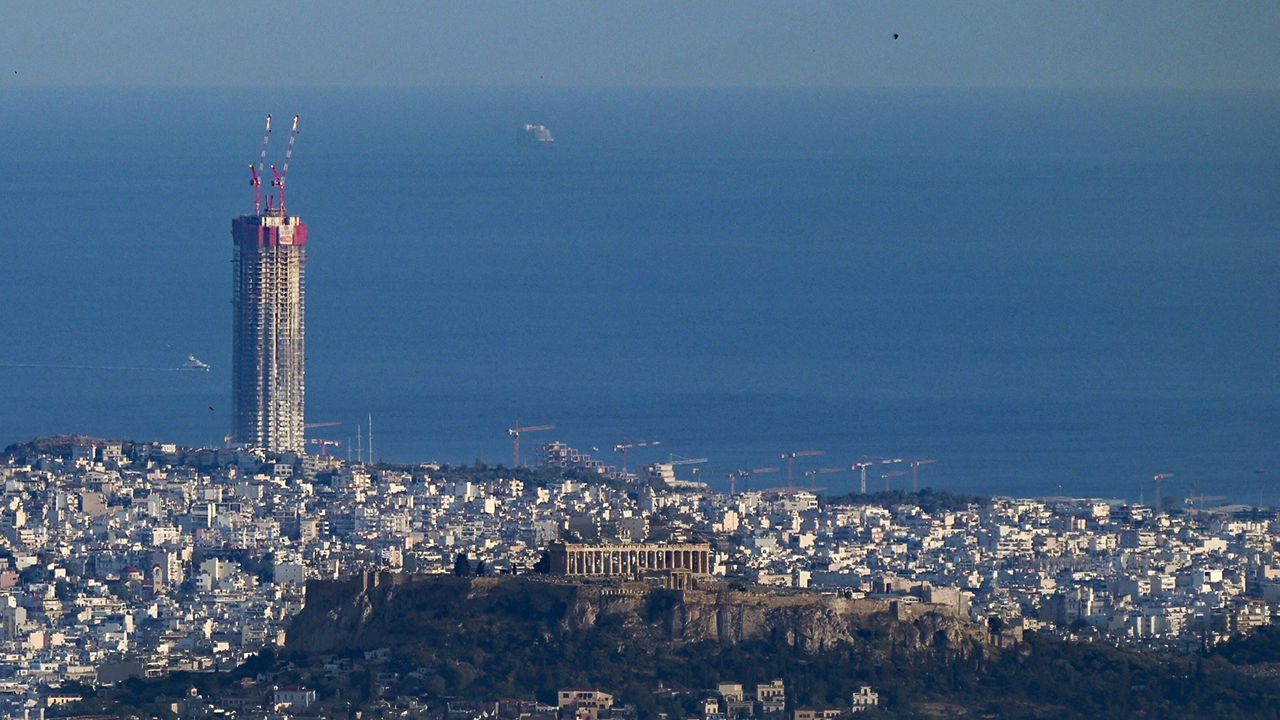
Meanwhile, 1,700km away, construction on the one kilometre tall giant ploughs on. In fact, as of May 2026, its 101st floor had been completed. Work began in 2013 but by 2018 it had ground to a halt with the tower standing at about 250 metres - staggeringly, still only a quarter of the way finished.
A number of delays caused progress to stutter along until January 2025 when news broke that one of the most daring engineering projects in history was back under construction. Flash forward just over a year and the tower dominates Jeddah’s skyline at a reported 400 metres in height.
At not even half way to completion it would already be the tallest building in the UK, Canada, Australia, the whole of South America and most other countries around the world.
Given how fast it's rising, the developers expect the tower to be completed by 2028. In just two years’ time, we could be looking up at a building that soars more than 1,000 metres towards the skies above.
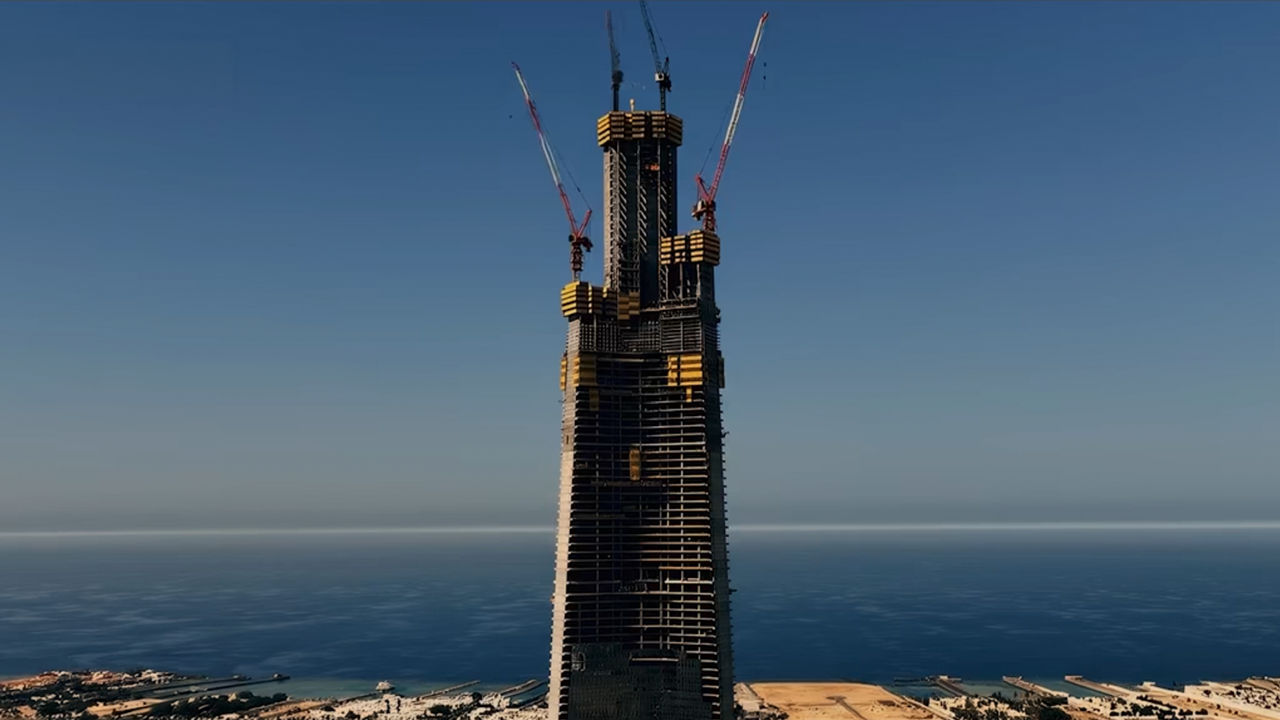
Above: When the Jeddah Tower opens it'll be the tallest building in history, standing at more than 1,000 metres in height. Image: Saudi Binladin Group.
What that means for the Burj Azizi’s legacy is yet to be decided. Although initially scheduled for a 2028 opening, some reports this year claim that could now be 2029.
It may become the second tallest building in the world, cementing its place in the history books, or it might end up being remembered as the building that strived for second and landed third; although in the grand scheme of things, that would still be an incredible accomplishment.
As things stand it could end up being the second tallest building in the world for a matter of months, weeks, or maybe even just a few days.
Building a project of this scale is rarely a linear process and both of these great towers have faced setbacks in the past but what the Burj Azizi does tell us is that the construction industry is well and truly into the next phase of its evolution.
When the Chrysler opened more than a century ago, it was an enormous building that dominated the skyline. Now, it’s more than two times smaller than the Burj Azizi and it raises a question - when people look back in 100 years from now, what will they think of the skyscrapers of today?
Will they be iconic reminders of a time when building over one kilometre tall still seemed out of reach or are we nearing the limit of possibility?
Rayon is the all-in-one, effortless CAD tool taking you from concept to completion. Try it (for free) here.
Additional footage and images: Azizi Developments, Saudi Binladin Group, Meydan Group and CNN.
We welcome you sharing our content to inspire others, but please be nice and play by our rules.
Comments