
Egypt Is Building a New Nile
- Youtube Views 1,506,917 VIDEO VIEWS

24 June 2026
Video hosted by Fred Mills. This video contains paid promotion for Brilliant.
BENEATH the desert west of the Nile, a network of tunnels is being carved through the sand. They are among the first visible signs of one of the most ambitious infrastructure projects in Egypt’s modern history, an attempt to create a new agricultural landscape and relieve mounting pressure on the Nile Delta.
For thousands of years, the delta has sustained Egypt’s population, but that system is now under strain. After decades of intervention, shifting river dynamics and rising demand, the fertile land that once fed the country is approaching its limits. The government’s response is the New Delta project, a vast plan to recycle water, move it across the desert and bring new land into cultivation on a scale rarely attempted anywhere in the world. Early satellite images suggest rapid progress, with hundreds of new fields appearing across previously barren terrain, but questions remain about how sustainable this transformation will be.
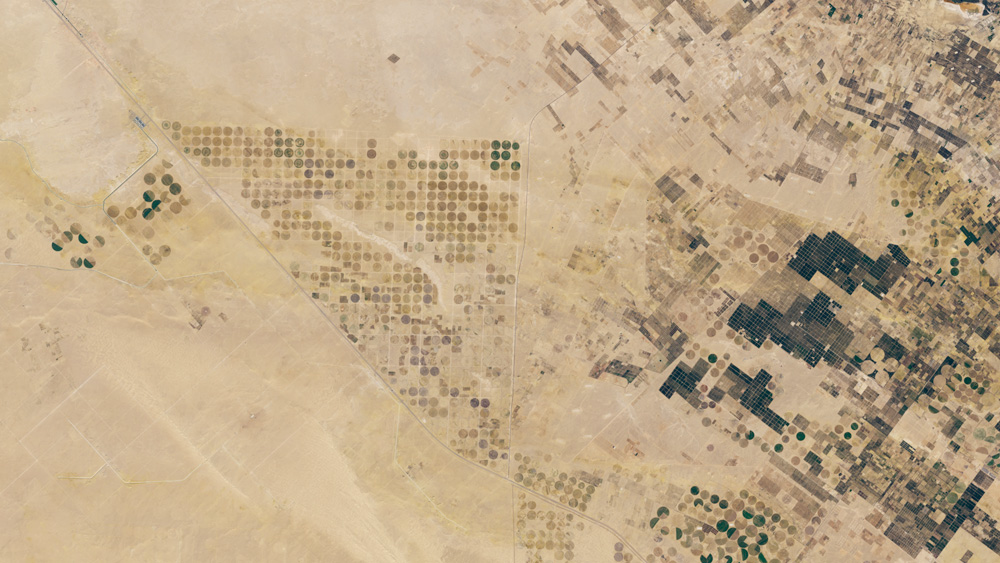
A satellite image showing new crop fields growing in the Egyptian desert. Image: NASA.
Few countries are as tightly bound to a single natural resource as Egypt is to the Nile. Around 95 percent of the population lives along its banks or within the delta where it meets the Mediterranean Sea. Beyond that narrow strip lies vast desert. From space, the contrast is striking. A thin ribbon of green cuts through an otherwise arid landscape, supporting tens of millions of people. For centuries, the Nile’s annual floods carried nutrient-
Video hosted by Fred Mills. This video contains paid promotion for Brilliant.
BENEATH the desert west of the Nile, a network of tunnels is being carved through the sand. They are among the first visible signs of one of the most ambitious infrastructure projects in Egypt’s modern history, an attempt to create a new agricultural landscape and relieve mounting pressure on the Nile Delta.
For thousands of years, the delta has sustained Egypt’s population, but that system is now under strain. After decades of intervention, shifting river dynamics and rising demand, the fertile land that once fed the country is approaching its limits. The government’s response is the New Delta project, a vast plan to recycle water, move it across the desert and bring new land into cultivation on a scale rarely attempted anywhere in the world. Early satellite images suggest rapid progress, with hundreds of new fields appearing across previously barren terrain, but questions remain about how sustainable this transformation will be.
A satellite image showing new crop fields growing in the Egyptian desert. Image: NASA.
Few countries are as tightly bound to a single natural resource as Egypt is to the Nile. Around 95 percent of the population lives along its banks or within the delta where it meets the Mediterranean Sea. Beyond that narrow strip lies vast desert. From space, the contrast is striking. A thin ribbon of green cuts through an otherwise arid landscape, supporting tens of millions of people. For centuries, the Nile’s annual floods carried nutrient rich silt downstream, renewing the fertility of the soil and underpinning agricultural production. That natural system helped sustain one of the world’s earliest complex civilisations.
In the twentieth century, that balance began to change. The construction of the Aswan High Dam, completed in 1970, brought clear benefits. It provided a steady supply of hydroelectric power and allowed water to be regulated for year round irrigation. At the same time, it halted the natural flood cycle that had sustained the delta for millennia. Sediment that once flowed freely downstream became trapped behind the dam, and farmers increasingly turned to artificial fertilisers to maintain yields. Over time, this shift altered the foundations of Egypt’s agricultural system.
More recently, attention has turned to developments beyond Egypt’s borders. The Grand Ethiopian Renaissance Dam on the Blue Nile is the largest hydroelectric project in Africa and a source of national pride for Ethiopia. For Egypt, which depends on the Nile for the vast majority of its freshwater, it introduces new uncertainty. Even relatively small reductions in water flow could have significant effects over time, particularly as demand continues to rise. Egyptian officials have warned that reduced flows could place increasing pressure on agriculture and water supply in the decades ahead.
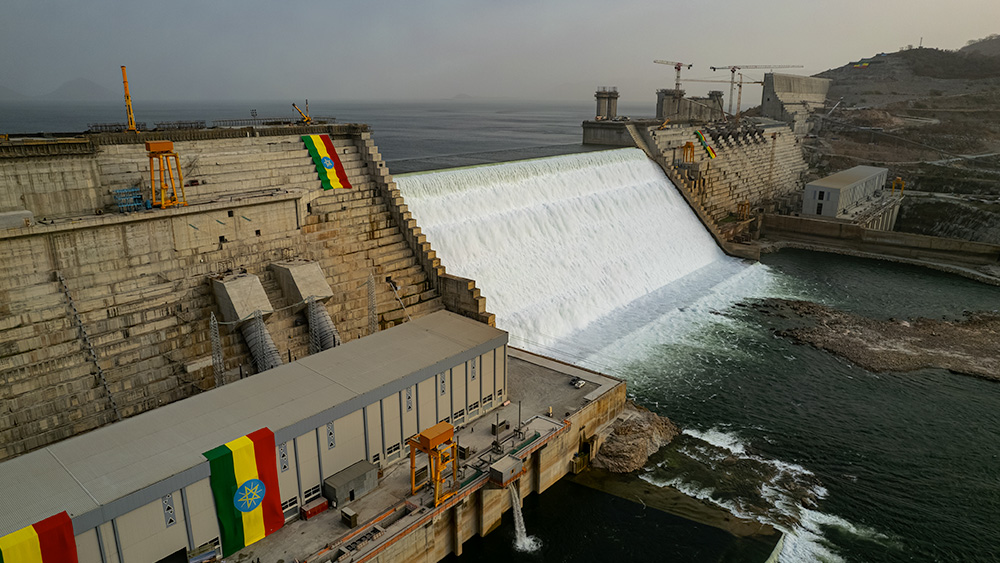
The Grand Ethiopean Renaissance Dam under construction.
At the same time, internal pressures are intensifying. Egypt’s population has grown rapidly, rising from around 60 million in 1990 to more than 100 million today. Most of that growth has been concentrated along the Nile, where land is already scarce. Urban expansion has steadily encroached on farmland, reducing the area available for agriculture even as demand for food continues to increase. The result is a widening gap between domestic production and consumption. Once largely self sufficient, Egypt is now the world’s largest importer of wheat, relying heavily on global markets to meet basic needs. That dependence was exposed in 2022 when the war in Ukraine disrupted supplies and drove up prices.
It is against this backdrop that the New Delta project was announced in 2018. The plan is to reclaim around 9,200 square kilometres of desert and transform it into productive farmland. If completed, it would increase Egypt’s cultivated land by more than a third. At the heart of the scheme is a complex water management system designed to move and treat vast quantities of water across long distances.
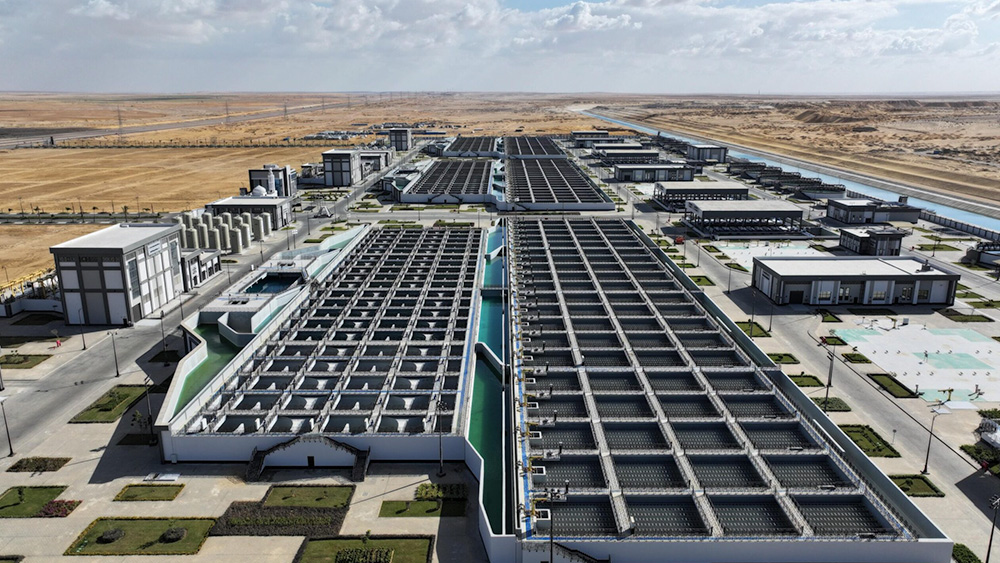
The new nile delta water treatment plant. Image: The Arab Contractors.
The largest component is the Al Hammam canal, which runs for around 170 kilometres. It collects agricultural wastewater that would otherwise be discharged into the Mediterranean and redirects it inland. A second system draws water directly from the Nile and supplies additional areas. Together, these networks are designed to irrigate a vast new agricultural corridor stretching into the Western Desert, an area that until recently consisted of little more than sand and rock.
Moving water across such distances presents significant engineering challenges. Much of the system begins close to sea level, while the desert plateau it must reach lies around 100 metres higher. To overcome this, a series of pumping stations has been constructed along the route, lifting water in stages as it moves inland. Evaporation is another major concern in the desert climate, where high temperatures can quickly reduce water volumes. To address this, parts of the system run through large underground pipes, limiting exposure to the sun and reducing losses.
Before the water can be used for irrigation, it must be treated. This is handled by the New Delta Water Treatment Plant, a vast facility capable of processing millions of cubic metres of water each day. By some measures, it is the largest installation of its kind in the world. The aim is to turn lower quality drainage water into a reliable resource for agriculture, reducing pressure on the Nile itself and making more efficient use of existing supplies.
There is clear evidence that the project is already changing the landscape. Satellite images show large areas of desert now under cultivation, with distinctive circular fields created by centre pivot irrigation systems. By 2024, thousands of square kilometres had reportedly been reclaimed. For the Egyptian government, this is proof that the project is delivering results.
However, the picture is more complex. Analysts say that much of the water currently being used to irrigate these new fields is not coming from the canal system, but from underground aquifers. These reserves have accumulated over thousands of years and are not easily replenished. Research based on satellite data suggests that groundwater depletion in parts of the Western Desert has accelerated in recent years. Once this water is exhausted, it cannot simply be replaced.
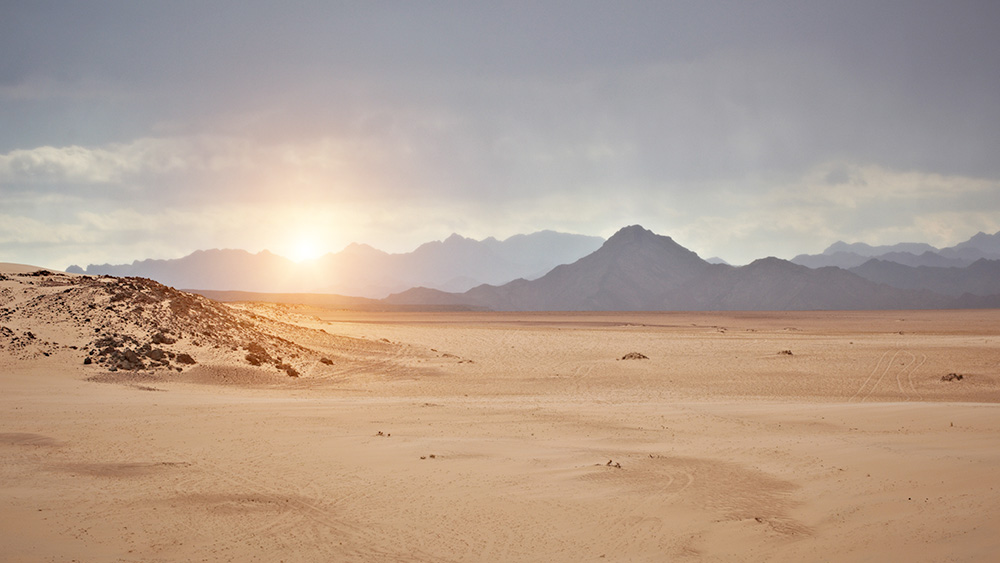
The New Nile Delta is currently relying on non renewable groundwater.
There are also questions about what is being grown and who benefits. Much of the production in newly reclaimed areas is focused on higher value crops such as fruit, vegetables and nuts, which can be exported. The government argues that this generates the foreign currency needed to pay for imports of staple foods such as wheat. Critics, however, say this approach does little to reduce Egypt’s reliance on global markets and leaves underlying food security challenges unresolved.
Egypt has attempted large scale desert reclamation before. In the late 1990s, the Toshka project aimed to create a new agricultural region by diverting Nile water into the Western Desert. Despite significant investment, it fell far short of its original ambitions. A series of new cities built to ease pressure on the Nile Valley has also delivered mixed results, with some developments struggling to attract the populations they were intended to serve.
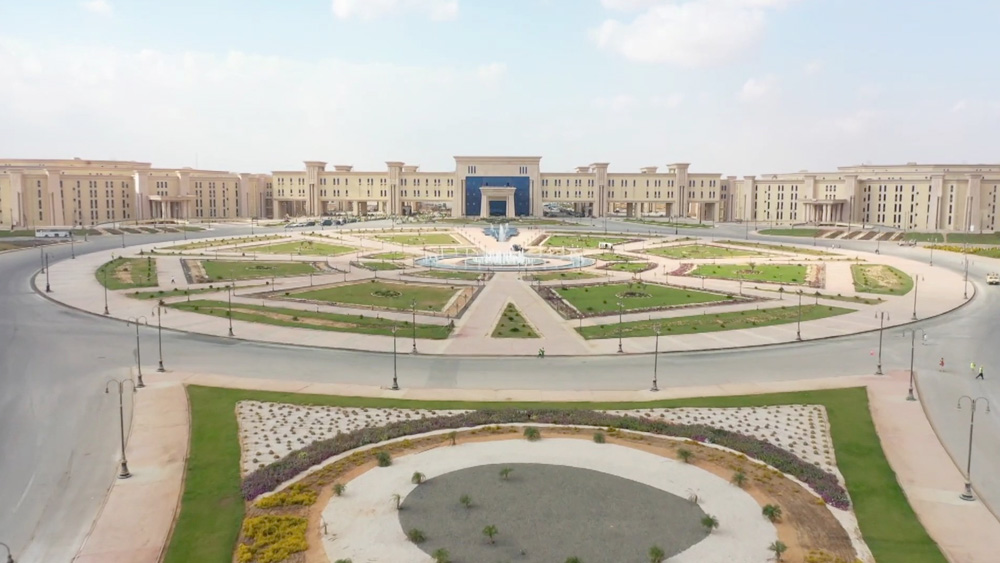
The New Administrative Capital, one of many new desert megaprojects in Egypt.
These experiences have raised questions about whether large infrastructure projects can deliver lasting change. The New Delta reflects both the scale of Egypt’s challenges and the ambition of its response. Its combination of water recycling, large scale engineering and agricultural expansion represents a significant shift in how the country is attempting to manage its resources.
There is no doubt that real progress has been made. But the long term success of the project will depend on whether it can operate sustainably in a country facing increasing water scarcity and continued population growth. Egypt has spent thousands of years learning how to manage the Nile. The New Delta is an attempt to apply that knowledge in a very different context.
Whether it marks the beginning of a lasting transformation, or becomes the latest in a long line of ambitious plans that fell short, will help decide Egypt’s future in the decades ahead.
Click here to get started with Brilliant’s tutor for free. You can upgrade to Premium to unlock all courses and right now, The B1M viewers can save 20% off an annual subscription.
Additional footage and images: Elsewdy Electric, Aucom Applied Motor Controls, Wilo Group, China State Construction, WeBuild.
rich silt downstream, renewing the fertility of the soil and underpinning agricultural production. That natural system helped sustain one of the world’s earliest complex civilisations.
In the twentieth century, that balance began to change. The construction of the Aswan High Dam, completed in 1970, brought clear benefits. It provided a steady supply of hydroelectric power and allowed water to be regulated for year-round irrigation. At the same time, it halted the natural flood cycle that had sustained the delta for millennia. Sediment that once flowed freely downstream became trapped behind the dam, and farmers increasingly turned to artificial fertilisers to maintain yields. Over time, this shift altered the foundations of Egypt’s agricultural system.
More recently, attention has turned to developments beyond Egypt’s borders. The Grand Ethiopian Renaissance Dam on the Blue Nile is the largest hydroelectric project in Africa and a source of national pride for Ethiopia. For Egypt, which depends on the Nile for the vast majority of its freshwater, it introduces new uncertainty. Even relatively small reductions in water flow could have significant effects over time, particularly as demand continues to rise. Egyptian officials have warned that reduced flows could place increasing pressure on agriculture and water supply in the decades ahead.
The Grand Ethiopian Renaissance Dam under construction.
At the same time, internal pressures are intensifying. Egypt’s population has grown rapidly, rising from around 60 million in 1990 to more than 100 million today. Most of that growth has been concentrated along the Nile, where land is already scarce. Urban expansion has steadily encroached on farmland, reducing the area available for agriculture even as demand for food continues to increase. The result is a widening gap between domestic production and consumption. Once largely self-sufficient, Egypt is now the world’s largest importer of wheat, relying heavily on global markets to meet basic needs. That dependence was exposed in 2022 when the war in Ukraine disrupted supplies and drove up prices.
It is against this backdrop that the New Delta project was announced in 2018. The plan is to reclaim around 9,200 square kilometres of desert and transform it into productive farmland. If completed, it would increase Egypt’s cultivated land by more than a third. At the heart of the scheme is a complex water management system designed to move and treat vast quantities of water across long distances.
The new nile delta water treatment plant. Image: The Arab Contractors.
The largest component is the Al Hammam canal, which runs for around 170 kilometres. It collects agricultural wastewater that would otherwise be discharged into the Mediterranean and redirects it inland. A second system draws water directly from the Nile and supplies additional areas. Together, these networks are designed to irrigate a vast new agricultural corridor stretching into the Western Desert, an area that until recently consisted of little more than sand and rock.
Moving water across such distances presents significant engineering challenges. Much of the system begins close to sea level, while the desert plateau it must reach lies around 100 metres higher. To overcome this, a series of pumping stations has been constructed along the route, lifting water in stages as it moves inland. Evaporation is another major concern in the desert climate, where high temperatures can quickly reduce water volumes. To address this, parts of the system run through large underground pipes, limiting exposure to the sun and reducing losses.
Before the water can be used for irrigation, it must be treated. This is handled by the New Delta Water Treatment Plant, a vast facility capable of processing millions of cubic metres of water each day. By some measures, it is the largest installation of its kind in the world. The aim is to turn lower quality drainage water into a reliable resource for agriculture, reducing pressure on the Nile itself and making more efficient use of existing supplies.
There is clear evidence that the project is already changing the landscape. Satellite images show large areas of desert now under cultivation, with distinctive circular fields created by centre pivot irrigation systems. By 2024, thousands of square kilometres had reportedly been reclaimed. For the Egyptian government, this is proof that the project is delivering results.
However, the picture is more complex. Analysts say that much of the water currently being used to irrigate these new fields is not coming from the canal system, but from underground aquifers. These reserves have accumulated over thousands of years and are not easily replenished. Research based on satellite data suggests that groundwater depletion in parts of the Western Desert has accelerated in recent years. Once this water is exhausted, it cannot simply be replaced.
The New Nile Delta is currently relying on non renewable groundwater.
There are also questions about what is being grown and who benefits. Much of the production in newly reclaimed areas is focused on higher value crops such as fruit, vegetables and nuts, which can be exported. The government argues that this generates the foreign currency needed to pay for imports of staple foods such as wheat. Critics, however, say this approach does little to reduce Egypt’s reliance on global markets and leaves underlying food security challenges unresolved.
Egypt has attempted large scale desert reclamation before. In the late 1990s, the Toshka project aimed to create a new agricultural region by diverting Nile water into the Western Desert. Despite significant investment, it fell far short of its original ambitions. A series of new cities built to ease pressure on the Nile Valley has also delivered mixed results, with some developments struggling to attract the populations they were intended to serve.
The New Administrative Capital, one of many new desert megaprojects in Egypt.
These experiences have raised questions about whether large infrastructure projects can deliver lasting change. The New Delta reflects both the scale of Egypt’s challenges and the ambition of its response. Its combination of water recycling, large scale engineering and agricultural expansion represents a significant shift in how the country is attempting to manage its resources.
There is no doubt that real progress has been made. But the long term success of the project will depend on whether it can operate sustainably in a country facing increasing water scarcity and continued population growth. Egypt has spent thousands of years learning how to manage the Nile. The New Delta is an attempt to apply that knowledge in a very different context.
Whether it marks the beginning of a lasting transformation, or becomes the latest in a long line of ambitious plans that fell short, will help decide Egypt’s future in the decades ahead.
Click here to get started with Brilliant’s tutor for free. You can upgrade to Premium to unlock all courses and right now, The B1M viewers can save 20% off an annual subscription.
Additional footage and images: Elsewdy Electric, Aucom Applied Motor Controls, Wilo Group, China State Construction, WeBuild.
We welcome you sharing our content to inspire others, but please be nice and play by our rules.
Comments