Why Every City is Building a Sphere
- Youtube Views 1,391,865 VIDEO VIEWS

26 June 2026
Video hosted by Fred Mills. This video contains paid promotion for KiwiCo.
A few years ago the Sphere kind of broke the internet… And now it’s back, with a vengeance. Cities all over the world are planning to build their own Spheres. Abu Dhabi. Korea. Washington DC. Singapore. Sure, it looks cool, and if they pull this off it could change live entertainment forever. But does any of this actually make economic sense? Two and a half years on, The Vegas Sphere still hasn’t made a profit. And it probably won’t for a while.
Not to mention, building one of these things isn’t exactly cheap. You can get your own sphere for $2.5BN. Either way, this hasn’t stopped MSG Sphere’s bold plan for world domination. This is the attack of the spheres.
Vegas domination
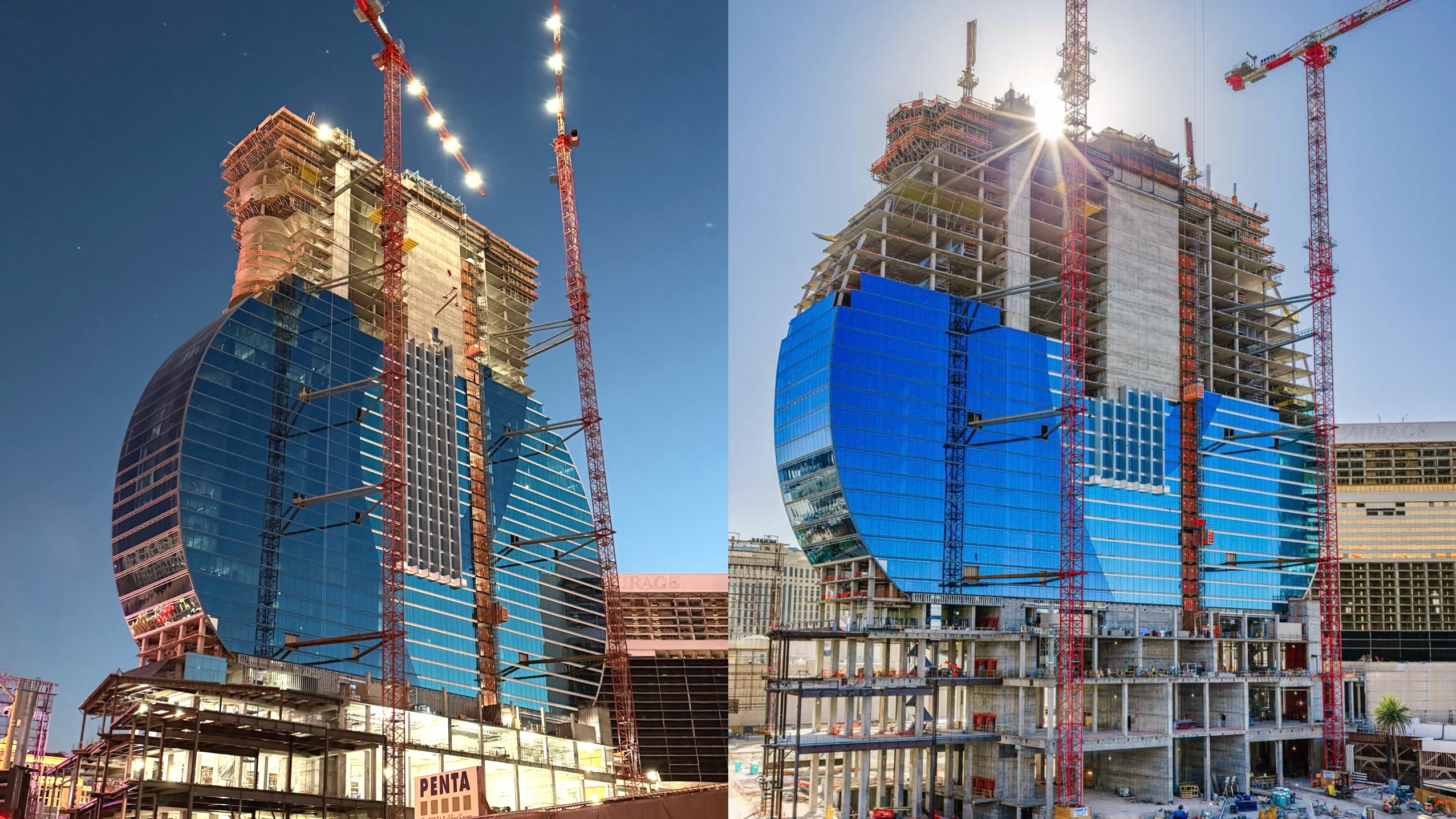
In a city that has a literal guitar skyscraper and a miniature New York skyline, it’s hard to build something that stands out. And yet, Vegas did just that. At 112 metres tall and wrapped in the largest LED display ever constructed, the Sphere is less a building and more a piece of urban theatre… or a gigantic billboard. It depends on who you ask.
It can transform into a basketball, a giant blinking emoji or even a human eye staring out across the Strip. Not creepy at all. Inside, it delivers a fully immersive experience, surrounding audiences with a 16K resolution screen and spatial audio.
When built it was completely one-of-a-kind. A hyper-specific response to the unique over-stimulation of Las Vegas. The kind of project that only makes sense in a city built on spectacle. But it didn’t stay there. Because now, the Sphere is going global. In a big way.
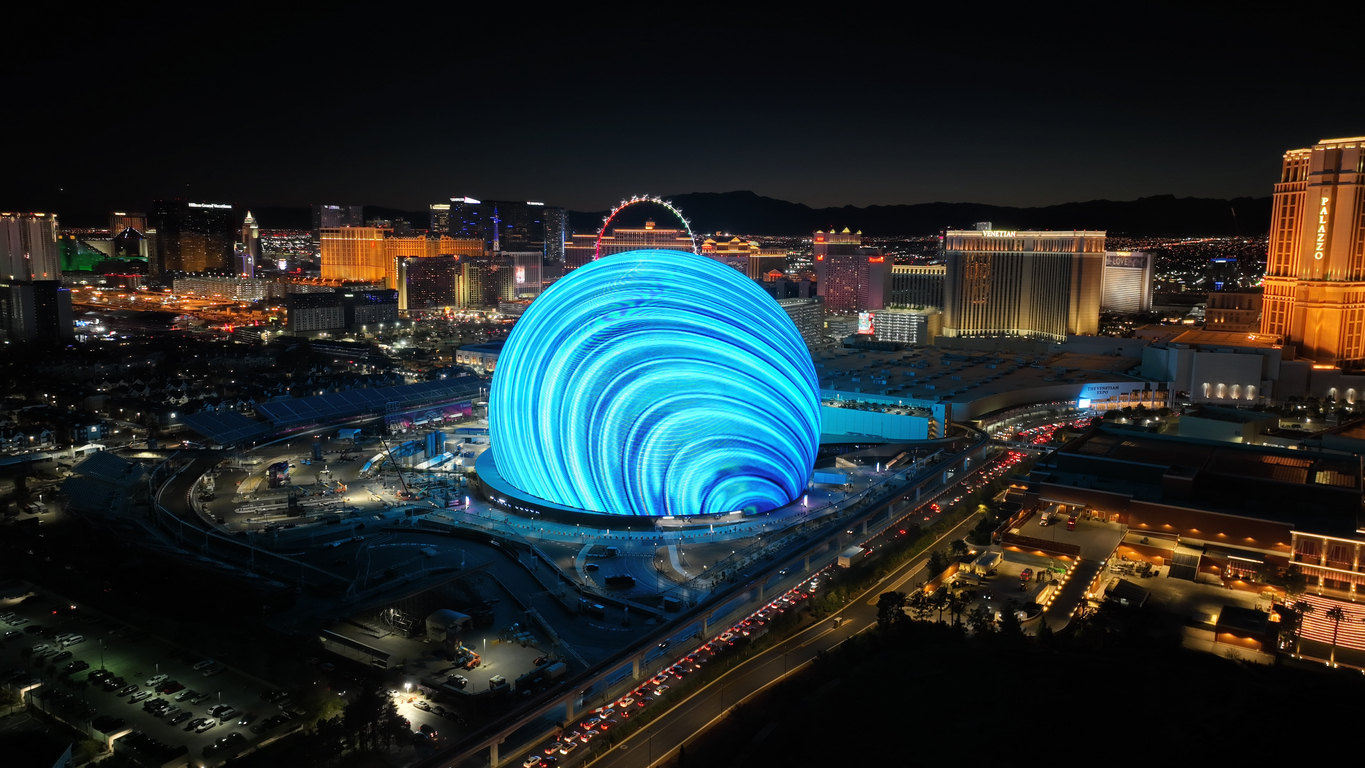
Above: The Sphere is a triumph in Vegas.
From the Middle East to Asia and North America, cities are lining up to build their own versions of this enormous digital venue. Abu Dhabi, South Korea, Washington DC and Singapore have all entered the conversation. Even London, briefly, came close to hosting one. But it raises a critical question: why is every city suddenly trying to build their own, and is it actually a good idea?
Breaking down the Sphere
To understand the global sphere rush, it’s worth looking more closely at the original. On paper, and on social media, you could be forgiven for thinking the Las Vegas Sphere is a success. It quickly became the highest-grossing concert venue in the world in 2024 and has generated more than $1.2BN in annual revenue. But the reality behind those figures is a little more complicated.
The project cost approximately a sphere-ious $2.3BN, making it: The. Most. Expensive. Entertainment venue. Ever constructed in Vegas. And despite its impressive revenue, it still has yet to turn a profit. The venue reportedly lost more than $400M in its first year and continued to post significant operating losses well into 2025. This is not what you would expect from a building generating over a billion dollars a year. The problem lies with the nature of the structure itself.
The Sphere is not a traditional arena by any means. It is not designed to simply host concerts, conferences or sporting events. Instead, it requires an entirely new category of content that is designed specifically the Sphere.
The visuals must be custom-built. The sound design must be tailored. The production costs can run into tens or even hundreds of millions of dollars. That fundamentally changes the economics of live performance. And then there are the operating costs.
The Sphere is effectively a giant warped television screen. Its LED exterior, known as the Exosphere, is the largest display surface in the world. Keeping it running requires enormous amounts of energy. While exact figures are not publicly confirmed, estimates suggest the cost of powering and maintaining these systems runs into the millions annually. In short, the Sphere is expensive to build, expensive to run, and expensive to program. And yet, despite these challenges, they want to build another one.
The Sphere goes global
Several spheres are already in development or under serious consideration. But there is one that has just been officially confirmed… Abu Dhabi. It is being hailed as the UAE’s biggest entertainment infrastructure project in years. I mean, how could it not be. It will reportedly cost $1.7BN - a touch cheaper than the final price tag for the $2.5BN Vegas one. While it won’t be as expensive to build, it will be pretty much exactly the same. It will be able to hold 20,000 people under that trademark fully immersive LED screen.
However, this project does represent something of a crucial shift in how the concept is delivered. Rather than funding and constructing the venue itself, Sphere Entertainment is licensing the technology and design to Abu Dhabi. The host city provides the capital and takes on the financial risk, while MSG supplies its proprietary systems. This includes structural geometry, LED technology, immersive audio and content infrastructure. It is, in essence, a franchise model for architecture. Which… could be a game-changing concept.
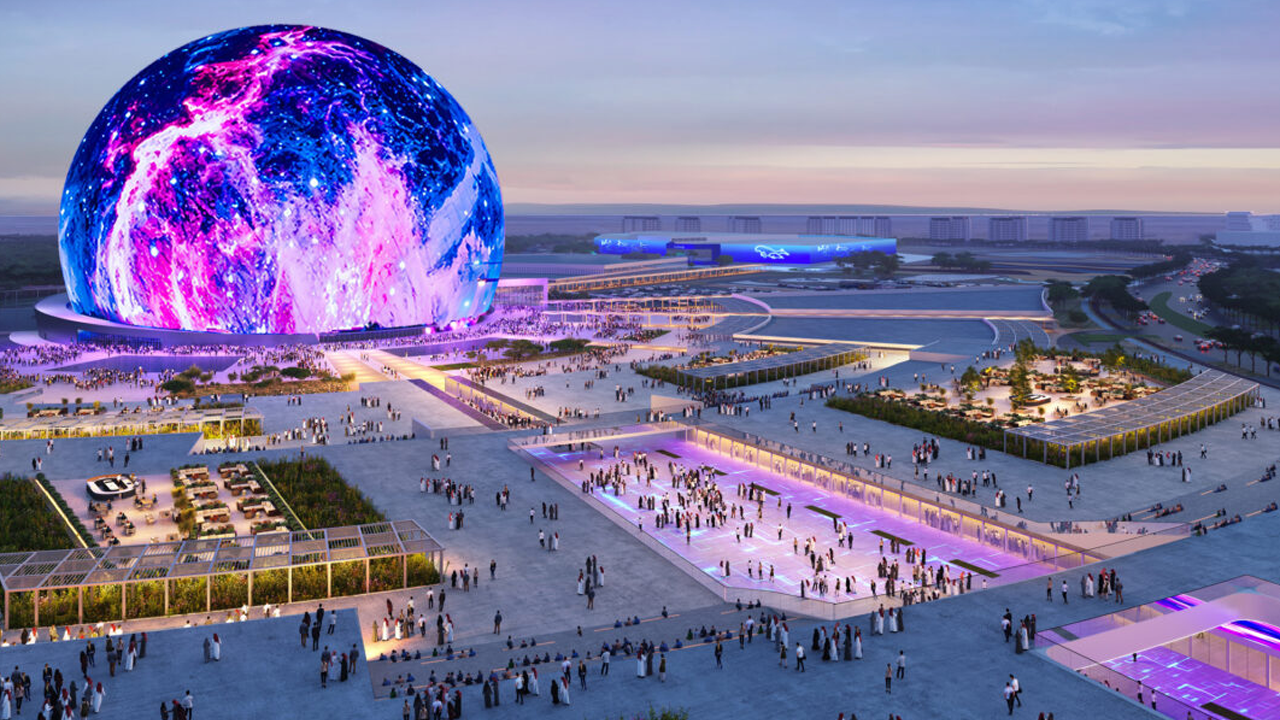
Above: The planned Sphere for Abu Dhabi. Department of Culture and Tourism – Abu Dhabi.
The Abu Dhabi Sphere is planned for Yas Island, an artificial entertainment hub already home to theme parks and several attractions. The Sphere will be finished by 2029.
It forms part of the emirate’s broader Tourism Strategy for 2030. This has the lofty aim of diversifying the economy and positioning the city as a global destination. Competing, of course, with Dubai and Saudi Arabia. Dubai may have many of the world’s biggest superlatives, but it doesn’t have the world’s biggest sphere. It’s this kind of… competitive thinking that’s the driving force behind a lot of the other bids for a Sphere.
In South Korea, a Sphere has been proposed for Hanam, just outside Seoul. Often referred to as the “K-pop Sphere,” the project would sit at the centre of a larger development known as K-Star World. This masterplan includes concert venues, film studios, theme parks and media production facilities. Here, the Sphere is positioned as an extension of South Korea’s now global cultural influence. K-pop is all about spectacle and pizzazz. And what has more pizzazz than this.
However, the project remains uncertain. Unlike Abu Dhabi, it is not yet under construction, and questions remain about its feasibility and long-term viability. In the US, a different approach is being tested…
Choose your size
A smaller version of the Sphere is planned for National Harbor, near Washington DC. With a capacity of around 6,000 seats, far less than Abu Dhabi’s 20,000 and Vegas’ 18,600. This makes it roughly one-third the size of the Vegas one. This “mini-sphere” is intended to be more affordable and easier to copy again.
Think of IKEA’s Billy bookcases. You can buy them in all different sizes and shapes but they are all still a Billy bookcase. And you have to assemble them yourself. And this is architecture as product. Despite its smaller size, the mini-sphere will still feature an ultra-high-resolution interior display and immersive audio systems. The estimated cost is over $1BN, with an opening targeted for 2030.
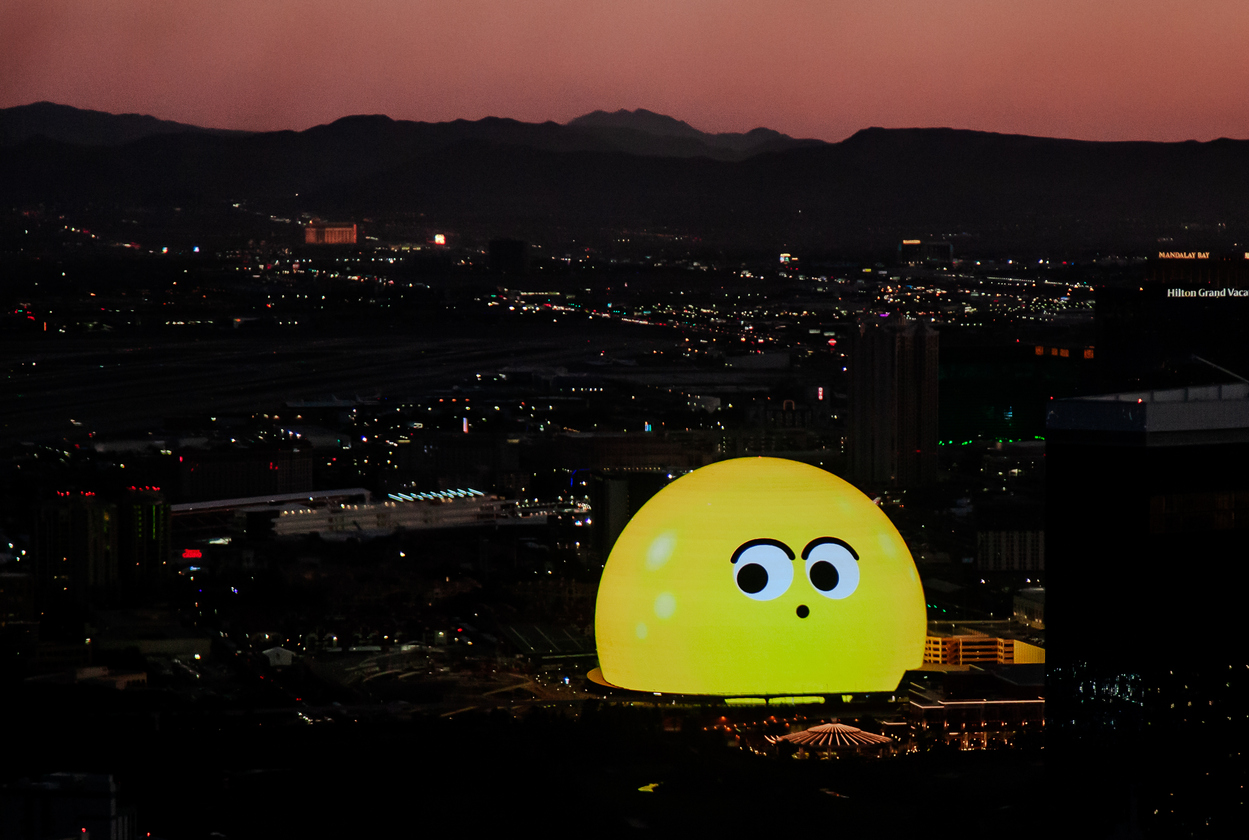
Above: Will the Sphere eventually make money?
This project is especially important because it represents a potential pathway to scalability. If the mini-sphere model proves successful, it could allow for the Spheres to be produced en masse. You could choose a size of sphere that perfectly fits your city. Big, medium or small. Or, tall, grande and venti if they want one in Seattle.
In other words, the Sphere could move from a one-off or even two-off megaproject to a truly global network of venues. Which is good news for all that content MSG has produced which can only be played in a sphere. Beyond planning and public acceptance, there is a much more pressing issue. Can the Sphere actually make money? So far, the answer is… unclear.
Moneymaker
The Las Vegas venue has shown strong demand, but it has also revealed significant challenges in achieving profitability. Initially, the business model relied heavily on live performances. However, concerts are expensive to produce and involve complex revenue-sharing arrangements with artists, which limits the venue’s ability to generate profit.
In response, Sphere Entertainment has begun shifting its strategy. Rather than acting purely as a host venue, it is increasingly focusing on producing its own content. This approach is more similar to the IMAX model, where the operator controls both the platform and the programming.
Producing original shows allows the company to retain a larger share of revenue and pay off production costs over multiple screenings, since they can be kept on rotation. However, it also introduces new risks. Creating high-quality immersive content is expensive, and there is no guarantee of success.
Complicating this is the fact that the Sphere can only run one show at a time. If that show fails to attract audiences, revenue could drop off a cliff. Meanwhile, the fixed costs stay incredibly high. Energy consumption, maintenance and staffing all contribute to a cost base that is difficult to reduce. This creates a business model that isn’t and cannot be flexible.
How to build a Sphere
It's easy to get lost in the economics of it all, but behind all this spectacle lies a complex and highly engineered structure. It is, quite frankly, a true marvel. Constructing a building of this scale and geometry is no small feat and how it’s built is fascinating. It’s worth looking at exactly what Abu Dhabi, South Korea and Washington are in for.
The process begins with deep foundations, piles and reinforced concrete designed to support a structure weighing more than 100,000 tonnes. On top of this sits a multi-level podium, which provides the base for the Sphere itself.
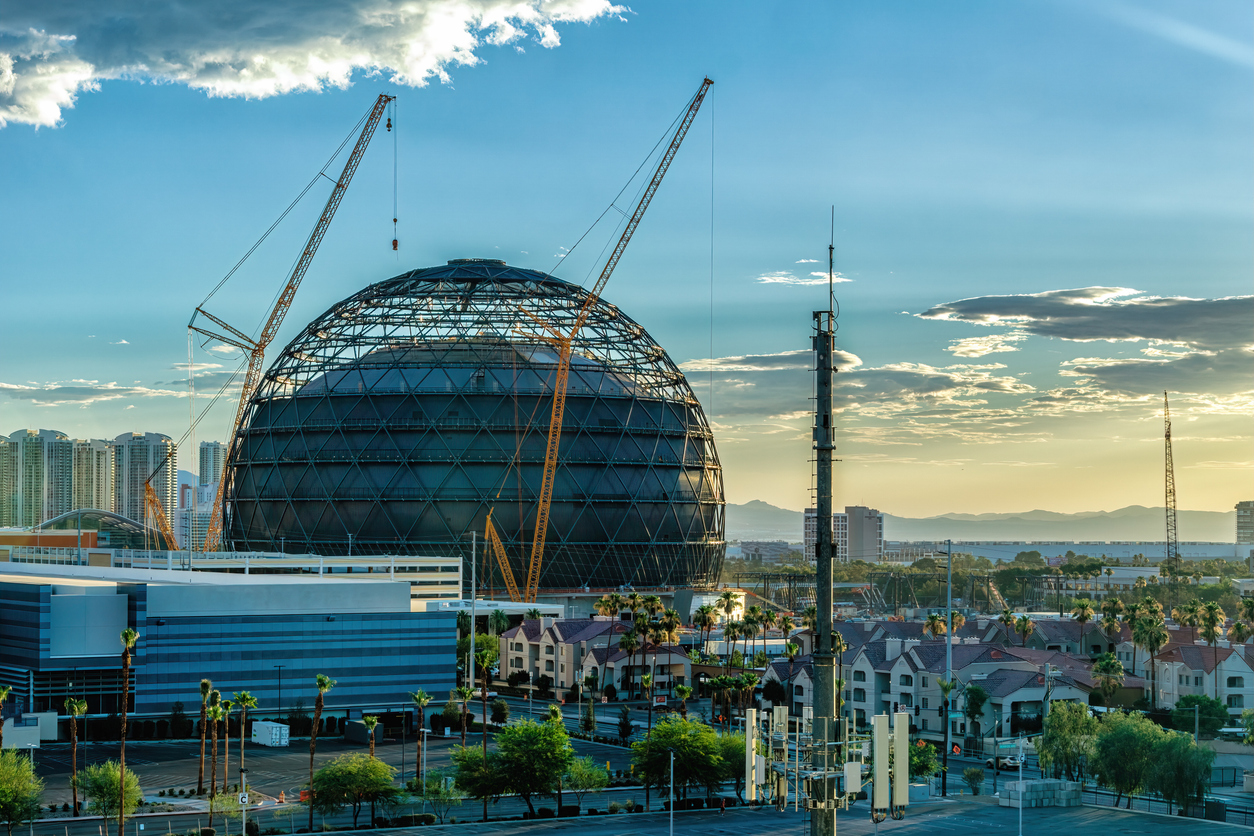
Above: The Sphere is an engineering marvel.
The spherical form is created using a steel lattice shell, similar in principle to a geodesic dome. Thousands of custom steel components are fabricated and assembled in stages, starting with a lower ring and gradually building upwards. During construction, temporary steel towers are installed inside the structure. These support the shell as it is assembled and provide platforms for cranes and workers. Once the structure becomes self-supporting, these internal supports are removed.
The result is a vast, hollow sphere ready to be fitted with seating, screens and technology. The scale is immense. The Las Vegas Sphere measures approximately 112 metres in height and 157 metres in width, making it the largest spherical structure ever built. Well, so far. But not every city is convinced of the Sphere’s magic.
Why London failed
In fact, one of the most high-profile proposals has already been rejected. A Sphere was planned for Stratford, in East London, near the site of the 2012 Olympic Games. The project initially received approval from the local council and appeared to be moving forward. However, in 2023, London Mayor Sadiq Khan intervened and blocked the development.
His decision was based not on engineering or financial concerns, but on its impact on the surrounding area. The primary issue was the exosphere, the outer shell. In Las Vegas, this feature blends into an environment already blasted with digital advertising and bright lights. In Stratford, a mainly residential area, it would have been a very different story.
Residents raised concerns about light pollution. The idea of a constantly animated, brightly lit structure displaying advertisements and harsh visuals in a residential area proved deeply, deeply unpopular. Ultimately, these concerns outweighed any benefits the project could bring. The London Sphere was cancelled. I guess it just wasn’t the right atmosphere.
This highlights the main limitation of the entire concept: a Sphere does not work everywhere. Given these challenges, the continued interest in building Spheres seems… well, it seems odd. But the appeal goes beyond direct financial returns. The Sphere is, above all, a symbol.
The Sphere puts cities on the map
It represents technological innovation, architectural ambition and where a city stands on the world stage. It is designed to be seen, shared and talked about. In an era where cities compete for attention as much as investment, this kind of visibility has real value. A Sphere can act as a landmark, a tourist attraction and a kind of branding tool for a city.
If the Abu Dhabi project succeeds, it could validate the licensing model. And, if the mini-sphere proves viable, it could unlock a more scalable version of the concept. But if these projects struggle, either financially or politically, the momentum could quickly fade.
For now, the Sphere remains an experiment. A bold attempt to redefine what an entertainment venue can be. From Las Vegas to Abu Dhabi, from South Korea to Washington DC, the Sphere is rapidly becoming one of the most talked-about developments in modern architecture across the globe. It is undeniably ambitious. They’ve conquered Vegas, but can the Sphere hit another home run in an entirely different ball game.
Inspire the future scientists and engineers that you love by visiting https://www.kiwico.com/theb1m today! Use the code THEB1M for a whopping 50% off of your first monthly crate!
Additional footage and images: 20th Century Studios, Madison Square Garden Entertainment and Department of Culture and Tourism – Abu Dhabi.
We welcome you sharing our content to inspire others, but please be nice and play by our rules.
Comments