These are the greatest construction projects London never had

THE WORLD'S greatest city has been shaped just as much by unbuilt proposals as its completed landmarks.
Over the past two decades, countless high-profile schemes have threatened to alter the capital’s river, transport system and skyline — but ultimately stalled, were rejected or significantly redesigned.
Here are seven of the most notable projects that never materialised as originally conceived.
The Floating Decant Facility for Parliament (2016)
In 2016, as plans progressed for the restoration and renewal of the Palace of Westminster, seat of UK parliament, US architecture firm Gensler proposed a temporary floating facility on the River Thames to house Members of Parliament during construction works.
The concept involved a large barge-based structure moored on the river, providing a fully operational decant chamber while refurbishment of the historic parliamentary estate took place. The proposal aimed to minimise disruption and avoid relocating parliamentary functions far from Westminster.
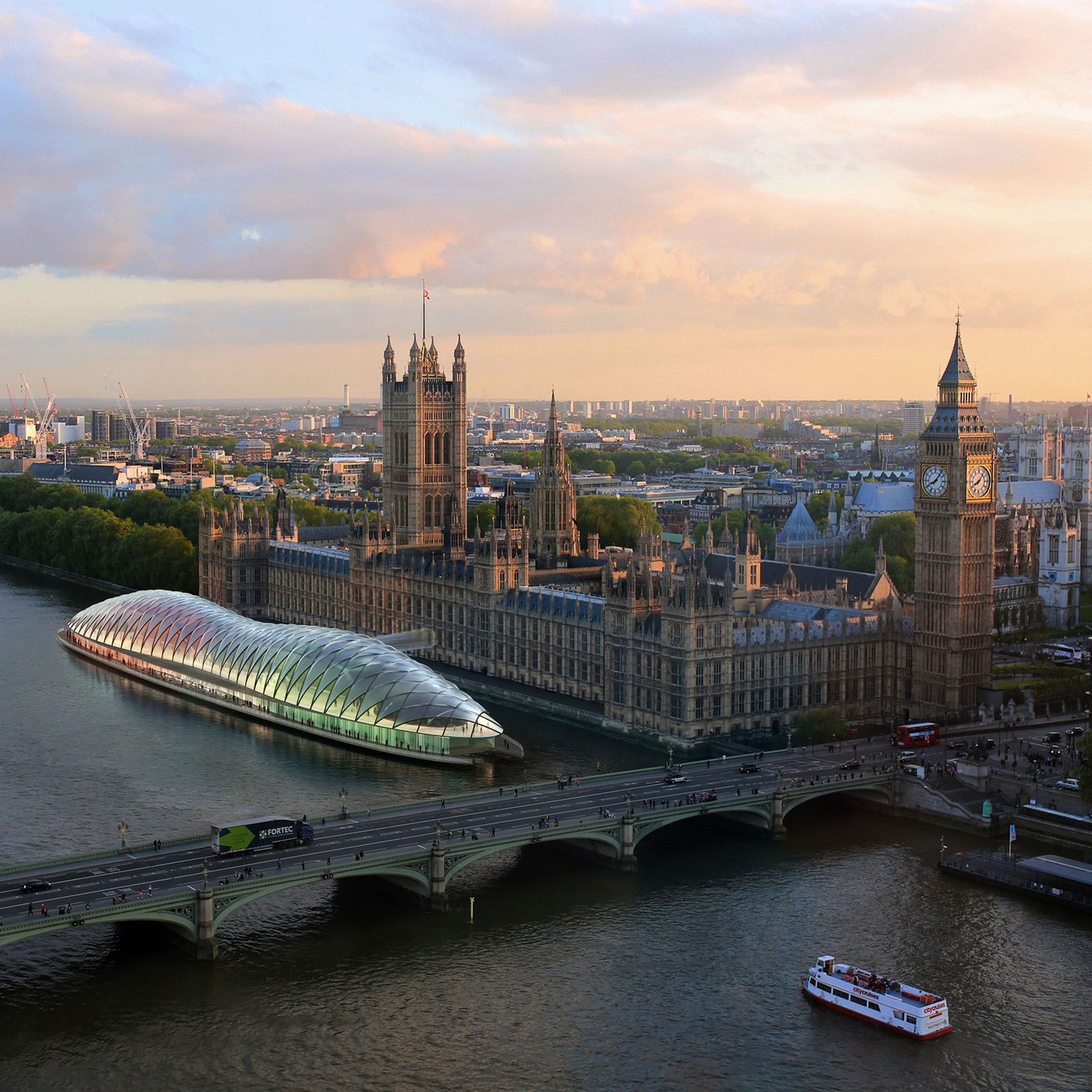
Above: The idea for a temporary UK parliament structure on the River Thames was floated by Gensler. Image: Gensler.
The scheme drew attention for its unconventional approach to heritage restoration logistics. However, the 'floating parliament' remained a conceptual study and was never adopted as part of the official restoration strategy.
The UK Government has since continued to debate cost, scope and decant arrangements for the Palace’s refurbishment, but Gensler’s river-based solution did not progress beyond the proposal stage.
The MSG London Sphere (2018)
Proposed in 2018 by MSG Entertainment, the MSG London Sphere would have been a 90-metre-high spherical entertainment venue in Stratford, east London.
Designed as a sister venue to the Las Vegas Sphere, the building would have featured a large-scale LED exterior capable of displaying dynamic digital content, alongside a high-capacity auditorium designed for immersive concerts and events.
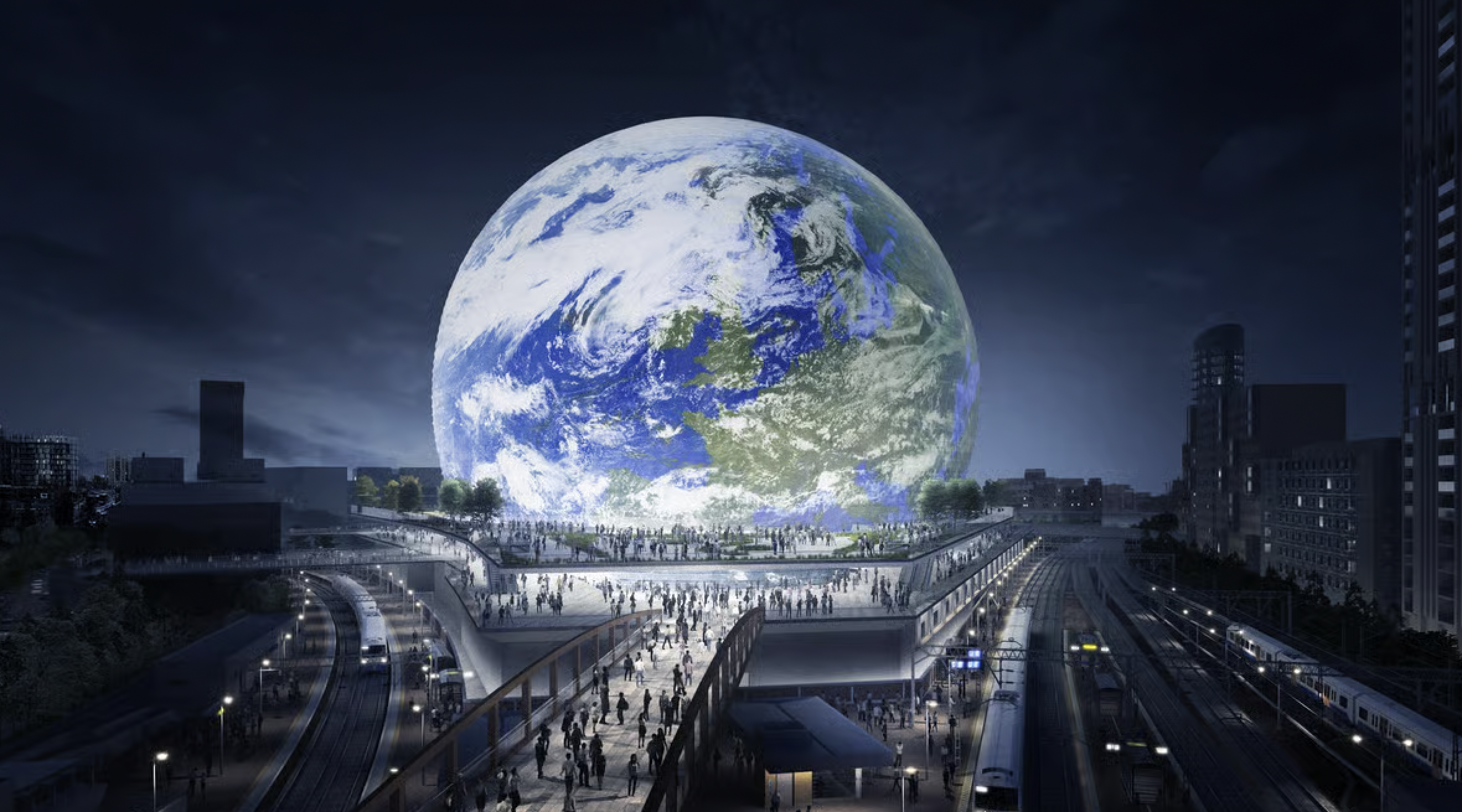
Above: The proposed MSG Sphere as it would have appeared in Stratford. Image: MSG Entertainment.
Despite support from some business groups, the project faced sustained opposition from local residents and politicians concerned about light pollution, environmental impact and disruption. In 2023, the Mayor of London rejected the scheme, citing concerns over its effect on residential amenity.
MSG Entertainment subsequently abandoned the proposal, ending plans for the high-tech venue in the capital and considering Abu Dhabi instead.
The Thames Estuary Airport (2008)
The Thames Estuary Airport, first proposed in this form in 2008, envisioned a new four-runway hub airport built on reclaimed land in the Thames Estuary. The scheme aimed to supplement London Heathrow, increase aviation capacity for the UK's capital. and reduce aircraft noise over densely populated areas.
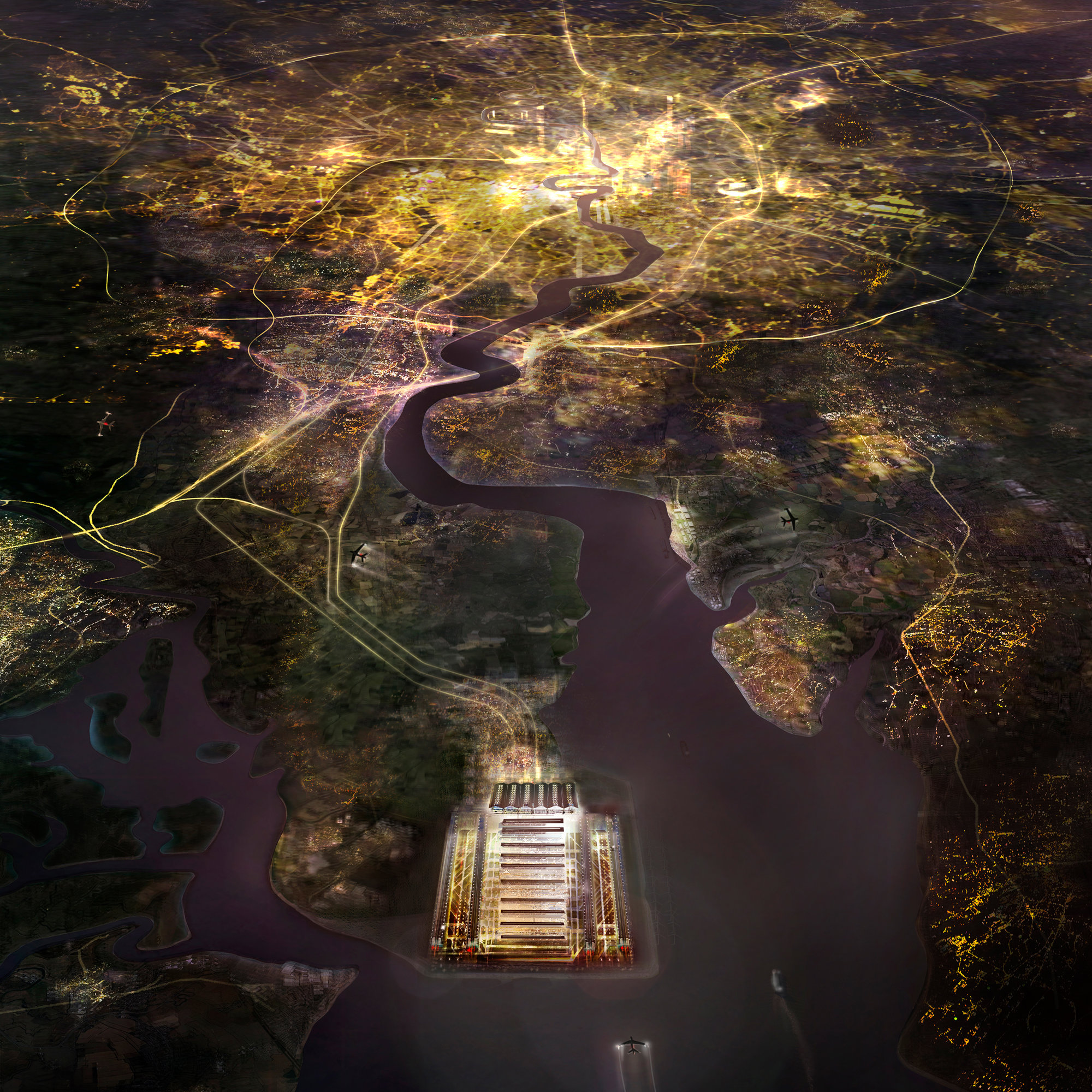
Above: The proposed Thames Estuary airport. Image: Foster + Partners.
Advocates argued the estuary location offered long-term strategic benefits, but the proposal raised significant concerns over environmental impact, cost, bird strike risk and surface transport connectivity.
In 2014, the Airports Commission excluded the estuary option from its shortlist, effectively ending the proposal in favour of expansion options centred on Heathrow and Gatwick.
The Pinnacle (2003)
The Pinnacle was proposed in 2003 as a 288-metre office tower for the City of London, designed by Kohn Pedersen Fox (KPF).
Distinguished by its spiralling, tapering form, the skyscraper was intended to become one of the tallest buildings in the City, adding a distinctive silhouette to the emerging cluster around Bishopsgate.
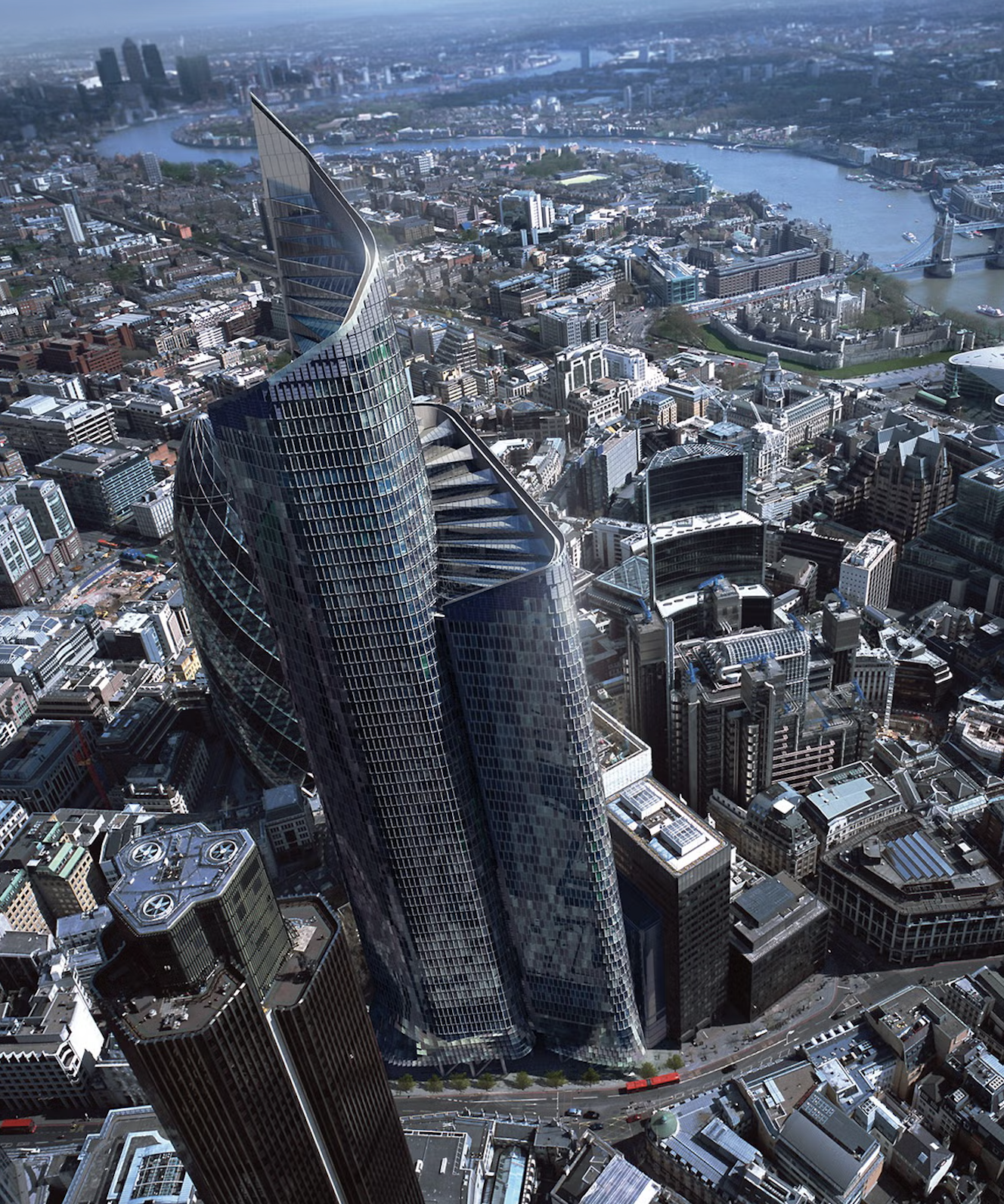
Above: The Pinnacle skyscraper would have been the tallest building in the City of London at the time. Image: KPF.
Construction began in 2008 but stalled following the global financial crisis, leaving only a partial concrete core and foundations in place. The site was later acquired and the project substantially redesigned.
The revised scheme ultimately emerged as 22 Bishopsgate, completed in 2020 at 278-metres tall, replacing The Pinnacle’s original sculptural form with a more commercially driven design.
The Garden Bridge (2012)
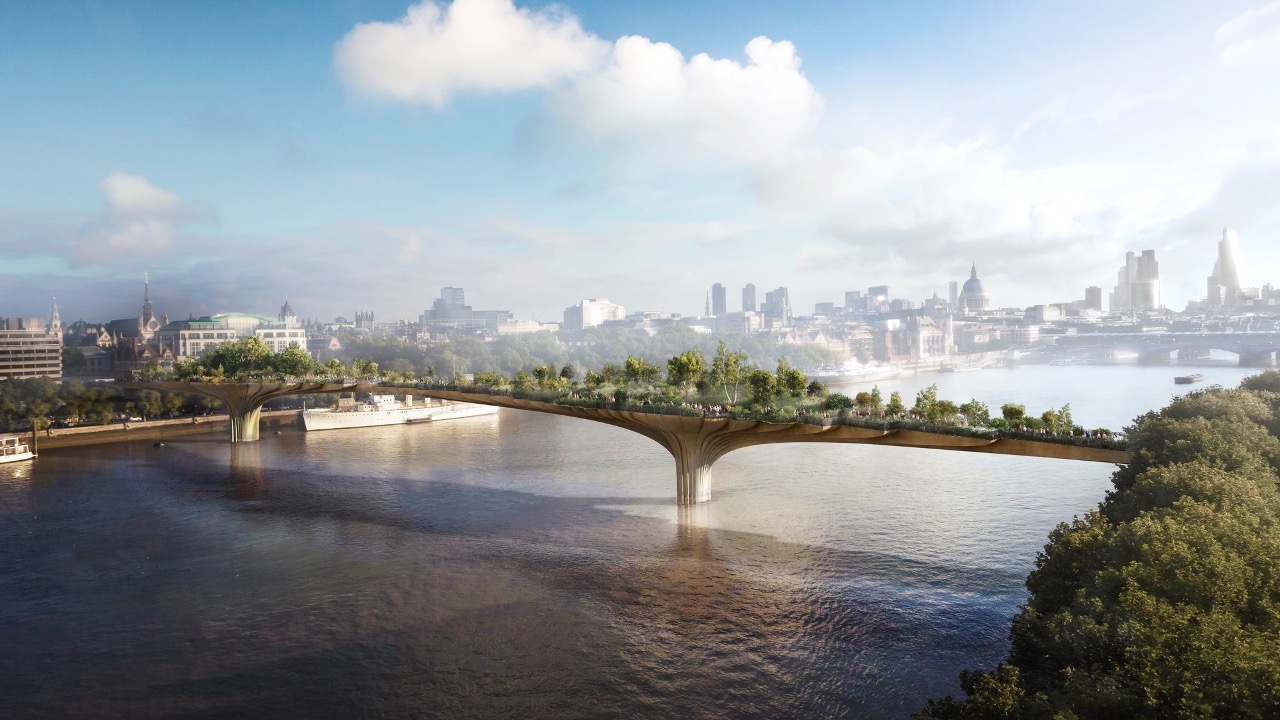
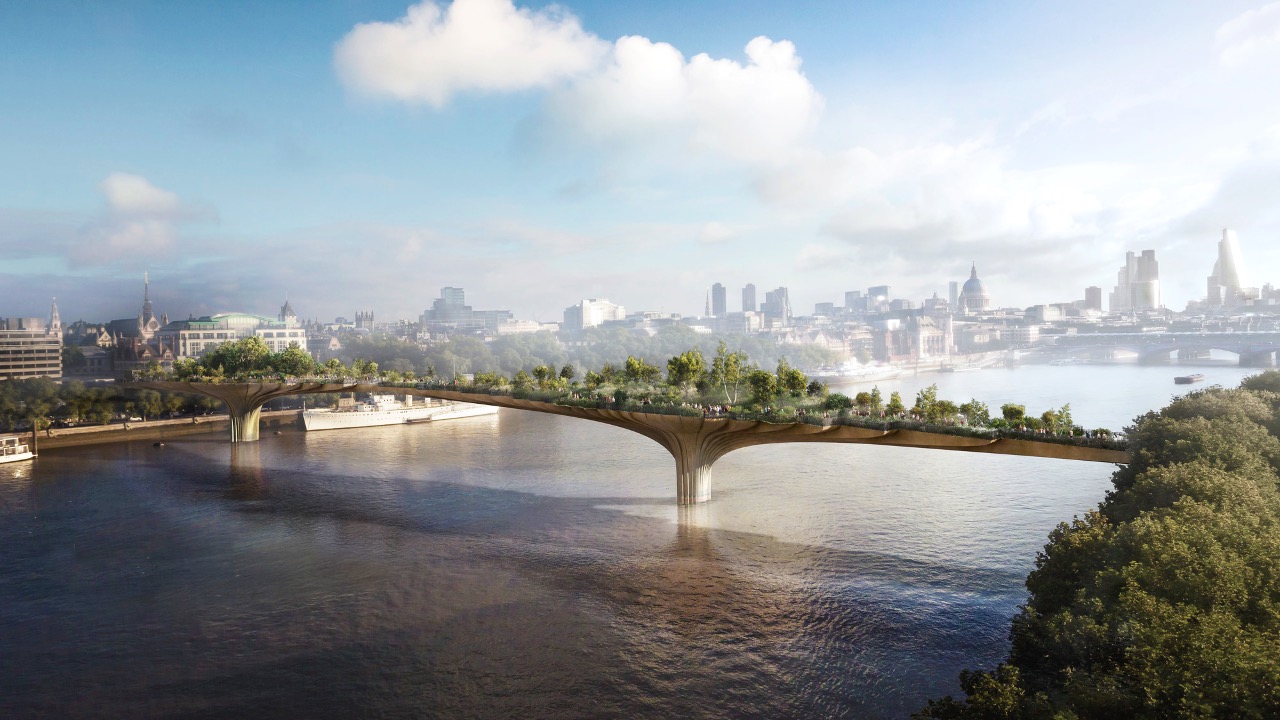
Advocated by the British actress Joanna Lumley, the Garden Bridge was planned as a pedestrian crossing over the Thames between Temple and the South Bank.
Designed by Heatherwick Studio, the scheme envisioned a tree-lined structure featuring extensive planting, intended to function as both infrastructure and public garden.
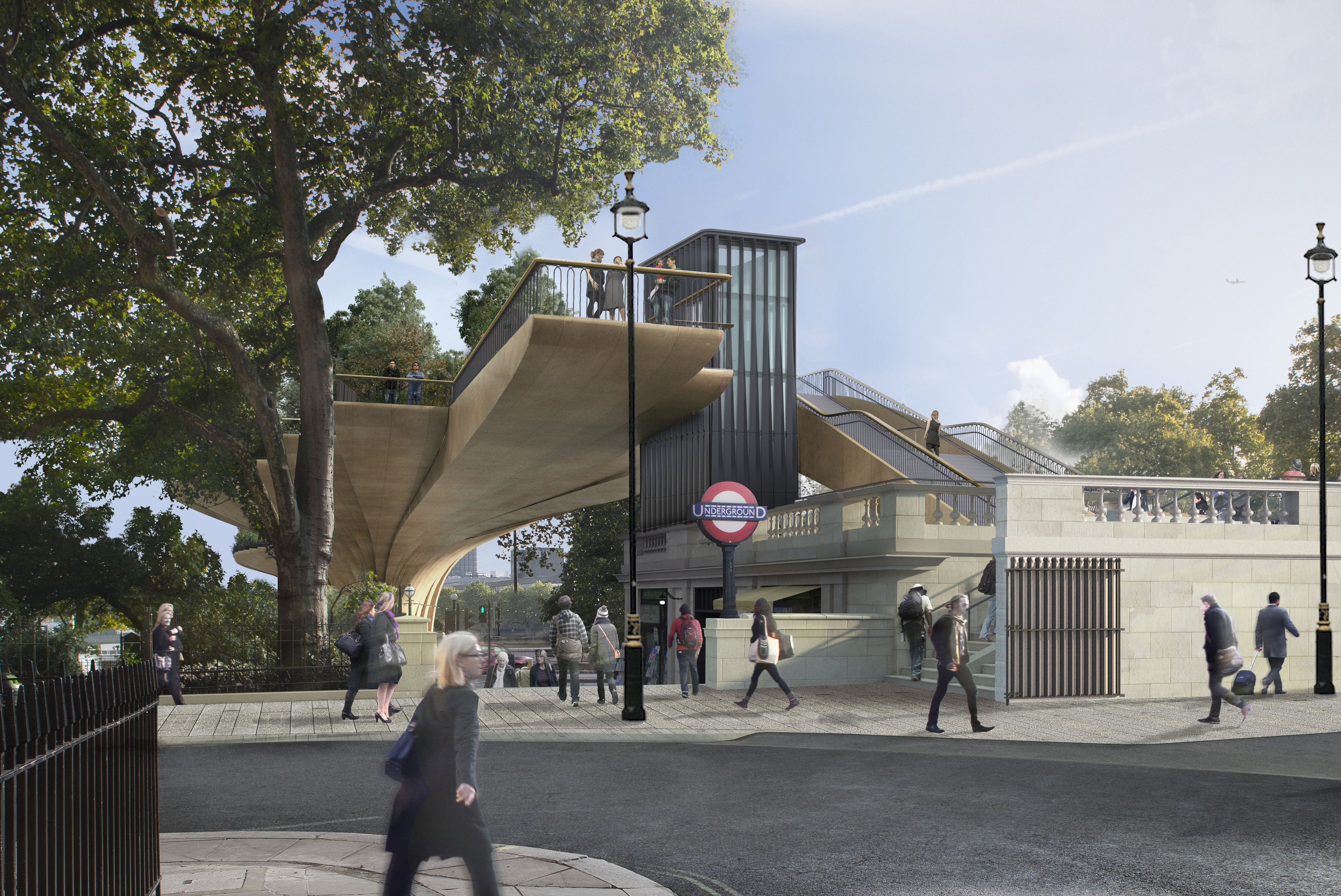
Above: How the Garden Bridge would have connected to the north bank of the River Thames. Below: How the park would have appeared over the river. Images: Heatherwick Studio.
The project received political backing and public funding commitments but became mired in controversy over procurement processes, governance and costs.
By 2017, after escalating budget concerns and the withdrawal of mayoral support, the Garden Bridge Trust was wound up and the project cancelled. Significant public funds had already been spent during the development phase.
The Tulip Observation Tower (2018)
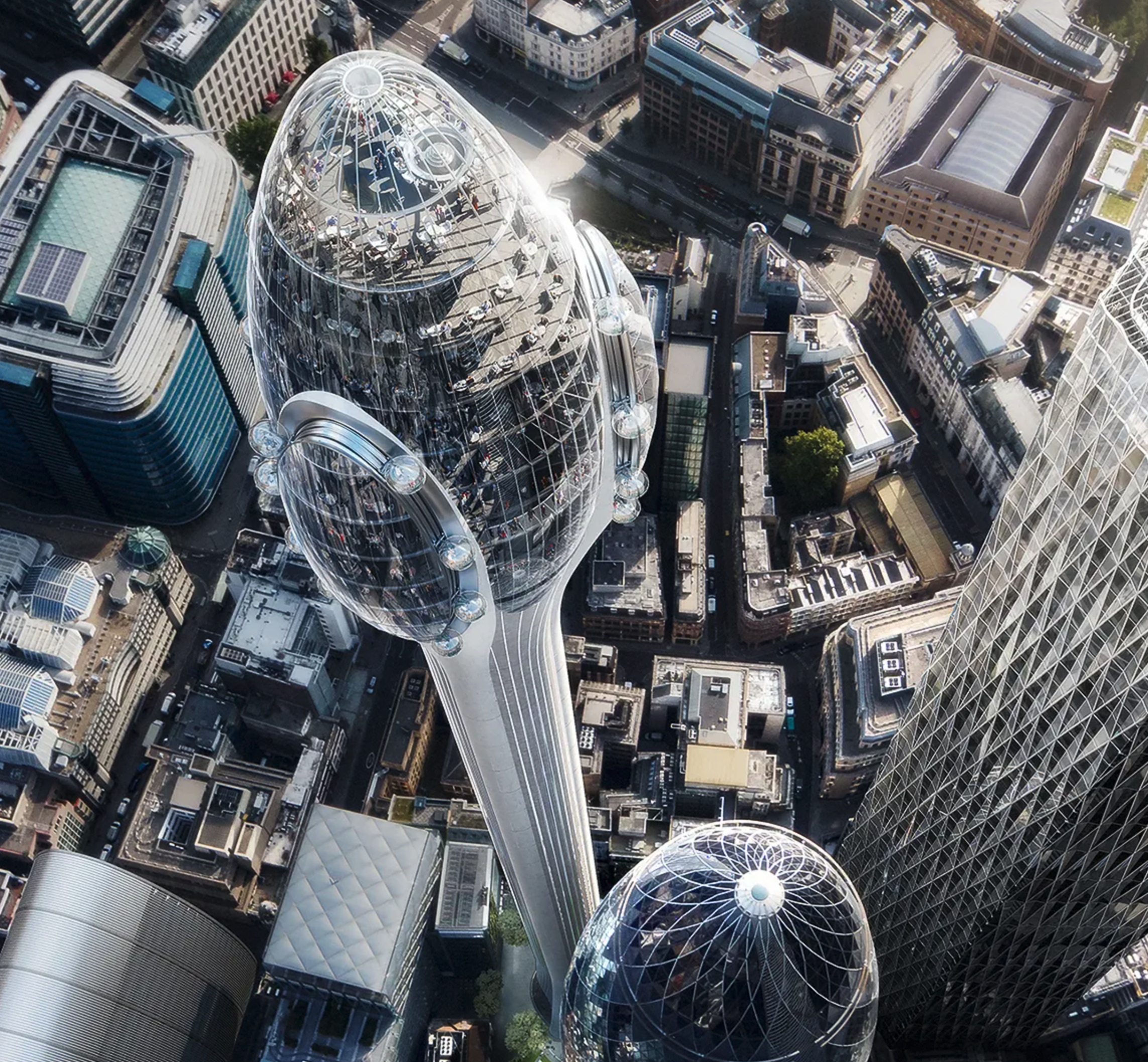
Unveiled in 2018, The Tulip was a proposed 305-metre observation tower next to 30 St Mary Axe (known as 'the Gherkin') in the City of London.
Designed by Foster + Partners, the slender concrete shaft would have supported a bulb-shaped viewing platform containing visitor attractions, including panoramic galleries and ride experiences.
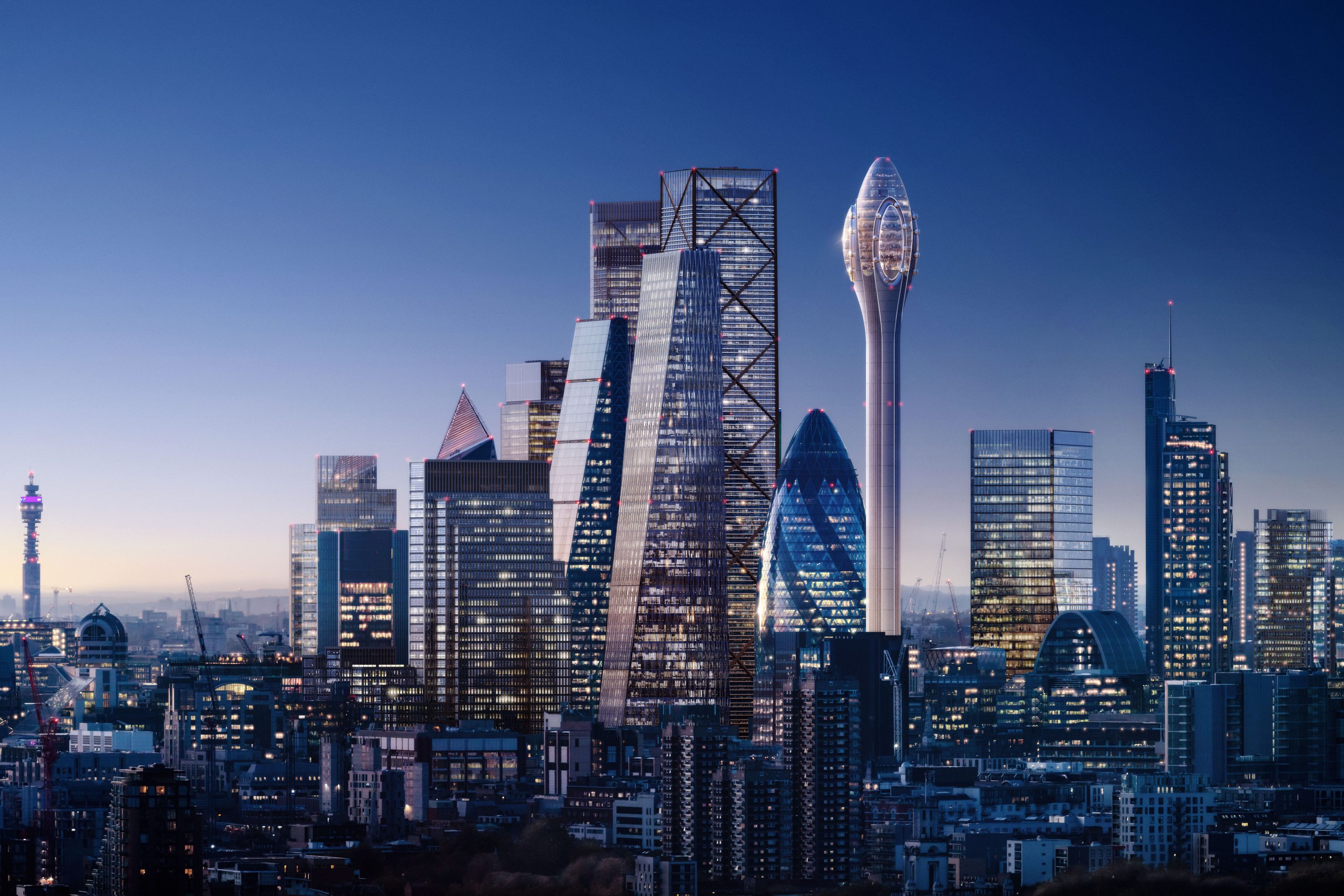
Above and Below: How the supertall Tulip observation tower would appeared on the London skyline. Images: Foster + Partners.
The City of London Corporation initially approved the project, but it was later called in by the UK Government.
In 2021, the Secretary of State refused planning permission, citing harm to London’s historic skyline and heritage assets. The decision brought an end to the project, which would have become one of the tallest structures in the City.
Heatherwick Studio’s Queen Elizabeth II Memorial Proposal (2025)
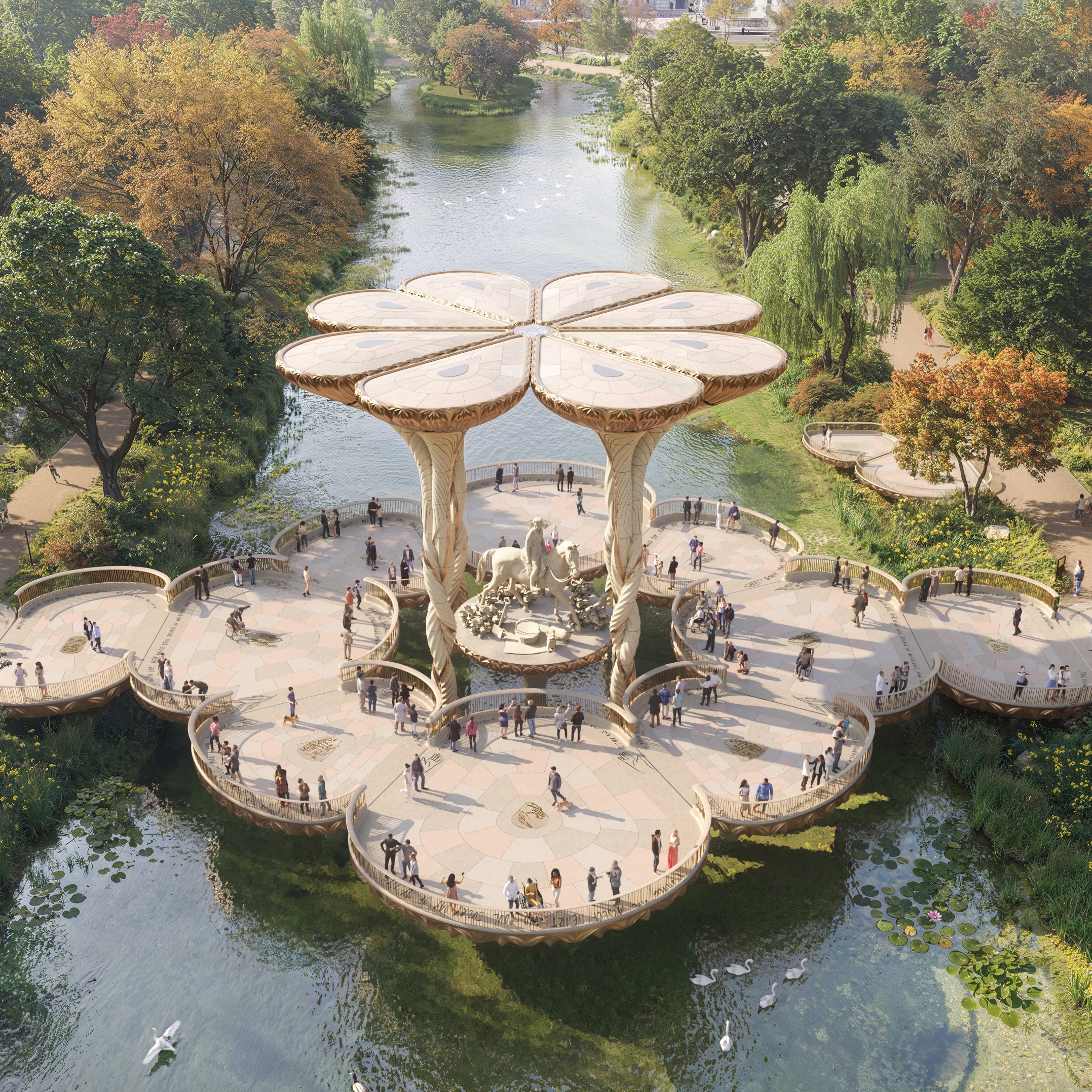
In 2025, Heatherwick Studio submitted an entry for the Queen Elizabeth II Memorial in London. The proposal sought to create a landmark commemorative space honouring the late monarch, although specific design details were not selected for progression in the competition process.
The commission was ultimately won by a Foster + Partners-led team, and Heatherwick’s concept remained an unrealised vision. While the studio has delivered several major projects in London, including Coal Drops Yard and the reworked Olympia scheme, its memorial proposal joins a list of ambitious ideas that did not proceed beyond competition stage.
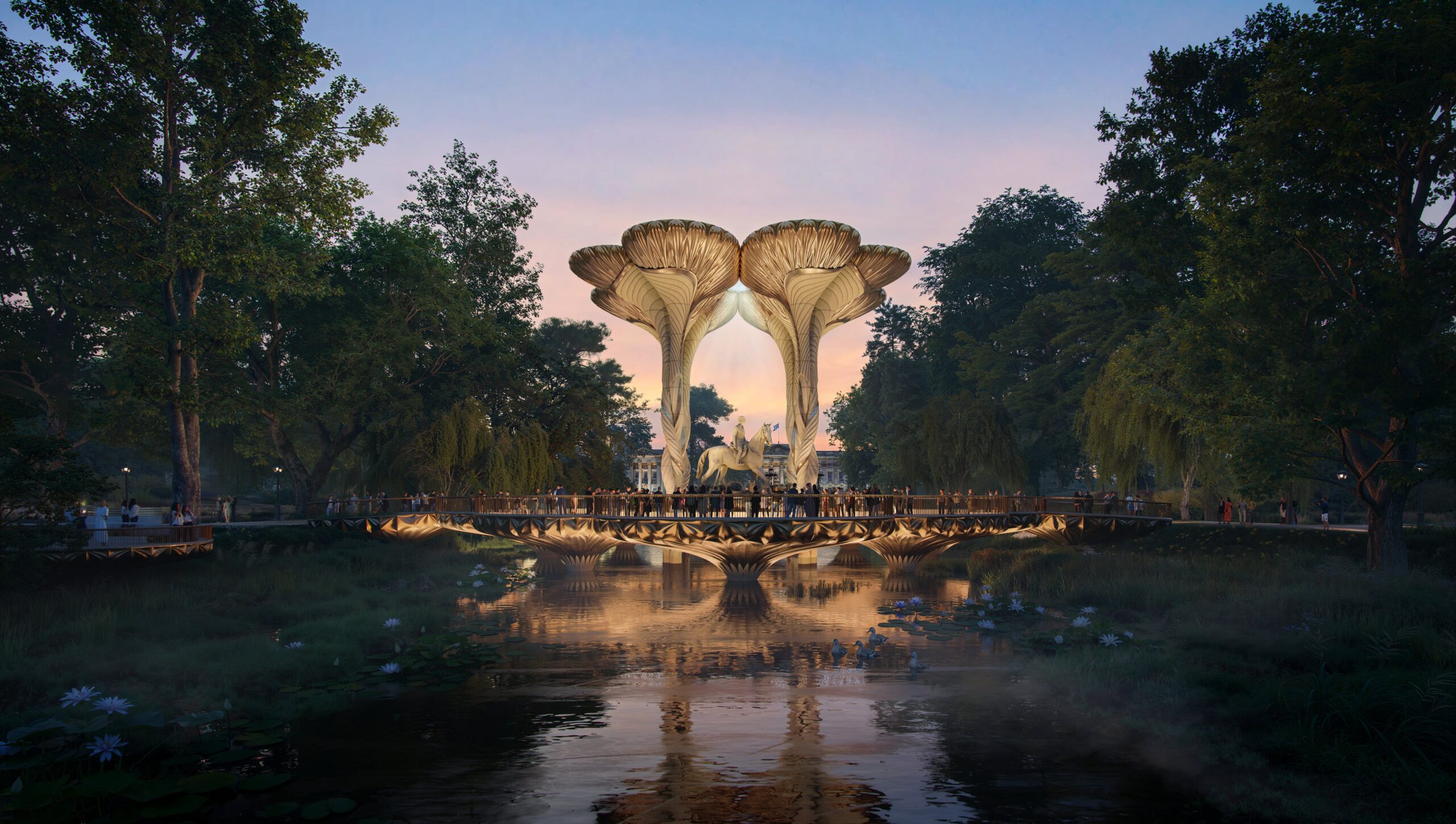
Above and Below: Heatherwick Studio's entry for the Queen Elizabeth II Memorial. Images: Heatherwick Studio.
Together, these projects reflect the scale of ambition that continues to shape debate around London’s development.
Though never built in their original forms, each scheme contributed to wider discussions about infrastructure, heritage, skyline growth and public space in one of the world’s most scrutinised cities.
Comments