
The $1.8BN Race To Finish LA's Most Embarrassing Buildings
- Youtube Views 225 VIDEO VIEWS

18 November 2026
Video hosted by Fred Mills. This video contains paid promotion for Rayon.
HERE's an easy question for you. What's the name of the stadium in Los Angeles where the LA Lakers play?
If you’re a City of Angels native, or just a big basketball fan, chances are you shouted an answer out immediately.
But whether you know it as the Staples Center or the Crypto.com Arena, we can all agree this venue has long since achieved legendary status.
Sitting right in the heart of Downtown LA, it’s neighbours with the LA Convention Center, the Grammy Museum, but also three derelict towers. How on Earth has that happened?
Well, that's just one part of what could turn out to be another classic Hollywood comeback story.
Maybe.
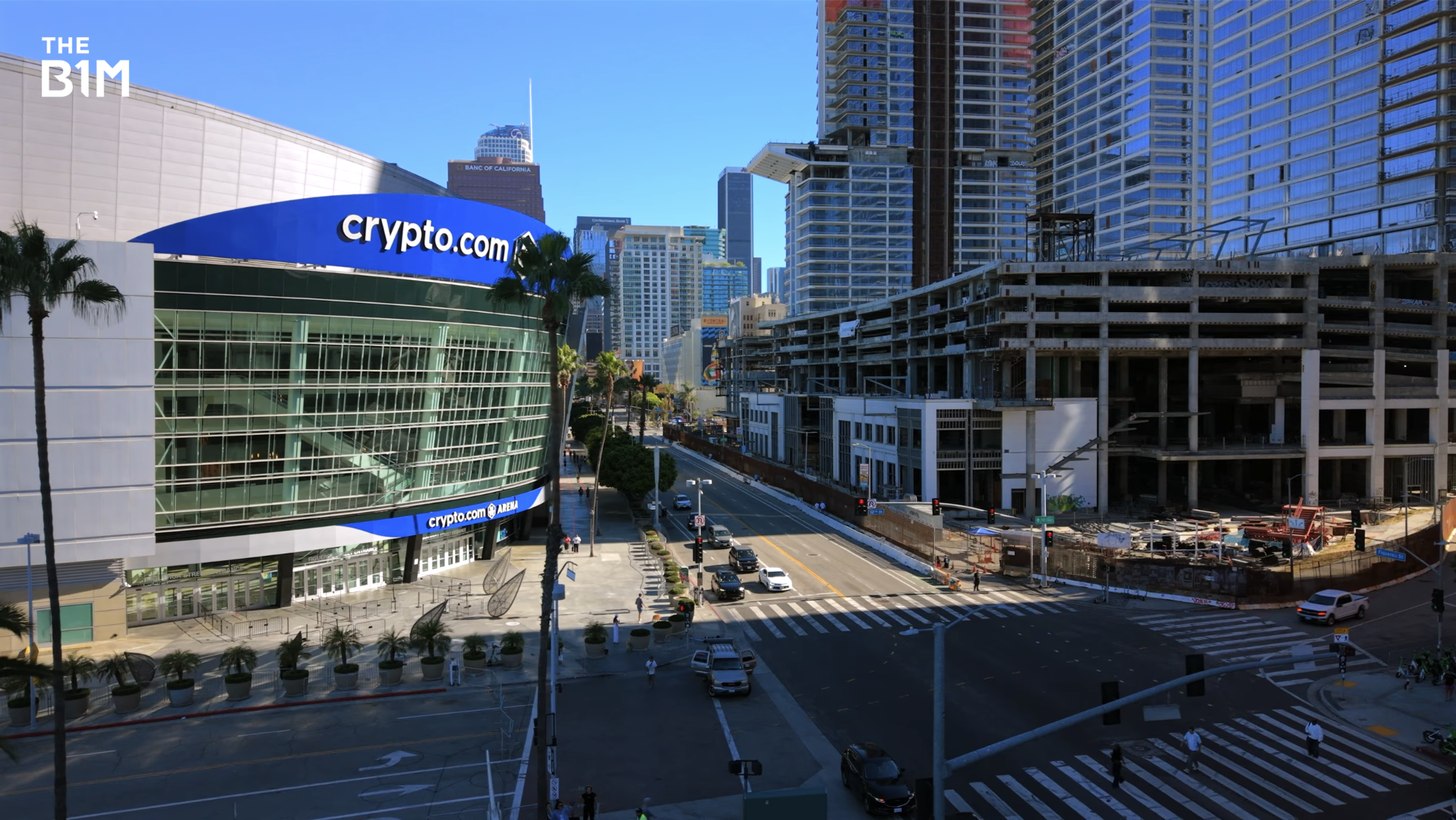
Above: The Crypto.com Arena sitting across the street from the unfinished Oceanwide Plaza.
On the down low
Historically, Los Angeles is a city known for keeping a low profile when it comes to its buildings, at least.
That's partly because, in 1904, the City Council issued an ordinance that set a 150-foot height limit for any new building. But despite popular rumour, it had nothing to do with concerns over how earthquake-prone the city can be.
According to LA history expert Paul Gleye, it was really down to Angelenos rejecting the New York City aesthetic of tall buildings packed tightly together.
The only permitted exception was Los Angeles City Hall, which topped out at 453 feet when it was completed in 1928, and was the tallest building in the city for almost forty years.
Once the height limit was repealed in the mid 1950s, Downtown LA quickly became skyscraper central. But the next few decades also saw a major economic decline in the area thanks to car-owning Angelinos choosing to move out to the suburbs.
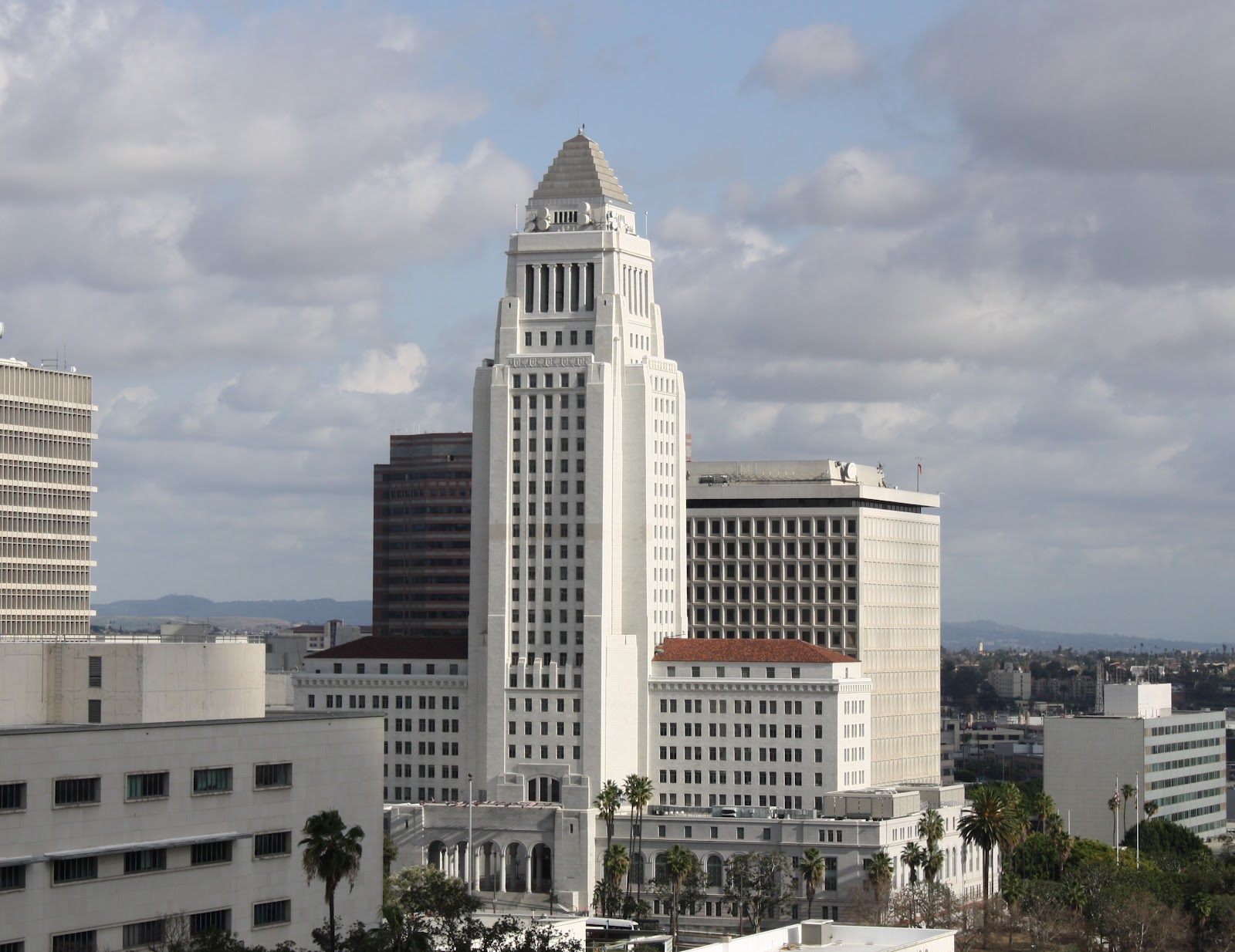
Above: Los Angeles City Hall. Credit: Tim Ahem.
Downtown was more like Ghost Town until the 1999 opening of the $375 million Staples Center spearheaded a revitalisation of the area which has continued into the present day.
This incredible comeback soon caught the attention of Chinese property developer Oceanwide Holdings who, in 2013, bought a vacant parking lot across the street from the Staples Center to build a luxury housing complex.
Easy as 1-2-3
The $1.2BN development, officially known as Oceanwide Plaza, would house 504 luxury condominiums across two 530-foot tall towers. A third, standing at 677 feet, would contain a five-star Park Hyatt hotel on its lower levels and more luxury condos managed by the hotel on the upper floors.
Up front would be a seven-floor galleria with around 160,000 square feet of retail and restaurant space, as well as a private roof garden for plaza residents.
This glamorous development was built entirely out of concrete, with reinforced steam beams throughout.
This is where concrete is poured around high-tension steel cables which remain taut after the concrete has dried. It provides a high level of structural strength, while allowing for thinner floor slabs and wide open interior spaces, perfect for luxury apartments.
The towers sit on a massive concrete base which covers an entire city block, and rises around eight stories, with the galleria complex housed within the first three floors.
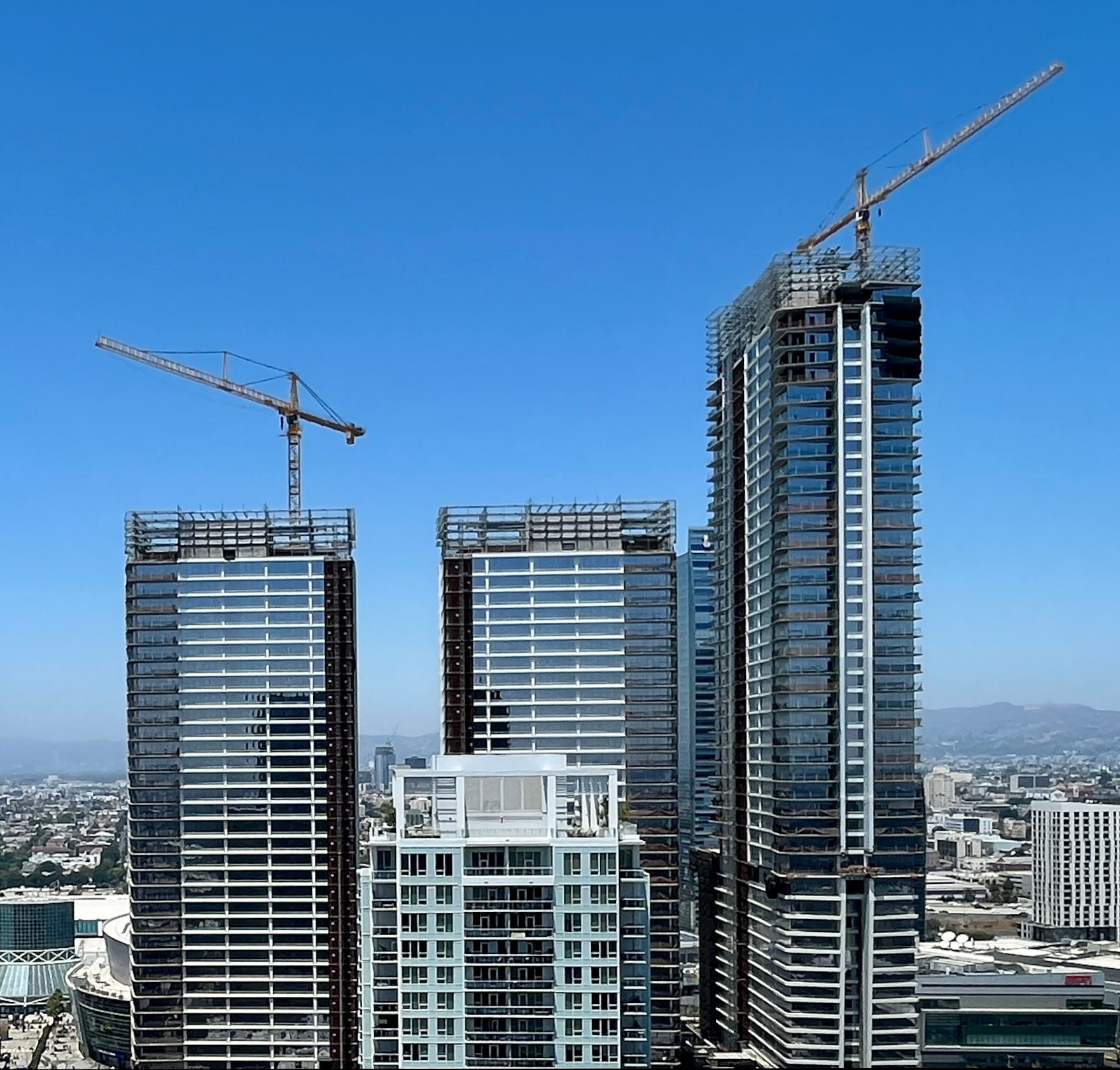
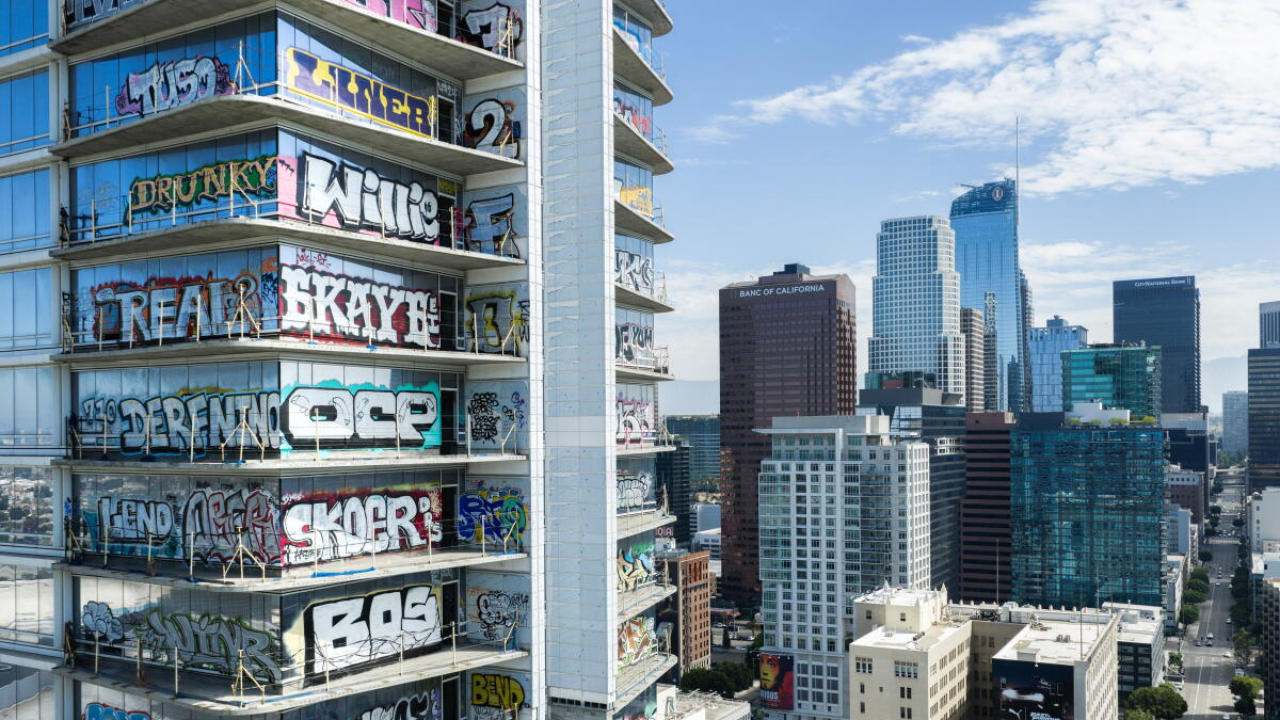
Above: The three unfinished towers of Oceanwide Plaza.
And if it sounds like we’ve talked about concrete a lot here, that’s because, to start with, the concrete pour was incredibly challenging to get right.
If you know anything at all about the initial phase of that kind of pour, you’ll know that it has to be a non-stop operation.
If you pour too slowly, you can end up with liquid concrete going on top of set concrete, which makes a seam or ‘cold joint’ form between them. And that’s bad news for your structural integrity.
So from 7.30pm until 11am the next morning, over 700 trucks carrying 7,000 cubic yards of concrete had to drive into the Oceanwide Plaza site, pour their concrete, and get out in a matter of minutes. If you’re at all familiar with LA traffic, you’ll know that was no easy feat.
The towers feature a custom-built curtain wall, an external structure used by virtually every modern skyscraper, which hangs off the building, keeps out the weather, and maximises natural light.
Oceanwide Plaza’s curtain wall is 600,000 square feet and has over 13,500 individual panes of glass. And each one is all embedded with custom design features like specialised sun-shading to block the harsh California sun, and state-of-the art acoustic dampening technology.
The towers topped out in April 2018, with Tower 1 becoming the tallest residential building in Los Angeles. Everything was well on track for a grand opening the following year.
But January 2019 arrived and construction suddenly stopped.
The Chinese government had initiated a harsh crackdown on outbound capital, heavily restricting cashflow to projects like Oceanwide. And no money means no building.
The subcontractors filed a flurry of mechanics’ liens against Oceanwide and Lendlease for unpaid labour, which was the first in a multi-year legal battle which would see Oceanwide’s debts top $240 million.
That means that Oceanwide Plaza couldn’t be sold until those debts were resolved. And since this is the home of Hollywood, it’s no surprise that there’s more to the story.
In 2020, LA city councilman Jose Huizar and former deputy mayor Raymond Chan were arrested by the FBI as part of Operation Casino Loyale - yes, that was the actual name - for taking bribes from developers in exchange for speeding their projects through the city’s approval process.
Oceanwide was one of the developers targeted in the initial FBI investigation. Although nobody working for them was ever charged, being tied to a federal corruption probe certainly didn’t help their crumbling reputation.
Three years later in 2022, construction cranes were removed from the site and a year later Oceanwide Holdings collapsed into liquidation and the project was foreclosed on.
The plaza was now abandoned. What was meant to be a monument to Downtown LA’s remarkable comeback was now an empty billion-dollar embarrassment.
And Oceanwide was soon costing the city a lot more than just its reputation.
Money for nothing
In December 2023, members of Los Angeles’ graffiti tagging community started illegally trespassing onto the site. Within a matter of weeks, all three towers were transformed into a colourful community-led art canvas. Or a vandalised eyesore, depending on your point of view.
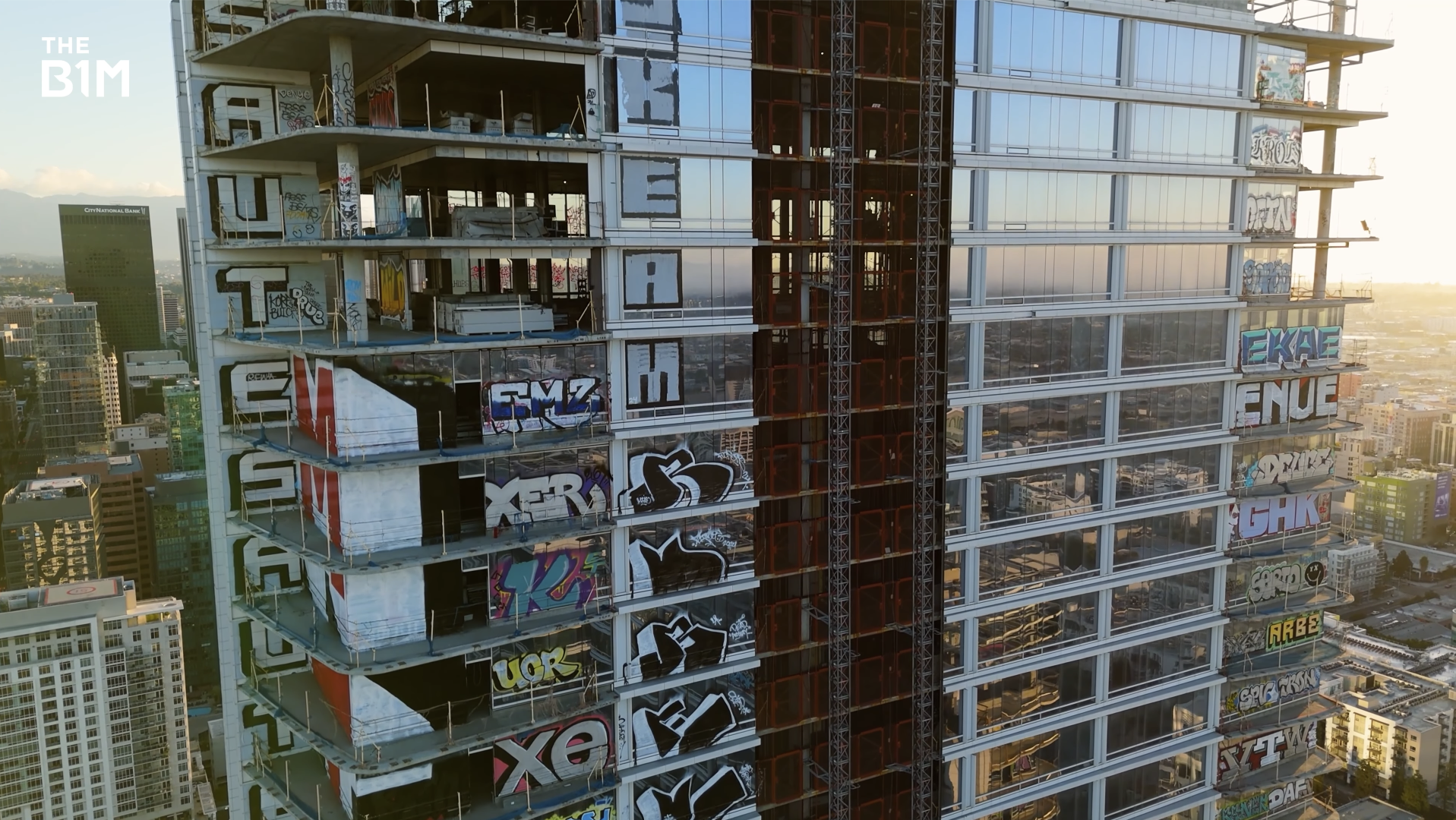
Above: Graffiti on one of Oceanwide Plaza's towers.
You can probably guess which position the city government and the LAPD took. Former mayor Karen Bass publicly said she was ‘terrified’ of someone getting hurt after a video of illegal BASE jumping from the towers went viral.
The city decided to allocate almost $4 million of taxpayer money in February 2024 to put up barriers, hire private security, and clean up the graffiti, with an intention to recoup the cost from Oceanwide Holdings.
When it became obvious that Oceanwide was unlikely to ever be in a position to pay them back, the city reversed course slightly and ended up spending just over a quarter of that initial allocation on securing the site. The now world-famous graffiti remained untouched.
In the middle of all this, Oceanwide was doing its best to sell the plaza to the highest bidder in order to pay off its massive debts, sitting at around $17BN.
But, remember all that time spent talking about post-tension concrete? Well, that started to become a pretty big issue.
With an almost-finished skyscraper complex like this, an attractive sell for most developers would be to buy it and then modify it, turning it into office space, for example. The problem with Oceanwide is that the post-tension construction method makes that kind of modification very difficult.
The problem with Oceanwide is that the post-tension construction method makes that kind of modification very difficult.
You’d need to cut through its concrete to make any radical changes. But accidentally sever one of those inner steel cables and it doesn't end well for anyone.
So there’s already a big turn-off right upfront for most developers and that’s before you even think about the curtain wall.
Each panel is state-of-the-art, bespoke, and very expensive. If one of those graffiti artists or BASE jumpers has damaged any of it, you can’t just whack in a standard windowpane as a replacement. That’s another zero on your final bill.
There was even talk of demolishing the plaza completely, but you can’t just do a controlled implosion of three massive towers in the busiest part of a major city. Doing it safely and carefully would also cost the city a lot of money.
So, with every option looking expensive, the lot stayed empty, having now been abandoned for over seven years.
Until July 2026, when a federal bankruptcy court approved the sale of Oceanwide Plaza to a joint venture between KPC Group, a Southern California-based real estate firm, and Lendlease, the original contractor who had been building the plaza before Oceanwide ran out of money to pay them.
The venture, known officially as KPC Square, was permitted to use the debts owed to them by Oceanwide Holdings as a form of currency. This is called a credit bid and the total amounted to a nice $470 million discount. KPC Square also paid an additional $70 million in cash to cover the cost of outstanding municipal fees and back taxes owed by Oceanwide to the city government.
After all the options were weighed up, Square decided to complete the plaza to the original plans, which is set to cost them another $800 million, and that now infamous graffiti art is due to be fully removed by the end of 2026.
Photo finish
One big motivator to finally get a deal for the towers going was the 2028 LA Olympics. The Staples Center, now officially known as the Crypto.com Arena, will host the gymnastics, trampolining and boxing events - and the city really doesn’t want millions of people around the world having a front row seat to an unfinished skeleton.
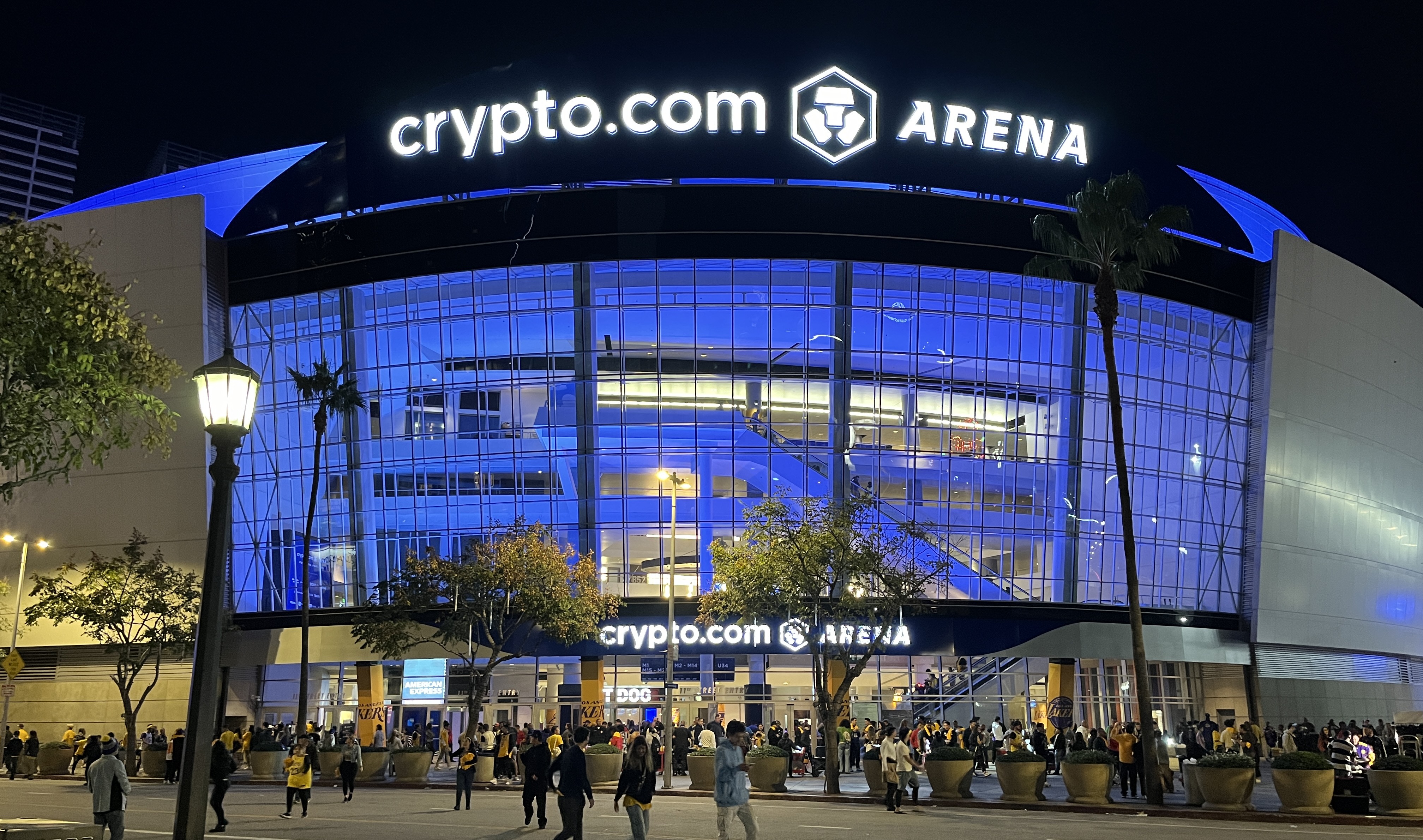
Above: The exterior of the Crypto.com Arena. Credit: Troutfarm27
So you might think that’s that. Oceanwide Plaza is finally on track to be completed just a few years late and only slightly over budget.
If only there was such a thing as a Hollywood ending in construction.
When KPC Square bought the plaza, they agreed to a strict six-month window for closing the transaction. If they can’t rustle up the extra $800 million needed to finish the plaza by early 2027, they’ll lose it to a backup bidder.
And while the people behind the sale say that the towers have held up remarkably well since they were abandoned, there’s no guarantee that structural issues won’t be found before construction can resume.
That might push the final cost up even higher and delay the completion.
But there’s one aspect of all this that we haven’t touched on. There’s much more to Los Angeles than just billion-dollar skyscrapers and massive arenas.
It’s also a city struggling with the worst housing crisis in its history.
Back in the 1950s, when the city repealed that 150 foot height limit, LA County was building around 70,000 housing units per year, and they were sold at prices which were affordable to the average resident. But that number has steadily declined and now sits just below 15,000.
LA currently builds housing at less than half the US national average relative to its population. Developers are especially reluctant to build affordable high-density housing in the city because of what they say are unaffordable tax and interest rates.
The preference is to build the kinds of townhouses which can only fit one household and so don’t do a whole lot to help such a pronounced crisis.
According to research from the University of Southern California, home ownership across LA County is sitting at just 45%, its lowest level in over fifty years.
It’s a state of affairs which also means that LA has around 45,000 people sleeping rough, with the largest unsheltered homeless population in the United States, although those numbers do attract a great deal of skepticism from local residents.
The city council outright rejected proposals to turn the plaza into low-income housing, citing the high cost involved. But it does raise a fair question. In a city where there are not enough affordable homes for the population, are three towers of luxury apartments and a five-star hotel the best use of an entire city block?
But it might still end up being a moot point. If the new owners can’t get that $800 million together in the next few months, the plaza will be right back to square one and will regain its status as Los Angeles’s most unavoidable white elephant.
And even if it’s completed, it will likely still face quite a lot of questions from Angelenos who won’t be able to afford the homes inside it.
Oceanwide Plaza will still stand as the most remarkable construction comeback story in this city’s history. But you’re going to have to decide for yourself if it’s one you’re interested in seeing.
Rayon is the all-in-one, effortless CAD tool for going from concept to completion. Try it (for free) here: https://rayon.design/r/v4w1_yt_the_b1m
Additional footage and images: Sony Pictures, The Grammy Museum, NBC, KTLA 5, LACITYCLERK, Paramount, St. Ives Productions, Library of Congress, UCLA Department of Theater Arts, Metro-Goldwyn-Mayer Studios, Eon Productions, Columbia Pictures, FOX 11 Los Angeles, CBS News, CNN, Cristaldi Film/Les Films Ariane
We welcome you sharing our content to inspire others, but please be nice and play by our rules.
Comments