North Korea Built its Own Dubai
- Youtube Views 0 VIDEO VIEWS

12 October 2026
Video hosted and narrated by Fred Mills. This video contains paid promotion for Odoo.
NORTH KOREA has opened a vast seaside holiday resort after seven years of construction, only to suspend visits by international tourists within weeks of its launch. The Wonsan Kalma coastal resort was presented by leader Kim Jong Un as a major step towards developing the country’s tourism industry. But its brief opening has raised questions about North Korea’s ambitions to attract overseas visitors, as well as the challenges of delivering large construction projects in one of the world’s most isolated economies.
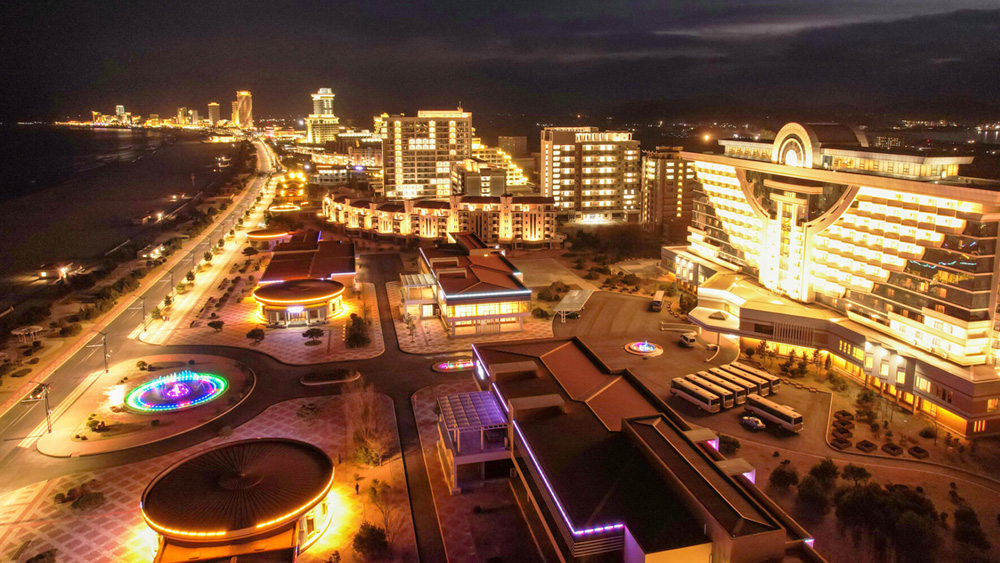
Located on a peninsula near the port city of Wonsan, around 140km from the capital Pyongyang, the development stretches along 4km of sandy coastline. It includes hotels, villas, leisure facilities and a beachfront promenade, all built on land that was previously used for military purposes.
The project was intended to establish a major tourism destination in a country where international travel is tightly controlled and economic activity has been restricted by decades of international sanctions.
Yet, despite the scale of the development, the resort’s future as an international holiday destination remains uncertain. Plans to transform the Wonsan region into a tourism hub emerged in 2014, as North Korea began pursuing leisure developments as a potential source of income.
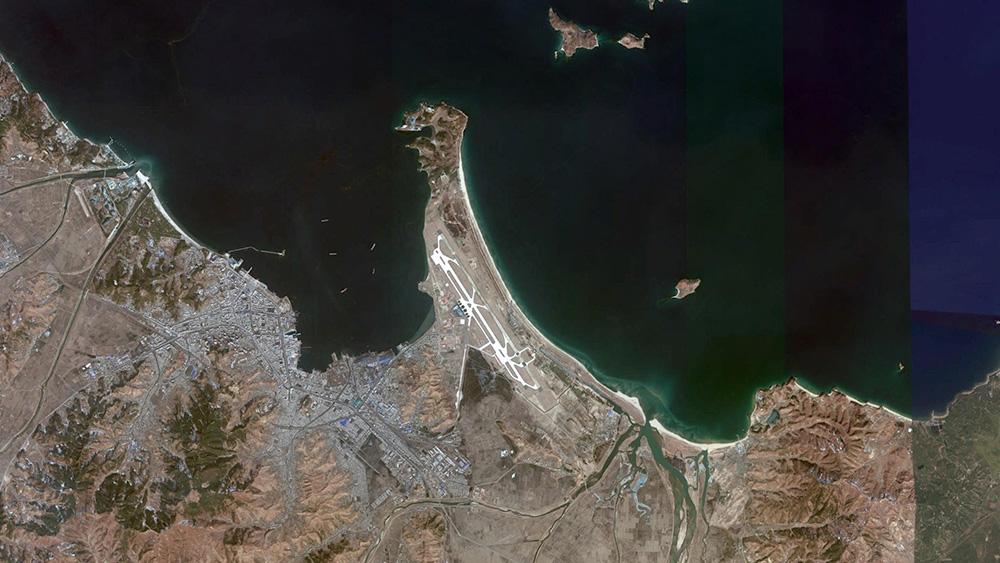
The Wonsan Kalma Peninsula prior to construction.
The country had already opened the Masikryong ski resort, which features nine ski trails, a hotel and a swimming pool. Wonsan Kalma represented a far more ambitious attempt to attract visitors to the country’s east coast.
Its location offered several advantages. The peninsula has a long sandy beach, relatively flat coastal land and transport connections, while its proximity to China puts it within a few hours’ flight of several major Chinese cities.
The surrounding area also has a history of military activity. A missile launch facility was established nearby, and the site became a regular location for missile tests.
The same coastal geography that made the peninsula attractive for tourism also made it suitable for military infrastructure. Plans for the resort therefore developed alongside the area’s strategic role.
The government’s wider ambition was to turn Wonsan into a major destination for domestic and international visitors, with the Kalma peninsula at its centre.
Tourism was particularly attractive because it offered a potential source of revenue that was less directly affected by international sanctions than many other sectors of the North Korean economy.
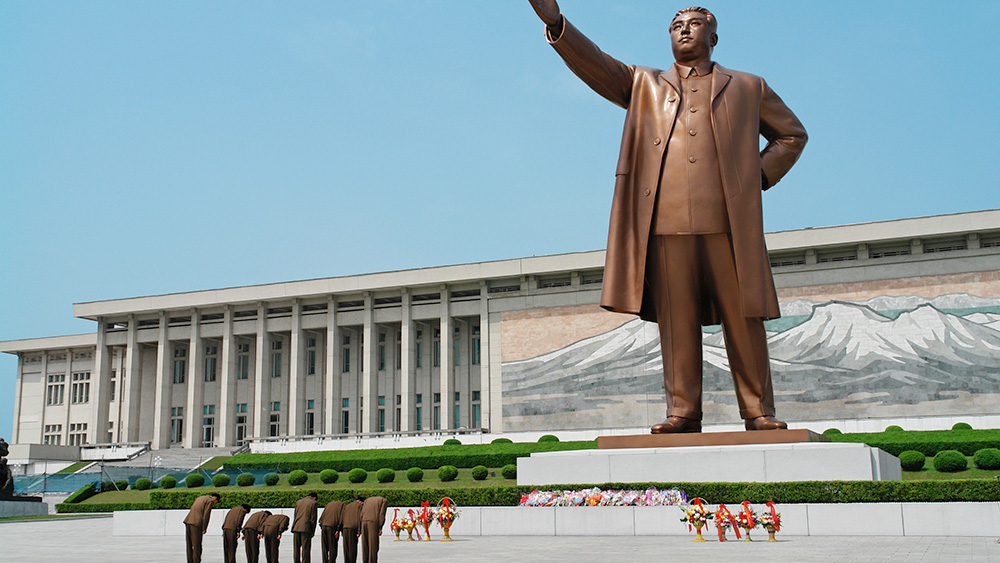
Tourism has been operating at a small scale for many years.
Wonsan Kalma formed part of a broader construction drive under Kim, who took power in 2011.
North Korea has pursued major housing, factory and infrastructure programmes, including plans for 50,000 new homes in Pyongyang. The government has frequently presented large construction projects as evidence of national development.
But delivering ambitious schemes in a country with limited access to international supply chains presents considerable challenges.
Glass and steel are widely used in large buildings around the world, but North Korea has faced restrictions on access to materials and equipment. Its construction industry has consequently relied heavily on concrete.
The Ryugyong Hotel in Pyongyang illustrates this approach. Standing at 330-metres, it is the country's tallest building and is constructed predominantly from concrete, rather than the combination of a concrete core, steel frame and glass exterior commonly found in many modern towers.
Similar constraints can be seen in the buildings at Wonsan Kalma. The resort's hotels are generally broad and relatively low-rise, with the tallest hotel tower reaching around 30 storeys.
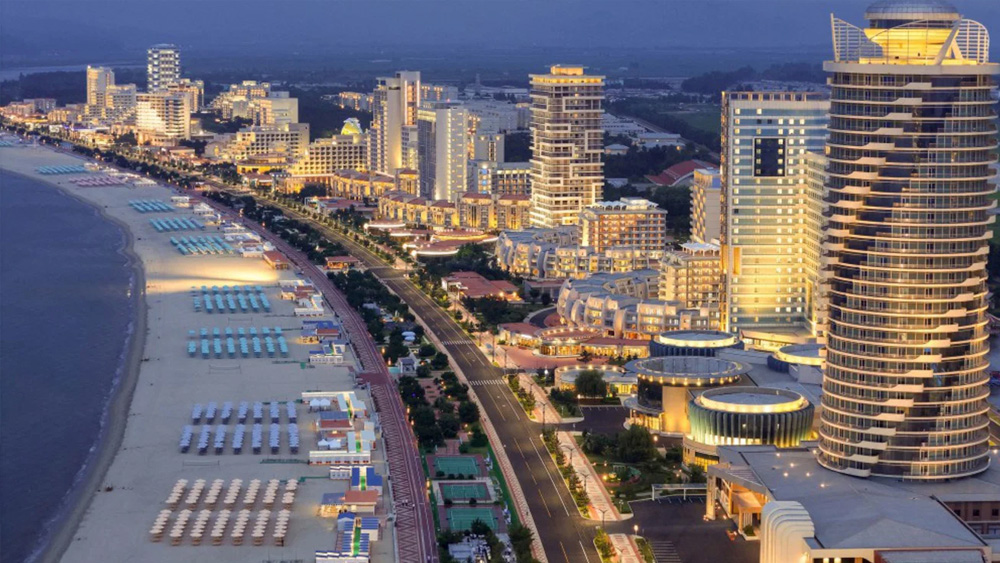
An early render o Wonsan Kalma. Image: KCNA.
The development also reflects a highly centralised approach to construction. Rather than being delivered by numerous independent developers, the resort was planned as a single state-led project, allowing the government to oversee the layout and appearance of the wider site.
That approach has produced a largely uniform development, with hotels and leisure facilities arranged along the coast.Construction began in early 2018, with Kim making his first visit to the site in May that year.
He praised the workers and spoke of the construction achievements taking place across the country. He also stressed the need to maintain high standards of craftsmanship, setting a completion date of 15 April 2019, just 11 months away.
However, subsequent visits brought a series of changes to the plans. During an inspection in August 2018, Kim criticised the appearance of the buildings, saying they looked separated and differed too much in height. He called for alterations to make the development more harmonious.
He also requested changes to artificial lakes and the addition of fishing areas. Later that year, he called for further facilities, including more hotels, an office tower, arcades, a stadium, cinemas, a funfair and a railway station.
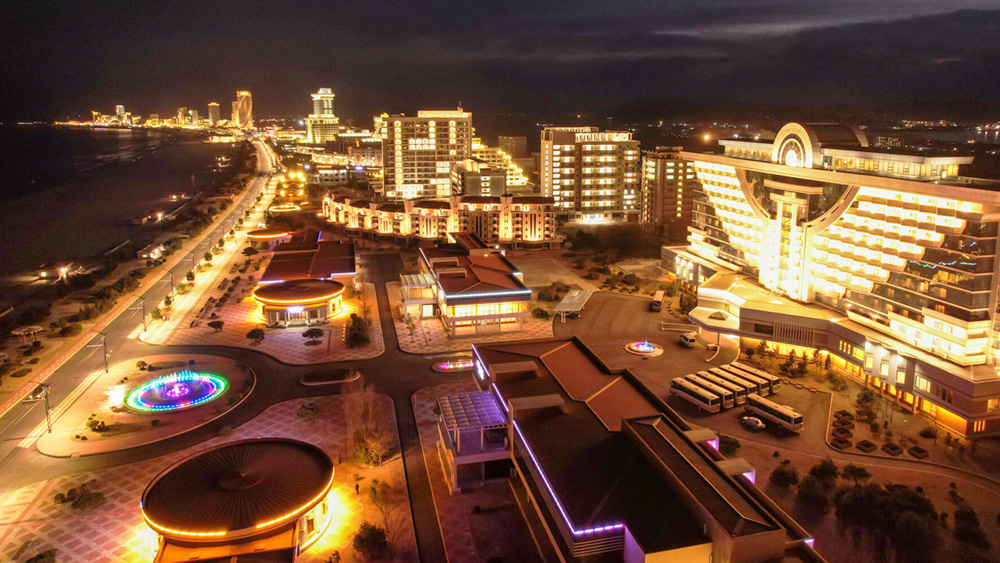
Wonsan Kalma at night. Image: KCNA.
By April 2019, Kim was praising the development as spectacular, but he still wanted additional features. These included a tram along the promenade, more street furniture, electric cars and floating piers.
The deadline was subsequently pushed back by another year. The resort's construction also took place within a system that has relied on demanding labour practices to deliver major projects quickly.
North Korea has used so-called shock brigades, specialist workforces assigned to high-priority construction schemes and expected to meet exceptionally tight deadlines. These programmes have often been timed to coincide with major state occasions.
Reports from workers who escaped North Korea have described long working days and harsh conditions on construction sites. At a housing development in Samjiyon, in the country's north, workers reportedly faced shifts lasting up to 20 hours in winter temperatures of around minus 20 degrees Celsius after Kim brought the completion deadline forward by a year.
The accounts provide a glimpse of the pressures that can accompany the country's construction campaigns, although conditions at Wonsan Kalma itself are not independently established by those reports. Satellite imagery provides evidence of the pace of development at Wonsan Kalma.
Images from November 2017 show the peninsula before construction began. Within the following year, the site had been transformed, with the principal buildings and much of the resort's layout already taking shape.
The images cannot establish the quality of the completed structures or show how much work remained inside them. However, the overall footprint of the development was largely established within that initial period.
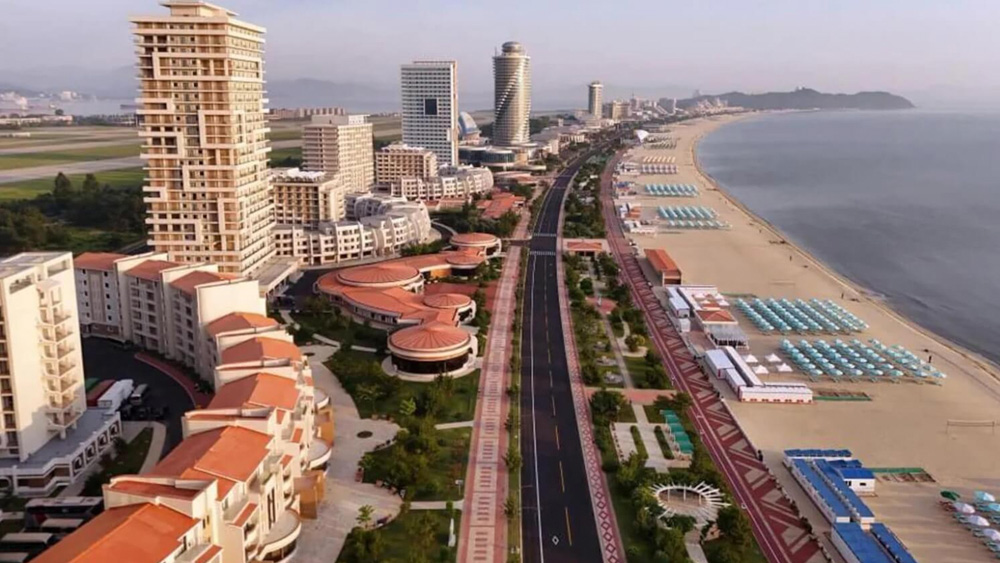
Wonsan Kalma after completion. Image: KCNA.
They also reveal changes to the original plans. An Olympic-sized swimming pool was close to completion in 2018, but was subsequently filled in and replaced by a hotel. An amphitheatre that appeared complete was demolished at some point in 2024 and rebuilt further south.
The missile launch facilities were also relocated to a neighbouring site. These changes reflect the challenges of delivering a large development when the client can continue to alter the brief during construction. In Wonsan Kalma's case, that client was the North Korean state, with Kim personally involved in overseeing the project.
Ultimately, the resort took seven years to reach its opening. On 24 June 2025, Kim attended a gala opening at Wonsan Kalma, describing it as the first step towards developing North Korea's tourism industry. The resort's facilities included 12 hotels, 28 villas, 48 mansions, a water park, sports fields, an outdoor concert venue, an Olympic-sized swimming pool and a beachfront promenade.
Two weeks after the opening, a group of Russian influencers became the first international visitors to the resort. They were accompanied by Russian foreign minister Sergei Lavrov. However, on 18 July 2025, North Korea's official tourism agency announced that visits by international tourists were temporarily suspended. No reason was given for the decision.
The announcement came less than a month after the resort's opening ceremony. Some observers have suggested the authorities were dissatisfied with the outcome of the initial visits. Others have pointed to the area's continuing military significance, with missile launches still taking place nearby despite the relocation of the launch facilities.
Neither explanation has been confirmed. Reports have suggested that domestic visitors continued to use parts of the resort, while questions remained about the completion of some building interiors.
The suspension of international visits has therefore cast doubt on the development's ability to fulfil its original purpose. Wonsan Kalma was built as a showcase for North Korea's construction capabilities and an attempt to establish tourism as a source of economic activity. Its scale demonstrates the country's ability to mobilise resources for a major state-led development.
But the resort's future depends on more than the construction of hotels, swimming pools and sandy promenades. It also requires a steady flow of visitors, reliable access and a willingness by the authorities to open the destination to the outside world. For now, a project that took seven years to build has yet to establish itself as an international holiday destination.
Try your first Odoo app for free today.
Additional footage and images: KCNA, KCTV, BBC News, Grand Budapest, Gelephu Mindfulness City, CNN, Darya Zubkova, CBS Mornings
We welcome you sharing our content to inspire others, but please be nice and play by our rules.
Comments