Inside Berlin's Abandoned Nazi Mega-Airport
- Youtube Views 249 VIDEO VIEWS

09 October 2026
Video hosted by Fred Mills. This video contains paid promotion for Brilliant.
IN the 1930s, an alternative master plan was put forward that would have changed Berlin forever. Most of it was thankfully never realised. With one notable exception.
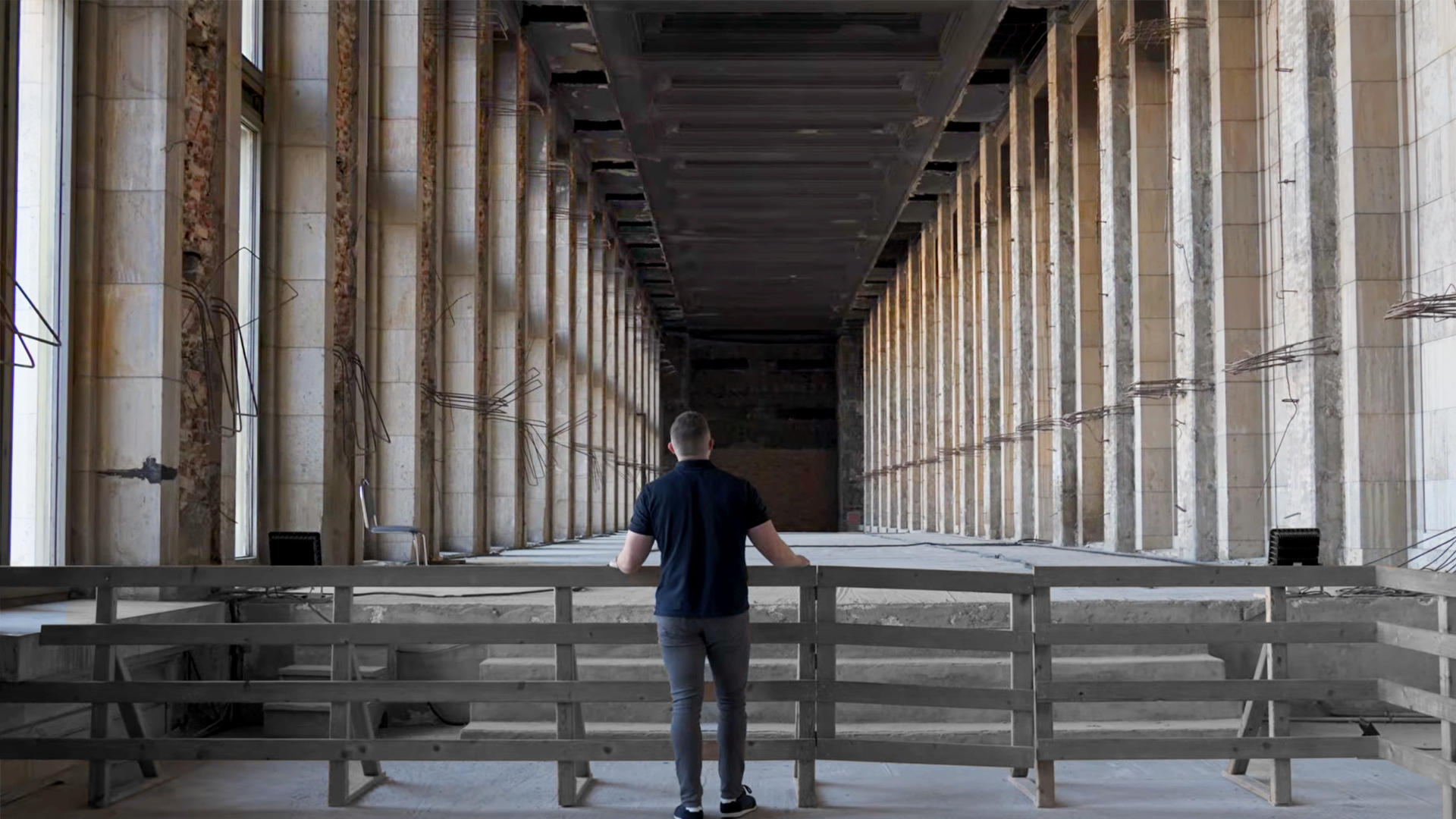
This massive abandoned building is one of the largest airport terminals ever constructed. This structure was built beyond human scale. And that's because this place was actually built by one of history's most atrocious villains. This airport, this place was designed to intimidate. This is Tempelhof Airport, the last remnant of Germania.
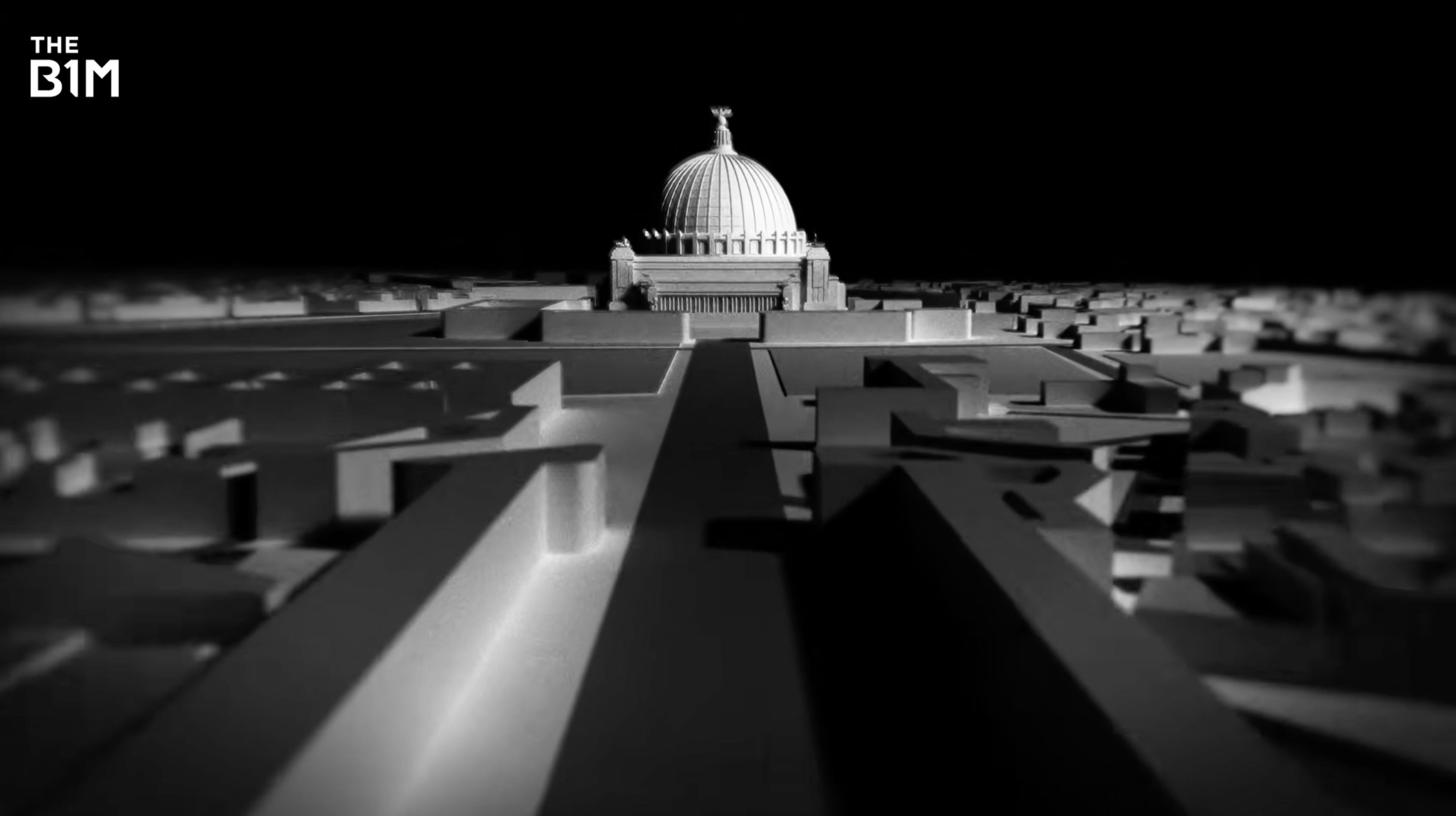
To really understand why this airport was so big, you have to get your head around the fact that it wasn't just intended as a gateway to Berlin. but is the grand entrance to a Nazi mega-city. Under the Nazis, Berlin was to be renamed Germania and would serve as the Third Reich's crown jewel. Conceived by Adolf Hitler and designed by his chief architect, Albert Spear, it would showcase the Nazi regime as an eternal force, an empire to rival ancient Rome.
At its centre would be an enormous domed hall with a capacity for over 180,000 people. Inspired by the Roman Empire and scaled to absurd proportions. It was 300m tall and 250m wide. Again, the whole point was intimidation. While much of that city was never built because of the outbreak of the Second World War, Tempelhof was, and it gives us a frightening glimpse into what could have been.
But Tempelhof existed long before Hitler took power. In the 18th century, it served as a Prussian military drill ground, and by the early 20th century, it was hosting air shows, including some of the earliest flights of the Wright brothers. Templehof was officially designated an airport in 1923 and quickly became one of Europe's most important aviation hubs. In 1934, the Nazi party saw its potential and architect Erns Sagabil was tasked with reimagining it.
Construction began in 1936, the year that Berlin hosted its now infamous Olympics. The Nazis wanted to project a modern image of Germany, architecture as propaganda with the whole world watching.
Tempelhof was designed to be the largest building in Europe. Its immense scale stretches in this vast arc, a total distance of more than 1.2 km. Its clean lines were reflecting Sagebiel's stripped down military-like aesthetic, a look that went on to be known as Nazi neoclassicism.
To construct it, they used steel reinforced concrete clad in limestone, which is actually pretty typical of the Nazi party. The materials were chosen for their durability and were designed to last for a thousand years.
Engineers focused on symmetry and order. Huge, long, uninterrupted corridors meant guards could watch over everything really easily. It's a technique that's more closely aligned to that of a military barracks than a civilian airport. It's also an unexpectedly modern way of building a large structure. Today, we see modular designs almost everywhere, but that certainly wasn't the case in the 1930s. Sagebiel designed the airport to be a repeatable system in part so that it would be easier to construct. That's particularly evident in the giant curved terminal.
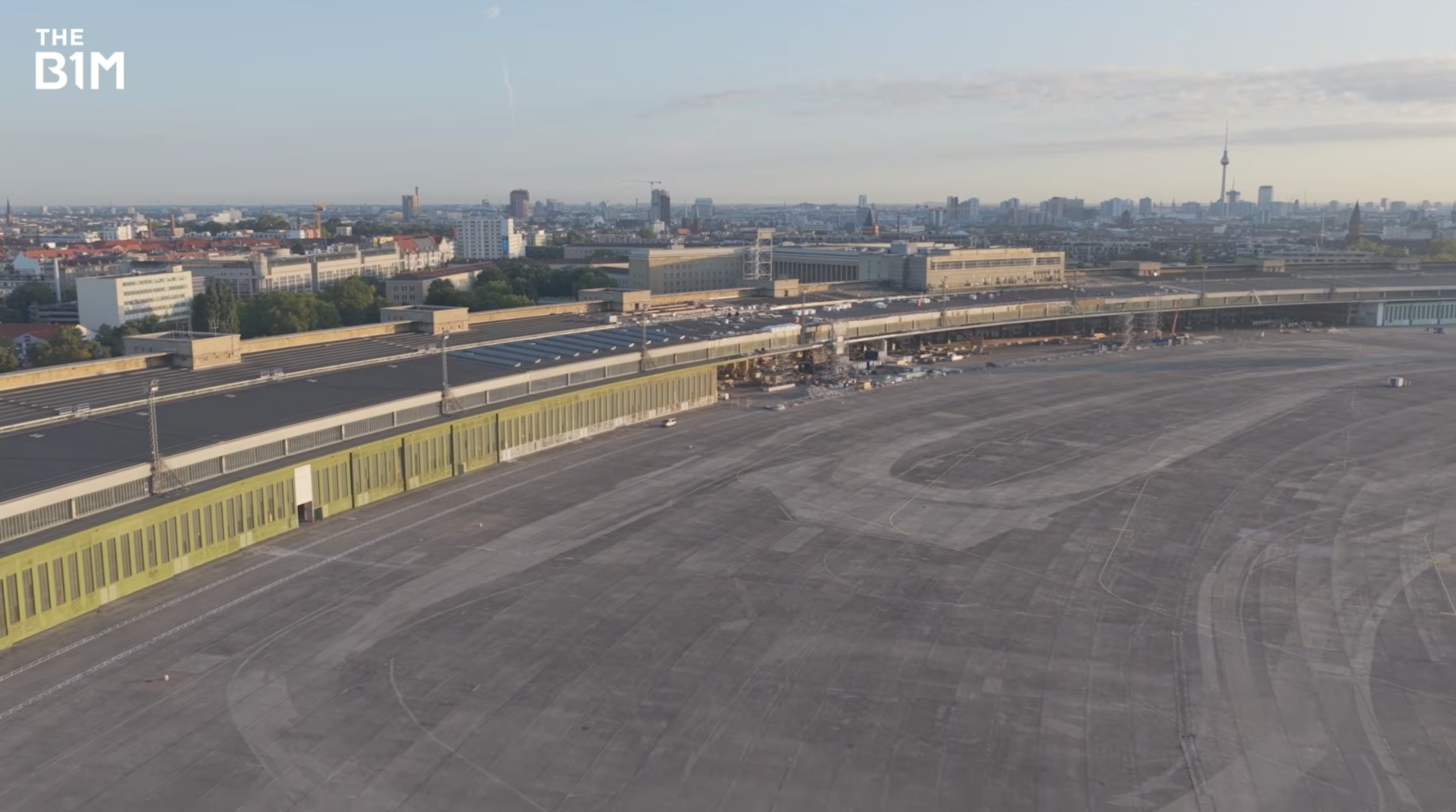
Essentially, it's a sequence of standardised steel and concrete bays repeated hundreds of times along the building's arc. From the outside, Tempelhof looks like classical architecture. But beneath the limestone facade, Sagebiel layered pre-fabricated or semi-standardised components. That wasn't classical. It was industrial.
These repeatable elements weren't just limited to the hangers. They also included identical window bands, replicated steel power dimensions, uniform stair towers, and duplicated office layouts.
The roof line soared with a 380-meter cantilevered canopy section that planes could drive in and park beneath. A key benefit of this roof was that it effectively hid military activity from aerial observation, such as during World War II when Tempelhof became a hub for aircraft production.
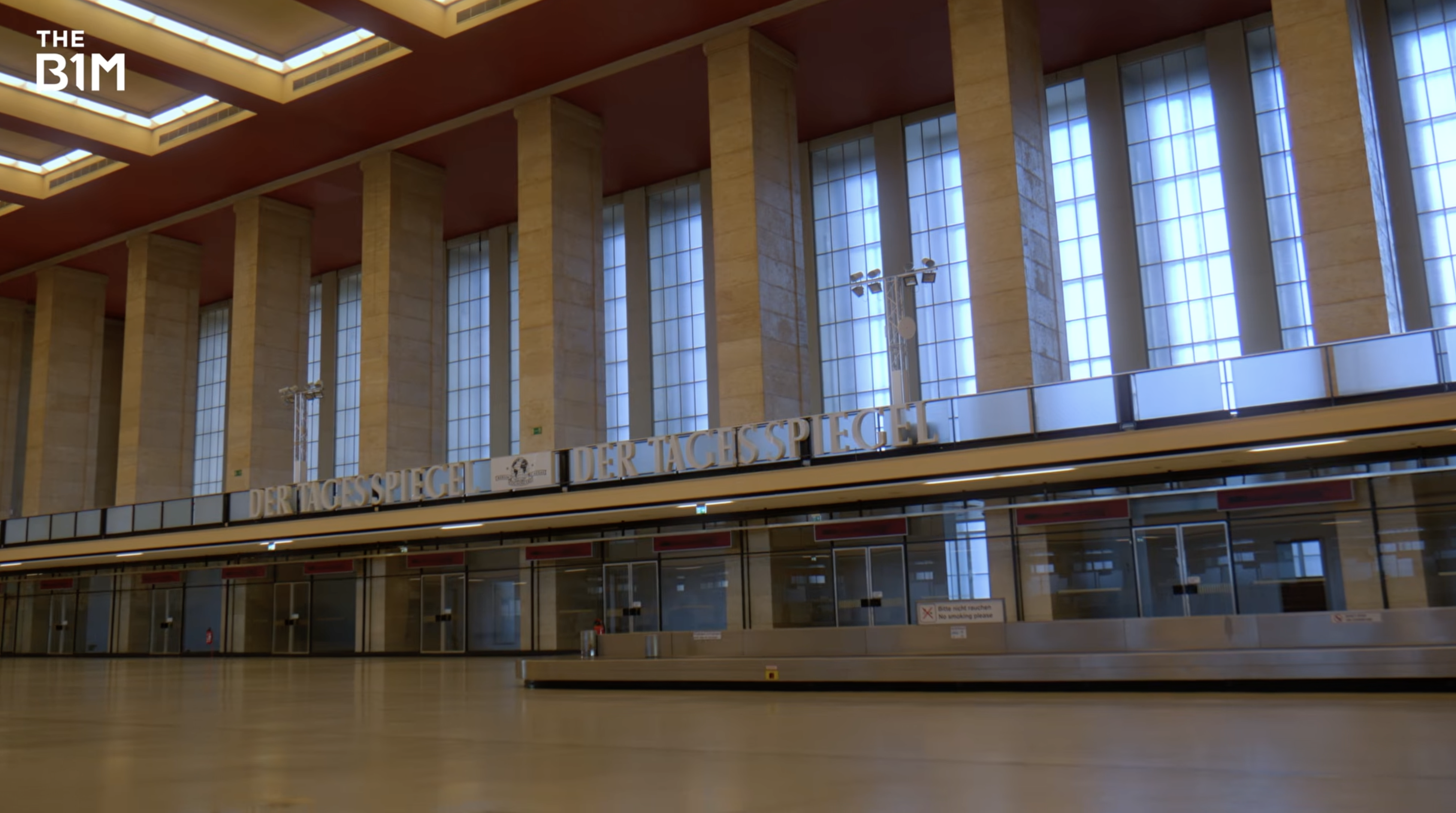
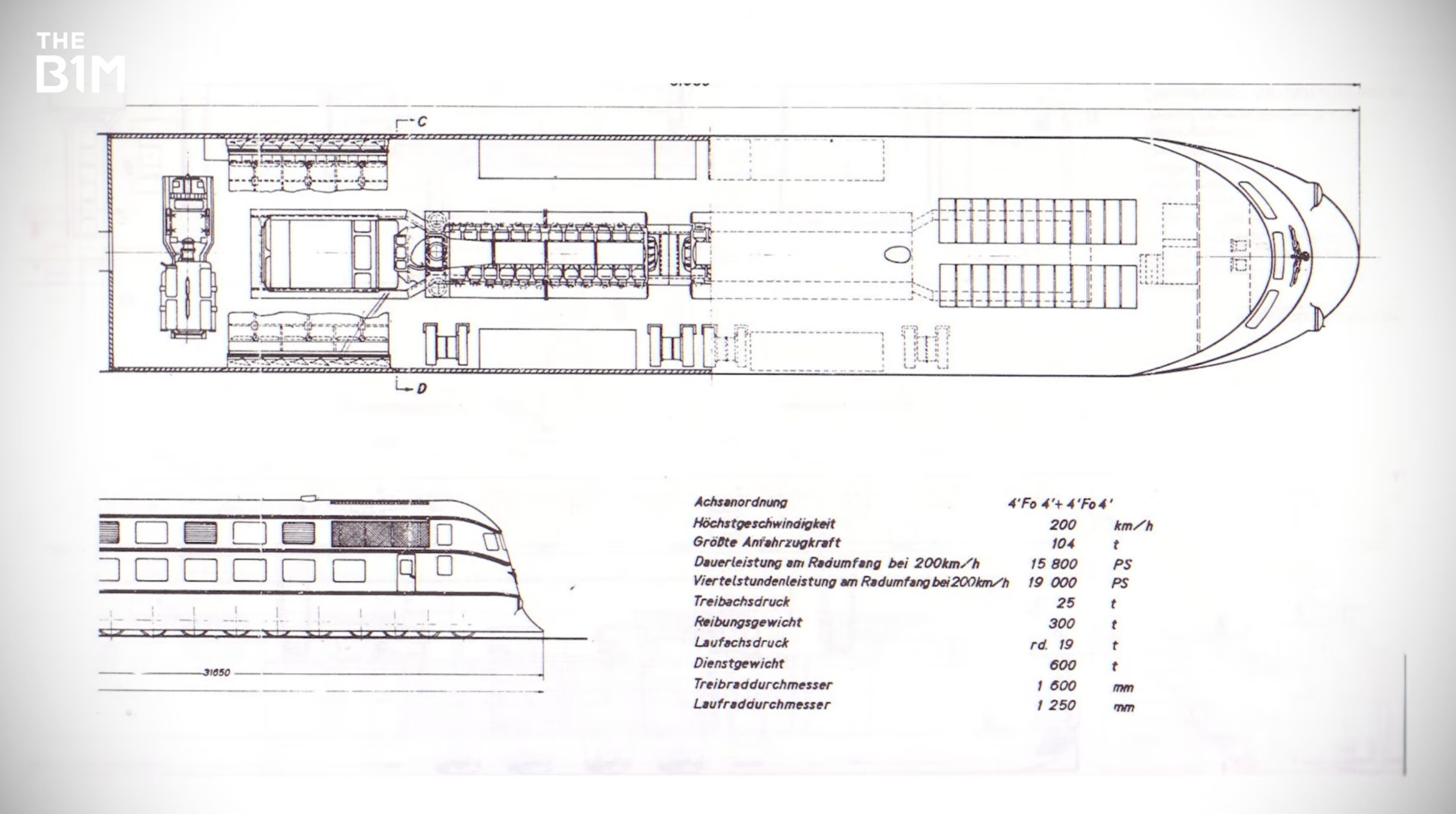
The interior is equally as grand. Vast halls, towering ceilings, and polished limestone, all designed to make the individual feel small in the presence of the state. But much of the terminal was never fully completed. Part of Sagebiel's vision was this huge sprawling roof terrace that would have been able to host up to 80,000 Berliners to watch air shows and military displays. There were plans for high-speed rail links called the Breitspurbahn - a colossal double-gauge supertrain.
Perhaps the most unsettling part of Tempelhof is not what you see here above ground, but what lies beneath.
Beneath Tempelhof airport, which was advanced airport for its time, there's a network of underground tunnels and bunkers that were used extensively during the Second World War. These bunkers built in the 30s and 40s featured thick reinforced concrete walls, blast doors, decontamination rooms, and emergency ventilation systems.
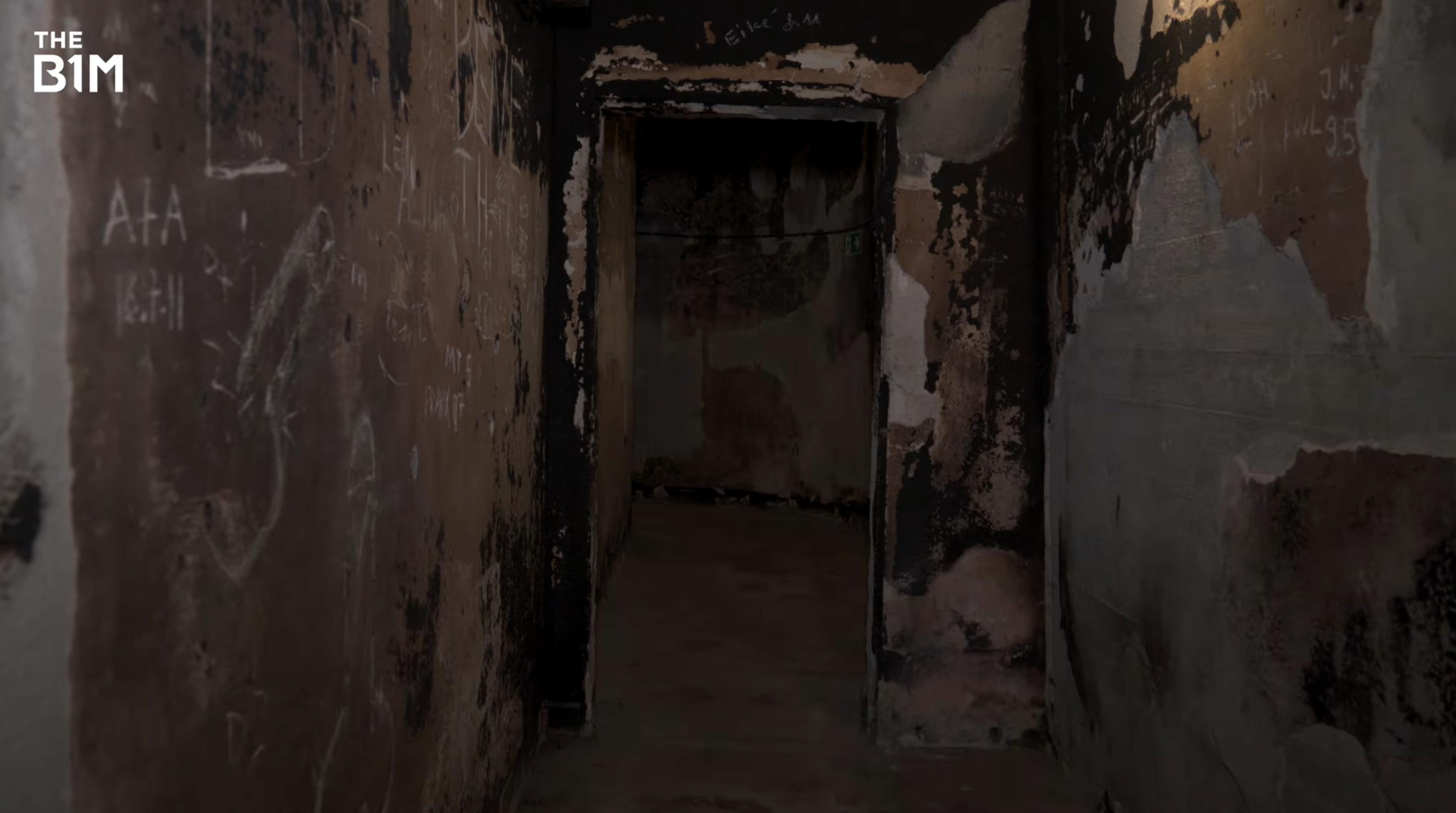
The civilian bunkers, for Berlins to shelter in during World War II, were formed of multiple rooms with big steel doors. More than 300 rooms sat under the airport, and each would have housed up to 20 people, sometimes having to shelter for days at a time. Much of the construction relied on forced labor from political prisoners, and workers conscripted from across Nazi-occupied Europe. They were often housed in the nearby Columbia concentration camp.
In 1941, construction of Tempelhof was eventually halted as resources shifted toward the war effort. By then, it already dominated the surrounding city. This curved terminal structure is so enormous that it was among the largest buildings on Earth by floor area at the time. Pilots used to joke that landing there felt like approaching a government ministry rather than an airport. And that was no coincidence.
As war broke out, the airport became a factory. Those same forced labourers now produced parts for aircraft, many of them housed in appalling conditions, either on the site or nearby. This building, once seen as a symbol of modern aviation, quickly became a part of the machinery of war. World War II came to a fiery close in Germany with the Battle of Berlin. The city was divided amongst the Allied powers and Tempelhof became part of West Berlin, specifically the sector that fell under US control.
When the Americans took over Tempelhof airport after World War II, they transformed it from a Nazi prestige project into one of the most symbolic outposts of the Cold War. What's fascinating is that they didn't demolish or completely erase the building. Instead, they adapted it. Templehof became part military base, part diplomatic symbol, part miniature American town, all embedded within West Berlin.
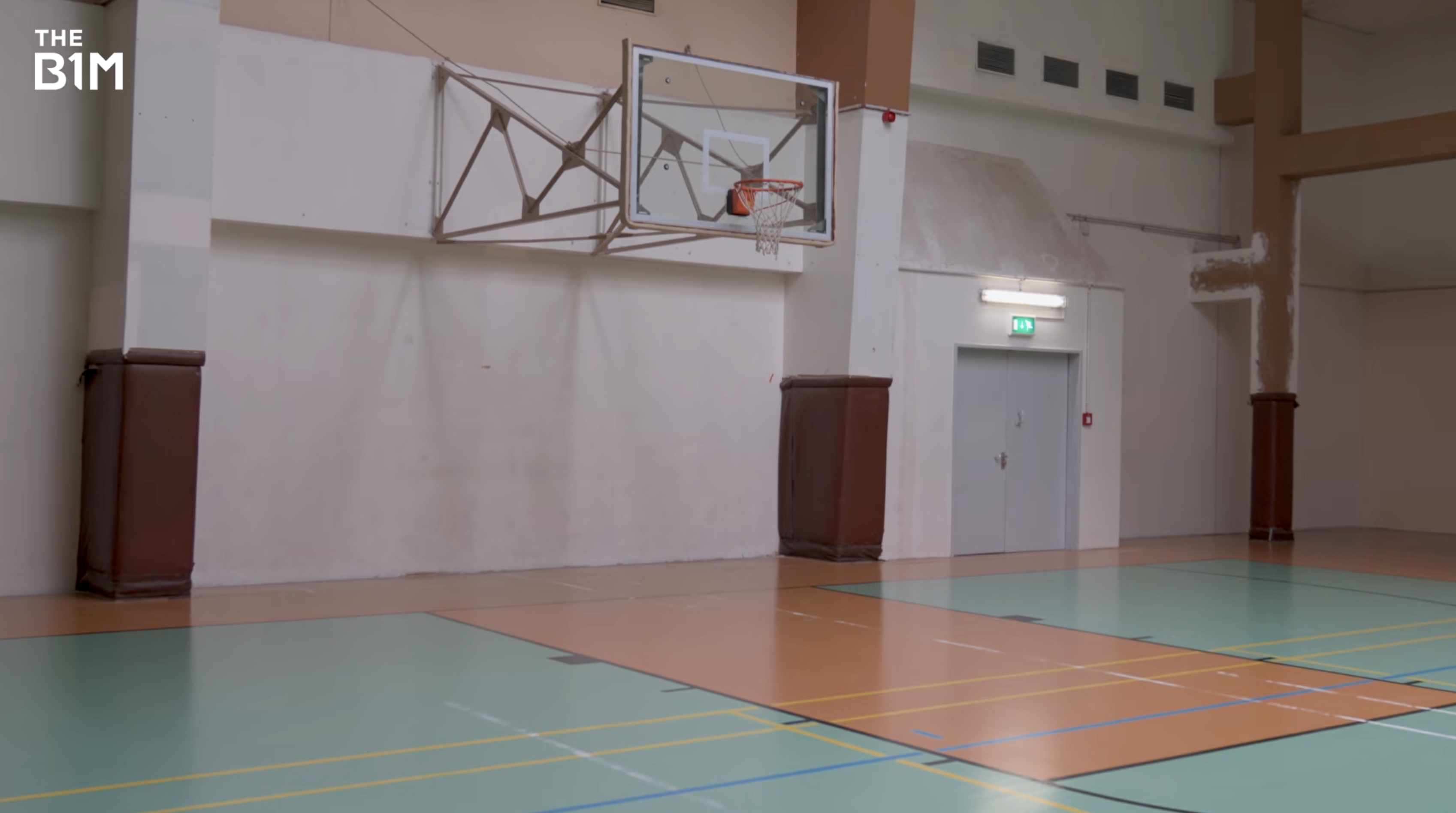
Up above the airport's departure hall, a room originally intended to be a ballroom and restaurant space was repurposed into a basketball court for the US military. It was part of a broader effort to maintain morale among troops living in what was effectively an isolated Cold War outpost surrounded by East Germany.
After repairs, the airport opened as Tempelhof Central Airport, resuming limited civilian traffic in 1951. But arguably its most defining moment in this period came during the Berlin blockade. The Soviets attempted to seal off West Berlin, closing roads and train lines. The only way to get food, fuel, and medical supplies to the 2.5 million people living inside was by air.
Tempelhof became the operational hub for the Berlin Airlift, delivering up to 5,000 tons of necessities every day. Planes landed every 90 seconds during peak periods. They operated a highly choreographed touchdown ballet where aircraft were forbidden from reversing or lingering. If a pilot missed an approach, they had to fly all the way back to West Germany instead of circling around and trying again.
For Berliners, Tempelhof was no longer a place of Nazi oppression, but a beacon of support, a lifeline from the Allies. In the decades following, it became a commercial aviation hub, and by the early 1970s, passenger traffic had peaked at around 5.5 million people each year. Pilots loved Tempelhof because the runways started astonishingly close to central Berlin. You could land and be in the city centre in a matter of minutes, which is almost unheard of for any major capital city airport today.
But its operations were reduced when Tegel Airport opened in 1975. The reunification of Germany led to complete American withdrawal by 1993 and the airport was handed over to Berlin's authorities. Despite its status as one of Europe's oldest operating hubs, Tempelhof became increasingly unviable. A decision to build the new Brandenburg airport effectively sealed its fate.
But this aging giant didn't go quietly. Thousands of Berliners campaigned to turn the airport into a public park. The grassroots group "100% Tempelhofer Feld" emerged, opposing any privatisation or development of the site. Remarkably, a 2014 referendum achieved 64% support, legally preventing any construction on the field.
71 years after the Nazi party opened this airport as a symbol of fascism, Tempelhof instead became the world's largest inner city urban park with an incredible 235,000 people turning up to its opening day.
Since 2012, events, exhibitions, trade fairs, startup workspaces, and creative studios have all inhabited parts of this terminal's vast hall space that was once designed for intimidation. The terminal's mile-long rooftop has been converted into a gallery, hosting exhibits throughout the year.
What was once a closed off, restricted area of the city, has now being given back to be enjoyed by everyone.
What should we do with buildings like this? I keep thinking that at some point I'm going to come to a verdict on Tempelhof, but I'm not sure that I can. Either way, it's not a place I think I'm going to be able to forget anytime soon.
Get started today for free, or upgrade to Premium for full tutoring support and unlimited access to everything on Brilliant. And right now, The B1M viewers can save 20% off an annual subscription by clicking the link here.
Additional footage and images: Tempelhof Airport, German Federal Archive, Stockholm Transport Museum, Klinke Und Co, Ferry Putz, Rettet Das Feld, One, Times, Dronepicr, Andrei Soare
We welcome you sharing our content to inspire others, but please be nice and play by our rules.
Comments