Will This Skyscraper Ruin Athens?
- Youtube Views 5,602 VIDEO VIEWS

14 October 2026
Video hosted by Fred Mills. This video contains paid promotion for Rayon Design.
THE Athens Riviera is one of the most beautiful stretches of coastline on the European continent.
Over kilometres long it runs all the way from the Port of Piraeus just outside the Greek capital down to the temple of Poseidon.
But about halfway down is the sort of thing you'd never normally see in this part of the world — a massive building site that's three times the size of Monaco.
And it's got to be big because this is where the $9BN Ellinikon project, Europe's largest urban development apparently, is in full swing.
When you look at what it entails you can understand why the company behind it, Lamda Development, has made such a bold claim.
City within a city
It'll have thousands of homes across multiple neighbourhoods, a hard rock hotel and casino, shopping mall, a regenerated marina and a new public beach.
Then there's the giant sports complex, schools, offices, healthcare facilities and a colossal park, which is set to offer two million square metres of green space. That's around. 40% larger than London's Hyde Park.
And we're not done yet. Check out the Riviera Galleria, designed by Kengo Kuma.
Described as a premium retail and dining destination, it'll have an undulating canopy inspired by the movement of water.
Next up is Park Rise, a group of 88 luxury residences with panoramic views, courtesy of Bjark Ingels Group.
So, you kind of get the idea — there are a lot of different parts to this and I haven't even mentioned the fact that it's being planned as a 15-minute city or the 200-metre-tall elephant in the room.
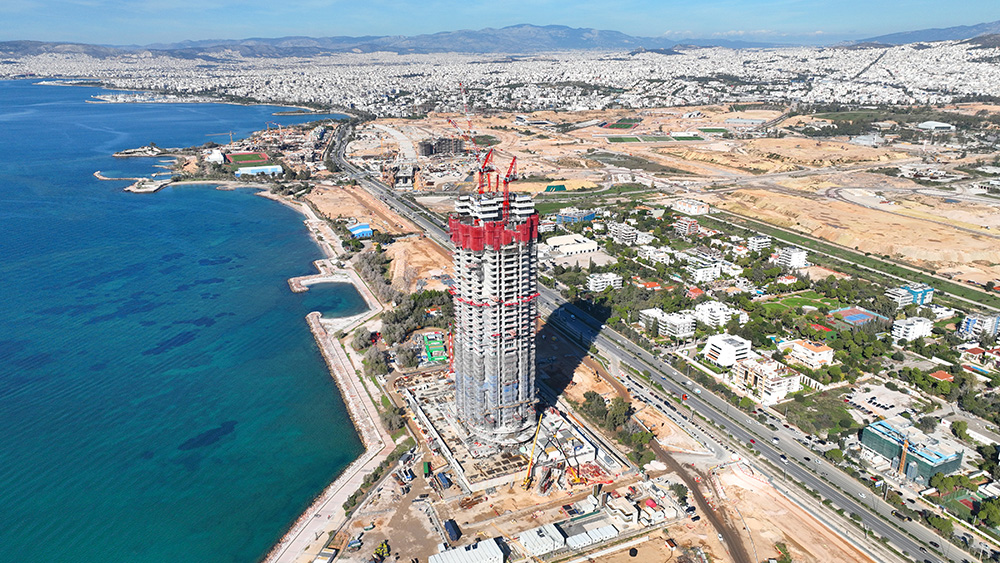
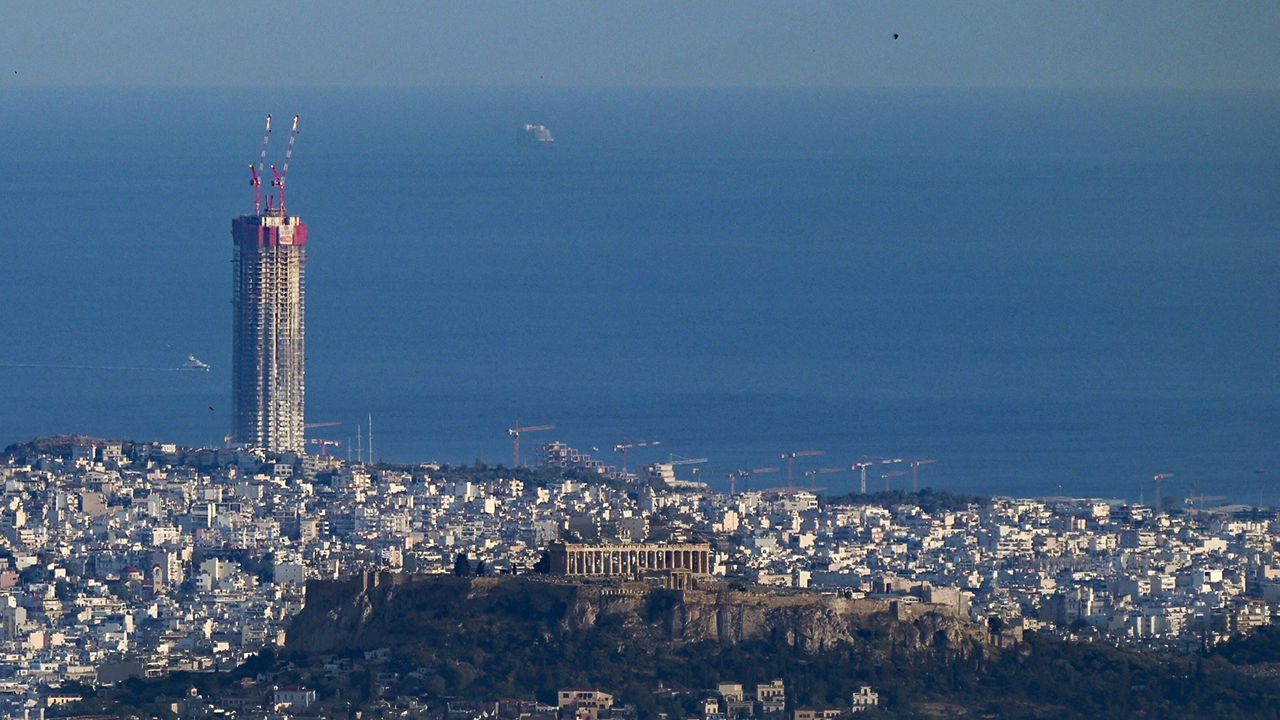
Above: The Riviera tower will be the tallest building in Greece and its debut skyscraper.
Brought to you by Foster + Partners — that's right, another big name architect, it's going to house 169 high-end residences.
These apartments and penthouses are going to be arranged on opposite sides with a spine running through the centre.
As well as linking the two halves of the structure, this central portion is going to have gardens and infinity pools alternating on each floor.
There's another thing that stands out when you look back at these satellite images from before construction started.
Well, there are a few things actually, but the most obvious one is this — what appears to be an old set of runways.
It makes sense because this is where Athens' old international airport was based. It closed back in 2001 and was left virtually abandoned for almost 20 years.
The same goes for the Boeing 747 — once belonging to the now-defunct Olympic Airlines — that was left rotting on the asphalt for even longer.
Seen better days
A little further north, more huge structures that were once bursting with life have now fallen into ruin. Except these were used for a different purpose — the 2004 Olympic Games.
Now let's be fair, Athens isn't the only city to neglect its Olympic venues after the games have wrapped up.
But when combined with the airport next door, it left an exceptionally large area of wasted space.
It stayed that way for ages because no one could decide what to do with it.
One government would be against selling off such a large piece of state-owned land and then the next government would be quite up for bringing in some private investment.
Which proved to be the most convincing argument, as by 2014 Lamda had secured a 99-year lease to revamp the old site.
We'll come on to how they managed to seal such a lucrative deal in just a moment.
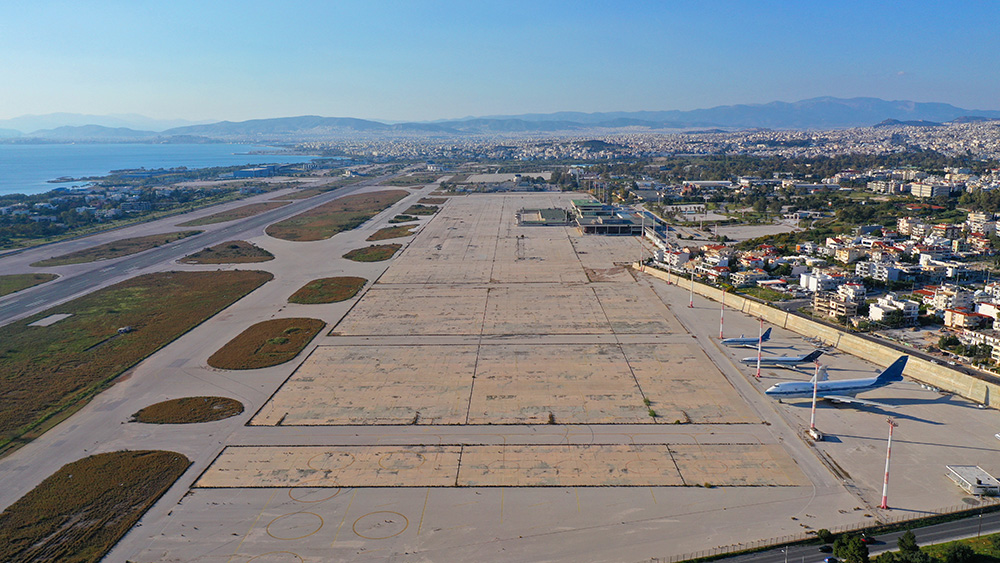
Above: Ellinikon International Airport served Athens for more than 60 years before it closed at the turn of the millennium.
Over a decade later, Ellinikon is five years into construction. Very little remains of the old airport and Olympic venues and new structures are now rising in their place.
There's no denying what truly dominates the landscape here from a visual perspective.
The reason the Riviera Tower looks so out of place is because usually buildings in Athens are limited to just 32 metres.
That's to preserve sight lines to the city's most historic and world famous landmark.
We're talking of course about the Acropolis and the Parthenon that sits on top of it, around 150 metres above sea level.
But the Riviera Tower is going to go more than six times over the city high limits. The skyscraper and the wider Elinikon development were approved as exceptions to the usual building regulations.
Special treament
Greece's government has granted the developers special permission to build multiple buildings up to 200 metres in height on this site.
Riviera Tower is the only one that's going to go right up to the maximum, but there's another that's going to run it pretty close.
Just a small distance away is the hotel and casino, or Integrated Resort as it's also called. That'll come in slightly shorter at 197 metres.
As for why this has been allowed to happen, well it's all to do with what the scheme promises to bring to a country that has been through some challenging times.
Although its debt crisis has been over for many years now, Elinikon gives Greece an opportunity to show the world how it has turned things around.
And having a new multi-billion dollar development like this on the fringe of one of the world's most famous cities is sure to attract lots of foreign investment and tourism.
It's expected to add more than a million extra visitors to the area every year, generate over $16BN in tax revenues and boost Greece's GDP by up to 2.5% on its own.
Then there's the location of it, which isn't actually in Athens at all. It's around six miles outside the centre, so far enough away for officials to claim that it doesn't interfere with historic sightlines.
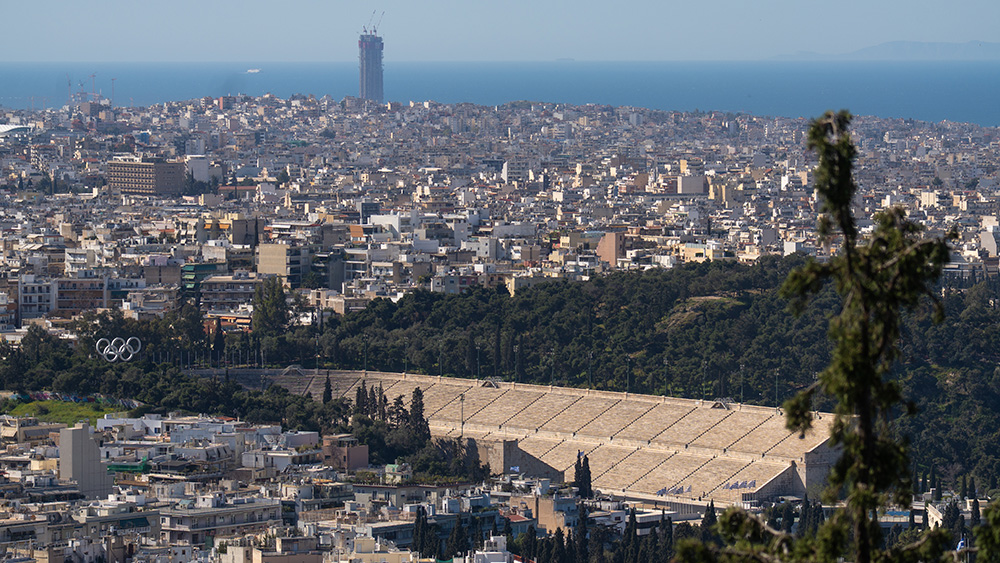
Above: A view of Riviera Tower from the city's iconic Panathenaic Stadium.
Now it's important to clarify, there has been some flouting of the height rule already.
Look up the ten tallest buildings in Athens and you'll see they're all comfortably over 32 metres, with the tallest one being over 100 metres. Not an official skyscraper but it's hardly low-rise either.
That's because these were all built during the 1960s and 70s when Greece was ruled by a military dictatorship.
To entice more real estate investment, the Junta, as they were known, abolished the restrictions which led to a brief surge in high-rise construction before the regime collapsed in 1974 and the rules were reinstated.
For decades, no other building in the region came close to reaching three figures on the metre scale. That was until 2022, when Lamda got the permit for the Riviera Tower.
It required special approvals from a whole host of organisations, including the Civil Aviation Authority, Central Council of Architecture and the Fire Service.
Riviera rises
A year later, the foundations for the skyscraper were in place. More than 100 piles, one and a half metres in diameter, had been driven up to 50 metres down into the bedrock.
After that, it was time to add the concrete — around 7,500 cubic metres of it, which would be enough to fill three Olympic-sized pools.
In total, it took over 40 hours to pour it all on top of the 1,760 tonnes of steel reinforcement.
The concreting of the basement and ground floor slab soon followed, and over the next three years the tower's 50 floors began to rise one by one.
Completion of the other structures isn't far behind. Early 2027 is going to see the opening of the park, the delivery of the first properties and the Riviera Galleria finishing construction.
Meanwhile, one pretty significant component of this development has already completed.
The Ellinikon Sport Park, with its track and field complex, football pitches, tennis and basketball courts opened in the summer of 2026.
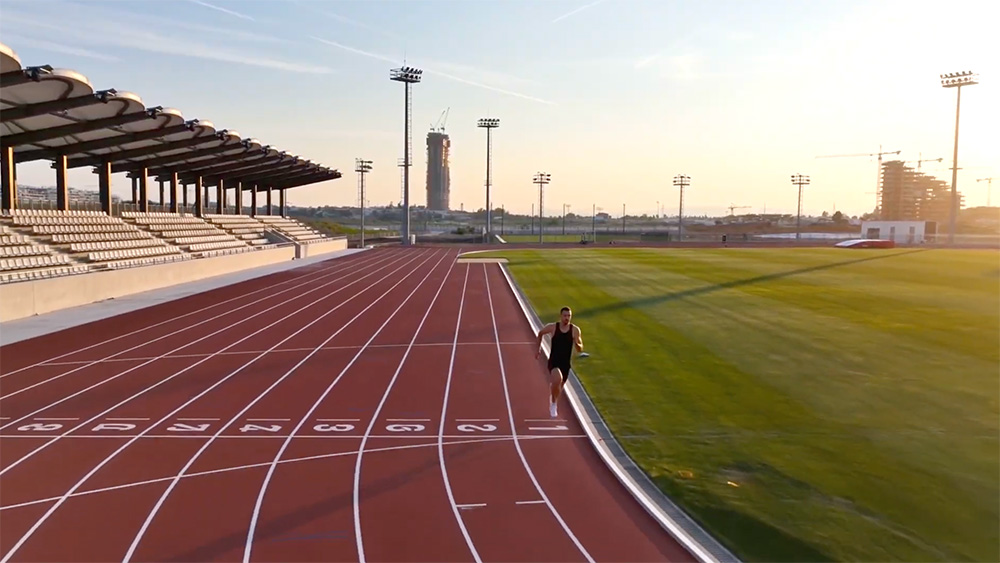
Above: The Sports Park is the first major element of the Ellinikon project to finish. Image: Lamda Development.
But that hasn't stopped some locals from trying to pull the plug on these new developments even at this late stage.
Residents and municipalities close to the site have been carrying out legal challenges for years and some of them are still going on.
One group of residents has questioned whether certain deviations to the usual Greek building code that were granted for the Galleria, as well as the hotel and casino, were legal.
Lamda says they were and that its opponents are unlikely to succeed, but it appears they're not going to back down.
But opposition to the scheme isn't anything new. There's been criticism of some of the decisions that have been made for over a decade.
Like how the developer was able to acquire what was previously public land for a bargain price back at the beginning.
Lamda paid just 915M Euros for it, which isn't pocket change but it stands to make a sizeable profit.
By the end of 2025, more than 1.5BN Euros had been accumulated in property sales when the project was nowhere near finished.
Properties in the Riviera Tower have been put on the market for up to 25M Euros each.
Time to cash in?
But when looking at all this, you've got to consider when that purchase was made. 2014 was the peak of the debt crisis when, according to the company's CEO, there was little interest from other parties and Lamda was the sole bidder.
That same year, the project was incorporated into the state's privatisation programme to bring in much-needed investment.
The Hellenic Republic Asset Development Fund, or HRADF, was put in charge of finding a buyer and there was only one choice. So it's perhaps not surprising that Lambda was able to pick it up on the cheap.
Still, the fact that Athens has had its former airport redeveloped into a place where most people can't afford to live, hasn't exactly sat well with everybody.
As soon as the deal was struck, there were protests outside the HRADF offices. Two years later, a poll of residents found that over 70% were displeased with the government's handling of the privatisation.
A 2025 poll found that 63% still opposed the Riviera Tower, while 41% were against the entire redevelopment.
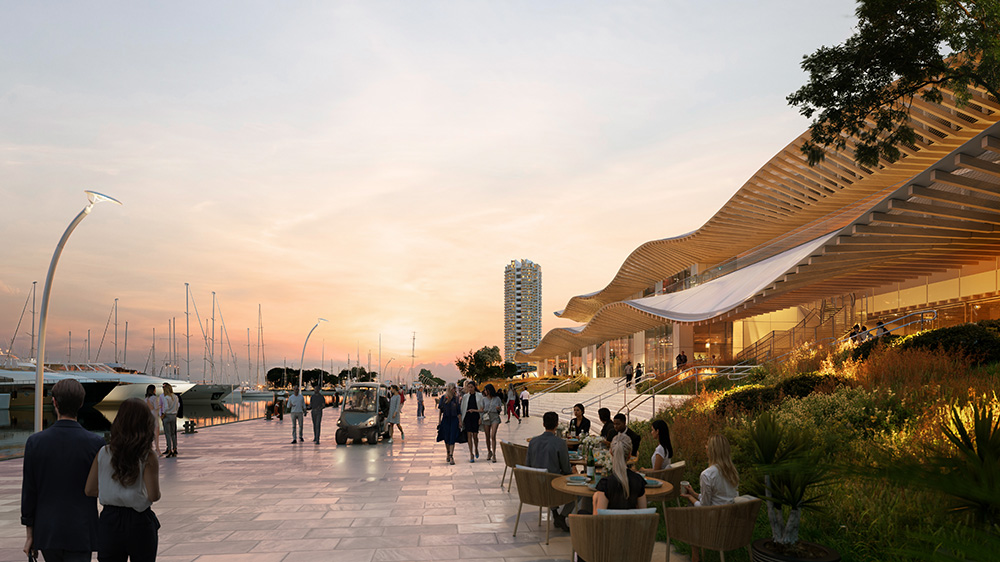
Above: The new development has had a mixed reception from locals. Image: Lamda Development.
While many Athenians are unhappy about what's become of their infrastructure, its presence will still be felt.
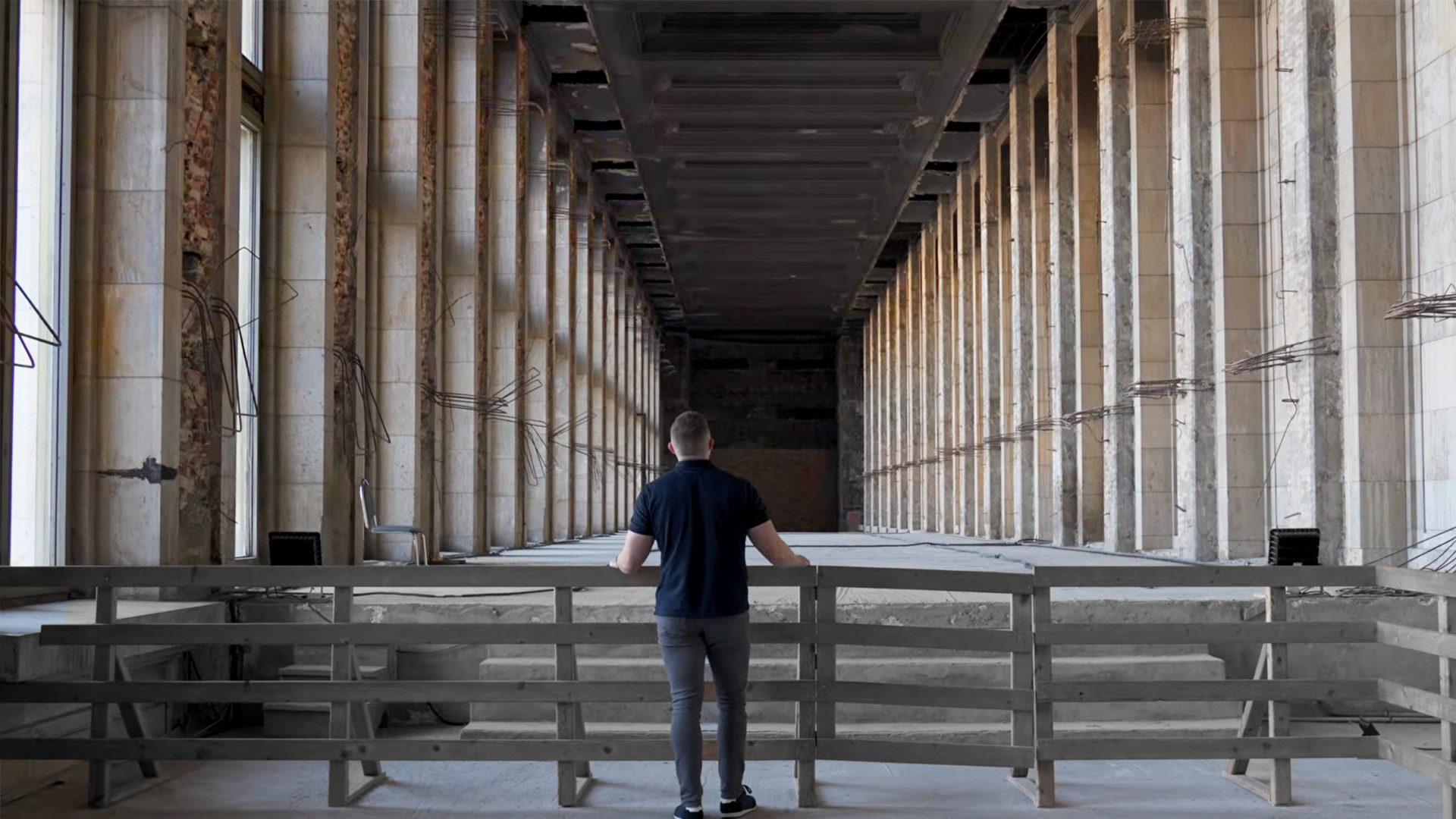
Part of the former airport terminal, renowned for its modernist design, is set to be retained as an exhibition space.
The Boeing 747, one of four planes that eventually had to be moved away, is expected to become a museum exhibit.
On the Olympic side, most of the stuff has pretty much gone except for the canoe slalom. There are plans to incorporate that into the new park.
And just because much of the housing here is aimed at people with a fair bit money it doesn't mean that this city within a city is only for wealthy people alone.
That park is going to be completely free and open to the public, and its sheer size will create enough room for all to enjoy it.
In the words of Lamda’s CEO, retail units will start at around half a million euros, which some Athenians may be able to afford.
But being real here, the vast majority of units on this sites are going to go for considerably more than that.
A sign of things to come?
There's a feeling as well that this new high-rise focus could be just the start and that it's only a matter of time before Greece starts building more skyscrapers.
It's certainly possible, especially if the Riviera Tower and the wider development its part of proves to be successful.
You've got to remember that this was all approved under exceptional circumstances and had to go through a rigorous process.
And because the tower has already gone straight to that maximum limit set out in the decree, it's impossible for anything taller to come along. Even so, many believe that a precedent has now been set.
The Ellinikon Project is one of the most divisive schemes we've come across in a while.
It's perhaps easy to see why it's had its critics — even at a distance from the heart of old Athens, its visual impact is hard to ignore.
Privatising such a large area — one that many Athenians will have fond memories of — was always going to be a difficult sell as well.
But it could help to pull the country even further away from its past troubles, while ensuring the public retains some, if not all, of what was once theirs.
Only time will tell if this compromise is something that everyone can eventually learn to live with.
They say Rome wasn't built in a day. They're maybe saying the same about Athens too.
Rayon is the all-in-one, effortless CAD tool for going from concept to completion. Try it (for free) here.
Additional footage and images: Lamda Development, GeorgeFoxCinematography, Verena Jung, Colin Cooke, Al Jazeera, Arne Müseler, CBS, CNN, euronews, Giwrgos Lamp, LAFARGE and Teo Laza.
We welcome you sharing our content to inspire others, but please be nice and play by our rules.
Comments