Australia’s Spending Billions to Fix its Melbourne Travel Nightmare
- Youtube Views 1 VIDEO VIEWS

14 September 2026
Video hosted by Fred Mills. This video contains paid promotion for Surfshark.
EVERY major airport needs a rail line connection. You can’t have millions of people driving to and from the city every year with no public infrastructure to help, or so you'd think.
Melbourne has been relying on its roads to connect the airport to the urban core for decades, but with soaring passenger demand that's becoming an issue. However, all hope is not lost.
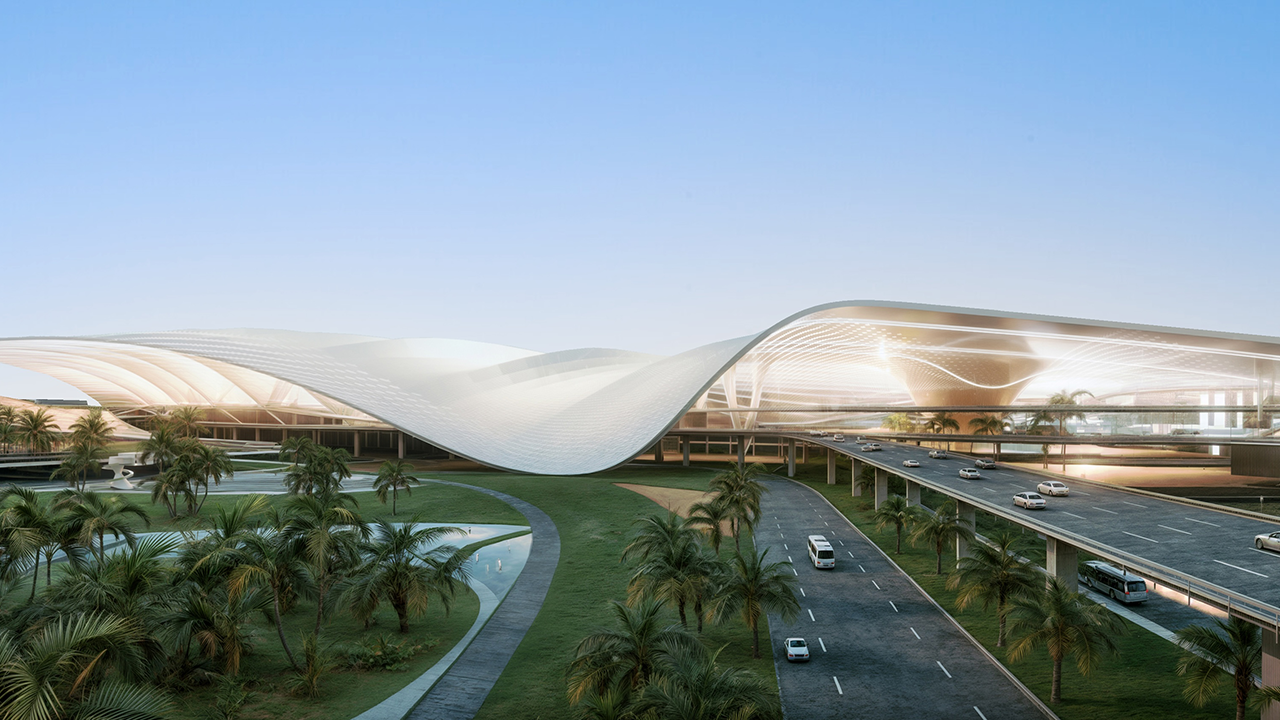
Melbourne Airport (MEL) is at the heart of a major infrastructure transformation. $4.5BN (AU) is being plunged into an overhaul providing shiny new terminals, gates and, importantly, a runway. And as of early 2026, work has officially begun on a $12BN project to, finally, build a rail line connecting the city of Melbourne to its airport.
After years of debates, disagreements and delays, change is on its way and for Melbourne, it can't come soon enough.
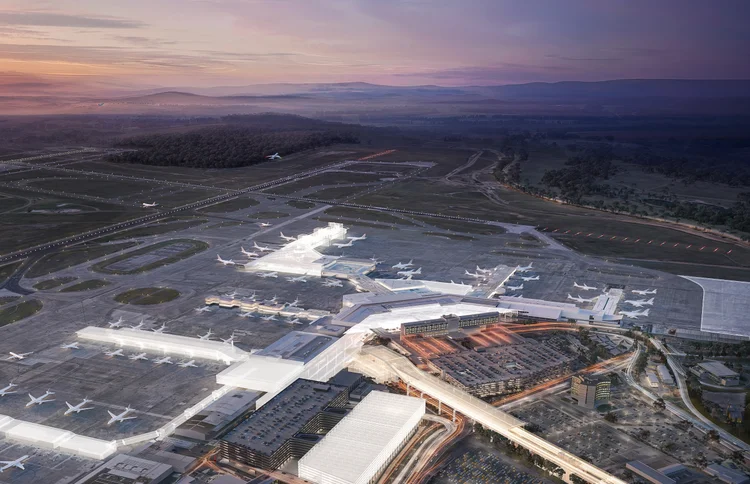
Above: Melbourne Airport is set for a $4.5BN (AU) overhaul. Image: Melbourne Airport.
Australia's vital lifeline
First thing’s first, you can’t think of MEL as a regular airport - it's a lifeline. Australia is really, really far away from the rest of us and probably more so than you realise.
To get to Melbourne from Heathrow you'd have to fly across all of Europe and the Middle East, stop in Singapore, get on another plane, and fly over the Indian Ocean. Once in Australia, to get to Melbourne you still have to cross the distance of Europe again. Add a layover, and that journey takes almost a full day.
Considering its location, it’s safe to say aviation is incredibly important to Australia and not just for international travel, but domestic too. Sydney to Perth is more than 3,300 kilometres. That’s roughly the same distance as London to Cairo and unlike Europe, there’s no dense web of high-speed rail connecting major cities.
In some parts of Australia, major cities are connected by little more than a single highway cutting through thousands of kilometres of empty land. As highways are to America and railways are to Europe: aviation is to Australia and nowhere illustrates that better than Melbourne.
A city on the up
Melbourne is growing faster than almost anyone expected. Driven largely by overseas migration, it has officially overtaken Sydney as Australia’s most populous city. Today, it’s home to more than 5.4 million people and it’s still growing rapidly. That’s great news for airlines but a major headache for the operators of Melbourne Airport.
When it opened in 1970, Melbourne itself was dramatically smaller; the city had just two million people. For context, in January alone, 1.26 million international passengers passed through MEL’s gates - the busiest month on record. The airport suffers with serious crowding and traffic chaos - remember, there’s still no rail link so cars and buses are king.
Now more than $4BN is being spent on a massive expansion, largely centred on T2, Melbourne’s international terminal and miraculously, the airport will continue to operate 24 hours a day throughout construction.
Perhaps the biggest change is the expansion of the international pier. Five new gates are being added, designed to handle either five wide-body aircraft simultaneously or up to eight narrow-body aircraft. That’s critical because wide-body aircraft are the backbone of long-haul international travel. These are the giant jets connecting Melbourne to the likes of Singapore, Dubai, Los Angeles and eventually, they could connect to London and New York.
The departures experience is set for a complete redesign too. The international check-in halls will become much larger and the security processing areas are being expanded. It includes a $500 million upgrade to the baggage systems, new check-in technology, and expanded customs and immigration processing. They’re also adding more retail space, bigger airline lounges and passenger waiting areas.
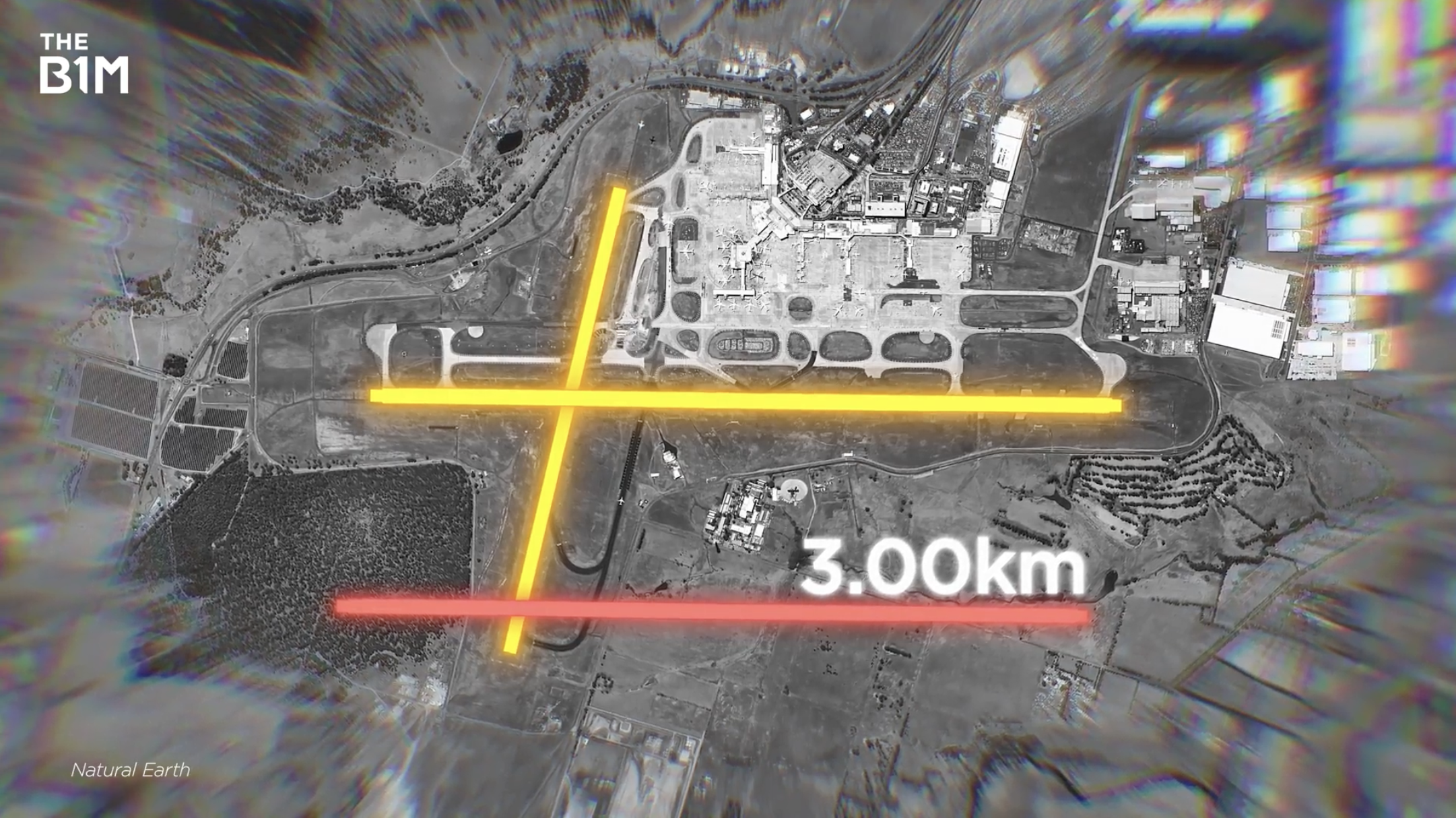
However, maybe the most exciting development is out on the airfield. The two current runways intersect, meaning aircraft can’t land or take off at the same time. In 2024, the Federal Government officially approved construction of a new third runway after years of delays and consultation. Once complete, it’ll stretch three kilometres long, built parallel to the existing north-south runway, and positioned around 1.3 kilometres to the west.
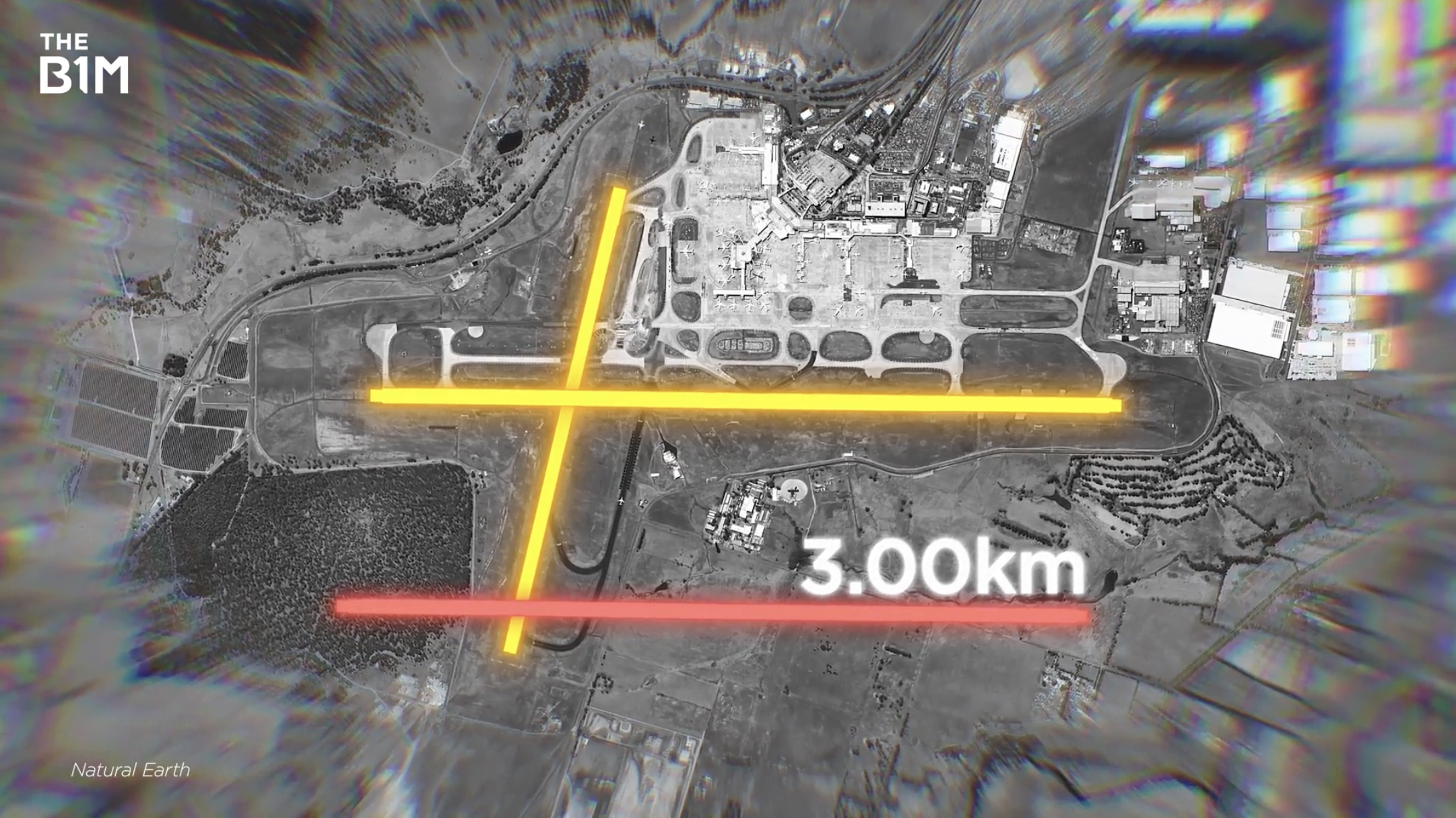
Above: Construction is underway to build a third runway at Melbourne Airport.
When it opens, currently targeted for 2031, Melbourne Airport will be able to operate parallel runway operations but building a runway at this scale isn’t easy. The earthworks to level and prepare the site are incredibly extensive, and that’s before any tarmac is laid and navigation infrastructure built.
If Melbourne wants to continue to grow, this is seen as essential work but there’s an elephant in the room.
A transit nightmare
The airport currently welcomes nearly 37 million people a year. By 2042, that number is set to more than double to 76 million and that’s great, if you can actually get to it.
Melbourne Airport faces a very different challenge to that of its Sydney counterpart. Sydney’s Kingsford-Smith Airport is built right next to the city and so expansion is tricky due to a lack of space - it’s part of the reason Western Sydney Airport was opened.
Meanwhile, when MEL was built to take over from Essendon Airport, planners had the foresight to develop the facility with heaps of room. They chose a huge piece of farmland far beyond the suburbs and developed an airport designed for future expansion. It’s a massive part of why this facility’s redevelopment is possible.
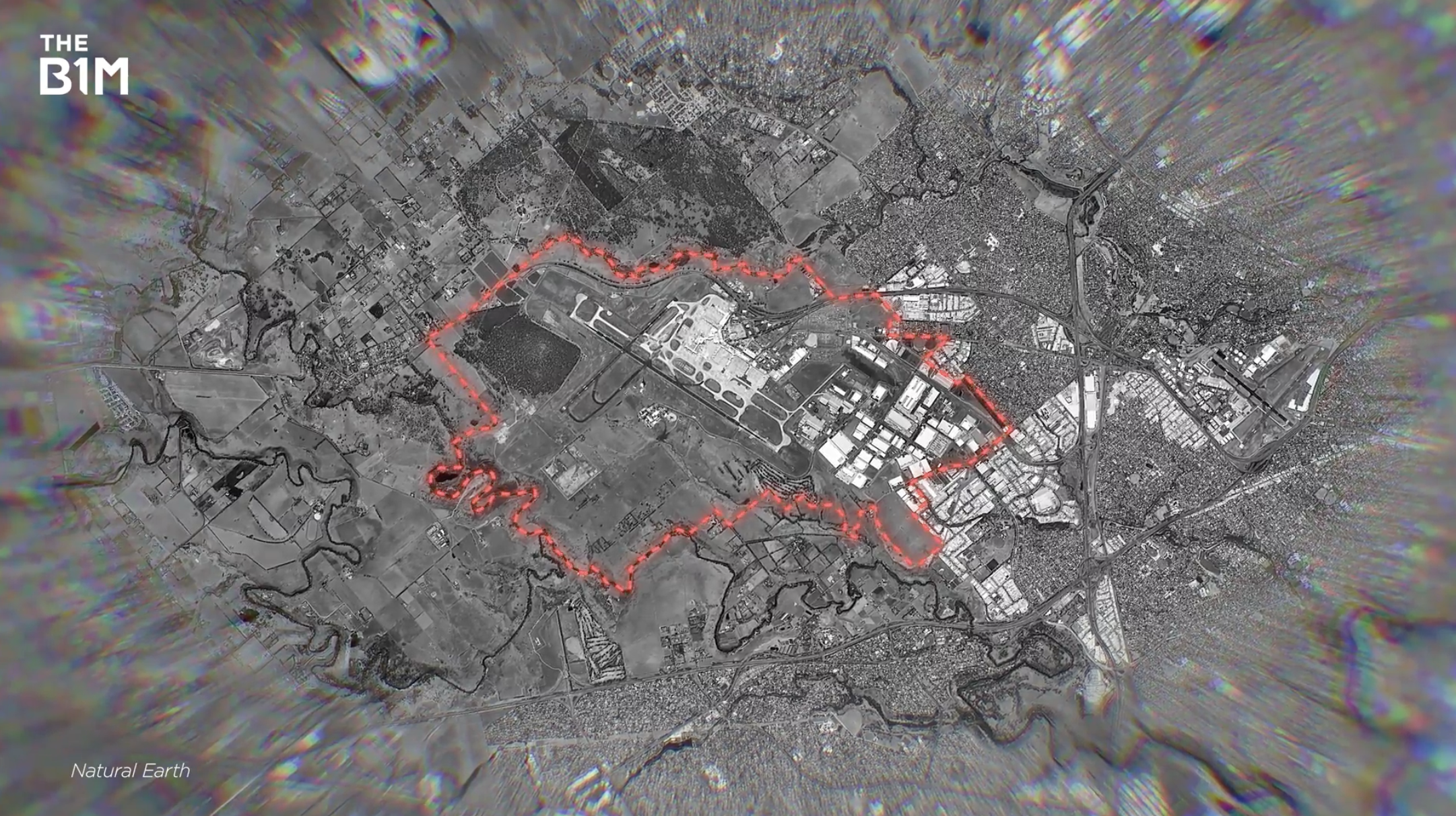
Above: When Melbourne Airport was constructed, planners developed it in an abundance of farmland in preparation for future expansion.
But post-war Melbourne was designed around cars and so the airport, more than 20 kilometres from the centre, was designed to be accessed by driving. Not such a problem when your population is around the two million mark but a much bigger issue when 76 million people might be landing on your air strips and looking to transfer to the city.
However, the government has a plan. Ground preparation works began this year to construct the Melbourne Airport Rail Link. Broken up into phases, the $12BN line will stretch from the airport, down to Melbourne CBD. The first stage of work includes untangling and simplifying a six kilometre section of track between West Footscray and Albion. There’ll be two new rail bridges, a fresh underpass, realigned passenger and freight lines, two new stations called Tottenham and Albion and a revamp of Sunshine Station to make it a ‘super-hub’. That should be completed by 2030.
Following stage 1, further track will be laid from Albion up to the airport, a new station called Keilor East will sit along that section and then a transfer hub will be created at the airport itself with a targeted completion of 2033.
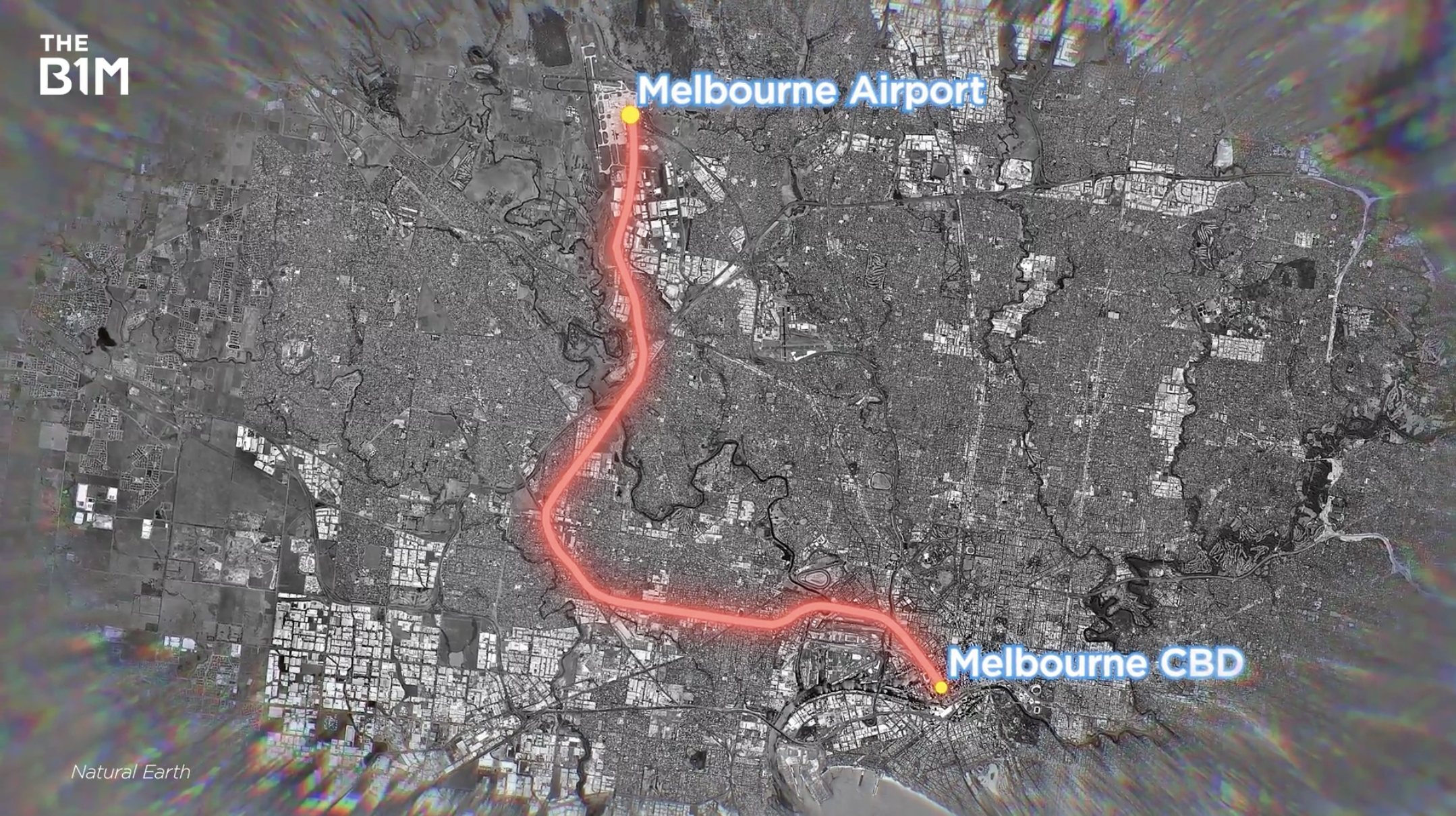
Above: At a cost of $12BN (AU), a rail line is under construction to finally connect the airport to the urban core.
If timelines are kept to - and that’s a big if when it comes to the construction of major infrastructure - Melbourne Airport will be in a position to welcome multitudes more passengers each year and while it’ll take years for passenger numbers to climb to that 76 million figure, 45 million people a year are expected to use MEL when the third landing strip opens.
That's a substantial ramp up from the current nearly 37 million. Meanwhile, there’ll be no rail line ready to support the growth. The problem stems from delays in the process - Melbourne Airport wanted an underground station while the government argued for an above ground facility.
After years of stalemate, in 2024 the airport agreed to compromise in the hopes a rail link could open in line with a third runway. That’s looking more and more unlikely. At the time, the government said the station wouldn’t be completed within six years and that deadline is now looking a lot more like 2033, two years after a new landing strip is finished.
An airport already unusually reliant on cars and buses could end up leaning even more heavily on its oversaturated roads. The travel problem to and from the site could be about to get a whole lot worse for a couple of years before it gets better.
There is fresh hope though: Melbourne’s new premier, Ben Carroll, has committed to making this Airport Rail Link his highest public transport priority. We’ll have to wait and see if he can keep it on track.
Proposals date back to the 1970s and people have been arguing about a fix for decades. Rarely is the approval and construction of major infrastructure, anywhere in the world, a smooth process and you can almost guarantee debate, disagreements and delays. The silver lining here is that a rail line and airport expansion is actually happening.
The city Melbourne Airport was built for no longer exists and so development was inevitable. There’ll always be bumps in the road - that’s the nature of the beast - but as the city’s unprecedented growth continues, the pressure to improve surrounding infrastructure grows too. Thankfully, authorities here finally responded.
MEL is set to become a major hub and arguably the most important airport in Australia and while it might be late in the day, Melburnians can finally see light at the end of the tunnel. The Melbourne of tomorrow is just around the corner.
Head to https://surfshark.com/theb1m and use code theb1m at checkout to get four extra months of Surfshark.
Additional footage and images: Melbourne Airport, Melbourne Airport Rail, Walking and Sightseeing Travel Channel, ABC, 9 News Melbourne, The Guardian, Bison United, TheGreenVan, PerPeriPlanespotting, Andrew Harvey, Oceania Vintage Films, Tony Hisgett, Ahmed Dawn and Emily Kulich.
We welcome you sharing our content to inspire others, but please be nice and play by our rules.
Comments